The Jurisprudential Dilemma of Marine Scientific Research: Balancing Coastal State Consent and Universal Inquiry
An exhaustive analysis of the authorization regimes for marine scientific research under UNCLOS, examining the friction between coastal state sovereignty and scientific freedom.
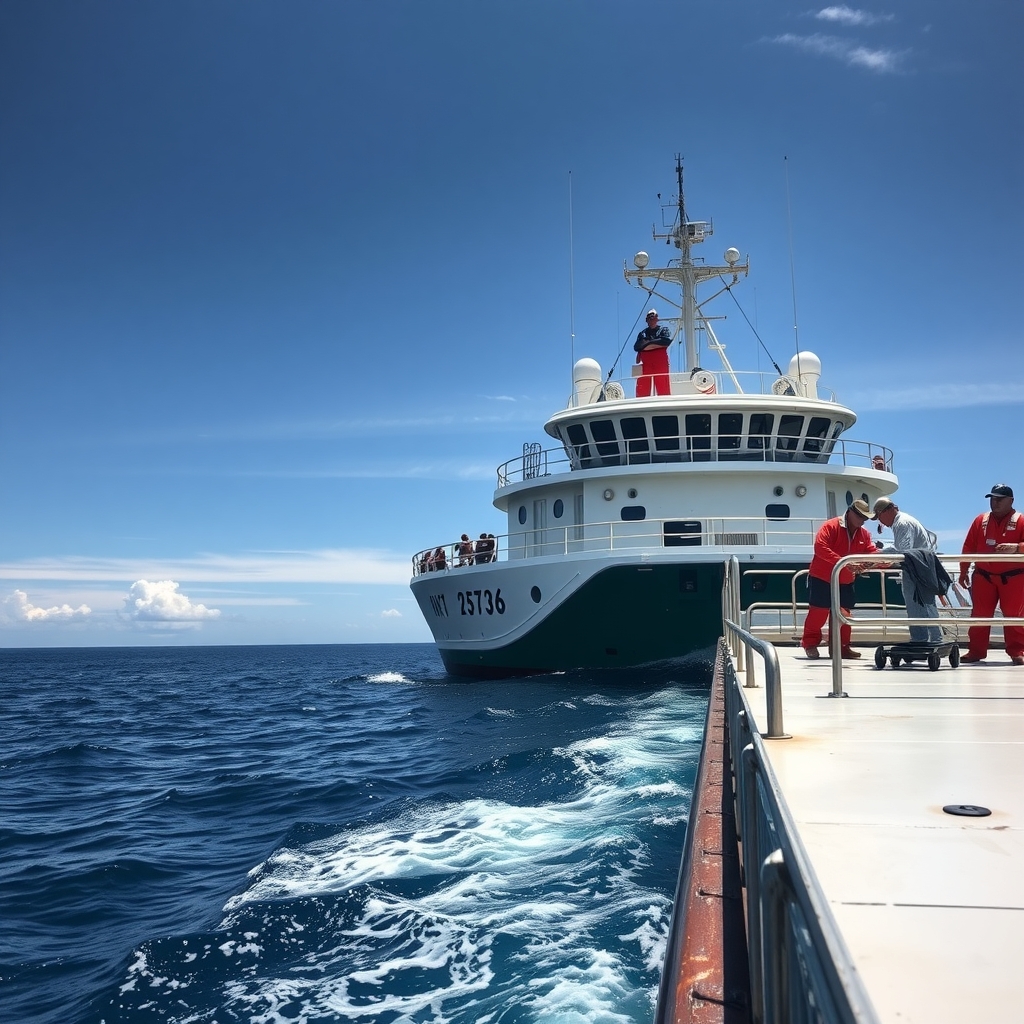
The legal framework governing Marine Scientific Research (MSR) represents one of the most delicate compromises within the United Nations Convention on the Law of the Sea (UNCLOS). Often described as the 'grand bargain' of the oceans, UNCLOS attempts to reconcile the competing interests of coastal States, who seek to protect their sovereign rights over marine resources, and the international scientific community, which advocates for the unhindered pursuit of knowledge. This article explores the intricate authorization regimes established under Part XIII of the Convention, analyzing the jurisdictional nuances, the consent mechanism, and the jurisprudential interpretations that have shaped modern maritime practice.
At its core, MSR is not merely a technical endeavor but an exercise of epistemic sovereignty. The ability to collect data on the seabed, the water column, and the atmosphere above is inextricably linked to the economic and security interests of the state. Consequently, the legal regime is structured around maritime zones, where the degree of coastal State control fluctuates in relation to the distance from the baseline. This spatial distribution of authority creates a complex matrix of rights and obligations that researchers must navigate to ensure the legality of their operations.
What is the legal regime for marine scientific research?
The legal regime for marine scientific research is primarily codified in Part XIII of UNCLOS (Articles 238 to 265). It establishes a foundational right for all States and competent international organizations to conduct MSR, provided that such research is conducted exclusively for peaceful purposes and in compliance with the Convention. However, this right is not absolute; it is subject to the rights and duties of other States, particularly the coastal State within whose jurisdiction the research occurs.
To understand the regime, one must examine the differentiation of rules across various maritime zones. In internal waters and the territorial sea, the coastal State exercises full sovereignty. Under Article 245, the coastal State has the exclusive right to regulate, authorize, and conduct MSR. Research in these waters can only be performed with the express consent of and under the conditions set by the coastal State. There is no obligation for the coastal State to grant such consent, and its discretion is essentially unfettered.
The regime becomes more nuanced in the Exclusive Economic Zone (EEZ) and on the continental shelf. Here, Article 246 establishes the 'consent regime.' While coastal States have the right to regulate and authorize MSR in these zones, the Convention introduces a presumption in favor of consent. Article 246(3) mandates that coastal States shall, in normal circumstances, grant their consent for MSR projects intended to increase scientific knowledge of the marine environment for the benefit of all mankind. This provision reflects the international community's desire to promote scientific progress while respecting the functional sovereignty of the coastal State.
Beyond the limits of national jurisdiction, the regime shifts again. On the high seas, Article 257 provides that all States and competent international organizations have the right to conduct MSR. In 'the Area' (the seabed and ocean floor beyond national jurisdiction), MSR is governed by Article 256, which stipulates that research shall be carried out for the benefit of mankind as a whole, in accordance with Part XI of the Convention and the authority of the International Seabed Authority (ISA).
How does the consent regime apply to marine scientific research?
The application of the consent regime in the EEZ and on the continental shelf is the most litigious and operationally challenging aspect of MSR law. While Article 246(3) creates a general obligation to grant consent under normal circumstances, Article 246(5) provides specific grounds upon which a coastal State may, at its discretion, withhold consent. These grounds include projects that:
- Are of direct significance for the exploration and exploitation of natural resources, whether living or non-living;
- Involve drilling into the continental shelf, the use of explosives, or the introduction of harmful substances into the marine environment;
- Involve the construction, operation, or use of artificial islands, installations, and structures;
- Contain inaccurate information regarding the nature and objectives of the project.
The distinction between 'pure' research (aimed at expanding human knowledge) and 'applied' research (linked to resource exploitation) is central to this regime. However, the Convention does not provide a precise definition of these terms, leading to significant interpretive friction. Many coastal States take a cautious approach, often categorizing broad geophysical surveys as resource-related to maintain control over potential economic assets. This subjective interpretation is partially mitigated by Article 246(4), which states that normal circumstances may exist even where there are no diplomatic relations between the coastal State and the researching State, but the lack of a clear objective test remains a point of contention.
A critical procedural component of the consent regime is the 'implied consent' mechanism found in Article 252. To prevent administrative inertia from stalling scientific progress, the Convention allows a researching State or organization to proceed with a project six months after the date of application, provided that the coastal State has not responded within four months with an objection or a request for further information. This 'silence as consent' rule is designed to ensure efficiency, yet it is rarely invoked in practice due to the political risks of conducting research in a foreign EEZ without explicit written authorization.
The Duty to Comply with Conditions
Even when consent is granted, the researching State must adhere to several conditions outlined in Article 249. These include the duty to ensure the participation of the coastal State's scientists in the project, the obligation to provide the coastal State with preliminary reports and final results, and the requirement to make the data and samples available to the coastal State. Failure to comply with these conditions can lead to the suspension or cessation of the research activities under Article 253.
The Jurisprudential Landscape: SCS and Chagos
The evolution of MSR law has been significantly influenced by international dispute settlement. The 2016 South China Sea Arbitration (Philippines v. China) offered a landmark, albeit controversial, analysis of MSR obligations. The Tribunal addressed the distinction between MSR and other activities, such as the gathering of intelligence or hydrographic surveys. Crucially, the Tribunal found that China had violated its obligations under Article 240 and 244 by failing to cooperate in MSR and by conducting research without the necessary consent in areas falling within the Philippines' EEZ.
The Tribunal emphasized that the duty to provide information and the duty to cooperate are not merely procedural formalities but substantive requirements intended to foster transparency. Furthermore, the Chagos Marine Protected Area Arbitration (Mauritius v. United Kingdom) highlighted the interplay between environmental protection and MSR, suggesting that the establishment of marine protected areas (MPAs) cannot be used as a pretext to circumvent the traditional rights of other States to conduct research, unless those rights are balanced against the legitimate conservation interests of the coastal State.
Comparative Analysis of Authorization Regimes
| Maritime Zone | Legal Basis (UNCLOS) | Authorization Requirement | Coastal State Discretion |
|---|---|---|---|
| Internal Waters | Article 245 | Explicit Consent | Absolute |
| Territorial Sea | Article 245 | Explicit Consent | Absolute |
| EEZ | Article 246 | Consent (Implied or Explicit) | Qualified (Art. 246(5)) |
| Continental Shelf | Article 246 | Consent (Implied or Explicit) | Qualified (Art. 246(5)) |
| High Seas | Article 257 | No Authorization Required | None (Freedom of Science) |
| The Area | Article 256 | ISA Notification / Regulation | Shared International Oversight |
Is coastal state consent required for MSR in the EEZ?
The short answer is yes: coastal State consent is a mandatory requirement for conducting MSR in the EEZ. However, the nature of this consent is 'qualified' rather than 'absolute.' As established in Article 246(2), the coastal State has the right to regulate and authorize research, but it is under a treaty obligation to grant that consent for projects that meet the criteria of peaceful, knowledge-seeking research. This creates a unique legal situation where the coastal State possesses a sovereign right to say no, but a treaty-based obligation to say yes.
In practice, the 'qualified' nature of this consent means that if a coastal State withholds consent for reasons not specified in Article 246(5), it may be in breach of the Convention. Nevertheless, the dispute settlement provisions of UNCLOS (Part XV) offer a significant shield to coastal States in this regard. Article 297(2) provides that a coastal State is not obliged to accept the submission to compulsory settlement of any dispute arising out of the exercise of its discretion to withhold consent in accordance with Article 246(5) or its decision to order suspension or cessation of a project under Article 253. This 'exception to the rule' effectively means that the coastal State's decision to deny a research permit is often beyond the reach of international judicial review, reinforcing the primacy of coastal State interests in the EEZ.
What is the difference between MSR and hydrographic surveying?
One of the most persistent ambiguities in the law of the sea is the distinction between Marine Scientific Research and hydrographic surveying. While UNCLOS provides a detailed regime for MSR in Part XIII, it is notably silent on the definition of hydrographic surveying. This silence has led to divergent state practices and significant diplomatic friction, particularly between the United States and several coastal States like China, India, and Brazil.
The core of the dispute lies in the purpose of the data collection. MSR is generally understood as the study of the marine environment (biology, geology, chemistry) for scientific purposes. Hydrographic surveying, on the other hand, is primarily concerned with the measurement and description of the physical features of the oceans and coastal areas for the purpose of safety of navigation (producing nautical charts). The United States and other maritime powers argue that hydrographic surveying is a component of the 'freedom of navigation' and 'other internationally lawful uses of the sea' related to navigation under Articles 58 and 87 of UNCLOS. Under this view, hydrographic surveying in the EEZ does not require coastal State consent.
Conversely, many coastal States argue that any activity involving the collection of data in their EEZ is a form of MSR and thus subject to the consent regime of Part XIII. They contend that the high-resolution sonar data collected during hydrographic surveys has significant dual-use potential, providing critical information for both economic exploitation (locating resources) and military operations (submarine warfare). From this perspective, allowing unauthorized surveys would undermine the coastal State's sovereign rights over its resources and security.
The distinction between MSR and hydrographic surveying remains an unresolved 'grey area' in international law. While the South China Sea Arbitration touched upon the nature of China's activities, it did not provide a definitive global standard to distinguish the two, leaving the matter to be settled through bilateral agreements or eventual customary law evolution.
Emerging Challenges: Technology and the BBNJ Agreement
The traditional authorization regimes of UNCLOS are increasingly challenged by technological advancements and new international treaties. The rise of autonomous underwater vehicles (AUVs) and gliders complicates the definition of 'research vessels.' These platforms can operate for months without human presence, often crossing maritime boundaries undetected. Determining the 'state of registry' or the 'operator' for the purpose of seeking consent poses significant legal hurdles.
Furthermore, the recently adopted BBNJ Agreement (Biodiversity Beyond National Jurisdiction) introduces new layers of regulation for Marine Genetic Resources (MGRs) on the high seas and in the Area. While UNCLOS emphasizes the freedom of research in these zones, the BBNJ Agreement establishes a framework for the sharing of benefits (both monetary and non-monetary) derived from MGRs. This reflects a shift from a purely 'freedom-based' regime to one grounded in the principle of the 'common heritage of mankind,' potentially impacting how MSR is funded and conducted in the future.
Conclusion
The authorization regimes for Marine Scientific Research under UNCLOS represent a sophisticated attempt to balance the universal need for ocean knowledge with the particularized interests of coastal States. While the 'grand compromise' has largely succeeded in providing a framework for international cooperation, significant legal ambiguities remain. The tension between the qualified consent regime and the expanding definition of maritime sovereignty continues to produce friction, particularly regarding the distinction between MSR and hydrographic surveying.
As the international community moves toward a more integrated management of the oceans through the BBNJ Agreement and the UN Decade of Ocean Science, the jurisprudential focus must shift toward enhancing transparency and standardizing the consent process. The survival of scientific freedom depends on the willingness of researching States to strictly adhere to the obligations of Part XIII and the capacity of coastal States to exercise their discretion in a manner that favors the collective benefit of humanity over narrow national interests. In the final analysis, the law of MSR is not just about permits and paperwork; it is about the sustainable governance of the global commons through the light of empirical inquiry.
Comments
No comments yet.