Climate Obligations at Sea: The Juridical Reconstruction of Flag State Duty and Carbon Neutrality
This study analyzes how maritime decarbonization reshapes international law, examining ITLOS jurisprudence, MARPOL Annex VI, charterparty disputes, and regional carbon pricing.
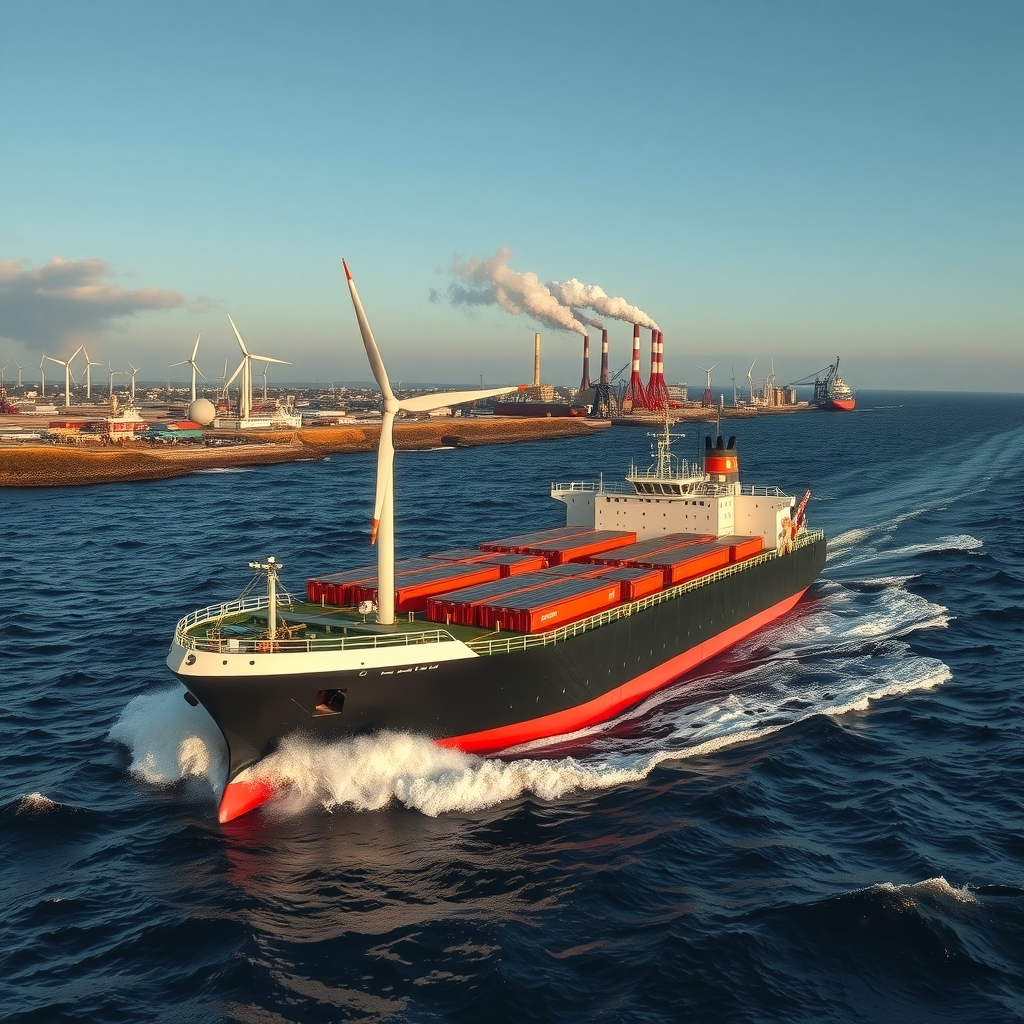
The integration of international climate obligations into public and private maritime law represents one of the most structurally complex developments in contemporary international jurisprudence. Historically perceived as a self-contained regime governed by the technical standards of the International Maritime Organization under the institutional umbrella of the United Nations Convention on the Law of the Sea, international shipping now confronts the overarching normative architecture of the United Nations Framework Convention on Climate Change and the 2015 Paris Agreement. For decades, the cross-border mobility of merchant vessels insulated the shipping sector from state-allocated greenhouse gas reduction targets, giving rise to persistent regulatory fragmentation. That insulation has decisively eroded. The friction between flag state jurisdiction, evolving port state regulatory unilateralism, and emerging contractual liability regimes demands a fundamental reappraisal of environmental due diligence on the high seas.
Central to this legal evolution is the tension between the principle of Common But Differentiated Responsibilities and Respective Capabilities, foundational to international climate treaties, and the non-discrimination and No More Favourable Treatment tenets that anchor maritime conventions. As market-based mechanisms, operational carbon indices, and alternative fuel mandates take effect across competing jurisdictions, the law of the sea is shifting from a permissive framework of sovereign transit to an affirmative system of ecological stewardship. Examining this transition requires assessing state responsibility, arbitral precedent, regional unilateralism, and private contract mechanics.
How does UNCLOS regulate greenhouse gas emissions?
For more than four decades, the threshold legal inquiry surrounding vessel-source greenhouse gas emissions centered on whether atmospheric emissions constituted marine pollution under the United Nations Convention on the Law of the Sea. Article 1, paragraph 1(4) of the convention defines pollution of the marine environment as the introduction by man, directly or indirectly, of substances or energy into the marine environment, which results or is likely to result in deleterious effects such as harm to living resources, hazards to human health, and impairment of water quality. Until recently, traditionalist readings maintained that greenhouse gases represented atmospheric phenomena primarily regulated by the Kyoto Protocol and the Paris Agreement, operating outside the jurisdictional domain of the law of the sea.
This interpretative ambiguity was authoritatively clarified by the International Tribunal for the Law of the Sea in its landmark Advisory Opinion of 21 May 2024, rendered in Case No. 31 pursuant to a request by the Commission of Small Island States on Climate Change and International Law. The Tribunal unanimously affirmed that anthropogenic greenhouse gas emissions, including carbon dioxide, methane, and black carbon, satisfy every element of Article 1(1)(4). The scientific mechanics of ocean warming, sea-level rise, ocean acidification, and deoxygenation demonstrate that the introduction of carbon emissions into the atmosphere constitutes an indirect introduction of deleterious substances and energy into the marine environment. Consequently, maritime greenhouse gas emissions fall squarely within the jurisdictional and substantive scope of Part XII of the convention.
The Tribunal established that vessel emissions trigger dual legal pathways within the convention. Under Article 212, states must adopt laws and regulations to prevent, reduce, and control pollution of the marine environment from or through the atmosphere, applicable to their air space and to vessels flying their flag. Concurrently, Article 222 mandates that states enforce these regulatory architectures within their airspace and on vessels flying their flag or registry. Crucially, the Tribunal declined to treat Article 212 as an isolated lex specialis. Instead, it anchored atmospheric pollution within the broader, unqualified obligation enshrined in Article 192: the general obligation of states to protect and preserve the marine environment.
By subordinating vessel emissions to Article 192, the Tribunal mobilized the principle of systemic integration under Article 31, paragraph 3(c) of the Vienna Convention on the Law of Treaties. The content of general treaty obligations under the law of the sea must be informed by external international agreements, including the Paris Agreement temperature thresholds of 1.5 degrees Celsius and well below 2 degrees Celsius above pre-industrial levels. Thus, the law of the sea can no longer be interpreted in clinical isolation from climate treaty jurisprudence.
What are flag state duties regarding marine climate pollution?
The classification of greenhouse gases as marine pollutants drastically transforms the scope of flag state jurisdiction. Under customary international law and Article 94 of the convention, the flag state exercises prescriptive and enforcement jurisdiction over ships flying its flag. However, the nature of the duty imposed by Article 194, paragraph 1—requiring states to take all measures consistent with the convention that are necessary to prevent, reduce, and control pollution of the marine environment from any source—is an obligation of conduct, not of result.
In accordance with the established standard of due diligence articulated by the International Court of Justice in Pulp Mills on the River Uruguay (Argentina v. Uruguay) and reaffirmed by the Permanent Court of Arbitration in the South China Sea Arbitration (Philippines v. China), due diligence demands that a state exercise its best possible efforts. It necessitates the deployment of administrative, legislative, and judicial apparatuses to prevent private commercial actors within its jurisdiction from causing cross-border environmental harm. In Case No. 31, the International Tribunal for the Law of the Sea expanded this doctrine, observing that the required standard of due diligence is stringent. The magnitude of planetary harm posed by climate change dictates that a flag state cannot satisfy its legal burden merely through passive formal adherence to minimal international agreements.
This standard carries major consequences for open registries, often referred to as flags of convenience, which register substantial proportions of global merchant tonnage while exercising limited domestic administrative oversight. Under Article 211, paragraph 2, flag states must establish rules and regulations that at least have the same effect as that of generally accepted international rules and standards established through the competent international organization—namely, the International Maritime Organization. The mandatory framework set out in MARPOL Annex VI, encompassing the Energy Efficiency Existing Ship Index, the Carbon Intensity Indicator, and Ship Energy Efficiency Management Plans, undeniably qualifies as these generally accepted international rules and standards.
Nevertheless, a pivotal divergence in legal doctrine persists: does compliance with the International Maritime Organization's baseline requirements immunize a flag state from international liability under state responsibility frameworks? In Case No. 31, the Tribunal reasoned that while international rules and standards establish the minimum mandatory threshold, the overarching due diligence obligation under Article 194, paragraph 1, may demand that states implement measures more stringent than existing International Maritime Organization instruments if those instruments prove scientifically insufficient to protect and preserve the marine environment. This holding dismantles the traditional shield long utilized by non-interventionist flag states, indicating that mechanical adherence to lagging multilateral technical standards may not absolve a flag administration of responsibility when its registered fleet systematically degrades global marine ecosystems.
Technical Realities and Flaws in the MARPOL Annex VI Architecture
The International Maritime Organization primarily regulates greenhouse gases through the progressive amendment of MARPOL Annex VI, initially adopted via the Marine Environment Protection Committee. The primary tools governing active merchant fleets include the operational Carbon Intensity Indicator, the technical Energy Efficiency Existing Ship Index, and the revised 2023 Strategy on Reduction of GHG Emissions from Ships, which established an ambition to reach net-zero greenhouse gas emissions by or around 2050.
The Carbon Intensity Indicator framework, introduced through Resolution MEPC.328(76), measures the operational fuel efficiency of vessels exceeding 5,000 gross tonnage by calculating the grams of carbon dioxide emitted per cargo-carrying capacity nautical mile. Vessels receive an annual operational rating ranging from A (major superior) to E (inferior). Ships rated D for three consecutive years or E for a single year must formulate an approved corrective action plan within their Ship Energy Efficiency Management Plan. Despite these procedural innovations, the regulatory architecture exhibits distinct doctrinal and technical design defects.
The primary structural deficiency lies in enforcement mechanisms. MARPOL Annex VI relies almost exclusively on flag state compliance monitoring and limited Port State Control inspections. Port State Control officers may verify the existence of a valid Statement of Compliance and an updated management plan, but the regulatory text does not authorize a port authority to detain a vessel, revoke its operational trading certificates, or impose substantial civil fines solely because the ship earned an operational rating of D or E. Consequently, the Carbon Intensity Indicator operates as an administrative audit rather than a punitive deterrence regime. The resulting enforcement void forces market participants, financiers, and charterers to adjudicate regulatory failure within the private realm of commercial maritime litigation.
Can charterparties allocate carbon intensity liabilities?
As the international public regulatory framework falters in executing coercive penalties, decarbonization rules have increasingly altered private charterparty arrangements. In a standard time charter, commercial and nautical operations are divided: the shipowner provides the vessel, crew, and technical navigation, while the time charterer directs the commercial exploitation, orders voyages, selects ports of call, and purchases bunker fuel. This bifurcated structure creates a fundamental principal-agent dilemma in the context of carbon regulation.
The commercial orders issued by a charterer directly determine a vessel's Carbon Intensity Indicator rating. Instructing a vessel to steam at maximum operational speed, encounter extensive port congestion at anchor, or undertake voyages in ballast degrades the ship's annual fuel performance metric. Conversely, if an owner orders speed reductions or refuses a voyage instruction to preserve the vessel's regulatory rating, the owner risks breaching its core obligation to prosecute voyages with utmost dispatch and comply with the charterer's legitimate employment orders under standard standard forms such as NYPE 1946/1993 or Shelltime 4.
To resolve this tension, standard-setting organizations developed contractual risk-allocation mechanisms, most notably the BIMCO CII Operations Clause for Time Charterparties 2022. This clause endeavors to bridge public administrative law and private contract governance through several key interventions:
- Collaborative Due Diligence: Parties contractually agree to cooperate, exchange granular fuel and operational data, and optimize voyages to maintain an agreed-upon annual operational rating.
- Charterer Operational Responsibility: The charterer warrants that it will not issue employment orders that cause the vessel to fall below the agreed Carbon Intensity Indicator trajectory.
- Owner Corrective Rights: If the vessel's operational data indicates performance is tracking below the target trajectory, the shipowner may notify the charterer, request revised commercial orders, and, if none are forthcoming, unilaterally reduce engine output or slow steam without committing a breach of the speed warranty or the duty of utmost dispatch.
This contractual balance has sparked significant resistance across international maritime markets. Charterers frequently argue that accepting the BIMCO CII Clause effectively transfers owners' seaworthiness and technical maintenance responsibilities—such as biofouling management and hull resistance optimization—onto the commercial operator. In charter negotiations, sophisticated parties routinely modify or replace standard clauses with bespoke riders. Consequently, maritime arbitral tribunals constituted under the London Maritime Arbitrators Association and the Singapore Chamber of Maritime Arbitration increasingly adjudicate disputes concerning off-hire declarations, alleged wrongful speed reductions, and constructive total loss calculations tied to degraded environmental vessel ratings.
Is regional emissions trading compatible with international maritime law?
Frustrated by the consensus-driven pace of negotiations within the International Maritime Organization, regional authorities have turned to unilateral, market-based mechanisms. The primary example of this regulatory pivot is the European Union's extension of its Emissions Trading System to maritime transport activities under Directive (EU) 2023/959, alongside the FuelEU Maritime Regulation (Regulation (EU) 2023/1805).
The revised European emissions directive encompasses 100 percent of greenhouse gas emissions from voyages between ports within the jurisdiction of a European Union member state, and 50 percent of emissions from voyages departing from or arriving at a member state port to or from an external third-country port. By extending its regulatory reach to emissions generated during transit across the high seas, the European Union has ignited fierce debates over sovereignty, extraterritoriality, and the jurisdictional parameters of port state authority under the law of the sea.
Under established customary international law, reflected in Article 25 and Article 211, paragraph 3 of the convention, port states possess comprehensive sovereignty over their internal waters and ports. A state may establish conditions for entry into its ports, provided these conditions are non-discriminatory and adequately publicized. The European Union relies heavily on this doctrine, alongside the landmark judgment of the Court of Justice of the European Union in Air Transport Association of America (ATAA) v. Secretary of State for Energy and Climate Change (Case C-366/10). In ATAA, the court validated the application of emissions trading to aviation, holding that the European Union possesses the prescriptive jurisdiction to regulate conduct occurring outside its territory, provided the regulated activity establishes a sufficient territorial nexus—namely, the physical arrival or departure of the vehicle at an infrastructure facility within European territorial boundaries.
Non-European flag states—including the United States, China, Brazil, and multiple developing nations—argue that applying regional carbon markets to international voyages impermissibly circumvents Article 211, paragraph 2, and infringes on the exclusive jurisdiction of the flag state on the high seas under Article 92. These states contend that the 50 percent calculation metric for extra-European voyages penalizes fuel consumption that occurs entirely beyond any European jurisdiction, amounting to constructive extra-territorial regulation. Furthermore, critics suggest this mechanism violates non-discrimination principles under the General Agreement on Tariffs and Trade (specifically Articles I, III, and XI), as well as World Trade Organization rules, because market compliance levies may indirectly place foreign shipping carriers at a competitive disadvantage relative to regional coastal operators.
| Regulatory Architecture | Primary Legal Basis | Jurisdictional Scope | Enforcement Mechanism | Doctrinal Limitations |
|---|---|---|---|---|
| MARPOL Annex VI (EEDI / CII) | International Maritime Organization Conventions; UNCLOS Art. 211(2) | Global flag-state application; universal applicability for qualifying gross tonnage | Flag state certification; limited Port State Control administrative review | Absence of mandatory detention powers for CII underperformance; slow multilateral consensus |
| EU Emissions Trading System (EU ETS) | Directive (EU) 2023/959; Port State Jurisdiction (UNCLOS Art. 25 & 211(3)) | Regional entry and exit: 100% intra-EU voyages, 50% extra-EU transits | Financial surrender of allowances; denial of port entry for systemic non-compliance | Allegations of extraterritorial overreach; trade friction with non-EU flag states; carbon leakage |
| UNCLOS Customary Obligations | UNCLOS Arts. 192, 194, 212; ITLOS Advisory Opinion (Case No. 31) | Global oceans; erga omnes duties to protect the marine environment | State responsibility claims via ICJ, ITLOS, or PCA dispute procedures | Requires proof of breach of due diligence; attribution hurdles; jurisdictional hurdles |
| Private Charterparty Regimes | Private Maritime Contracts (BIMCO CII, bespoke clauses); English Common Law / Lex Maritima | Inter-party commercial obligations across specific charter fixtures | Commercial arbitration (LMAA, SCMA); damage claims, off-hire offsets, voyage cancellations | Fragmented arbitral awards; commercial inequality between owners and charterers; zero public accountability |
Reconciling Global Economic Measures with the Principle of Differentiated Responsibility
The fundamental conflict across the decarbonization landscape remains the philosophical divergence between two dominant public international law doctrines. Within the United Nations Framework Convention on Climate Change, Article 3, paragraph 1 explicitly mandates that parties act on the basis of equity and in accordance with their Common But Differentiated Responsibilities and Respective Capabilities. Developing states argue that maritime decarbonization frameworks must respect this principle by preventing historical polluters from imposing identical economic burdens upon states that contributed minimally to global greenhouse gas concentrations.
Conversely, the constitutive framework of the International Maritime Organization is anchored in Article 1(b) of the IMO Convention and the No More Favourable Treatment rule codified in treaties such as MARPOL. Maritime transport operates on unified competitive conditions. If ships flying the flags of developing states were excused from technical efficiency measures or market-based levies, commercial fleets would promptly reflag to those registries, producing catastrophic carbon leakage and destroying the economic parity of global trade. Consequently, maritime negotiators confront the challenge of systemic integration: how to formulate an international market-based measure that honors non-discrimination while incorporating differentiated responsibility principles.
Current proposals circulating within the Marine Environment Protection Committee—such as a universal greenhouse gas levy championed by Pacific Island nations and supported by the European Union, juxtaposed with revenue-rebate systems favored by Latin American agricultural exporters—represent the practical testing ground for this reconciliation. Legally, the synthesis can only be achieved by decoupling revenue collection from revenue distribution. While flag and port states must enforce a uniform, non-discriminatory economic mechanism upon all commercial vessels regardless of nationality, the resulting revenues must be disproportionately redirected to vulnerable, developing, and small-island developing states to finance port decarbonization infrastructure, climate adaptation, and green marine fuel production. This structural division harmonizes the functional universality of the law of the sea with the redistributive justice imperatives of international environmental law.
The Juridical Horizon of Maritime Decarbonization
The decarbonization of international shipping has moved past simple regulatory compliance, evolving into a fundamental reconstruction of maritime jurisprudence. For nearly a century, maritime law operated under the Westphalian premise that freedom of the high seas was limited only by flag state sovereignty and baseline navigational safety standards. That paradigm is no longer sustainable. The convergence of binding marine environmental protections under Part XII of the convention, the clear findings of the International Tribunal for the Law of the Sea in Case No. 31, and aggressive regional market interventions have transformed carbon containment into an obligation of due diligence with erga omnes dimensions.
The contemporary flag state must recognize that its sovereign right to register merchant vessels carries an enforceable duty of administrative vigilance. It must enact laws capable of abating cumulative planetary harm. Simultaneously, maritime commerce must accept that commercial arrangements can no longer prioritize rapid transit over planetary survival. As commercial arbitrators untangle speed disputes and operational ratings under the Carbon Intensity Indicator, international courts will increasingly be asked to adjudicate whether unilateral port access restrictions or global market-based mechanisms exceed conventional jurisdiction.
Navigating these challenges requires sustained normative coherence. If the International Maritime Organization fails to implement a transparent, equitable, and legally binding market-based mechanism that incorporates both technical universality and climate justice, the resulting fragmentation will splinter the global ocean economy into competing regional trade blocs. Decarbonization is no longer merely an engineering challenge for shipyards and naval architects; it is a critical test of international law's ability to safeguard planetary stability without fracturing the globalized system of maritime trade.
Comments
No comments yet.