Sovereignty, Consortia, and Cartels: The Transformation of Liner Shipping Competition Regulation
An examination of liner shipping antitrust regulation, tracing the dissolution of conference immunities and the rise of alliance scrutiny across international jurisdictions.
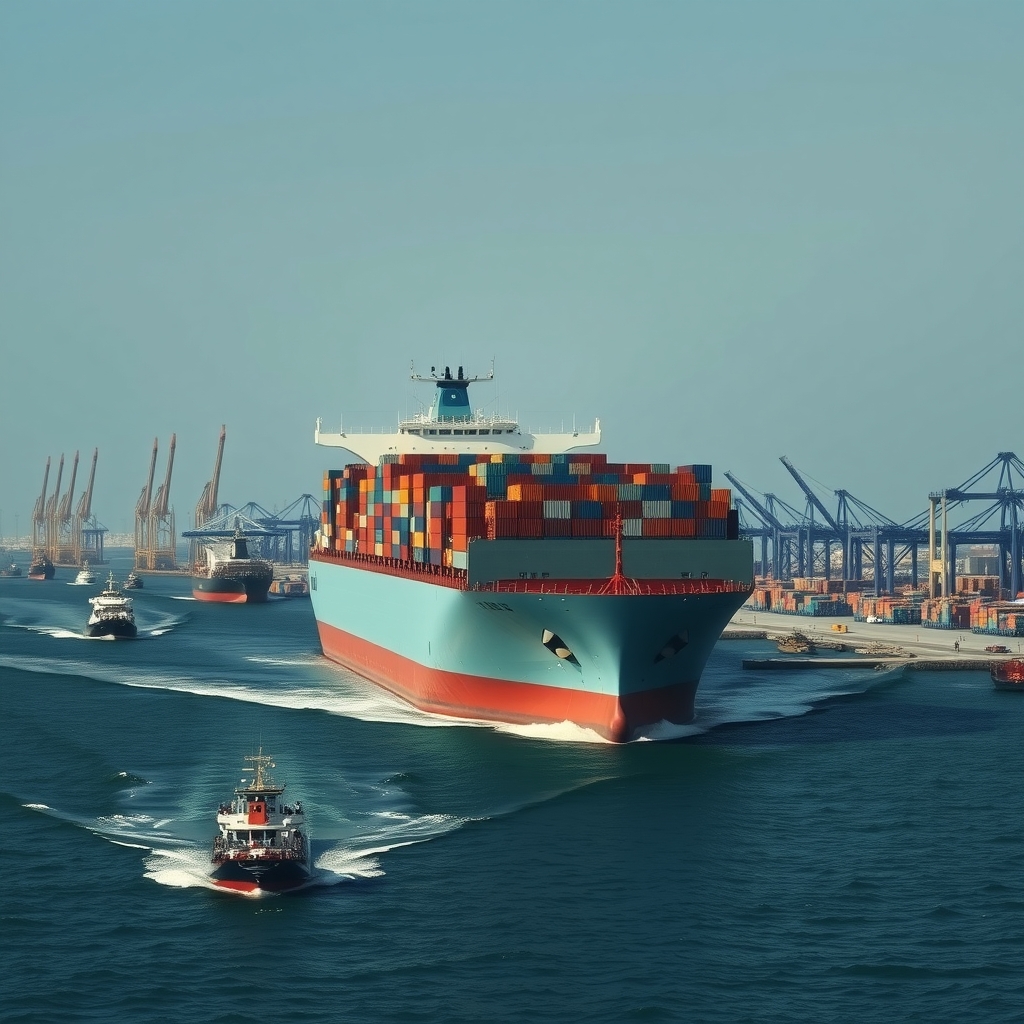
For more than a century, international liner shipping enjoyed a bespoke departure from orthodox antitrust doctrines. The unique economic topology of scheduled ocean transport—characterized by high fixed capital commitments, volatile marginal costs, asset specificity, and structural susceptibility to destructive pricing cycles—historically convinced commercial powers that unfettered competition was antithetical to stable maritime trade. The legal architecture that codified this consensus found expression in statutory conference immunities, such as the United States Shipping Act of 1916 and Council Regulation 4056/86 within the European Economic Community, complemented by multilateral frameworks including the 1974 United Nations Convention on a Code of Conduct for Liner Conferences. Under these regimes, horizontal price-fixing, joint capacity management, and tariff-setting cartels were not merely tolerated; they were formalized as protective safeguards ensuring service frequency and price predictability.
Over the past three decades, this exceptionalist paradigm has steadily dissolved. The structural transformation of ocean carriage—driven by cellular containerization, the emergence of megamax vessels, carrier consolidation, and sophisticated digital coordination—has dismantled the policy arguments that formerly sustained collective rate-setting. The contemporary regulatory landscape is instead characterized by aggressive administrative scrutiny, the withdrawal of statutory block exemptions, and acute jurisdictional friction among major trading blocs. As ocean carriers transition from insular port-to-port carriers into vertically integrated end-to-end logistics conglomerates, competition authorities in Brussels, Washington, Beijing, and Singapore must reconcile legacy maritime legal concepts with modern antitrust imperatives concerning market power, information sharing, and structural dependency.
The Jurisprudential Demise of the Liner Conference Regime
The institutional legitimacy of liner conferences rested on the premise that internal rate coordination prevented destructive ruinous competition, which would otherwise drive carriers into sequential insolvencies and leave cargo interests without reliable sailings. Under the 1974 UNCTAD Code of Conduct for Liner Conferences, developing states sought to safeguard their fledgling national merchant marines through statutory cargo-allocation quotas, notably the famous 40:40:20 distribution rule between national lines of the trading partners and third-flag cross-traders. Yet, while the UNCTAD Code institutionalized conferences on an international diplomatic plane, it institutionalized a model of state-sponsored economic protectionism that sat uneasily beside modern competition law developments.
The turning point in European jurisprudence emerged through the enforcement actions against conference practices in the West African trades, culminating in the landmark judgments of the European Court of Justice in Compagnie Maritime Belge Transports SA and Others v Commission (Joined Cases C-395/96 P and C-396/96 P). The Associated Central West Africa Lines (CEWAL) conference had employed several aggressive instruments to eliminate independent non-conference competition, most notably Grimaldi and Cobelfret. These instruments included the deployment of fighting ships—vessels scheduled to sail on identical dates alongside independent entrants, offering predatory, below-cost freight rates financed collectively by the conference members—alongside loyalty contracts and predatory regulatory lobbying.
The Court of Justice upheld the European Commission’s determination that the conference members held a collective dominant position under what is now Article 102 of the Treaty on the Functioning of the European Union (TFEU). The Court established that the statutory block exemption granted to liner conferences under Council Regulation 4056/86 covered only standard horizontal tariff consultations and operational coordination; it did not insulate predatory exclusionary conduct intended to extinguish external competition. The CEWAL judgment dismantled the shield of collective conference immunity by holding that:
A dominant position may be held collectively by two or more independent economic entities, provided that they are linked by such economic factors that they adopt the same conduct on the market. An undertaking in a dominant position cannot use regulatory frameworks or collective power to eliminate remaining competitive forces through targeted price predation.
Subsequent jurisprudence cemented this restrictive approach. In the Trans-Atlantic Conference Agreement (TACA) litigation (Case T-191/98 Atlantic Container Line AB and Others v Commission), the Court of First Instance confirmed that conference block exemptions did not permit inland price-fixing or multimodal tariff coordination. The judiciary strictly construed exemptions from Article 101(1) TFEU, establishing that price agreements covering inland haulage exceeded the natural maritime domain of the conference system. This steady jurisprudential curtailment rendered the traditional conference structure administratively unviable, leading directly to the formal repeal of Regulation 4056/86 by the Council of the European Union in 2006, effective October 2008.
What is the legal status of maritime conferences under international competition law?
The international legal status of maritime conferences today is one of stark bifurcation, characterized by widespread prohibition in Western jurisdictions and persistent, if narrowly regulated, survival in select Asian and Latin American legal orders. With the repeal of Regulation 4056/86, the European Union entirely stripped liner conferences of their antitrust immunity. Consequently, any horizontal coordination between ocean carriers that touches upon common pricing, freight surcharges, or rate stabilization within trades serving EU ports constitutes a per se infringement of Article 101(1) TFEU, exposing participants to administrative fines of up to ten percent of global annual turnover.
In the United States, the legal status of rate-fixing arrangements followed a different trajectory under the Shipping Act of 1984, as amended by the Ocean Shipping Reform Act (OSRA) of 1998 and the Ocean Shipping Reform Act of 2022 (codified in Title 46 of the United States Code). The US statutory framework does not rely on European-style categorical prohibitions; instead, it requires carrier agreements to be filed formally with the Federal Maritime Commission (FMC). Under 46 U.S.C. § 40307, agreements that become effective pursuant to the Shipping Act are conferred statutory immunity from the federal antitrust statutes, specifically the Sherman Act and the Clayton Act.
However, OSRA 1998 fundamentally hollowed out traditional liner conferences by legalizing confidential, bilateral service contracts between individual ocean carriers and shippers. Prior to this statutory intervention, conference rates were published openly, and individual members were barred from negotiating proprietary tariffs. By permitting shippers to execute direct, confidential volume-rate contracts outside the collective framework, the commercial utility of traditional rate-setting conferences evaporated on the major East-West corridors. While modern conference agreements remain technically permissible under US filing rules, carrier appetite for collective rate filing collapsed, replaced by operational arrangements that intentionally omit horizontal rate coordination.
Conversely, several Asian jurisdictions preserve statutory carve-outs for maritime rate-setting conferences. Japan, through its Marine Transportation Act, maintains an explicit antitrust exemption administered by the Ministry of Land, Infrastructure, Transport and Tourism (MLIT), although this regime has faced repeated domestic reform proposals. Similarly, Singapore’s Competition (Block Exemption for Liner Shipping Agreements) Order has long accommodated both liner consortia and limited forms of discussion agreements that facilitate information exchange and rate benchmarking, premised on Singapore’s status as a global transshipment hub that prioritizes network density and port connectivity over strict competition enforcement.
How do block exemptions affect liner shipping alliances?
As rate-fixing conferences faded into legal obsolescence, ocean carriers reconstituted their collaborative architecture through operational alliances: the 2M Alliance, the Ocean Alliance, and THE Alliance (now transitioning to the Premier Alliance and Gemini Cooperation). These arrangements abandon explicit collective price-setting in favor of extensive vessel sharing agreements (VSAs), slot exchange contracts, joint scheduling, and terminal rationalization. The regulatory vehicle designed to accommodate these operational synergies in Europe was Commission Regulation (EC) No 906/2009—the Consortia Block Exemption Regulation (CBER).
The CBER established a safe harbor under Article 101(3) TFEU, granting automatic antitrust immunity to operational consortia subject to strict qualitative and quantitative conditions. Crucially, the exemption applied only to consortia that did not engage in price-fixing, market partitioning, or customer allocation (the so-called hardcore restrictions), and whose joint market share on the relevant trades did not exceed 30 percent, calculated by aggregate capacity or cargo lifted. The regulation rested on the economic presumption that operational rationalization yields immediate consumer benefits through lower operating expenditures, reduced emissions, improved vessel capacity utilization, and enhanced direct port-pair connections.
However, the rapid escalation of carrier consolidation fundamentally destabilized the practical operation of the CBER. By 2020, through a series of corporate acquisitions (such as Maersk’s acquisition of Hamburg Süd, CMA CGM’s takeover of NOL/APL, and the consolidation of Japanese carriers into Ocean Network Express), the global market share of the top ten carriers approached 85 percent. On primary trade lanes—most notably Asia-North Europe and the Transpacific—the operational alliances routinely deployed market shares fluctuating near or above the 30 percent threshold. This operational reality triggered complex legal disputes over whether the CBER continued to offer genuine legal certainty, as alliances were increasingly required to conduct individual self-assessments under Article 101 TFEU rather than relying upon the safe harbor.
The operational stress test arrived during the post-2020 global supply chain crisis. Massive container terminal congestions, landside logistics bottlenecks, and extreme surges in consumer goods demand drove spot freight rates to unprecedented heights, reaching upwards of $20,000 per FEU (forty-foot equivalent unit), alongside widespread blank sailings (canceled voyages) and historic highs in carrier profitability. Cargo interests, led by European and American shipper councils, argued that the alliances were utilizing joint capacity management mechanisms to deliberately withhold supply, thereby exploiting the consortia exemptions to orchestrate coordinated rate escalation.
Following an extensive evaluation, the European Commission concluded that the CBER had ceased to achieve its fundamental regulatory objective of streamlining compliance while ensuring that a fair share of the resulting efficiencies is passed on to consumers. Consequently, on 10 October 2023, the Commission announced its decision to let the CBER expire on 25 April 2024. The expiration of this safe harbor does not render operational alliances unlawful per se under EU law. Rather, it transitions the entire maritime transport sector into the horizontal antitrust regime applicable to all other industrial sectors: Regulation 1/2003 and the European Commission’s Horizontal Cooperation Guidelines.
Under this post-exemption regime, members of vessel sharing agreements must continually assess the compatibility of their operational integrations with Article 101 TFEU. The legal scrutiny shifts decisively toward the mechanics of information exchange. In contemporary VSAs, the transmission of data regarding fleet deployment, bunker adjustment factors, vessel capacity utilization, and arrival schedules risks crossing the boundary into concerted practices if it permits competing lines to anticipate each other's commercial strategies. The dissolution of the block exemption shifts the legal burden onto the carriers to substantiate that their technical integrations generate verifiable, pro-competitive efficiencies that could not be achieved through less restrictive contractual mechanisms.
Comparative Approaches to Liner Competition Regulation
The governance of liner shipping reveals deep philosophical and procedural divergences between the dominant global trade corridors. The contrast between administrative filing mechanisms, direct judicial enforcement, and sector-specific exemptions creates persistent extraterritorial tensions for carriers operating round-the-world services.
| Jurisdiction | Primary Regulatory Authority | Foundational Legal Instrument | Treatment of Operational Alliances | Extraterritorial Nexus Standard |
|---|---|---|---|---|
| European Union | European Commission (DG COMP) | Articles 101 & 102 TFEU; Regulation 1/2003 | No block exemption; individual self-assessment under Horizontal Guidelines | Qualified Effects Doctrine (economic effects direct, substantial, foreseeable) |
| United States | Federal Maritime Commission (FMC) | Shipping Act of 1984; OSRA 2022 (46 U.S.C. Subtitle IV) | Ex-ante filing review under Section 6(g); statutory antitrust immunity if effective | Commerce clause jurisdiction covering US foreign waterborne commerce |
| People's Republic of China | Ministry of Transport (MOT) / SAMR | Regulations on International Maritime Transportation (2001, as rev.) | Administrative filing with MOT; potential intervention for unreasonable rates | Inbound and outbound maritime transport serving Chinese territorial ports |
| Singapore | Competition and Consumer Commission of Singapore (CCCS) | Competition Act 2004; Maritime Block Exemption Order | Sectoral Block Exemption Order extended through late 2020s | Agreements impacting transshipment and local cargo markets within Singapore |
Extraterritorial Jurisdiction and Conflict of Laws
Because liner shipping services cross high seas corridors beyond any single state's territorial sovereignty, competition authorities must rely upon extraterritorial principles to regulate anti-competitive conduct occurring partially or entirely abroad. This extraterritorial reach has generated recurring jurisdictional friction under international law, particularly regarding the limits of prescriptive jurisdiction under customary international principles.
In the European context, the jurisdictional reach over non-EU shipping lines engaging in coordinated capacity allocation was solidified by the European Court of Justice in the seminal Wood Pulp case (Joined Cases 89, 104, 114, 116, 117 and 125 to 129/85 A. Ahlström Osakeyhtiö and Others v Commission). The Court drew a clean distinction between the location where an anti-competitive agreement is formed and the territory where it is implemented. Under the implementation test, if foreign ocean carriers enter into an agreement outside the European Union that is implemented within the internal market—such as through the direct offering of services at unified or coordinated rates to European ports—the European Commission possesses prescriptive jurisdiction to enforce Article 101 TFEU.
This doctrine was further refined into the qualified effects doctrine in Gencor Ltd v Commission (Case T-102/96), wherein the Court of First Instance held that European competition law applies to activities undertaken outside the EU provided that it is foreseeable that the conduct will have an immediate and substantial effect within the Community. When applied to containerized liner networks, the qualified effects doctrine empowers European authorities to penalize foreign carriers for blanking sailings on Far East-Europe voyages or agreeing upon joint bunker surcharges within Asian executive committees, provided those decisions directly distort freight rates or available vessel capacity inside European ports.
In the United States, extraterritorial authority over international liner arrangements is governed structurally by Title 46 of the United States Code. The Shipping Act applies unambiguously to agreements among ocean common carriers operating in the foreign waterborne commerce of the United States, regardless of the carriers' flag states, corporate nationality, or the geographic situs of their corporate deliberations. Under the Section 6(g) standard (46 U.S.C. § 41307(b)), the FMC assesses whether an agreement is likely, through a reduction in competition, to cause an unreasonable reduction in transportation service or an unreasonable increase in transportation cost.
During the intense regulatory fallout from the 2021–2022 maritime logistics crisis, the US Congress enacted the Ocean Shipping Reform Act of 2022 (OSRA 2022), markedly recalibrating the FMC’s prosecutorial posture. OSRA 2022 amended 46 U.S.C. § 41104 to formally invert evidentiary burdens regarding detention and demurrage charges—penalties levied on shippers for container storage delays. Under the revised framework, the carrier bears the burden of establishing that any assessment of demurrage or detention charges is reasonable and serves the incentive principle of promoting freight fluidity, rather than acting as a punitive, anti-competitive revenue stream. Furthermore, OSRA 2022 prohibited carriers from unreasonably refusing cargo space accommodations or denying export cargo bookings, directly addressing concerns that major alliances were rapidly repositioning empty containers back to Asia to capture high inbound spot rates, thereby foreclosing American agricultural and manufacturing exporters from international markets.
Vertical Integration and the Rise of Port-to-Porch Conglomerates
The contemporary frontier of maritime antitrust analysis no longer centers primarily on horizontal rate-fixing, but on vertical integration and market foreclosure. Armed with unprecedented balance-sheet surpluses accumulated during the post-2020 freight surge, top-tier ocean carriers have aggressively acquired terminal facilities, freight forwarders, domestic customs brokers, contracted drayage fleets, digital booking platforms, and dedicated air-cargo fleets. A sector historically defined as a common carrier port-to-port utility is rapidly morphing into integrated, end-to-end global supply chain logistics integrators.
This vertical consolidation introduces profound legal challenges under merger control regimes and abuse of dominance principles. The central competition concern is the potential for input foreclosure and customer foreclosure. An ocean carrier that controls both an alliance-dominant deep-sea shipping service and key terminal facilities at major hub ports can grant preferential berthing windows, reduced dwell-time charges, or specialized container handling to its own vertically integrated logistics arms, while constructively denying or downgrading terminal access to non-affiliated freight forwarders and competing independent carriers.
The essential facilities doctrine, developed under landmark European jurisprudence including Commercial Solvents (Joined Cases 6/73 and 7/73) and Bronner (Case C-7/97), establishes strict thresholds under which an undertaking controlling an indispensable infrastructure asset must provide non-discriminatory access to competitors. In the maritime context, deep-water automated container berths capable of handling 24,000-TEU ultra-large container vessels (ULCVs) are increasingly viewed as scarce infrastructure assets. When a consolidated alliance consortium exercises dual ownership over the primary container terminal operating concession and the exclusive liner services calling that terminal, sovereign port authorities and competition bodies are forced to evaluate behavioral and structural ring-fencing remedies to prevent foreclosure of secondary transport markets.
Simultaneously, antitrust regulators are scrutinizing the widespread deployment of carrier-backed digital platforms. These proprietary ecosystems consolidate vessel booking, predictive tracking, electronic bills of lading, and freight financing within single corporate umbrellas. Under both the EU Digital Markets Act (by regulatory analogy) and broad fair-competition provisions, there is growing apprehension that dominant maritime platforms will leverage structural network effects to extract proprietary pricing intelligence from third-party logistics providers who utilize their systems, thereby institutionalizing an unassailable informational asymmetry that permanently handicaps independent market actors.
Environmental Imperatives and Competition Law in the Decarbonization Era
The liner shipping industry is confronting an existential capital re-allocation driven by global environmental mandates. The International Maritime Organization (IMO) has committed to achieving net-zero greenhouse gas emissions from international shipping by or around 2050, accompanied by interim indicative checkpoints in 2030 and 2040 under its Revised GHG Strategy. Concurrently, the European Union has integrated maritime emissions into the EU Emissions Trading System (EU ETS) via Directive (EU) 2023/959, while mandating the progressive uptake of low-carbon fuels through the FuelEU Maritime Regulation (Regulation (EU) 2023/1805).
Decarbonizing maritime transport requires massive, unprecedented capital investments in dual-fuel tonnage (utilizing green methanol, liquefied ammonia, or synthetic methane), global bunkering infrastructure, and zero-emission port electrification. In response to these prohibitive individual capital risks, ocean carriers are seeking deeper horizontal collaborations, proposing joint fuel procurement agreements, shared green corridor investments, and technical pooling arrangements. These initiatives place environmental public policy in direct tension with traditional competition law disciplines.
Under strict interpretations of Article 101(1) TFEU or Section 1 of the Sherman Act, horizontal cooperation among ocean carriers aimed at jointly purchasing green fuels, agreeing upon standard industry surcharges for carbon emissions, or coordinating the operational phase-out of legacy heavy fuel oil vessels could be classified as illegal collective purchasing agreements or output restrictions. To resolve this tension, the European Commission introduced provisions on sustainability agreements within its revised Horizontal Guidelines in 2023. These guidelines establish that agreements between competitors that genuinely pursue environmental objectives will not infringe Article 101(1) if they do not lead to significant price increases or output reductions, or if the environmental benefits passed on to consumers outweigh the anti-competitive restrictions.
However, the cross-jurisdictional reconciliation of environmental exemptions remains intensely fragmented. While European competition policy demonstrates willingness to integrate non-economic welfare goals into Article 101(3) assessments, the US Federal Maritime Commission and Department of Justice operate under statutory mandates that prioritize commercial impact on freight pricing and common carriage access. If global carriers coordinate green corridor allocations or implement standardized carbon compliance surcharges across transatlantic trade lanes, they face asymmetric regulatory exposures: an arrangement considered a lawful sustainability initiative in Brussels could face administrative penalties or formal civil investigations for price stabilization in Washington.
The Future Jurisprudential Trajectory of Maritime Competition
The regulatory trajectory of international liner shipping has completed a structural cycle. The historical paradigm—which held that the sector’s high fixed costs and network vulnerabilities justified state-sanctioned cartels and formal antitrust immunity—has definitively broken down. In its place stands an interconnected, multi-jurisdictional regulatory network marked by heightened skepticism toward operational collaborations, structural interventionism against vertical foreclosure, and administrative demands for pricing transparency.
The sunsetting of the EU Consortia Block Exemption Regulation marks a permanent watershed moment. Carriers can no longer rely upon generalized, sector-specific immunities to shield operational vessel sharing agreements. As new alliance alignments—including bifurcated operational models such as the hub-and-spoke Gemini Cooperation between Maersk and Hapag-Lloyd—come into operation, their compliance architectures will be continually tested against mainstream competition standards. Regulators are systematically applying principles developed in the digital and financial services sectors to ocean transport, treating capacity availability, route-planning algorithms, and multimodal logistical hubs as strategic markets vulnerable to collusion and market manipulation.
Looking ahead, international maritime transport must navigate a fraught regulatory divergence. The absence of a binding multilateral competition authority—the UNCTAD Code having effectively yielded to fragmented domestic jurisdictional assertion—leaves ocean transport exposed to contradictory administrative mandates. The future of liner competition regulation will be forged in the harmonization of these extraterritorial enforcement actions, as competition directorates, maritime administrations, and national ministries of transport confront consolidated, vertically integrated shipping alliances operating at the critical intersection of world trade, environmental transition, and sovereign supply-chain resilience.
Comments
No comments yet.