Fragmented Regimes and Intermodal Transit: Freight Forwarders and Multimodal Transport Liability
An exhaustive legal analysis of freight forwarder liability in multimodal transport, examining the transition from agent to carrier, convention conflicts, and jurisprudence.
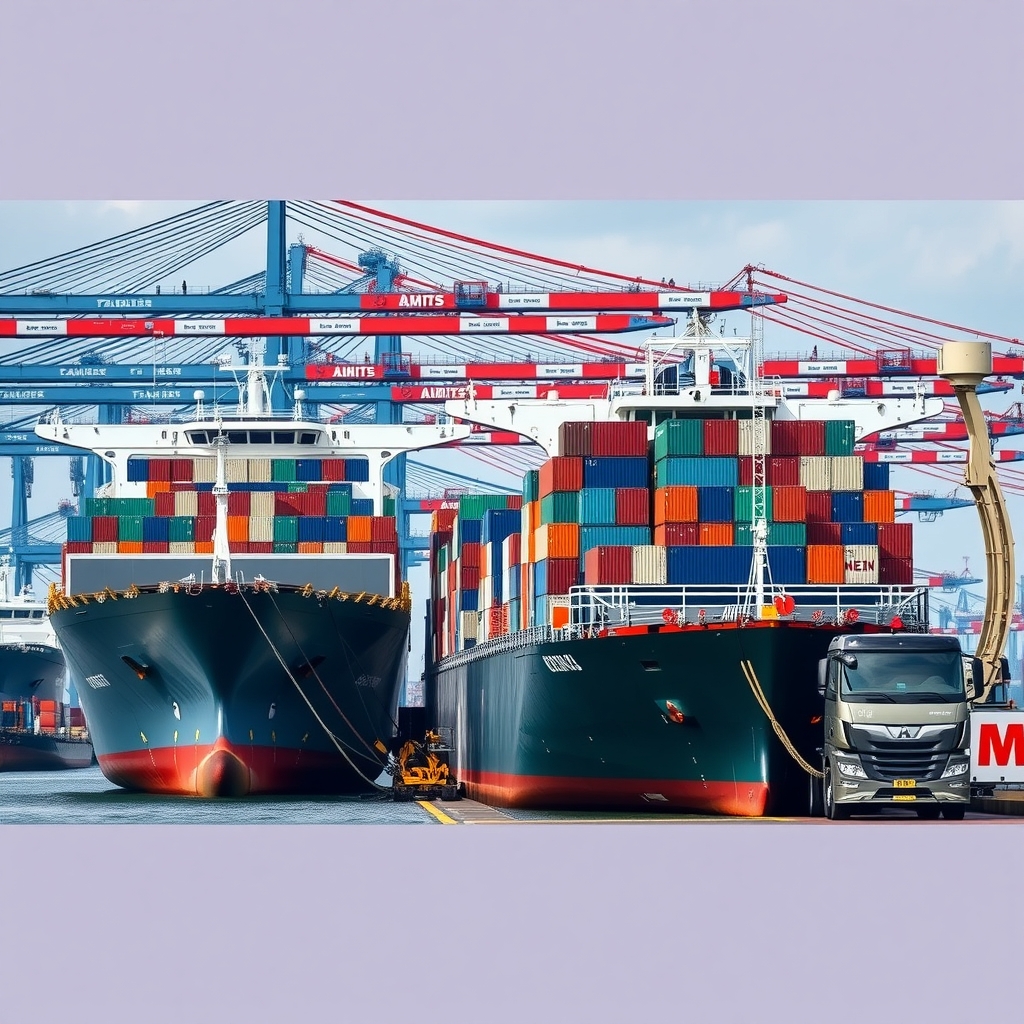
The contemporary international supply chain relies upon the frictionless transfer of unitized cargo across terrestrial, maritime, and aerial interfaces. However, the private international law governing this intermodal movement remains fundamentally fragmented. Whereas technological progress and commercial practice have synthesized logistics into an integrated, door-to-door operation, the international legal architecture remains bound to unimodal regimes designed in the nineteenth and twentieth centuries. At the center of this disconnect stands the freight forwarder, an entity whose operational versatility defies rigid doctrinal categorization. Historically operating as a pure commercial agent brokering disparate contracts of carriage, the modern forwarder frequently assumes the role of a multimodal transport operator, contracting in its own name and undertaking end-to-end responsibility for the cargo.
This dual identity generates profound legal ambiguities regarding liability, standard of care, financial limitations, and the temporal scope of responsibility. Because the United Nations Convention on International Multimodal Transport of Goods of 1980 failed to attract the ratifications necessary to enter into force, the governance of multimodal carriage is mediated through a fractured matrix of competing unimodal conventions, soft law regimes such as the UNCTAD/ICC Rules, standard form contract terms like the FIATA Multimodal Bill of Lading, and conflicting national jurisprudence. The resulting friction exposes cargo owners, carriers, and forwarders to systemic legal uncertainty, particularly when determining whether liability should be evaluated under a network system, a uniform regime, or an idiosyncratic contractual compromise.
When does a freight forwarder become liable as a carrier?
The threshold inquiry in cargo loss, damage, or delay claims invariably concerns the legal capacity in which the freight forwarder acted. In both common law and civil law traditions, a sharp doctrinal boundary separates the forwarding agent who merely arranges transport from the carrier who undertakes to perform or procure the performance of carriage under personal liability. If the forwarder is characterized as an agent, its duties are bounded by the law of agency: it must exercise reasonable care in selecting third-party carriers, procuring appropriate contractual terms, and following the shipper instructions. Once a reputable performing carrier is engaged, the agent incurs no personal liability for cargo loss or damage occurring in transit, provided reasonable care was exercised in the selection process.
Conversely, if the forwarder contracts as a principal or carrier, it assumes primary contractual liability for the entirety of the transit, irrespective of whether the physical movement of the goods is executed through its own equipment or delegated to sub-contractors. This status transformation, often termed the assumption of carrier status or conversion into a non-vessel-operating carrier, turns on objective contractual construction rather than the subjective label chosen by the parties. Courts across major trading jurisdictions have evolved distinct yet converging analytical tests to determine when this threshold is crossed.
The Contractual Construction and Nomenclature Test
English commercial jurisprudence has long affirmed that the title assigned to a document is evidentiary rather than dispositive. In Aqualon (UK) Ltd v Delafield Transport Ltd [2000] 2 Lloyd's Rep 420, the court emphasized that calling a company a freight forwarder does not preclude it from contracting as a carrier. The critical test is whether, viewing the transaction against its commercial matrix, the defendant undertook a personal obligation to carry the goods to the destination, or merely promised to procure a contract of carriage with a third party. The issuance of a transport document that names the forwarder as carrier, provides a single through-rate, or incorporates carrier-style trading conditions militates heavily toward principal status.
Similarly, the issuance of the International Federation of Freight Forwarders Associations Multimodal Transport Bill of Lading fundamentally alters the legal equation. By issuing a FIATA Multimodal Bill of Lading, the forwarder explicitly accepts liability as a carrier under the terms printed on the reverse, which mirror the UNCTAD/ICC Rules. The English Commercial Court confirmed in The Berkshire [1974] 1 Lloyd's Rep 185 that a party issuing a bill of lading in its own name, undertaking delivery at destination, assumes the status of a carrier toward the holder, effectively precluding a subsequent retreat into pure agency.
Remuneration Structures and All-In Rates
The financial architecture of the transaction serves as a crucial metric for judicial characterization. Where a freight forwarder invoices the shipper for the actual freight charged by the performing carrier plus a distinct commission or administrative fee, civil and common law courts readily infer an agency relationship. In contrast, when the forwarder quotes a fixed, all-in lump-sum rate that conceals the underlying modal freight rates and captures the margin between wholesale carrier costs and retail charges, courts increasingly view the forwarder as a principal. In French law, the distinction mirrors the divide between the transitaire, who acts under the rules of ordinary mandate governed by Article 1984 of the Civil Code, and the commissionnaire de transport governed by Article L. 132-1 of the Commercial Code. The commissionnaire, having agreed to an all-in price and exercising autonomy over the routes and carriers chosen, is subject to a statutory presumption of liability for the defaults of intermediate carriers, assuming direct guarantor obligations for transit execution.
Course of Dealing and Factual Holding Out
German commercial law provides a statutory codification of this reality under the Handelsgesetzbuch. Under Section 458 of the HGB, a forwarder that fixes a lump-sum freight rate (known as a Spediteur zu festen Kosten) or performs carriage through its own operational organization is legally deemed a carrier, incurring strict carrier liabilities. Furthermore, Section 459 establishes that where a forwarder consolidates multiple consignments under a single groupage contract, it assumes the rights and duties of a carrier with respect to each individual shipper. US maritime and federal jurisprudence applies a comparable substantive analysis. Under decisions interpreting the Shipping Act of 1984, federal courts assess whether the entity held itself out to the public as providing transportation, assumed responsibility for the cargo from point of receipt to destination, and utilized underlying ocean carriers for physical transit. Where these criteria are met, the forwarder is classified as a Non-Vessel-Operating Common Carrier, subjecting it to statutory carrier liabilities that strip away the defenses available to a pure agent.
What is the difference between an MTO and an NVOCC?
The regulatory and operational proliferation of intermediary entities has blurred the boundary between a Multimodal Transport Operator and a Non-Vessel-Operating Common Carrier. While these terms are frequently conflated in international commercial practice, their legal definitions, historical origins, and jurisdictional parameters diverge in critical respects.
A Multimodal Transport Operator is an international private law concept rooted in international conventions and model contractual rules. As defined in Article 1(2) of the 1980 United Nations Convention on International Multimodal Transport of Goods, an MTO is any person who concludes a multimodal transport contract and assumes responsibility for the performance of the contract as a carrier, involving at least two distinct modes of transport. The definition is fundamentally operational and transactional: it requires no maritime leg and can encompass road-rail, air-road, or sea-land combinations. The MTO undertakes end-to-end contractual responsibility, issuing a through or multimodal transport document that creates direct contractual privity with the shipper across all legs of the journey.
In contrast, the Non-Vessel-Operating Common Carrier is primarily a statutory creation of United States maritime regulatory law, established under the Shipping Act of 1984 and administered by the Federal Maritime Commission. Under 46 U.S.C. Section 40102(17), an NVOCC is defined as a common carrier that does not operate the vessels by which the ocean transportation is provided, and is a shipper in its relationship with an ocean common carrier. The classification is inherently tethered to ocean transit: an NVOCC must involve ocean carriage. Furthermore, under US regulatory law, an NVOCC must publish tariffs, obtain an FMC license, and maintain financial security bonds to protect the shipping public. An MTO operating purely outside US jurisdictions has no such statutory or bonding prerequisites, being governed solely by the applicable contract law and modal transport conventions.
The NVOCC occupies an anomalous hybrid status: it is simultaneously a common carrier in relation to the ultimate cargo owner who purchases its services, and a statutory shipper in its contractual relationship with the underlying vessel-operating common carrier that performs the ocean voyage.
This dual posture generates complex indemnification and liability loops. In litigation involving cargo loss, an NVOCC must answer to the cargo owner under the terms of its house bill of lading, while seeking recourse against the ocean carrier under an ocean master bill of lading. If the terms, liability limits, and time bars in these two instruments diverge, the NVOCC faces significant liability gaps. An MTO, under standard international definitions, may operate either with or without vessels, but its liability structure is defined by its chosen intermodal regime rather than US administrative licensing categories.
The Conflict of Conventions: Unimodal Imperatives in a Multimodal Continuum
The most acute jurisprudential difficulty in multimodal transport arises when a single contract of carriage traverses jurisdictions and modalities governed by compulsory unimodal conventions. These conventions were designed with mandatory application clauses intended to protect cargo interests by invalidating any contractual derogation that relieves the carrier of liability or lowers statutory limits. When integrated multimodal transit passes through these regimes, their mandatory scopes of application collide.
The Scope of Compulsory Regimes
International freight transport is hemmed in by four major mandatory regimes:
- Maritime: The International Convention for the Unification of Certain Rules of Law relating to Bills of Lading (Hague Rules 1924) and its 1968/1979 Protocols (Hague-Visby Rules), alongside the Hamburg Rules 1978. Hague-Visby applies compulsorily to bills of lading issued in contracting states or covering departures from contracting states, governing the carriage from tackle-to-tackle under Article 1(e).
- Road: The Convention on the Contract for the International Carriage of Goods by Road 1956 (CMR). Article 1 dictates compulsory application to every contract for the carriage of goods by road in vehicles for reward, when the place of taking over and the place of delivery are situated in two different countries, of which at least one is a contracting country.
- Rail: The Uniform Rules concerning the Contract of International Carriage of Goods by Rail (CIM), forming Appendix B to the Convention concerning International Carriage by Rail (COTIF 1980/1999).
- Air: The Warsaw Convention 1929, as amended, and the Montreal Convention 1999. Under Article 18 and Article 38 of Montreal, compulsory rules govern carriage by air, with specific provisions demarcating multimodal transit.
Jurisprudential Friction under CMR Article 2 and Article 31
The potential for conflict is demonstrated by Article 2 of the CMR, which addresses piggyback transport: situations where a road vehicle containing goods is conveyed by sea, rail, or inland waterway over part of the journey without being unloaded. Article 2 mandates that the CMR applies to the entire transit. However, it incorporates a complex proviso: if the loss, damage, or delay occurs during the non-road carriage and was not caused by an act or omission of the road carrier, but by an event that could only have occurred in the course of and by reason of that other mode, the liability of the carrier is determined not by the CMR, but in the manner prescribed by the mandatory conditions of that other mode of transport.
This proviso has generated irreconcilable national interpretations. In the United Kingdom, the House of Lords and subsequent appellate courts have construed the proviso strictly, requiring proof that the damage was exclusively attributable to the other mode and that a hypothetical direct contract between the shipper and the maritime carrier would have triggered mandatory rules. Conversely, the Dutch Supreme Court (Hoge Raad) has adopted a broader interpretation, applying maritime law more readily when containers are transshipped. Furthermore, where goods are unloaded from the road vehicle and placed directly into an ocean container or ship hold, Article 2 ceases to apply, throwing the contract into the jurisdictional abyss between national contract law, the CMR, and maritime bills of lading.
A related clash occurs under Article 31 of the CMR, which establishes wide jurisdictional choices for claimants, potentially conflicting with exclusive forum selection or arbitration clauses in multimodal bills of lading. The Court of Justice of the European Union addressed the relationship between international transport conventions and European jurisdictional rules in TNT Express Nederland BV v AXA Versicherung AG (Case C-533/08) [2010], ruling that while specialized international conventions take precedence under European law, their application must not undermine the objectives of predictability and mutual trust in judicial decisions. When multimodal transport contracts attempt to channel all claims to a single maritime forum, European courts frequently disregard the clause if the cargo claimant initiates proceedings in a valid CMR jurisdiction where damage occurred on a road leg.
How does the network liability system apply to multimodal transport?
In response to the absence of a universally ratified multimodal convention, commercial actors and courts rely upon liability systems designed to allocate risk across disparate legs of transit. These frameworks resolve into three competing models: the pure uniform liability system, the pure network liability system, and the modified network liability system.
The Structural Typologies
The uniform liability system applies a singular, unchanging set of liability rules, financial limits, and time bars across the entire multimodal transit, irrespective of where the loss or damage occurs. While commercially straightforward, this model faces severe legal obstacles: whenever an international convention applies compulsorily to a specific modal leg, any uniform contractual standard that provides lower financial recovery or wider carrier exemptions than that convention is struck down as null and void.
The pure network liability system resolves this conflict by applying the precise legal regime governing the specific mode during which the damage occurred. If the goods are damaged on an ocean vessel, the Hague-Visby Rules apply; if damaged on an international motorway, the CMR applies; if damaged during rail movement, the COTIF-CIM rules apply. While this system prevents collisions with mandatory conventions, it breaks down entirely when the damage is unlocalized—that is, when goods packed in a container are found damaged at the final destination, but it is impossible to identify the specific leg during which the damage took place.
The modified network liability system, codified in the UNCTAD/ICC Rules for Multimodal Transport Documents (1992) and incorporated into the FIATA Multimodal Bill of Lading, represents the prevailing commercial compromise. Under this hybrid construct, localized damage is governed by the mandatory convention or national law applicable to the specific stage where the incident occurred. Where damage cannot be localized, a fallback uniform regime takes effect.
Mechanics of the UNCTAD/ICC Fallback Regime
Under Rule 5.1 of the UNCTAD/ICC Rules, the MTO is liable for loss of or damage to the goods, as well as for delay in delivery, if the occurrence which caused the loss took place while the goods were in its charge, unless it proves that no fault or neglect of its own, its servants, or its agents caused or contributed to the loss. This establishes a baseline fault with reversed burden of proof.
When damage is unlocalized, Rule 6 establishes financial liability ceilings: liability is limited to an amount not exceeding 666.67 Special Drawing Rights per package or unit, or 2 SDRs per kilogram of gross weight of the goods lost or damaged, whichever is higher. However, to align with road and air logistics where sea transit is omitted, Rule 6.2 provides an exception: if the multimodal transport does not, according to the contract, include carriage of goods by sea or by inland waterways, the liability of the MTO is limited to an amount not exceeding 8.33 SDRs per kilogram of gross weight—matching the statutory limit of the CMR.
Comparative Liability Limits Across Modal Regimes
The dramatic variance in financial liability caps across modal regimes illustrates the high stakes involved in identifying the governing law during multimodal carriage. The following table highlights the sharp differences in compensation thresholds and limitation periods applicable to distinct stages of an international multimodal journey.
| Transport Mode / Instrument | Governing Convention / Instrument | Standard Liability Limitation | Time Bar for Filing Claims | Basis of Liability & Burden of Proof |
|---|---|---|---|---|
| Maritime Leg | Hague-Visby Rules (1968/1979) | 666.67 SDR per package or 2 SDR per kg | 1 year (Art. 3(6)) | Presumed fault; long list of carrier exemptions including nautical fault (Art. 4(2)) |
| Road Carriage | CMR Convention (1956) | 8.33 SDR per kg | 1 year (3 years in case of willful misconduct) | Strict liability; narrow relief for inevitable circumstances (Art. 17(2)) |
| Rail Carriage | COTIF-CIM (1999) | 17 SDR per kg | 1 year (2 years for willful misconduct) | Strict liability; relief for inherent vice or circumstances beyond control (Art. 36) |
| Air Transit | Montreal Convention (1999) | 22 SDR per kg (revised periodic limit) | 2 years (Art. 35) | Strict liability up to limits; absolute defense only for inherent defect (Art. 18) |
| Unlocalized Multimodal (with Sea Leg) | UNCTAD/ICC Rules / FIATA FBL | 666.67 SDR per package or 2 SDR per kg | 9 months (Rule 10) | Presumed fault with reversed burden; defenses mirror maritime traditions |
| Unlocalized Multimodal (without Sea Leg) | UNCTAD/ICC Rules / FIATA FBL | 8.33 SDR per kg | 9 months (Rule 10) | Presumed fault; default terrestrial standard matching road conventions |
Judicial Fragmentation: Kirby, Regal-Beloit, and Through-Bill Jurisprudence
In the absence of a comprehensive international treaty, the resolution of multimodal disputes has produced conflicting legal doctrines across common law jurisdictions. The United States Supreme Court has made landmark interventions addressing the reach of maritime contracts into terrestrial spheres, developing jurisprudence that diverges sharply from European approaches.
The Doctrine of Maritime Extension: Norfolk Southern Railway v. Kirby
In Norfolk Southern Railway Co. v. Kirby, 543 U.S. 14 (2004), the US Supreme Court confronted a dispute concerning machinery shipped from Australia to Huntsville, Alabama, under an international through bill of lading issued by an ocean freight forwarder. The cargo was transported by sea to Savannah, Georgia, and then transferred to Norfolk Southern Railway for the inland rail leg, during which the train derailed, causing substantial damage. The ultimate cargo owner sued the rail carrier directly in tort, attempting to bypass the low liability limitations contained in the ocean bills of lading.
Delivering the unanimous opinion of the Court, Justice Sandra Day O'Connor held that the character of a through bill of lading is inherently maritime if its primary objective is to accomplish the transportation of goods by sea from abroad, even if it encompasses an extensive inland rail leg. Consequently, federal maritime law, rather than state tort law or the federal Carmack Amendment governing domestic rail carriage, controlled the dispute. The Court upheld the operation of the Himalaya clause in the forwarder's through bill of lading, extending the contractual $500 per package limitation under the US Carriage of Goods by Sea Act to downstream inland sub-contractors.
Furthermore, Kirby established an expansive doctrine of intermediary agency: when an intermediary freight forwarder contracts with an underlying carrier for transportation, it acts as an agent with the limited authority to bind the cargo owner to the liability limitations negotiated with upstream carriers. This ruling eliminated the traditional privity requirement, preventing cargo owners from asserting unlimited tort claims against domestic performing sub-contractors engaged by forwarders.
Retrenchment and Statutory Preemption: Kawasaki Kisen Kaisha v. Regal-Beloit Corp.
Six years after Kirby, the US Supreme Court was compelled to resolve the statutory interface between maritime through bills and the Carmack Amendment in Kawasaki Kisen Kaisha Ltd. v. Regal-Beloit Corp., 561 U.S. 89 (2010). Cargo was shipped from China to interior locations in the US under an ocean through bill of lading issued by the ocean carrier K-Line. The cargo was discharged in California and transferred to Union Pacific Railroad for rail transit to the Midwest, where a train derailment occurred. The cargo owners argued that the rail segment was subject to the Carmack Amendment (49 U.S.C. Section 11706), which imposes strict common-carrier liability and restricts liability-limiting agreements.
In a 6-3 decision authored by Justice Anthony Kennedy, the Supreme Court held that the Carmack Amendment does not apply to the inland rail leg of an international multimodal shipment originating overseas under an ocean through bill of lading. Carmack applies only to inland carriers receiving goods for domestic transit under a domestic rail bill of lading. Because the rail carrier received the goods pursuant to an international through bill of lading governed by maritime law and COGSA, Carmack did not attach.
The Regal-Beloit dissent by Justice Sonia Sotomayor warned that exempting the terrestrial legs of international through bills from the Carmack Amendment created a profound regulatory vacuum, permitting ocean carriers and forwarders to displace long-standing domestic statutory protections designed to safeguard cargo owners against rail carrier immunities.
The English courts have approached the issue through the lens of strict contractual privity and the mandatory application of the CMR. In cases such as Sonicare Hearing Technologies Ltd v Sea-Cargo Ltd [2011] EWHC 2420 (Comm), the Commercial Court declined to let maritime contract mechanisms displace compulsory terrestrial statutes. Where a transport leg falls squarely within the factual and territorial boundaries of the CMR, the English courts refuse to allow an international through bill of lading or a maritime-centric clause to diminish the mandatory protections of the road regime, illustrating a sharp split with the maritime imperialism displayed in American through-bill jurisprudence.
The Rotterdam Rules and the Unfulfilled Promise of 'Maritime Plus'
Recognizing the legal instability generated by fragmented modal regimes, the United Nations Commission on International Trade Law drafted the United Nations Convention on Contracts for the International Carriage of Goods Wholly or Partly by Sea (2008), widely known as the Rotterdam Rules. Designed explicitly as a modern maritime plus regime, the convention seeks to resolve the dilemma of multimodal transit by establishing an international uniform standard for containerized transport incorporating an ocean voyage.
The Compromise of Article 26: The Conflict-Avoidance Mechanism
The architects of the Rotterdam Rules avoided the unrealistic ambition of a completely uniform multimodal code that would supersede entrenched terrestrial conventions. Instead, Article 26 adopts a modified network system designed to prevent institutional conflict with the CMR, COTIF-CIM, and the Montreal Convention.
Under Article 26, if loss, damage, or an event causing delay occurs during a non-maritime leg of transport, the Rotterdam Rules step aside in favor of another international convention, provided three conditions are satisfied:
- The loss or damage can be shown to have occurred solely during that specific non-maritime leg.
- The competing international instrument is one that, under its own terms, would have applied to all or any of the carrier activities if the shipper had made a separate and direct contract with the carrier concerning that particular stage of transport.
- The competing convention cannot be departed from by contract, or cannot be departed from to the detriment of the shipper under that instrument.
This mechanism seeks to harmonize the carrier's through liability without placing contracting states in breach of their pre-existing treaty obligations under the CMR or CIM. Where damage cannot be localized to a specific land leg, the Rotterdam Rules apply uniformly, establishing a liability threshold of 875 SDRs per package or 3 SDRs per kilogram (Article 59), an increase over the Hague-Visby limits.
The Deadlock in Global Ratification
Despite this careful drafting, the Rotterdam Rules have failed to attain the widespread adoption required to reshape global transport practice. While gaining the requisite twenty ratifications to enter into force, key maritime and logistics nations—including the United States, the United Kingdom, China, and major European civil law jurisdictions—have deferred ratification. The reasons for this stagnation are doctrinal and political:
- Resistance from Terrestrial Road and Rail Interests: Terrestrial transport unions and logistics federations in continental Europe view the maritime plus framework as an encroachment by ocean carriers into domestic logistics sectors, asserting that it subordinate terrestrial haulage rules to ocean shipping interests.
- The Complexity of Maritime Performing Parties: Articles 19 and 20 introduce the novel concept of the maritime performing party, establishing statutory joint and several liability between the contractual carrier and land-based entities (such as stevedores and port terminal operators) that perform services within the port area. This framework has faced significant opposition from terminal operators and port authorities wary of expanded exposure.
- Volume Contracts Derogations: Article 80 permits parties to volume contracts to contract out of the mandatory protections of the convention under certain conditions. European shipper associations have voiced strong concerns that this carve-out enables large carriers and forwarders to impose adhesion contracts on medium and small shippers, diluting statutory consumer protections.
Comparative Contractual Practice: The FIATA Model and Standard Trading Conditions
Given the statutory paralysis of multilateral conventions, commercial practice has responded through private legal ordering. The standard contract terms developed by freight forwarding federations constitute the true operating law of international multimodal logistics.
FIATA Multimodal Bill of Lading (FBL) Architecture
The FIATA FBL is the most widely adopted standard document for forwarder-led multimodal transport. Issued under the copyright of FIATA, it incorporates the UNCTAD/ICC Rules for Multimodal Transport Documents and effectively transforms the issuing forwarder into a Multimodal Transport Operator. Clause 2 of the FBL contains an explicit undertaking of carrier status: the forwarder assumes responsibility for the performance of the contract from the time of taking the goods into its charge until delivery.
Crucially, the FBL integrates a contractual network liability regime in Clause 8. It stipulates that the responsibility of the forwarder shall be determined by the provisions contained in any international convention or national law, the provisions of which cannot be departed from by private contract, and which would have applied if the merchant had made a separate and direct contract with the forwarder in respect of the particular stage of transport. Where no mandatory law applies, the contractual fallback limits of 2 SDRs per kilogram or 666.67 SDRs per package control, accompanied by a nine-month contractual time bar for the commencement of arbitral or judicial proceedings.
National Association Conditions: The English BIFA Model
In contrast to the carrier-oriented approach of the FIATA FBL, national forwarder associations often draft Standard Trading Conditions designed to preserve the forwarder's agency defenses to the maximum extent permissible by law. The British International Freight Association Standard Trading Conditions illustrate this protective architecture.
Under Clause 4 of the BIFA Conditions (2021 edition), the customer expressly grants the company full authority to enter into contracts as an agent with third parties. Clause 7 provides that the forwarder is entitled to perform all or any part of the carriage as an agent or as a principal, but carefully preserves broad exclusions of liability. Where the forwarder is held liable as a principal, Clause 26 strictly caps liability at 2 SDRs per kilogram of the gross weight of the goods affected, completely excluding recovery for indirect or consequential loss, loss of profit, and economic delay, unless a specific written declaration of value is negotiated in advance.
However, the enforceability of these protective conditions remains vulnerable to domestic consumer and fair contract legislation. In the United Kingdom, the application of the Unfair Contract Terms Act 1977 requires that liability limitations satisfy the statutory test of reasonableness under Section 11. In Granville Oils & Chemicals Ltd v Davies Turner & Co Ltd [2003] EWCA Civ 570, the English Court of Appeal upheld the BIFA nine-month time limitation, ruling that in commercial transactions between experienced business parties of equal bargaining strength, the standard limits reflect an acceptable commercial allocation of risk, requiring the cargo owner to protect itself via its own cargo insurance policy.
Harmonization in an Era of Digital Supply Chains
The legal relationship between freight forwarders and multimodal transport liability remains suspended between commercial integration and regulatory fragmentation. The historical division between forwarder as agent and forwarder as carrier has been eroded by supply chain realities: market forces demand that logistics intermediaries provide end-to-end cargo tracking, guaranteed transit times, and single-invoice billing, all of which align with carrier status in modern judicial analysis. Yet, the governing legal framework remains tied to unimodal conventions that generate jurisdictional clashes, conflicting financial compensation limits, and procedural pitfalls.
The judicial solutions articulated in decisions like Kirby in the United States and the strict application of the CMR by European tribunals represent opposing doctrines. The American doctrine resolves the tension through maritime extension, allowing maritime through bills to draw terrestrial legs under the umbrella of federal admiralty law and statutory package limits. European jurisprudence maintains modal separation, preserving the primacy of compulsory terrestrial regimes like the CMR and COTIF whenever cargo crosses national boundaries on wheels or rails, resisting contractual attempts by maritime carriers and forwarders to dilute statutory liability standards.
Looking forward, the prospects for universal treaty-based harmonization through the Rotterdam Rules appear constrained. Commercial practice will therefore continue to rely upon standard form private codifications, including the FIATA Multimodal Bill of Lading and the UNCTAD/ICC Rules. Concurrently, the transition to electronic transport records, smart contracts, and distributed ledger supply chain platforms introduces new challenges. Electronic bills of lading and platform-mediated logistics workflows make tracing the precise geographic point of cargo damage more operationally feasible, diminishing the historical category of unlocalized damage. Yet, until an international instrument bridges the gaps among sea, road, rail, and air regimes, the liability of the freight forwarder will remain a fragmented construct, governed by the precise intersection of contractual drafting, modal borders, and the jurisdictional forum in which the dispute is heard.
Comments
No comments yet.