Offshore Energy Projects and Maritime Legal Issues: Rights, Risk, and Regulation
Offshore energy operations face a complex web of maritime jurisdiction, vessel classification, pollution liabilities, and decommissioning mandates across international waters.
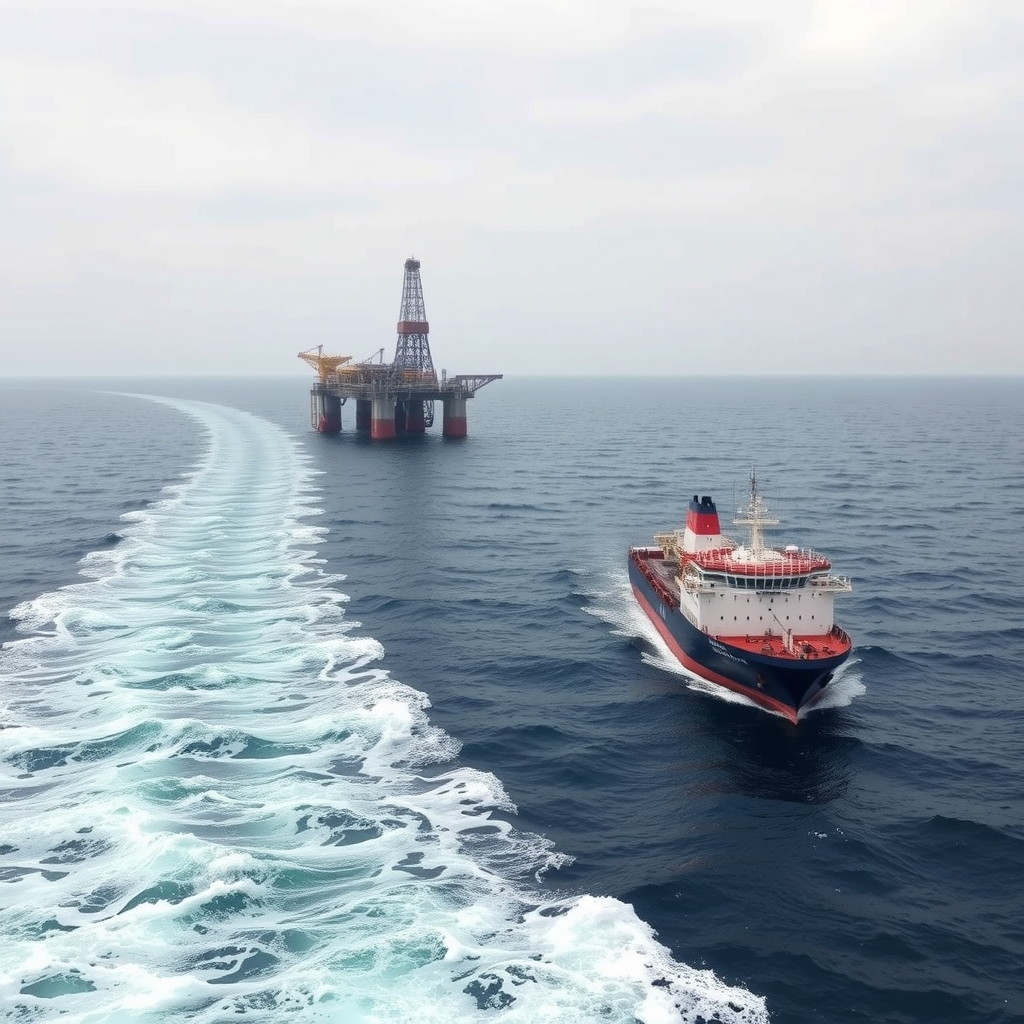
The exploitation of marine resources has expanded far beyond traditional shallow-water drilling. Contemporary offshore energy projects encompass deepwater hydrocarbon extraction, floating liquefied natural gas facilities, extensive subsea pipeline networks, floating substations, wave energy converters, and subsea carbon capture infrastructure. As these projects move farther from shore into harsher environments and contested waters, they operate at the convergence of two distinct legal systems: the law of the sea, which governs maritime spaces and sovereign rights, and private maritime law, which regulates shipping, contracts, and civil liability.
Maritime law was historically conceived around mobile assets engaged in navigation and international trade across shared ocean spaces. In contrast, energy projects rely on semi-permanent, capital-intensive infrastructure tethered to the seabed or moored in specific ocean blocks for decades. This fundamental tension between the traditional freedom of navigation and the continuous occupation of the water column generates complex jurisdictional, contractual, and operational challenges. Understanding this legal environment requires examining how sovereign authority is partitioned at sea, how physical offshore assets are classified, which environmental and safety treaties apply, and how liability is distributed when marine accidents occur.
How does UNCLOS regulate offshore energy infrastructure?
The primary global framework governing all ocean activities is the 1982 United Nations Convention on the Law of the Sea, commonly known as UNCLOS. UNCLOS establishes a graduated zonal system in which coastal state sovereign authority diminishes as distance from the baseline increases. Offshore energy operators must navigate distinct jurisdictional realities depending on whether a project sits within internal waters, the territorial sea, the exclusive economic zone, or on the outer continental shelf.
Within the territorial sea, which extends up to twelve nautical miles from the baseline, the coastal state exercises full territorial sovereignty over the water column, the seabed, the subsoil, and the airspace above. While foreign ships retain the right of innocent passage through these waters, the coastal state holds total regulatory authority over any industrial installations, resource extraction activities, and localized maritime traffic.
Beyond the territorial sea lies the exclusive economic zone, reaching up to two hundred nautical miles from the baseline. Under Article 56 of UNCLOS, the coastal state does not hold plenary sovereignty over the exclusive economic zone but enjoys sovereign rights for the purpose of exploring and exploiting, conserving, and managing natural resources, whether living or non-living, of the waters superjacent to the seabed and of the seabed and its subsoil. Furthermore, Article 60 grants the coastal state the exclusive right to construct, authorize, and regulate the construction, operation, and use of artificial islands, installations, and structures for economic purposes.
A critical limitation of Article 60 is that artificial islands, installations, and structures do not possess the status of islands. They have no territorial sea of their own, and their presence does not affect the delimitation of the territorial sea, the exclusive economic zone, or the continental shelf. Coastal states may establish reasonable safety zones around offshore installations, which must not exceed a distance of five hundred meters around them, measured from each point of their outer edge, unless authorized by generally accepted international standards. All ships must respect these safety zones and comply with international standards regarding navigation in the vicinity of offshore units.
On the continental shelf, which encompasses the seabed and subsoil extending beyond the territorial sea to the outer edge of the continental margin, coastal states exercise sovereign rights under Article 77 for the purpose of exploring it and exploiting its natural mineral and non-living resources. These rights are exclusive: if the coastal state does not explore the continental shelf or exploit its natural resources, no other entity may undertake these activities without express consent. Where a coastal state exploits non-living resources beyond two hundred nautical miles on the extended continental shelf, Article 82 mandates that it make payments or contributions in kind through the International Seabed Authority, introducing unique commercial and compliance considerations for ultra-deepwater energy ventures.
Is an offshore installation considered a ship under maritime law?
One of the most consequential legal questions in offshore energy is whether an offshore structure constitutes a ship or vessel under maritime law. The offshore energy sector utilizes a diverse fleet of assets, including fixed steel-jacket platforms, gravity-based structures, jack-up drilling units, tension-leg platforms, semi-submersible rigs, drillships, and floating production storage and offloading units, known as FPSOs. Determining whether an asset is a vessel dictates the application of maritime liens, mortgage registration, limitation of liability conventions, salvage law, collision regulations, and maritime employment statutes.
International conventions provide inconsistent definitions. The International Regulations for Preventing Collisions at Sea 1972 define a vessel as including every description of water craft, including non-displacement craft, WIG craft, and seaplanes, used or capable of being used as a means of transportation on water. Under this standard, self-propelled drillships and mobile offshore drilling units navigating between locations clearly qualify as vessels. However, once a jack-up rig lowers its legs and elevates its hull out of the water, or once an FPSO is attached to a submerged turret loading system for a twenty-year field lifecycle, its navigational character becomes ambiguous.
Domestic maritime jurisdictions address this issue through distinct tests:
- United States Maritime Law: American jurisprudence applies the standard articulated by the United States Supreme Court in Stewart v. Dutra Construction Company and refined in Lozman v. City of Riviera Beach. Under Title 1 of the United States Code, Section 3, a vessel includes every description of watercraft or other artificial contrivance used, or capable of being used, as a means of transportation on water. The Supreme Court clarified that the asset must be practically, not merely theoretically, capable of transportation on water. Purpose-built drillships and mobile offshore drilling units generally qualify as vessels, allowing crew members to claim seaman status under the Jones Act. Conversely, permanently fixed platforms, or floating units permanently moored with severed propulsion and integrated into the ocean floor, are often treated as artificial islands governed by the Outer Continental Shelf Lands Act, which applies adjacent state law as surrogate federal law.
- English Admiralty Law: English courts examine the physical characteristics, purpose, and capability of the structure. In cases concerning salvage and admiralty jurisdiction, English courts historically placed weight on whether the structure was used in navigation. Fixed platforms do not qualify as ships. For floating units, such as semi-submersibles and FPSOs, the legal classification depends on the context of the claim. An FPSO navigating under its own power or being towed across international waters is treated as a ship. Once permanently tethered to the seabed, disconnected from self-propulsion, and functioning exclusively as a processing factory and storage depot, its status as a ship for admiralty purposes becomes disputed and context-dependent.
- Civil Law Jurisdictions: Many civil law systems resolve this tension by creating statutory categories. Several jurisdictions classify mobile drilling units and floating production units as specialized maritime installations or offshore units, subjecting them to public maritime safety and registration rules while denying the application of specific commercial shipping rules that were designed strictly for cargo-carrying merchant vessels.
The practical ramifications of vessel classification are profound. If an offshore unit is deemed a vessel, its owner can invoke the Convention on Limitation of Liability for Maritime Claims 1976, or its 1996 Protocol, to cap total liability following a catastrophic incident, provided the right has not been barred by intentional or reckless conduct. If the asset is categorized as a fixed installation, statutory limitation regimes for shipowners are inapplicable, exposing the operator to unmetered common law or civil code damages.
What maritime laws apply to offshore energy platforms?
Offshore energy operations exist under a multi-layered regulatory architecture that blends international safety conventions, environmental treaties, coastal state domestic statutes, and standard maritime contracts. While coastal states hold exclusive jurisdiction over economic activities within their exclusive economic zone, international shipping standards frequently extend to offshore units through the International Maritime Organization, known as the IMO.
Key international instruments governing offshore energy units include:
- The MODU Code: Recognizing that mobile offshore drilling units differ fundamentally from conventional cargo ships, the IMO adopted the Code for the Construction and Equipment of Mobile Offshore Drilling Units. The MODU Code sets international safety and design criteria for mobile units to prevent fire, structural collapse, and capsizing, facilitating their movement between different coastal state jurisdictions.
- MARPOL 73/78: The International Convention for the Prevention of Pollution from Ships applies directly to offshore units. Under Annex I, drilling rigs and other platforms must comply with oily waste discharge limitations equivalent to ships of four hundred gross tonnage and above. Discharges of chemicals, sewage, and garbage are regulated by Annexes II, IV, and V. However, discharges arising directly from the exploration, exploitation, and associated offshore processing of seabed mineral resources are explicitly excluded from MARPOL and fall instead under the domestic legal regimes of the relevant coastal state.
- SOLAS and STCW: The International Convention for the Safety of Life at Sea 1974 applies to mobile units during international voyages under tow or propulsion. The International Convention on Standards of Training, Certification and Watchkeeping for Seafarers governs maritime crew qualifications, creating jurisdictional friction when marine crews interact with specialized industrial, non-maritime technicians aboard the same facility.
Beyond international conventions, operations are shaped by national cabotage and local content laws. Maritime cabotage restricts coastal trade and the carriage of goods and passengers between domestic ports or offshore installations to vessels flagged, built, and crewed within the coastal state. In the United States, the Jones Act imposes strict requirements on vessels transporting merchandise between points on the United States mainland and energy installations on the outer continental shelf. Similar restrictive regimes exist in Brazil, Nigeria, and Indonesia. These restrictions complicate offshore energy supply chains, as specialized heavy-lift vessels, pipe-laying barges, and dynamic-positioning support ships are often foreign-flagged, necessitating elaborate legal workarounds, structural waivers, or joint ventures.
Contractual Risk Allocation and Standard Industry Charters
Contractual practice in the offshore energy sector relies on specialized standard contracts developed by industry organizations such as BIMCO and LOGIC. Chartering offshore support vessels, anchor-handling tugs, and platform supply vessels is dominated by standard agreements like SUPPLYTIME, while heavy-lift and towing operations frequently use TOWCON or BARCON.
A defining hallmark of offshore energy contracting is the knock-for-knock indemnity structure. Under a knock-for-knock regime, each contracting party agrees to bear responsibility for its own personnel and property, and to indemnify the other party against claims arising from injury, death, or property loss, regardless of who caused the damage, even in cases of ordinary negligence. This system avoids complex maritime litigation between oil companies, contractors, and sub-contractors operating in dense marine working areas. However, national maritime courts enforce knock-for-knock indemnities with varying degrees of scrutiny, routinely invalidating indemnity protections where an incident results from gross negligence, wilful misconduct, or a breach of non-delegable statutory health and safety duties.
| Asset Type | Typical Maritime Status | Primary Governing Regime | Limitation of Liability Eligibility |
|---|---|---|---|
| Fixed Jacket Platform | Non-vessel / Artificial Island | Coastal State Domestic Law; UNCLOS Art. 60 | Generally Ineligible |
| Jack-up Drilling Rig | Vessel in transit; Disputed when elevated | Flag State; Coastal State; MODU Code | Eligible during navigation; Mixed when fixed |
| Semi-Submersible Rig | Vessel / Mobile Offshore Unit | Flag State; Coastal State; MODU Code | Widely Recognized under LLMC |
| Drillship | Vessel | Flag State; Maritime Conventions; Coastal State | Fully Eligible under LLMC / Merchant Shipping Acts |
| FPSO / FLNG | Hybrid / Vessel in navigation; Industrial asset when hooked up | Flag State registry; Coastal State production law | Jurisdiction-dependent; often contested |
| Subsea Export Cable | Seabed Infrastructure | UNCLOS Arts. 79 & 112; Coastal State law | Not an asset entitled to limit; Claims subject to tort |
Who is liable for offshore energy pollution incidents?
Marine environmental damage resulting from offshore energy operations is among the most catastrophic and financially devastating risks in global commerce. When an offshore installation experiences a well blowout, structural rupture, or reservoir breach, legal accountability is governed by a patchwork of international conventions, regional agreements, and aggressive domestic statutory liability systems.
The principal global shipping liability framework—the International Convention on Civil Liability for Oil Pollution Damage, known as the CLC, alongside the 1992 Fund Convention—does not apply to offshore well blowouts or production platform accidents. The CLC regime is confined exclusively to pollution damage caused by spills of persistent hydrocarbon mineral oil from ships designed or adapted to carry oil in bulk as cargo. Consequently, if a conventional crude oil tanker collides with a platform, the CLC applies to oil leaking from the tanker. If an offshore well head explodes, releasing crude oil from the reservoir or an underwater well, the CLC and Fund Conventions offer no coverage.
Because there is no comprehensive global treaty governing civil liability for offshore drilling and production pollution, liability is governed by three primary mechanisms:
- Regional Conventions: Certain regional treaties impose binding standards. In the Mediterranean, the Offshore Protocol to the Barcelona Convention imposes obligations regarding authorization, safety, and liability. In the Baltic, the Helsinki Convention establishes regional pollution controls. In the North Sea and Northeast Atlantic, the Convention for the Protection of the Marine Environment of the North-East Atlantic, known as the OSPAR Convention, regulates discharges of hazardous substances and offshore waste.
- Voluntary Industry Agreements: In jurisdictions bordering the North West European shelf, including the United Kingdom, Denmark, Germany, France, the Netherlands, and Norway, operators participate in the Offshore Pollution Liability Agreement, known as OPOL. Under OPOL, operating companies accept strict liability for pollution damage and remediation costs resulting from an offshore exploration or production incident, subject to a defined financial limit, and must provide evidence of financial capability to meet their obligations.
- Domestic Strict Liability Statutes: In many maritime states, operators face severe statutory liability regimes that displace general maritime limitations. In the United States, the Oil Pollution Act of 1990, known as OPA 90, was enacted following the Exxon Valdez disaster and applied extensively following the Deepwater Horizon blowout. OPA 90 establishes strict, joint, and several liability for removal costs and damages on the responsible party of an offshore facility. While OPA 90 contains statutory limits of liability, these limits are stripped away if the incident was proximately caused by gross negligence, wilful misconduct, or the violation of an applicable federal safety, construction, or operating regulation. In addition, the EU Environmental Liability Directive 2004/35/EC imposes strict public environmental remediation obligations across European Union waters.
Transboundary Environmental Harm and Sovereign Claims
When an offshore pollution incident occurs near a maritime boundary, ocean currents can carry pollutants into the territorial waters and exclusive economic zones of adjacent or opposite coastal states. Under customary international law, as affirmed in the Trail Smelter arbitration and the International Court of Justice jurisprudence, states have a responsibility to ensure that activities within their jurisdiction or control do not cause damage to the environment of other states or to areas beyond the limits of national jurisdiction.
However, an injured foreign state attempting to recover cleanup costs or economic losses from an operator based in another country faces severe private international law hurdles. Questions of sovereign immunity, jurisdictional competence over foreign corporations, conflicting choice-of-law rules, and the non-enforceability of foreign public environmental fines create complex cross-border litigation risks. The absence of an international civil liability treaty for offshore exploration remains one of the most critical structural gaps in contemporary international environmental law.
Subsea infrastructure, pipelines, and maritime spatial conflicts
Offshore energy relies extensively on subsea infrastructure, including export pipelines, intra-field flowlines, power cables connecting offshore platforms or marine energy arrays to terrestrial grids, and subsea injection manifolds. These assets inhabit a congested seabed environment shared with international telecommunication cables, commercial fishing grounds, aggregate extraction zones, and navigation channels.
Under UNCLOS Articles 79 and 112, all states are entitled to lay submarine cables and pipelines on the continental shelf and the high seas. Coastal states may not impede the laying or maintenance of such cables or pipelines, subject to their right to take reasonable measures for the exploration of the continental shelf, the exploitation of its natural resources, and the prevention and reduction of pollution. When operators lay subsea lines, they must pay due regard to cables or pipelines already in position on the seabed, avoiding arrangements that prejudice the repair of existing lines.
Despite these international protections, physical damage to subsea infrastructure from third-party maritime users is frequent. Ship anchors dragged across the seabed, bottom-trawling commercial fishing gear, and unauthorized dredging inflict substantial structural harm, leading to environmental leaks or protracted power outages. Enforcing legal liability against a third-party vessel that damages a pipeline or power cable presents acute evidentiary and legal hurdles:
- Identification and Evidence: Identifying the precise vessel responsible for a subsea impact requires cross-referencing subsea survey sonar data with historical Automatic Identification System tracking feeds and vessel voyage data recorders.
- Limitation of Liability: If the damaging ship is identified, its owner will invariably seek to limit liability under the 1976 or 1996 Convention on Limitation of Liability for Maritime Claims. Because the financial loss of an offshore field shutdown or pipeline replacement easily reaches hundreds of millions of dollars, the shipowner limitation fund—calculated on the gross tonnage of the offending vessel—typically covers only a fraction of the total economic loss.
- Absence of Physical Damage to Non-Owners: Under common law admiralty doctrines established in cases such as Robins Dry Dock and Repair Company v. Flint, parties who suffer purely economic losses from pipeline severances without direct physical ownership of the severed asset are barred from asserting tort claims against the navigating vessel.
Decommissioning liabilities and residual environmental risks
Every offshore energy installation eventually reaches the end of its commercial lifecycle. Decommissioning represents a massive operational and legal phase, involving the plugging and abandonment of wells, removal of topsides and jackets, recovery of subsea umbilical systems, and remediation of seabed contamination.
International law imposes an obligation of removal. Article 60, paragraph 3, of UNCLOS mandates that any installations or structures which are abandoned or disused shall be removed to ensure safety of navigation, taking into account any generally accepted international standards established in this regard by the competent international organization. That competent body, the IMO, issued the 1989 Guidelines and Standards for the Removal of Offshore Installations and Structures on the Continental Shelf. Under these guidelines, complete removal is the baseline rule, though partial removal or leaving structures in place may be permitted under strict conditions based on depth, navigational safety, and environmental impact.
Regional regimes often adopt standards far stricter than the global baseline. In the Northeast Atlantic, Decision 98/3 under the OSPAR Convention prohibits the dumping and leaving wholly or partly in place of disused offshore installations. Derogations from this total removal mandate are narrow, applying only to the footings of large steel jackets installed before 1999 or heavy concrete gravity-based structures where engineering reality renders removal dangerous or technically unfeasible.
Decommissioning also generates enduring commercial and corporate liability issues:
- Trailing Liability: Many coastal states impose statutory trailing liability to protect public finances from default by distressed energy operators. Under provisions such as Section 29 of the United Kingdom Petroleum Act 1998, governments retain the legal authority to issue decommissioning notices to former license holders and parent companies if the current licensee becomes insolvent. Even after an asset is sold, previous owners remain legally exposed if the buyer fails to satisfy eventual removal duties.
- Decommissioning Security Agreements: To allocate future removal risks in commercial transactions, parties negotiate Decommissioning Security Agreements, known as DSAs. These agreements require license holders to post irrevocable letters of credit, cash reserves, or corporate performance bonds based on regular independent assessments of remaining field reserves versus estimated abandonment expenditures.
- Rigs-to-Reefs Programs: In jurisdictions such as the United States Gulf of Mexico, operators may participate in regulated programs that permit obsolete platform jackets to be toppled in place or transported to dedicated artificial reef zones. While this mitigates removal costs, operators must navigate legal questions regarding continuous liability for navigational safety, residual pollution, and long-term seabed monitoring.
Maritime dispute resolution in the offshore energy sector
Given the jurisdictional complexity, high capital requirements, and diverse international participants in offshore energy projects, disputes are practically inevitable. When legal conflicts arise—whether involving offshore vessel collisions, contractual non-performance, subsea damage, or concession expropriations—parties encounter overlapping forums of dispute resolution.
Standard offshore construction and service contracts overwhelmingly favor international commercial arbitration over domestic courtroom litigation. Contractual forms such as BIMCO agreements standardly incorporate maritime arbitration clauses specifying the London Maritime Arbitrators Association, the Society of Maritime Arbitrators in New York, or the Singapore International Arbitration Centre. Arbitrating offshore energy disputes offers neutrality, confidentiality, and access to arbitrators possessing technical understanding of marine engineering and admiralty jurisprudence. The resulting awards enjoy broad international enforceability under the 1958 New York Convention on the Recognition and Enforcement of Foreign Arbitral Awards.
However, jurisdictional friction frequently arises between private commercial arbitration and coastal state administrative courts. Many oil and gas producing states reserve jurisdiction over environmental compliance, petroleum licensing, safety enforcement, and tax regimes exclusively to their domestic administrative or constitutional tribunals. An arbitration tribunal may comfortably adjudicate a breach of contract between a rig contractor and an offshore operator, but it cannot override an administrative decree by a coastal state maritime authority ordering the detention or shutdown of a facility for safety infringements.
Furthermore, when sovereign states alter regulatory terms, revoke licenses, or expropriate offshore assets, the conflict shifts to investor-state dispute settlement under Bilateral Investment Treaties or international arbitration frameworks like the International Centre for Settlement of Investment Disputes. These investment arbitrations frequently intersect with maritime boundary disputes: if an offshore concession sits within maritime borders disputed between two coastal states, an operator may find its title invalidated, prompting multi-billion-dollar claims against the host sovereign.
The evolving legal horizon of offshore energy
The legal architecture governing offshore energy projects is facing unprecedented structural transformation. As international decarbonization targets drive the massive deployment of floating marine renewables, the repurposing of exhausted hydrocarbon reservoirs for offshore carbon dioxide storage, and the development of ocean-based green hydrogen generation, maritime law must adapt to industrial arrangements never contemplated by the drafters of the twentieth-century maritime conventions.
Novel technologies present acute classification dilemmas. Is an offshore green hydrogen production vessel an industrial factory, an artificial installation under UNCLOS Article 60, or a ship subject to flag state maritime registries? Does the injection of captured carbon dioxide into subsea continental shelf reservoirs constitute the dumping of wastes under the 1972 London Convention and its 1996 Protocol, or is it an authorized industrial storage activity? Regulatory clarity on these fronts is emerging slowly through piecemeal amendments to regional treaties and coastal state domestic legislation.
Moreover, the intensifying pressure on marine space necessitates comprehensive marine spatial planning frameworks. Balancing the spatial rights of traditional shipping lanes, naval defense corridors, commercial fisheries, marine protected areas, and vast offshore energy projects requires international harmonization. The failure to align commercial shipping laws with offshore energy realities creates financial uncertainty, exposes lenders to unquantified security risks, and leaves marine environments vulnerable to uncompensated harm.
Navigating offshore energy legal challenges requires cross-disciplinary mastery of public international law, coastal state statutory schemes, and traditional admiralty jurisprudence. As ocean industrialization accelerates across the continental shelves and into the deep ocean, the legal frameworks governing maritime projects will remain central to balancing national sovereign resource security, maritime navigational freedom, and global environmental protection.
Comments
No comments yet.