Securing the Global Commons: Legal Frameworks for Maritime Security and Vessel Protection
An analytical inquiry into the legal complexities of maritime security, evaluating the tension between state sovereignty and international navigation rights.
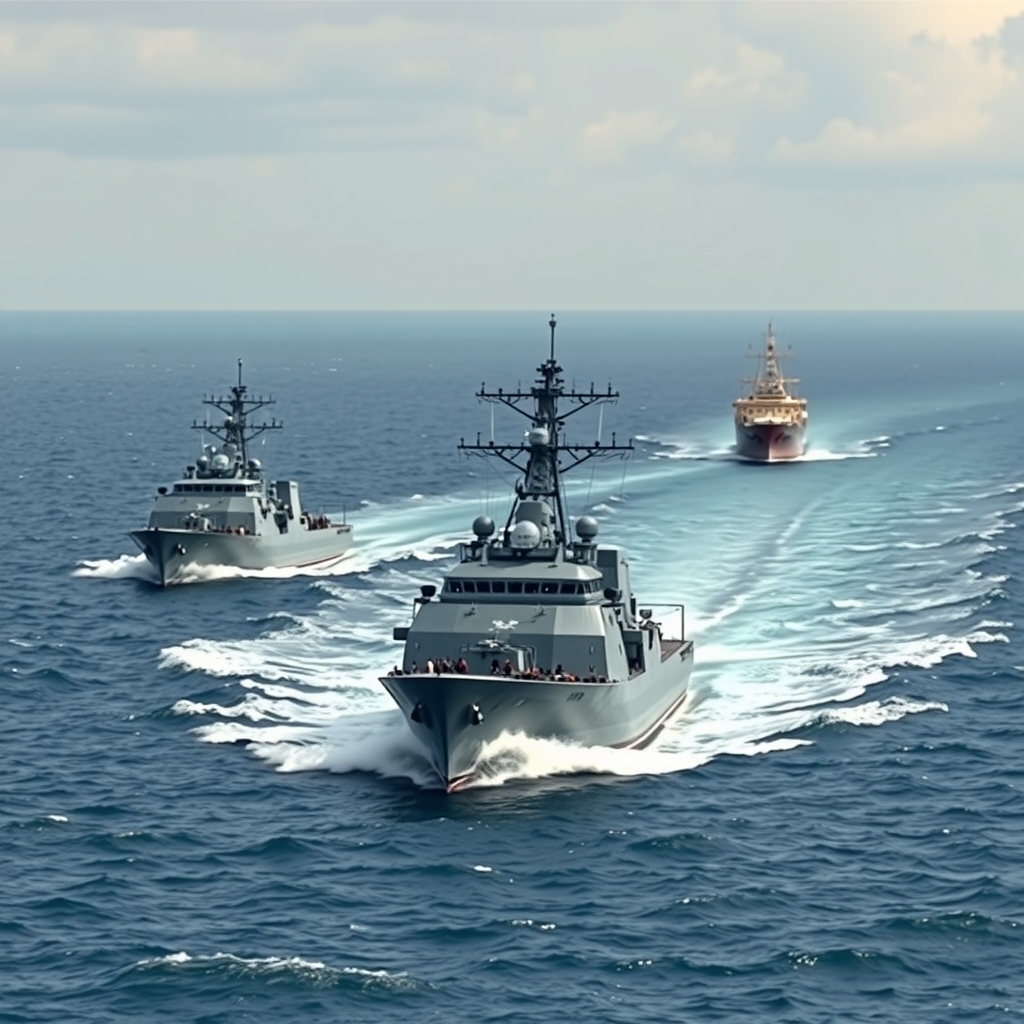
The maritime domain serves as the circulatory system of global commerce, yet it remains one of the most legally complex and physically perilous environments for the passage of goods and people. As geopolitical tensions escalate and non-state actors evolve their tactics, the legal architecture governing maritime security and vessel protection faces unprecedented strain. The fundamental tension lies in the dialectic between the principle of mare liberum—the freedom of the seas—and the sovereign imperative of coastal states to regulate and secure their maritime zones. This article interrogates the prevailing international legal regimes, the evolving definitions of maritime threats, and the precarious legal status of private entities engaged in vessel protection.
The Foundational Tension: Sovereignty vs. Navigation
At the heart of maritime law lies the United Nations Convention on the Law of the Sea (UNCLOS), often described as the 'constitution for the oceans.' UNCLOS establishes a delicate equilibrium between the rights of coastal states to exercise jurisdiction and the rights of flag states to ensure the freedom of navigation. However, this equilibrium is increasingly disrupted by the exigencies of modern security. When a vessel is threatened by piracy, terrorism, or state-sponsored harassment, the legal question shifts from 'where does a state's authority end?' to 'at what point does the right to self-defense supersede the prohibition on the use of force?'
The jurisprudence of the International Tribunal for the Law of the Sea (ITLOS) and the International Court of Justice (ICJ) has long grappled with these boundaries. In the M/V Saiga (No. 2) case, the tribunal emphasized that even in the enforcement of domestic laws, the use of force by coastal states must be strictly necessary and proportional. This principle provides a cornerstone for vessel protection, implying that security measures—whether state-led or private—must operate within a narrow corridor of legality to avoid infringing upon the fundamental rights of transit.
How does UNCLOS define maritime security threats?
The legal classification of a threat is not merely an academic exercise; it determines the jurisdictional basis for response. Under UNCLOS, the most clearly defined maritime security threat is piracy. Article 101 provides a stringent, narrow definition, requiring that the acts of violence, detention, or depredation be committed for private ends by the crew or passengers of a private ship or aircraft and must occur on the high seas or in a place outside the jurisdiction of any State.
This definition creates a significant legal lacuna. If an act of maritime violence occurs within a state's territorial waters, it is technically not 'piracy' under international law but rather 'armed robbery at sea,' which falls under the domestic jurisdiction of the coastal state. This distinction is critical for determining whether the international community may exercise universal jurisdiction to apprehend and prosecute offenders. The following table delineates these essential legal distinctions:
| Feature | Piracy (UNCLOS Art. 101) | Armed Robbery at Sea |
|---|---|---|
| Spatial Jurisdiction | High Seas or areas outside State jurisdiction | Territorial Waters of a coastal state |
| Jurisdictional Basis | Universal Jurisdiction (any state may intervene) | Coastal State Sovereignty |
| Legal Intent | Must be for 'private ends' | Varies; often criminal/political |
| Enforcement Framework | International law/UNCLOS | Domestic criminal law |
Beyond piracy, the law struggles to categorize 'hybrid' threats, such as maritime terrorism or state-sanctioned 'grey zone' activities, where the distinction between private criminal intent and state-directed aggression becomes blurred. The absence of a codified definition for maritime terrorism in UNCLOS leaves a gap that is often filled by ad hoc regional agreements or security council resolutions, creating a fragmented legal landscape.
What are the legal rights of vessels under attack?
When a vessel encounters an imminent threat, the law provides certain protections, primarily rooted in the right of self-defense. Under customary international law, and increasingly reflected in the interpretation of UNCLOS, a master of a vessel has the inherent authority to take reasonable measures to protect the ship, its crew, and its cargo. However, the execution of this right is fraught with legal peril.
The right to use force is governed by the principles of necessity and proportionality. A vessel under attack may employ force to repel the aggressors, but this force must be calibrated to the threat. Excessive force, particularly if it results in the loss of life or significant property damage to non-combatants, may lead to complex litigation regarding the liability of the shipowner and the state of registry. The Enrica Lexie incident, involving Italian marines on a commercial vessel, serves as a seminal example of how the use of force in contested waters can trigger profound diplomatic and legal crises between flag states and coastal states.
Furthermore, the duty to render assistance—a long-standing principle of maritime law—remains a critical component of vessel protection. While UNCLOS mandates that masters provide assistance to those in distress at sea, this duty becomes complicated when the 'distress' is a security-related incident rather than a maritime accident. The legal obligation to ensure the safety of life at sea (SOLAS) must be balanced against the security protocols required to prevent boarding by hostile actors.
The Proliferation of Private Actors: Legal Status of PMSCs
In response to the inadequacy of state-led naval presence in certain high-risk areas, such as the Gulf of Aden, the maritime industry has turned to Private Maritime Security Companies (PMSCs). This shift has introduced a 'grey zone' into the traditional Westphalian maritime order. The legal status of armed guards on merchant vessels remains one of the most contested issues in contemporary maritime security law.
Several legal ambiguities persist regarding PMSCs:
- Status of Personnel: Are armed guards considered civilians or 'unlawful combatants' if they engage in hostilities? The lack of clarity under the Geneva Conventions regarding their status in non-international armed conflicts creates significant risk.
- Liability for Use of Force: If a private guard discharges a weapon, does the liability rest with the individual, the PMSC, or the shipowner? The doctrine of vicarious liability is often invoked, but the jurisdictional complexities of high seas operations make enforcement difficult.
- Flag State vs. Coastal State Authority: A vessel carrying armed guards is subject to the laws of its flag state, but if it enters a territorial sea, it must comply with the coastal state's regulations regarding the carriage of weapons. This creates a 'legal minefield' for shipping companies attempting to maintain continuous protection.
While the Montreux Document provides non-binding guidance on the responsibilities of states regarding PMSCs, it lacks the coercive power of an international treaty. Consequently, the legal framework for private vessel protection is characterized by a patchwork of domestic regulations and contractual arrangements rather than a unified international standard.
How do states balance security and freedom of navigation?
The most persistent challenge in maritime security law is the reconciliation of state security measures with the right of innocent passage and freedom of navigation. Coastal states often seek to expand their regulatory reach, citing the need to prevent smuggling, terrorism, or environmental damage, as a justification for intrusive inspections or the restriction of certain maritime routes.
UNCLOS attempts to moderate this by defining 'innocent passage' in Article 19, stating that passage is innocent so long as it is not prejudicial to the peace, good order, or security of the coastal state. However, the interpretation of what constitutes 'prejudicial' is highly subjective. For instance, a state may argue that a vessel's refusal to allow a boarding inspection—even if the vessel is not suspected of piracy—is a violation of its security protocols. Conversely, flag states argue that such inspections, if not based on specific, articulable suspicion, constitute an unlawful interference with the freedom of navigation.
This friction is most evident in the South China Sea and other contested maritime regions, where security and sovereignty are inextricably linked. In these contexts, the application of maritime law becomes a tool of geopolitical competition. The use of 'maritime militias' or coast guard vessels to enforce domestic claims under the guise of security operations challenges the very foundations of the UNCLOS-based order. As the PCA's ruling in the South China Sea Arbitration demonstrated, the legal status of maritime features and the corresponding rights of states are central to preventing the erosion of international maritime norms.
Concluding Observations
The evolution of maritime security law is currently in a state of reactive transition. The legal frameworks designed in the late 20th century are being forced to contend with 21st-century realities: asymmetric warfare, cyber-maritime threats, and the widespread use of private security. The existing reliance on the narrow definition of piracy and the traditional distinctions between high seas and territorial waters is proving insufficient for a world where threats are increasingly hybrid and pervasive.
Moving forward, the international community must seek to codify the responsibilities and liabilities of private maritime actors and refine the thresholds for the use of force in maritime security operations. There is an urgent need for a more nuanced legal understanding of 'maritime security' that transcends the binary of piracy versus peaceful transit. Only by addressing these legal ambiguities through multilateral cooperation can the global community ensure that the freedom of the seas remains a reality rather than a legal fiction, securing the blue frontier for the future of global commerce.
Comments
No comments yet.