Artificial Waterways and Sovereign Seas: The Legal Regimes of International Canals
An in-depth legal analysis of the international treaties, neutrality frameworks, and sovereign rights governing the Suez, Panama, and Kiel Canals.
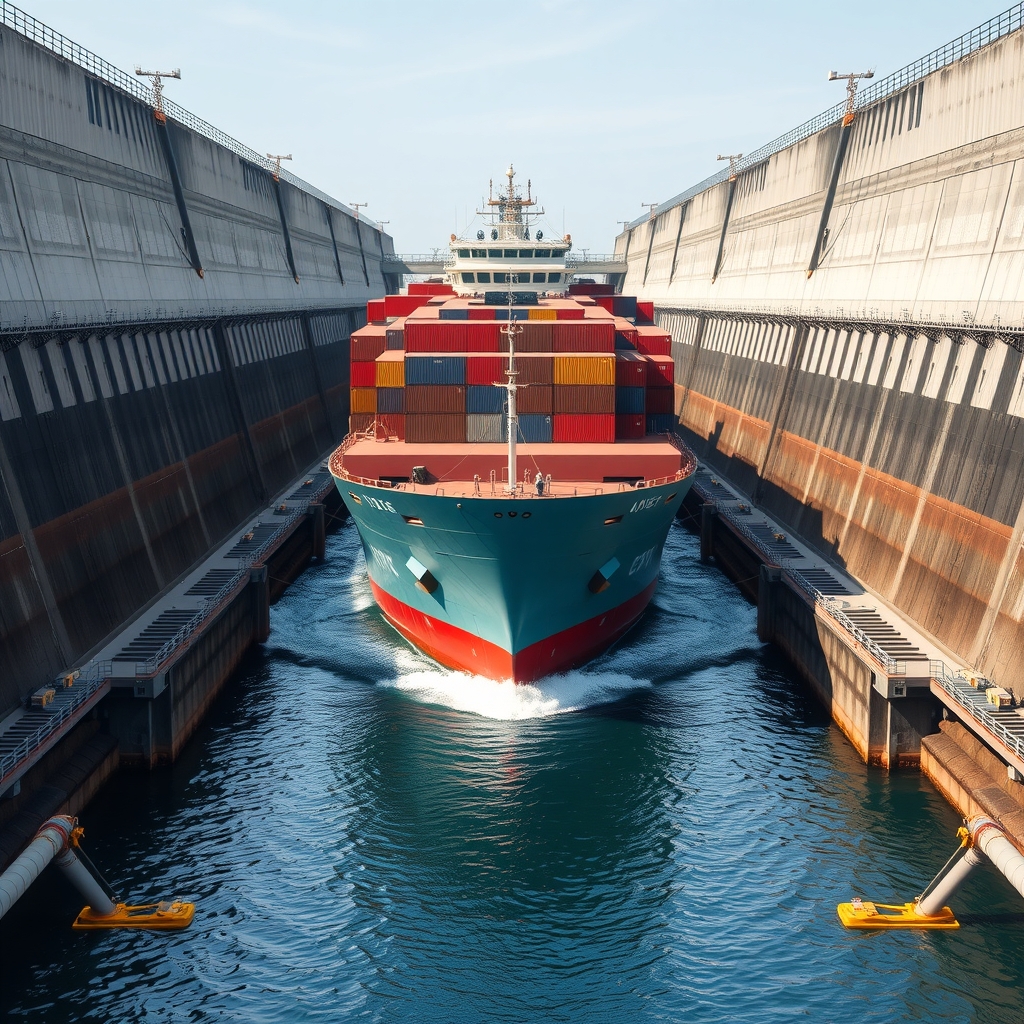
International canals represent some of the most vital arteries of global commerce and naval strategy. Unlike natural waterways and international straits formed by geography, international canals are artificial channels constructed entirely within the sovereign territory of a single coastal state to connect two navigable bodies of open water. Because they are man-made installations situated within national territory, international law treats canals prima facie as internal waters under the absolute sovereignty of the territorial state. However, the immense importance of these waterways to worldwide navigation has led to the establishment of specialized international legal regimes for the most prominent global routes: the Suez Canal, the Panama Canal, and the Kiel Canal.
Understanding the legal status of these choke points requires examining how treaty law, customary norms, and state practice balance the territorial sovereignty of host states against the rights of the international community to unhindered maritime transit and commerce.
What is the legal difference between an international canal and a strait?
In public international maritime law, the distinction between an artificial international canal and a natural strait is fundamental. Under the United Nations Convention on the Law of the Sea, natural straits used for international navigation between one part of the high seas or an exclusive economic zone and another are subject to regimes such as transit passage under Part III of the Convention, or innocent passage where specific exceptions apply. Coastal states bordering natural straits cannot suspend transit passage, nor can they arbitrarily exclude foreign vessels or levy discriminatory charges for mere transit.
Conversely, artificial canals do not automatically inherit customary international rights of navigation simply by virtue of connecting two seas. Because a canal is constructed through the terrestrial territory of a sovereign state, the waters within it constitute internal waters. As a baseline rule of sovereign jurisdiction, a coastal state enjoys the unfettered right to regulate, restrict, or entirely prohibit entry into its internal waters unless it has voluntarily bound itself to an international regime through a bilateral or multilateral treaty, or through long-standing unilateral declarations accepted by the international community.
Article 35(c) of the United Nations Convention on the Law of the Sea expressly preserves this distinction by stating that nothing in Part III affects the legal regime in straits in which passage is regulated in whole or in part by long-standing international conventions in force specifically relating to such straits. While artificial canals are not straits under general international law, the principle remains: transit rights through major artificial waterways derive from dedicated conventional instruments rather than general maritime freedom principles.
How does the Constantinople Convention govern the Suez Canal?
The Suez Canal, opened in 1869 across the Isthmus of Suez, connects the Mediterranean Sea directly to the Red Sea, eliminating the need for vessels to circumnavigate the African continent. The foundational legal instrument governing this vital corridor is the Convention of Constantinople, signed on October 29, 1888, by nine maritime powers: Great Britain, Germany, Austria-Hungary, Spain, France, Italy, the Netherlands, Russia, and the Ottoman Empire.
Core Principles of the 1888 Convention
The Convention of Constantinople established a permanent legal regime founded on two fundamental tenets: universal accessibility and perpetual neutrality. Article I of the Convention provides the foundational mandate:
The Suez Maritime Canal shall always be free and open, in time of war as in time of peace, to every vessel of commerce or of war, without distinction of flag.
The treaty established specific conditions to guarantee this principle:
- Universal Freedom of Transit: Ships under all flags, whether commercial vessels or warships, enjoy equal rights of transit without arbitrary obstruction.
- Prohibition of Blockades: The canal must never be subjected to the exercise of the right of blockade.
- Neutrality During Armed Conflict: No act of hostility, nor any act having for its object the direct preparation of an operation of war, can be committed in the canal or its access ports, even if the territorial sovereign is a belligerent party.
- Warship Regulations: Belligerent warships are forbidden to take on troops, munitions, or war materials inside the canal, and their stay in port or transit must adhere to strict temporal limits to prevent tactical exploitation.
Sovereignty, National Defense, and Post-1956 Evolution
The universal freedom of passage under the Constantinople Convention is not without limits. Article X of the Convention permits the territorial sovereign—originally the Ottoman Empire, and subsequently the Arab Republic of Egypt—to take measures necessary for the defense of the country and the maintenance of public order, provided such measures do not create permanent obstacles to the free use of the canal.
Following the nationalization of the Suez Canal Company by Egypt in 1956 and the subsequent Suez Crisis, Egypt reaffirmed its adherence to the 1888 Convention in a formal declaration registered with the United Nations Secretariat on April 24, 1957. Today, the canal is managed and operated by the Suez Canal Authority, an autonomous public body under Egyptian law. While Egypt enforces domestic navigation codes, environmental regulations, pilotage requirements, and transit tolls, it remains legally bound by the internationalization regime mandated by the 1888 Convention and its 1957 declaration.
What is the legal status of the Panama Canal today?
Connecting the Atlantic and Pacific Oceans across the Isthmus of Panama, the Panama Canal represents another milestone in international maritime engineering and legal governance. The legal architecture governing the Panama Canal evolved through three primary historical phases, culminating in the modern framework based on the 1977 Torrijos-Carter Treaties.
The Evolution from 1901 to 1977
The earliest legal foundations were laid by the Hay-Pauncefote Treaty of 1901 between the United States and the United Kingdom, which adopted the principles of neutralization found in the Suez Convention of Constantinople. Following Panama's independence from Colombia, the Hay-Bunau-Varilla Treaty of 1903 granted the United States extensive territorial rights across a ten-mile-wide Canal Zone, treating the territory as if it were sovereign.
This arrangement proved legally and politically contentious over the twentieth century, leading to extensive negotiations that produced two landmark instruments signed on September 7, 1977:
- The Panama Canal Treaty: Provided for the gradual transfer of administrative, operational, and jurisdictional control of the canal from the United States to the Republic of Panama, culminating in full Panamanian sovereignty on December 31, 1999.
- The Treaty Concerning the Permanent Neutrality and Operation of the Panama Canal: Established the permanent legal status and operational regime of the waterway for the indefinite future.
The Permanent Neutrality Regime
Under the Neutrality Treaty, the Panama Canal is declared a permanently neutral international waterway. The treaty establishes key legal principles that operate independently of any bilateral political shifts:
- Non-Discriminatory Access: The canal remains secure and open to peaceful transit by the vessels of all nations on terms of entire equality, ensuring that tolls and conditions of transit are just, reasonable, and non-discriminatory.
- Warship Regimes: Warships and auxiliary vessels of all nations are entitled to transit the canal at all times, irrespective of their internal propulsion or armament, without being subjected to inspection, search, or surveillance.
- Expeditious Passage: Warships and auxiliary vessels of the United States and Panama are granted the specific privilege of transiting the canal expeditiously, meeting emergency national security contingencies.
- Defense Obligations: Both Panama and the United States maintain the obligation to defend the canal against any threat to its neutrality and unimpeded operation, an arrangement affirmed through the Protocol to the Neutrality Treaty to which numerous third states have acceded.
Since the complete transfer on December 31, 1999, the Panama Canal Authority, an autonomous entity established under the Constitution of Panama, exercises administrative and regulatory control over daily navigation, maintenance, and expansions, operating strictly within the confines of permanent international neutrality.
Why was the SS Wimbledon case important for the Kiel Canal?
The Kiel Canal, traversing the German state of Schleswig-Holstein, links the North Sea at Brunsbüttel to the Baltic Sea at Kiel-Holtenau. Constructed primarily for German domestic and naval strategic purposes between 1887 and 1895, the legal regime of the Kiel Canal is unique because its internationalization occurred through the post-World War I peace settlement.
The Treaty of Versailles and the SS Wimbledon Decision
Under Articles 380 to 386 of the Treaty of Versailles of 1919, Germany was compelled to keep the Kiel Canal free and open to vessels of commerce and war of all nations at peace with Germany on terms of absolute equality. This regime led to a landmark decision by the Permanent Court of International Justice in the 1923 Case of the S.S. Wimbledon.
During the Polish-Soviet War of 1920, the British steamship SS Wimbledon, chartered by a French company, was transporting military supplies destined for the Polish armed forces. German authorities refused the vessel passage through the Kiel Canal, asserting that allowing munitions to transit German territory would violate German domestic neutrality decrees concerning the Polish-Soviet conflict.
The Permanent Court of International Justice ruled against Germany, establishing fundamental doctrines of international law regarding dedicated waterways:
- Dedication to International Commerce: The Court held that by virtue of Article 380 of the Treaty of Versailles, the Kiel Canal had ceased to be an internal waterway of purely national concern and had become an international waterway dedicated to the passage of all nations at peace with Germany.
- Sovereignty and Treaty Commitments: The Court rejected the argument that entering into treaty obligations restricting sovereign action infringes upon state sovereignty. Instead, the Court declared that the capacity to enter into international engagements is an attribute of state sovereignty itself.
- Neutrality versus Passage: The Court affirmed that permitting the passage of contraband or belligerent cargo through an internationalized canal does not compromise the neutrality of the territorial state if such passage is mandated by an international treaty obligations regime.
Modern Legal Status of the Kiel Canal
In November 1936, the German government unilaterally repudiated the canal clauses of the Treaty of Versailles. Following the end of the Second World War, the Kiel Canal was not placed under a renewed multilateral convention. Instead, Germany resumed administration of the waterway under its domestic legal jurisdiction.
Today, the Federal Republic of Germany administers the Kiel Canal as a national federal waterway. However, Germany maintains a consistent policy of non-discriminatory access, allowing vessels of all flags to transit the canal upon payment of established dues and compliance with domestic maritime safety and environmental regulations. While grounded in national administration, the canal continues to operate de facto as an open international commercial route.
Comparative Analysis of the Three Canals
Although the Suez, Panama, and Kiel Canals share the common function of connecting major maritime zones, their governing legal structures exhibit distinct origins, treaty frameworks, and enforcement mechanisms.
| Feature | Suez Canal | Panama Canal | Kiel Canal |
|---|---|---|---|
| Governing Instrument | Convention of Constantinople (1888); Egyptian Declaration (1957) | Torrijos-Carter Treaties (1977 Neutrality Treaty) | Originally Treaty of Versailles (1919); currently German Federal Law |
| Legal Status | Internationalized internal waterway under Egyptian sovereignty | Permanently neutral international waterway under Panamanian sovereignty | National waterway under German sovereignty operating open access |
| Warship Transit | Permitted for all flags in peace and war | Permitted for all flags; expeditious passage for Panama and US | Permitted in peacetime subject to state authorization/notification |
| Neutrality Scope | Perpetual neutrality; non-blockade rule | Permanent treaty-guaranteed neutrality regime | Customary open access maintained by administrative policy |
| Operating Authority | Suez Canal Authority (Egypt) | Panama Canal Authority (Panama) | Federal Waterways and Shipping Administration (Germany) |
Sovereign Rights versus International Community Interests
The legal regimes governing international canals demonstrate an enduring legal compromise between two fundamental pillars of international law: the territorial sovereignty of the host state and the freedom of international maritime transport.
Regulatory and Administrative Powers
Even where an artificial canal is dedicated to international commerce, the territorial state retains substantial regulatory powers. International law recognizes that the host state may validly enforce:
- Navigation Safety: Mandatory pilotage regulations, vessel traffic management, speed restrictions, and convoy scheduling to prevent collisions and groundings.
- Environmental Protections: Standards concerning ballast water discharge, hazardous cargo handling, and air emissions to protect adjacent ecosystems and local populations.
- Financial Levies: Toll structures and transit fees designed to cover maintenance, operation, dredging, and channel expansion, provided they are applied without arbitrary discrimination.
- Customs and Security: Inspection rights to verify manifests, security clearance for foreign crew members, and enforcement of sanitary quarantine rules.
Limitations on Sovereign Discretion
Conversely, the international legal regimes limit the territorial sovereign from exercising arbitrary jurisdiction. A canal state cannot unilaterally alter transit conditions to target specific flags, impose political boycotts, or levy extortionate or discriminatory rates. Even during geopolitical tensions, the underlying treaty obligations—such as the permanent neutrality of Panama or the open access rules of the Constantinople Convention—impose binding international obligations to preserve transit for global navigation.
Conclusion
International canals occupy a distinctive place in the law of the sea. As artificial engineering achievements cut into sovereign landmasses, they are fundamentally internal waters governed by national jurisdiction. Yet, through long-standing treaties, judicial decisions such as the SS Wimbledon case, and consistent state practice, canals of primary global importance have acquired specialized legal regimes that internationalize their use.
The legal frameworks of the Suez, Panama, and Kiel Canals illustrate that unimpeded maritime trade depends on legal certainty, mutual treaty obligations, and the harmonization of national territorial sovereignty with the global community's collective need for secure, efficient, and open sea lanes.
Comments
No comments yet.