Accountability in the Anthropocene: The Legal Framework for Hazardous and Noxious Substances at Sea
An academic exploration of the legal complexities, liability regimes, and jurisprudential challenges surrounding the transport of hazardous and noxious substances in maritime environments.
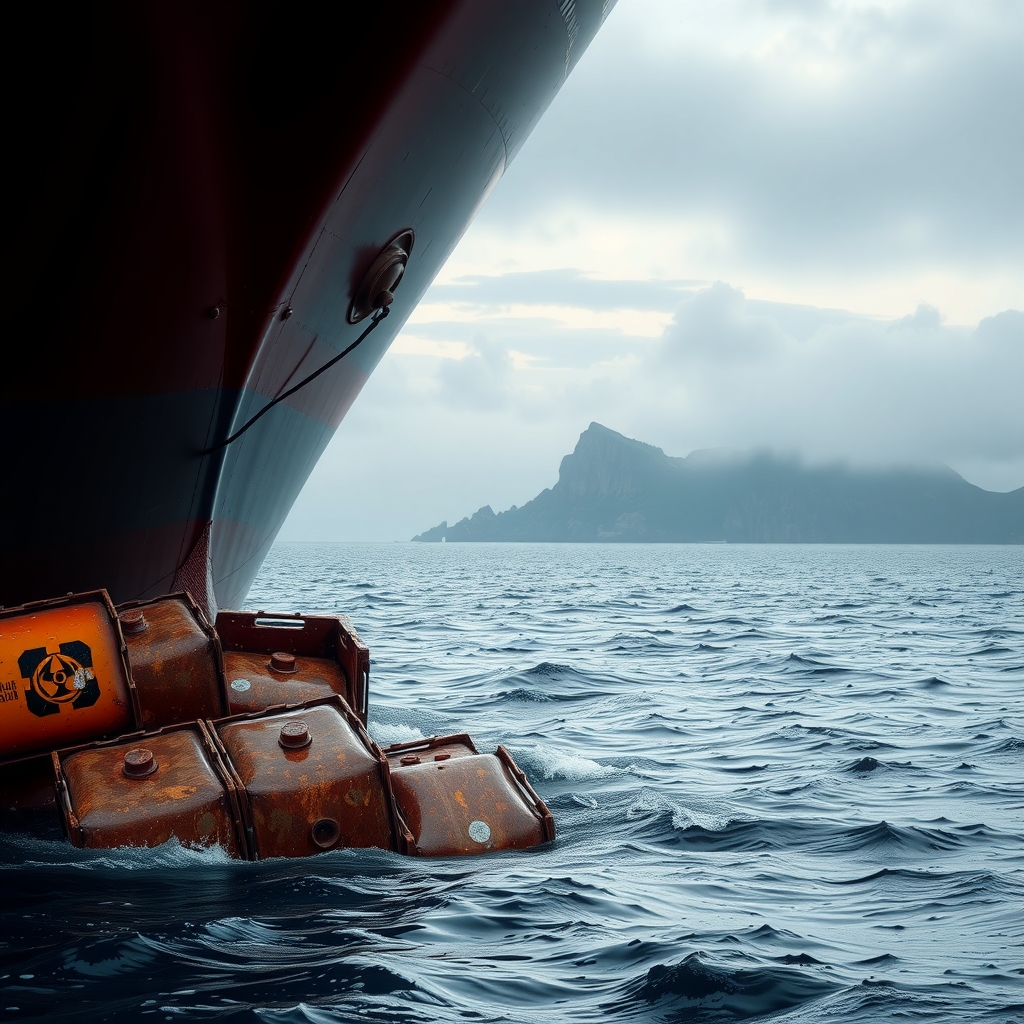
The contemporary maritime landscape is characterized by an unprecedented density of chemical and hazardous cargo, a reality that has outpaced the traditional legal architectures designed to mitigate environmental catastrophes. While the international community has spent decades refining the protocols for oil pollution, the transport of hazardous and noxious substances (HNS) presents a distinct set of ontological and legal challenges. Unlike oil, which possesses a relatively predictable physical and chemical behavior in marine environments, HNS encompasses a vast spectrum of substances—ranging from highly flammable gases and toxic chemicals to corrosive liquids and radioactive materials—each necessitating unique regulatory responses and liability assessments. The legal difficulty lies not merely in the containment of these substances, but in the allocation of responsibility when the boundaries between shipowner negligence, cargo owner risk, and state failure to regulate become blurred.
The Evolution of Maritime Environmental Liability
The historical trajectory of maritime liability has been largely reactive, shaped by the catastrophic failures of the twentieth century. The seminal incidents of oil spills led to the development of the Civil Liability Convention (CLC) and the subsequent Fund Convention, creating a robust, albeit oil-centric, regime of strict liability and tiered compensation. However, the HNS regime occupies a different legal niche. It must reconcile the specialized safety requirements of the International Maritime Dangerous Goods (IMDG) Code with the broader compensatory objectives of the International Convention on Liability and Compensation for Damage Resulting from the Transport of Hazardous and Noxious Substances by Sea (the HNS Convention).
The transition from a focus on single-commodity pollution (oil) to a multi-substance paradigm (HNS) represents a significant shift in maritime jurisprudence. Under the oil regimes, the liability is relatively straightforward: the shipowner is strictly liable, and the Fund, financed by oil receivers, provides a secondary layer of compensation. In the HNS context, the diversity of the cargo complicates this simplicity. A single vessel may carry a heterogeneous mix of substances, each with different toxicity levels, volatility, and environmental persistence. Consequently, the legal challenge is to design a regime that is sufficiently flexible to cover all potential HNS incidents while remaining predictable enough to provide certainty for the global shipping industry.
The Fragmentation of Regulatory Instruments
One of the primary impediments to a cohesive HNS legal framework is the fragmentation of existing international law. The maritime legal order is a patchwork of specialized conventions, including MARPOL 73/78 for the prevention of pollution, the Basel Convention on the Control of Transboundary Movements of Hazardous Wastes and Their Disposal, and the UN Convention on the Law of the Sea (UNCLOS). While these instruments overlap, they often operate under different legal philosophies. MARPOL is primarily a technical and preventative instrument, focused on vessel construction and operational standards. UNCLOS, conversely, provides the constitutional framework for the oceans, establishing the general obligation of states to protect and preserve the marine environment under Article 192, but offering little in the way of specific liability mechanisms for private actors.
Who is liable for hazardous substance spills at sea?
Determining liability in the wake of an HNS incident requires navigating a complex web of contractual, statutory, and international legal principles. The central question remains: where does the burden of risk reside? In modern maritime law, the prevailing doctrine seeks to balance the interests of the carrier (the shipowner) and the cargo interests (the shippers and receivers). The HNS Convention proposes a dual-tier liability system that mirrors the oil pollution model, yet introduces complexities regarding the identification of liable parties.
The first tier of liability is placed upon the shipowner. Under the principle of strict liability, the shipowner is held responsible for damage caused by the transport of HNS, regardless of fault, subject to certain narrow exceptions such as acts of war or intentional acts by a third party. This ensures that victims—whether they are coastal states, fishing industries, or local communities—can seek immediate recourse without the arduous task of proving negligence in the highly technical operations of a vessel. However, this strict liability is not absolute; it is typically subject to a limitation of liability, governed by the Convention on Limitation of Liability for Maritime Claims (LLMC).
The second tier involves the HNS Fund, which is financed by contributions from cargo receivers. This tier is designed to cover damage that exceeds the shipowner's liability limits. This distributive approach is rooted in the Polluter Pays Principle, but it shifts the focus from the actual polluter (the shipowner) to those who profit from the movement of the hazardous goods. The legal justification for this is that the cargo owners, by introducing dangerous substances into the maritime stream, are internalizing the environmental risk as a cost of business. This creates a systemic form of insurance that protects against the insolvency of a carrier or the inadequacy of shipowner limits in the event of a large-scale chemical catastrophe.
"The allocation of risk in the HNS regime must not be viewed merely as a commercial arrangement, but as a fundamental instrument of maritime environmental justice, ensuring that the externalities of hazardous trade do not fall disproportionately upon the global commons."
The Conflict Between Carrier and Cargo Interests
A significant point of jurisprudential tension exists between the carrier's desire for predictable, limited liability and the cargo owners' push for a broader compensatory pool. If the shipowner's liability is set too low, the HNS Fund may be depleted prematurely; if it is too high, the economic viability of hazardous goods transport may be compromised. Furthermore, the question of 'fault' remains a contentious issue. While the HNS Convention relies on strict liability, the underlying fault of the crew or the shipowner in the event of a collision or mechanical failure can still influence the interpretation of 'exceptional circumstances' that might exempt the owner from liability.
| Feature | Oil Pollution Regime (CLC/Fund) | HNS Regime (Proposed/Developing) |
|---|---|---|
| Primary Liability Model | Strict liability on the registered shipowner. | Strict liability on the shipowner, plus a tiered cargo fund. |
| Primary Fund Source | Oil receivers (oil importers). | HNS cargo receivers (diverse chemical interests). |
| Substance Diversity | Low (primarily crude and refined oils). | Extremely High (gases, chemicals, solids, radioactive). |
| Damage Assessment | Well-established (clean-up, economic loss). | Complex (toxicological, long-term ecological harm). |
How is HNS liability calculated under international law?
Quantifying the damage resulting from an HNS spill is arguably the most difficult task facing maritime jurists and environmental scientists. Unlike an oil spill, where the visible impact on coastlines and wildlife provides a tangible basis for claim, the impact of certain HNS—such as colorless, odorless toxic gases or dissolved chemical contaminants—may be invisible, delayed, or cumulative. This creates profound challenges for the calculation of compensable damage.
Under current international legal trends, compensable damage is typically categorized into three domains: economic loss, property damage, and environmental remediation. Economic loss encompasses the loss of income suffered by fishermen, tourism operators, and other industries dependent on a healthy marine ecosystem. Property damage covers the physical destruction of vessels, infrastructure, or coastal assets. However, the most contentious area is environmental remediation—the cost of restoring the marine environment to its pre-spill state.
The difficulty in calculating environmental harm lies in the debate over whether compensation should be limited to the 'cost of reasonable measures of reinstatement' or if it should include 'pure ecological damage.' The former is a more conservative, market-based approach that only compensates for tangible cleanup actions. The latter, often advocated by environmental scholars and certain coastal states, seeks to assign a monetary value to the intrinsic loss of biodiversity, ecosystem services, and the long-term health of the oceans. The jurisprudence of the International Tribunal for the Law of the Sea (ITLOS) has increasingly leaned toward the necessity of the precautionary principle, suggesting that a lack of full scientific certainty should not be used as a reason for postponing cost-effective measures to prevent environmental degradation. This principle has significant implications for how damages are calculated: it encourages a proactive rather than a purely reactive approach to ecological loss.
The Challenge of Proximate Causation
In the context of HNS, the legal doctrine of proximate causation—the requirement that a defendant's action must be the direct cause of the harm—is frequently challenged by the complexity of chemical interactions. If a vessel carries multiple substances and a spill occurs, determining which specific substance caused which specific ecological effect can be an evidentiary nightmare. Furthermore, the interaction between the spilled substance and existing environmental stressors (such as ocean acidification or rising temperatures) can make it difficult to isolate the carrier's liability from the broader anthropogenic impact on the oceans. This ambiguity often leads to protracted litigation and underscores the need for clearer evidentiary standards in maritime environmental law.
Jurisdictional Tensions and State Responsibility
Beyond the private liability of shipowners and cargo owners, there exists the overarching realm of state responsibility. Under UNCLOS, states have a fundamental duty to ensure that activities under their jurisdiction or control do not cause damage by pollution to the marine environment. This is not merely a duty of prevention, but a duty of 'due diligence.' As articulated in various ITLOS advisory opinions, the standard of due diligence is an objective one; a state must demonstrate that it has taken all necessary and appropriate measures to regulate and monitor the transport of HNS within its waters and by its flagged vessels.
A tension arises when a flag state (the state where the ship is registered) fails to enforce international standards, leading to a spill that impacts the waters of a coastal state. In such instances, the coastal state may seek to hold the flag state responsible under the principles of international responsibility for wrongful acts. This brings us into the territory of erga omnes obligations—duties owed by states to the international community as a whole. The protection of the marine environment is increasingly recognized as an erga omnes obligation, meaning that any state, even if not directly affected by a spill, may have a legal interest in ensuring that the rules of HNS transport are upheld.
The Role of International Tribunals
While the International Court of Justice (ICJ) and ITLOS have historically focused on territorial disputes and maritime boundaries, their role in environmental adjudication is expanding. The principles established in cases like the Pulp Mills on the River Uruguay (ICJ) regarding environmental impact assessments (EIAs) are highly relevant to the HNS regime. A state's failure to require a rigorous EIA for a high-risk chemical transport route could be interpreted as a breach of its due diligence obligations. Similarly, the PCA (Permanent Court of Arbitration) has provided forums for resolving complex environmental disputes that involve a mix of scientific evidence and international legal principles, offering a template for how HNS-related disputes might be adjudicated in the future.
Unresolved Legal Ambiguities
Despite the advancements in maritime law, several critical ambiguities remain that threaten the efficacy of the HNS regime. First is the problem of 'non-economic loss.' Current compensation models are heavily skewed toward quantifiable economic damages. However, much of the harm caused by HNS—such as the loss of a unique species or the degradation of a cultural heritage site—cannot be easily translated into a dollar amount. As international law moves toward a more holistic understanding of ecological value, the lack of a mechanism to compensate for these non-market losses remains a glaring gap.
Second is the issue of 'thresholds of harm.' At what point does a minor chemical leak become a compensable incident? The current legal frameworks often struggle with the concept of cumulative, low-level pollution, which may not trigger immediate liability but contributes significantly to the long-term decline of marine health. The law is currently better equipped to handle 'acute' events (spills) than 'chronic' degradation (ongoing leakage or mismanagement). Finally, the lack of universal ratification of the HNS Convention creates a fragmented global landscape. Until the Convention is widely adopted, the legal protection for coastal states and the predictability for the shipping industry will remain inconsistently applied, leaving vast areas of the ocean in a state of regulatory uncertainty.
Conclusion
The legal architecture governing liability for hazardous and noxious substances at sea is currently in a state of transition, moving from a reactive, oil-centric model toward a more sophisticated, multi-layered framework. While the proposed HNS Convention offers a promising path forward by balancing shipowner and cargo interest liabilities, its effectiveness depends on its ability to address the inherent complexities of chemical diversity, the difficulties of quantifying ecological damage, and the evolving standards of state due diligence. As the maritime industry continues to transport increasingly dangerous substances in an era of environmental fragility, the legal community must strive to bridge the gap between technical maritime law and the broader principles of international environmental justice. The goal must be a regime that not only compensates for harm but actively incentivizes the safe and responsible stewardship of the global marine commons.
Comments
No comments yet.