Jurisprudential Dialectics of Marine Pollution: Liability, Sovereignty, and Ecological Remediation
A deep analysis of the international legal framework governing ship-source pollution, examining the tension between strict liability regimes and state sovereignty under UNCLOS.
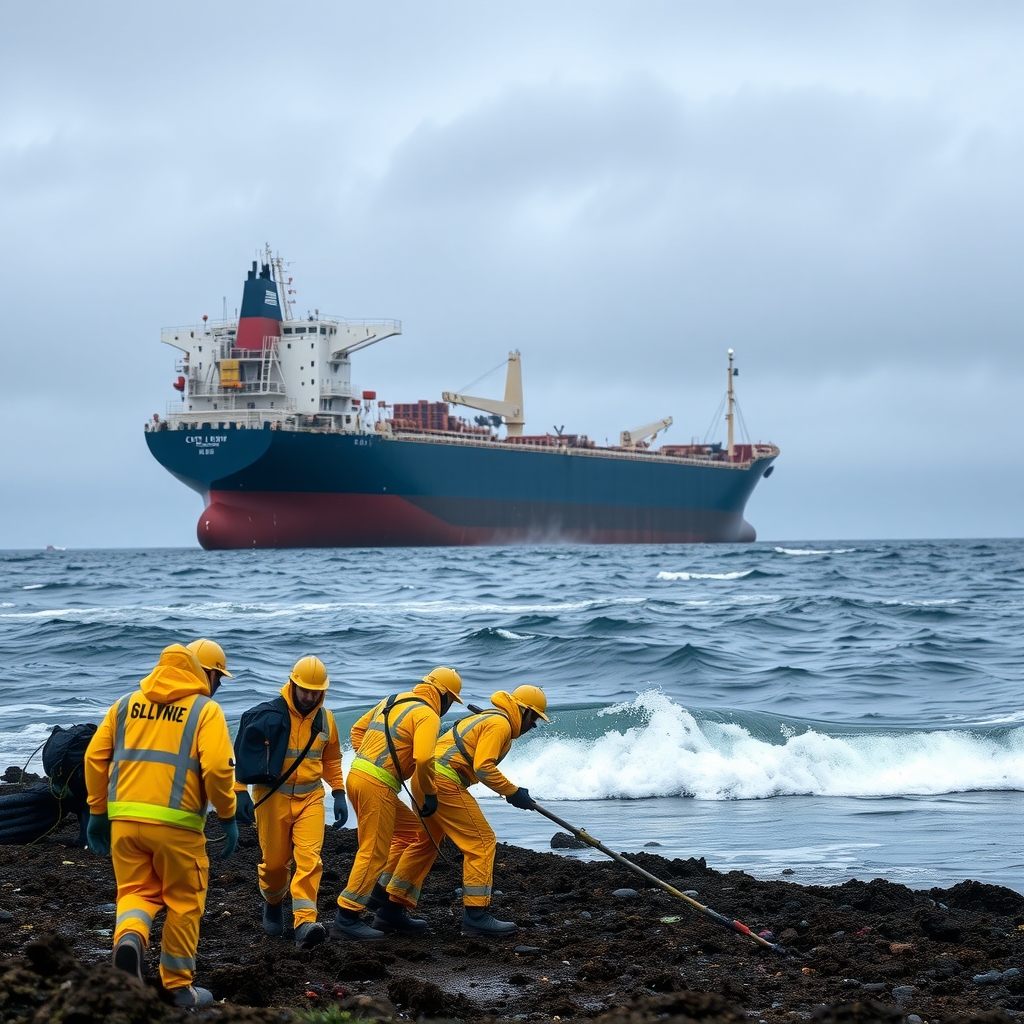
The evolution of international maritime law has long been defined by a fundamental friction: the necessity of facilitating global commerce through the freedom of navigation versus the existential imperative to protect the marine environment. This tension is nowhere more apparent than in the legal architecture governing ship-source pollution. While traditional maritime law focused on the allocation of risk between private commercial actors, the late twentieth century witnessed a paradigmatic shift toward ecological stewardship. The normative development of maritime liability reflects a transition from a fault-based system to one of strict liability, yet significant gaps remain in the enforcement of these standards and the remediation of environmental degradation.
The Evolution of the International Legal Architecture
The contemporary regime for ship-source pollution did not emerge from a vacuum; it was forged in the wake of catastrophic failures. The 1967 Torrey Canyon disaster off the coast of Cornwall served as the primary catalyst for the international community to recognize that the existing ad hoc legal arrangements were insufficient to handle the complexities of massive oil spills. Before this event, the legal recourse for coastal states was largely confined to domestic tort law, often hindered by the limited liability of shipowners and the complexities of jurisdictional immunity.
The subsequent decades saw the establishment of a dual-track system: the regulatory framework embodied in the International Convention for the Prevention of Pollution from Ships (MARPOL) and the liability framework established by the Civil Liability Convention (CLC) and the Fund Convention. These instruments represent a compromise between the interests of flag states, which prioritize vessel autonomy, and coastal states, which bear the brunt of ecological disasters. However, the legal efficacy of these conventions relies heavily on the overarching principles of the United Nations Convention on the Law of the Sea (UNCLOS), which serves as the lex generalis for the global hydrosphere.
What is the ship-source pollution liability regime?
The ship-source pollution liability regime is a complex, multi-layered system designed to ensure that victims of pollution damage—primarily from oil spills—are compensated and that the costs of cleanup are borne by the industry rather than the public purse. At its core, the regime is built upon the Polluter Pays Principle, though this is tempered by the concept of Limited Liability to ensure the continued insurability of the shipping industry.
The regime operates through three primary tiers of compensation:
- The 1992 Civil Liability Convention (CLC): This tier places strict liability on the shipowner. Under this convention, the owner of a sea-going vessel carrying persistent oil in bulk as cargo is liable for pollution damage caused by the escape or discharge of oil from the ship. Liability is strict, meaning the claimant does not need to prove fault or negligence; they only need to prove that the damage occurred and that it resulted from the vessel in question.
- The 1992 Fund Convention: This provides a second layer of compensation when the shipowner's liability is insufficient to cover the total damage, or if the shipowner is financially incapable of meeting their obligations. The Fund is financed by levies on entities that receive more than 150,000 tonnes of contributing oil in a calendar year.
- The Supplementary Fund: Established in 2003, this third tier provides additional compensation for major disasters in states that have ratified the protocol, significantly increasing the total amount available for a single incident.
This tiered structure is designed to distribute the financial burden between the shipping industry (shipowners) and the oil industry (cargo owners). While effective for persistent oil, the regime's limitations become apparent when dealing with non-persistent oils or hazardous and noxious substances (HNS), where the legal frameworks are either less robust or have faced significant delays in international ratification.
The Doctrine of Strict Liability and Its Exceptions
The implementation of strict liability under the CLC represents a departure from the Corfu Channel (1949) standard established by the International Court of Justice (ICJ), which emphasized a state's knowledge of a danger within its territory as a prerequisite for liability. In the context of ship-source pollution, the law has moved toward a more objective standard. However, the CLC provides specific, narrow exemptions for the shipowner, such as damage resulting from an act of war, a natural phenomenon of an exceptional and irresistible character, or the intentional act of a third party.
Who is liable for oil spills from ships?
Determining who is liable for oil spills involves a process known as channelling. To provide legal certainty and simplify the claims process, the CLC channels liability exclusively to the registered owner of the vessel. This means that claimants cannot pursue the ship's master, crew, charterers, or managers unless the damage resulted from their personal act or omission, committed with the intent to cause such damage, or recklessly and with knowledge that such damage would probably result.
This channelling mechanism is a cornerstone of maritime law, intended to protect the various parties involved in a maritime venture from a multitude of lawsuits. However, it has been a point of contention in cases where the corporate structure of the shipowner is designed to insulate the parent company from liability. Courts have occasionally wrestled with the concept of piercing the corporate veil, though the international conventions generally uphold the channelling principle to maintain the predictability of the insurance market, specifically the Protection and Indemnity (P&I) Clubs.
| Convention | Primary Liable Party | Basis of Liability | Compulsory Insurance |
|---|---|---|---|
| CLC 1992 | Registered Shipowner | Strict Liability | Required for ships > 2,000 tonnes |
| Bunkers Convention 2001 | Registered Owner, Charterer, Manager, Operator | Strict Liability | Required for ships > 1,000 GT |
| HNS Convention (2010 Protocol) | Shipowner | Strict Liability | Required based on HNS units |
How does UNCLOS address marine environmental protection?
The United Nations Convention on the Law of the Sea (UNCLOS) serves as the constitutional framework for the oceans, with Part XII specifically dedicated to the protection and preservation of the marine environment. Article 192 establishes a clear, unqualified obligation: "States have the obligation to protect and preserve the marine environment." This is a significant development from earlier maritime law, which viewed the high seas as a res nullius where states had rights but few affirmative duties.
UNCLOS balances this obligation through several key mechanisms:
- Jurisdictional Competence: UNCLOS defines the powers of flag states, coastal states, and port states. While Article 211 grants flag states the primary authority to establish and enforce environmental regulations, it also allows coastal states to adopt laws for the prevention, reduction, and control of pollution within their territorial seas and exclusive economic zones (EEZ), provided they conform to generally accepted international rules and standards (GAIRAS).
- The Duty to Cooperate: Article 197 mandates that states cooperate on a global and regional basis to formulate international rules and standards for environmental protection. This has led to the proliferation of regional seas agreements and specialized IMO conventions.
- Enforcement Capabilities: Articles 217 to 221 outline the enforcement powers of different states. Port states, in particular, have gained significant power to investigate and prosecute vessels for discharge violations that occurred outside their waters, a doctrine that strengthens the global enforcement net.
The jurisprudence of the International Tribunal for the Law of the Sea (ITLOS) has further clarified these obligations. In the Southern Bluefin Tuna Cases and the M/V SAIGA (No. 2) Case, ITLOS emphasized that the duty to protect the marine environment is a fundamental element of the international legal order. Most notably, the South China Sea Arbitration (2016) at the Permanent Court of Arbitration (PCA) affirmed that Article 192 creates a positive obligation for states to take active measures to prevent environmental harm, including the regulation of their own nationals and vessels, even in areas beyond their immediate jurisdiction.
What are the limitations of the CLC Convention?
While the CLC and the Fund system are often cited as a success story in international law, they are not without substantial limitations. One of the primary criticisms is the definition of Pollution Damage. Traditionally, courts and the International Oil Pollution Compensation (IOPC) Funds have interpreted this to include the cost of preventive measures, cleanup, and proven economic loss (such as loss of income for fishermen or the tourism industry). However, the recovery of "pure ecological damage"—damage to the environment that has no immediate commercial value—is generally excluded, unless it relates to the cost of reasonable measures of reinstatement actually undertaken or to be undertaken.
This creates a legal vacuum for the "unowned" environment. For example, if a spill destroys a coral reef or a deep-sea ecosystem that is not directly tied to a commercial activity, the current liability regime provides little in the way of financial restitution for the intrinsic loss of biodiversity. This issue was highlighted in the Patmos case in Italy, where the court initially struggled with the valuation of environmental damage that did not translate into direct financial loss.
Furthermore, the CLC applies only to spills of persistent oil from tankers. It does not cover spills of non-persistent oils (like gasoline) or pollution from other types of vessels, which are instead covered by the 2001 Bunkers Convention. The Bunkers Convention, while modeled on the CLC, lacks a second-tier fund, meaning that if the damage exceeds the shipowner's liability limits, the victims may be left with uncompensated losses.
Can a shipowner limit liability for environmental damage?
The short answer is yes, but this right is not absolute. The ability to limit liability is a unique feature of maritime law, formalized in the Convention on Limitation of Liability for Maritime Claims (LLMC) 1976 and its 1996 Protocol. The rationale is to allow shipowners to calculate their risk and obtain affordable insurance, which in turn facilitates global trade.
However, the "unbreakability" of this limit is a subject of intense legal debate. Under the LLMC, a shipowner loses the right to limit liability only if it is proved that the loss resulted from their personal act or omission, committed with the intent to cause such loss, or recklessly and with knowledge that such loss would probably result. This is a remarkably high threshold of proof, making the limit virtually unbreakable in most cases of negligence or even gross negligence.
In the context of environmental disasters, this has led to calls for a reform of the LLMC or for states to opt-out of the convention for environmental claims. Some jurisdictions, notably the United States under the Oil Pollution Act of 1990 (OPA 90), have rejected the international limitation standards in favor of much higher liability ceilings and broader definitions of compensable damage. This fragmentation of the legal landscape creates significant challenges for international shipping companies navigating different liability "bubbles."
"The tension between the limitation of liability and the principle of full restitution for environmental harm remains the most significant unresolved conflict in maritime jurisprudence. While the former protects the industry, the latter protects the planet; finding a equilibrium between these two necessitates a re-evaluation of the 'unbreakability' of maritime limits."
Jurisprudential Ambiguities and the Role of Due Diligence
The concept of Due Diligence has emerged as a critical tool for courts and tribunals in evaluating state and vessel responsibility. In the Responsibilities and Obligations of States Sponsoring Persons and Entities with Respect to Activities in the Area advisory opinion, ITLOS clarified that the obligation to protect the environment is an obligation of conduct, not of result. A state is not necessarily liable for every instance of pollution, but it is liable if it fails to exercise due diligence—meaning it must have a robust regulatory framework and active enforcement mechanisms in place.
This standard is particularly relevant in the context of flag state responsibility. When a vessel registered under a "flag of convenience" causes massive pollution, the question arises whether the flag state can be held liable for its failure to properly oversee the vessel's maintenance and safety standards. While current conventions focus on the shipowner, the emerging jurisprudence under UNCLOS suggest a growing trend toward holding states accountable for their regulatory failures under the banner of due diligence.
Comparative Analysis of Liability Frameworks
Comparing the international regime with the U.S. OPA 90 reveals a fundamental divergence in legal philosophy. The CLC/Fund system emphasizes uniformity and the protection of the shipping venture through limits, whereas OPA 90 emphasizes the protection of the coastal environment and the full compensation of the victim, even if it means piercing the channelling of liability or ignoring international limitation conventions. This divergence often leads to complex forum non conveniens disputes, where claimants seek to bring their cases in jurisdictions with the most favorable liability standards.
Conclusion: Toward a Restorative Jus Cogens?
The legal landscape of ship-source pollution is currently at a crossroads. The existing conventions have been remarkably effective at reducing the frequency of major oil spills through stringent construction and operational standards. However, the liability framework remains anchored in an era where environmental damage was secondary to economic loss.
The future of maritime jurisprudence will likely be defined by three emerging trends. First, the expansion of liability to include non-economic, ecological damage. Second, the potential for holding flag states more strictly accountable for their failure to enforce international standards. And third, the integration of technological monitoring—such as satellite surveillance and AI-driven traffic management—into the definition of due diligence.
Ultimately, the protection of the marine environment must transition from a set of reactive liability rules to a proactive, restorative framework. As the ICJ and ITLOS continue to interpret the broad mandates of UNCLOS, the obligation to "protect and preserve" may eventually take on the character of a jus cogens norm, overriding the historical privileges of the maritime industry in favor of the collective survival of the global ecosystem. Until then, the rigorous application of existing conventions, coupled with a nuanced understanding of their jurisprudential limits, remains the primary defense against the degradation of the high seas.
Comments
No comments yet.