The Jurisprudential Tensions of Maritime Human Smuggling and the Duty to Rescue
An examination of the legal collision between transnational criminal frameworks and the maritime obligations of states and masters regarding irregular migration.
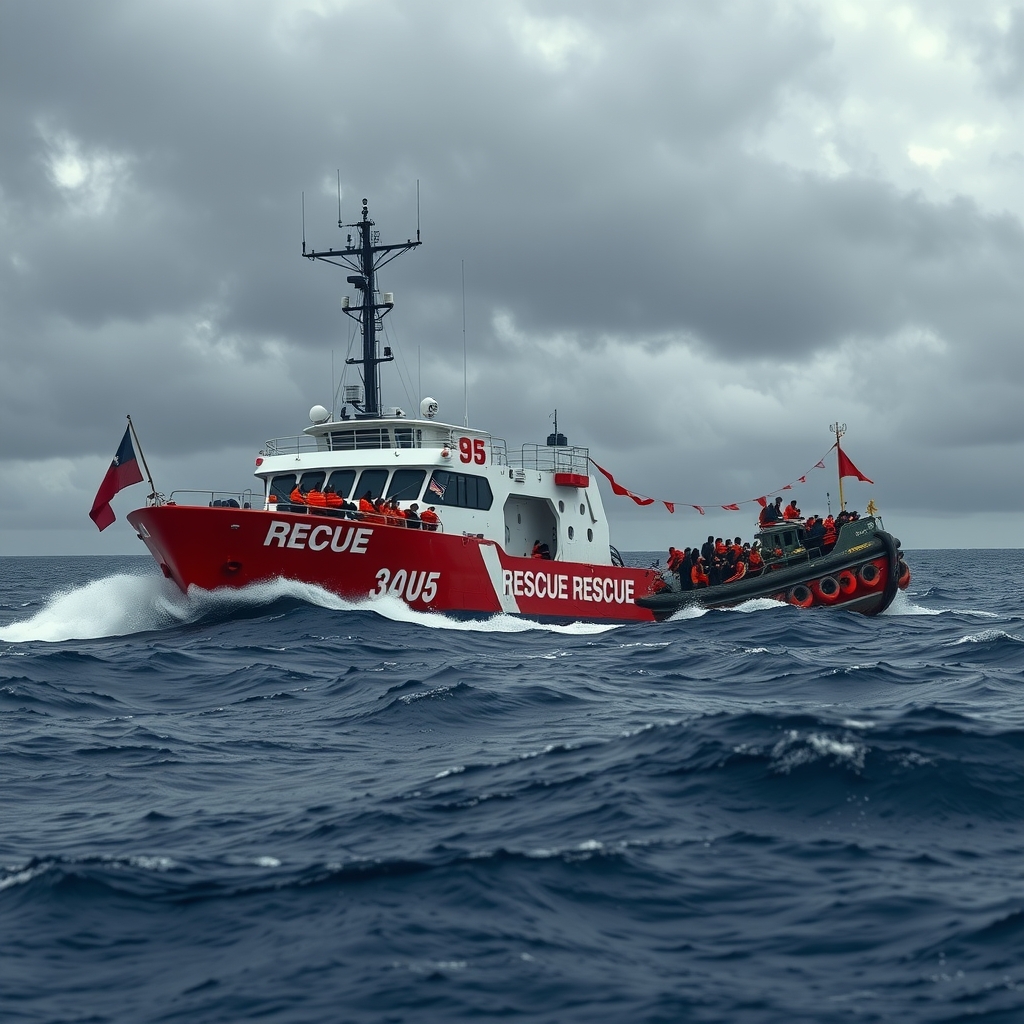
The high seas have long served as both a sanctuary and a site of profound legal contestation. In the contemporary era, the intersection of irregular migration and maritime security has forced a re-evaluation of the traditional pillars of international law. As migratory routes increasingly shift toward perilous maritime passages, the legal frameworks governing human smuggling, search and rescue (SAR), and state sovereignty are being stretched to their breaking points. This tension arises from a fundamental dialectic: the necessity of the state to enforce border integrity and combat organized crime versus the non-derogable humanitarian obligation to protect life at sea. The resulting legal landscape is not merely a matter of administrative compliance but a complex web of overlapping jurisdictions, conflicting doctrines, and evolving customary norms.
The Conceptual Divergence: What is the difference between human smuggling and human trafficking at sea?
To address the crisis of maritime migration, one must first disentangle the terminological and legal distinctions that define the nature of the offense. While often conflated in popular discourse, human smuggling and human trafficking represent fundamentally different breaches of international order. The distinction is crucial because it dictates whether the primary victim is the state or the individual, and consequently, which legal regimes—the UN Convention against Transnational Organized Crime (UNTOC) or international human rights law—take precedence.
Human smuggling is essentially a crime against the sovereignty of the state. It involves the facilitation of the illegal entry of a person into a state of which the person is not a national or a lawful resident. Under the Palermo Protocol, smuggling is defined by the intent to obtain a financial or other material benefit. The relationship between the smuggler and the migrant is, theoretically, consensual; the migrant pays for the service of unlawful passage. The legal focus here is on the violation of border controls and the organized criminal networks that exploit maritime routes to bypass customs and immigration protocols.
In contrast, human trafficking is a crime against the person. It is characterized by the recruitment, transportation, or receipt of persons through coercion, deception, or the abuse of power for the purpose of exploitation. Unlike smuggling, trafficking does not require the element of illegal entry; a person can be trafficked within their own country. At sea, the distinction becomes blurred when a smuggling operation transitions into trafficking—for instance, when migrants are held in squalid conditions on a vessel and forced into labor or sexual exploitation. The legal response to trafficking is anchored in the protection of human rights and the prevention of inhuman or degrading treatment, whereas smuggling is addressed through the lens of criminal justice and border enforcement.
| Feature | Human Smuggling | Human Trafficking |
|---|---|---|
| Nature of Crime | Crime against the State (Sovereignty) | Crime against the Person (Human Rights) |
| Consent | Generally consensual (transactional) | Non-consensual (coerced or deceived) |
| Primary Legal Focus | Border integrity and criminal prosecution | Protection of victims and prevention of exploitation |
| Key Framework | Palermo Protocol (Smuggling Protocol) | Palermo Protocol (Trafficking Protocol) |
The Regulatory Framework: How does UNCLOS govern maritime search and rescue?
The governance of the maritime domain is anchored by the United Nations Convention on the Law of the Sea (UNCLOS), which provides the constitutional framework for all maritime activities. When addressing the complexities of human smuggling and the subsequent need for rescue, UNCLOS functions as the foundational authority, though it must be read in conjunction with the International Convention for the Safety of Life at Sea (SOLAS) and the International Convention on Maritime Search and Rescue (SAR Convention).
UNCLOS establishes the jurisdictional boundaries—territorial seas, contiguous zones, and the high seas—that define where a state may exercise its enforcement powers. Article 98 of UNCLOS is the critical provision in the context of migration and rescue. It imposes a dual duty: first, that every state shall require the master of a ship flying its flag to render assistance to any person found at sea in danger of being lost; and second, that every state shall promote the establishment, operation, and maintenance of an adequate search and rescue service.
However, the implementation of these duties is often fraught with jurisdictional ambiguity. While the SAR Convention mandates that states coordinate rescue operations within designated Search and Rescue Regions (SRRs), it does not explicitly resolve the tension that arises when a vessel in distress is located in international waters but seeks entry into a neighboring state's territory. The distinction between the functional responsibility to coordinate a rescue and the sovereign right to control entry into territorial waters creates a legal vacuum that criminal networks frequently exploit. Smugglers often utilize the high seas to maximize the delay between the onset of distress and the arrival of state-led enforcement, thereby increasing the humanitarian risk to the migrants.
The Command Responsibility: What are the legal obligations of a captain during a rescue?
The master of a vessel occupies a unique position in international law, acting as both a commercial agent and a quasi-judicial authority on the high seas. The legal obligations of a captain during a rescue operation are codified primarily under SOLAS and reinforced by customary international law. When a captain encounters a vessel in distress, the duty to assist is not discretionary; it is a mandatory obligation of the office.
Under SOLAS Chapter V, Regulation 33, the master is required to proceed with all possible speed to the assistance of persons in distress at sea. This obligation persists regardless of the master's nationality, the vessel's flag, or the commercial interests of the shipowner. The primary legal tension for a captain arises when the rescued individuals are suspected of being involved in human smuggling. A master must balance the immediate, life-saving duty under SOLAS with the security obligations to report suspected criminal activity to the relevant coastal or flag state authorities.
A critical component of this duty is the determination of a 'place of safety.' International maritime law dictates that once a rescue is performed, the rescued persons must be delivered to a place of safety where their basic human needs are met and they are not returned to a situation where they may face persecution. This concept is deeply intertwined with the principle of non-refoulement under international refugee law. If a captain delivers migrants to a port that subsequently refuses them entry or attempts to deport them to a dangerous territory, the captain's fulfillment of the duty to rescue may inadvertently trigger a violation of human rights norms. Thus, the master's decision-making process is not merely operational but is a high-stakes legal navigation of competing international mandates.
Jurisdictional Friction: Can a coastal state refuse entry to a vessel in distress?
One of the most contentious issues in contemporary maritime law is the extent to which a coastal state can assert its sovereignty to deny entry to a vessel that has conducted a rescue at sea. This question sits at the nexus of the Law of the Sea and international human rights jurisprudence, particularly regarding the rights of migrants and the obligations of states under the European Convention on Human Rights (ECHR) and similar regional instruments.
Technically, under UNCLOS, a state has the sovereign right to regulate its ports and territorial waters. However, this right is not absolute. The jurisprudence of the European Court of Human Rights (ECtHR), most notably in Hirsi Jamaa and Others v. Italy, has clarified that states cannot circumvent their obligations by conducting operations in international waters that result in the 'push-back' of migrants. The Court held that when a state exercises 'effective control' over individuals—even on the high seas—it becomes responsible for their human rights, including the prohibition against collective expulsion and the principle of non-refoulement.
This creates a profound legal paradox. A coastal state may argue that allowing a vessel to dock would set a precedent that encourages human smuggling and maritime irregular migration. Yet, the legal reality is that once a rescue has been initiated, the state's ability to refuse entry is severely constrained by its obligations to ensure the safety and dignity of the rescued persons. The refusal of entry can, in certain legal contexts, be viewed as an unlawful exercise of jurisdiction that violates the duty to provide a place of safety, thereby transforming a humanitarian necessity into a legal confrontation.
Attribution and Liability: Who is liable for maritime human smuggling crimes?
The enforcement of law against human smuggling requires a sophisticated understanding of how liability is attributed in a maritime context. Determining who is liable—the smugglers on the vessel, the shipowners, or the flag states—involves analyzing the intersection of criminal law and state responsibility.
Criminal liability is primarily directed at the individuals organizing and executing the smuggling operations. Under the Palermo Protocol, states are encouraged to adopt domestic legislation that criminalizes the facilitation of illegal entry. However, the prosecution of these crimes is often hampered by the transient nature of maritime evidence and the difficulty of apprehending suspects in international waters. When a vessel is intercepted, the legal question of whether the crew members are 'smugglers' or 'rescuer-involved actors' becomes a pivotal point of litigation.
Beyond individual criminal liability, there is the question of state responsibility. Under UNCLOS, flag states have the obligation to exercise effective jurisdiction and control over their vessels. If a flag state is found to be systematically failing to regulate its vessels, thereby facilitating large-scale smuggling operations, it may face scrutiny under international law. Furthermore, if a state's failure to maintain adequate SAR services contributes to loss of life, the question of state liability for negligence in the performance of international obligations emerges. This is a developing area of law, as the link between a state's administrative failure and specific maritime casualties is legally complex to prove in international tribunals like the International Tribunal for the Law of the Sea (ITLOS).
| Legal Entity | Primary Source of Liability | Nature of Obligation |
|---|---|---|
| Individual Smugglers | Domestic Criminal Law / UNTOC | Criminal prosecution for facilitating illegal entry. |
| Shipowners/Operators | Maritime Tort / Contract Law | Civil liability for unseaworthiness or negligence. |
| Flag States | UNCLOS | Duty to exercise effective control and enforcement. |
| Coastal States | SAR Convention / Human Rights Law | Duty to coordinate rescue and provide a place of safety. |
Conclusion
The legal architecture governing human smuggling and maritime rescue is characterized by a fundamental tension between the enforcement of borders and the preservation of life. The current framework, built upon UNCLOS, SOLAS, and the SAR Convention, provides a robust set of duties, yet it remains vulnerable to the strategic exploitation of jurisdictional gaps by organized criminal networks. The distinction between smuggling and trafficking remains a critical tool for legal classification, yet the operational reality on the high seas often blurs these lines.
As maritime migration continues to evolve, the international community must address the friction between state sovereignty and humanitarian imperatives. The jurisprudence of bodies like the ECtHR and the evolving interpretations of ITLOS suggest a shift toward a more human-centric application of maritime law, one that recognizes that the duty to rescue and the principle of non-refoulement are not merely moral suggestions but binding legal requirements. To resolve the crisis of human smuggling, the law must move toward a more harmonized approach that integrates criminal enforcement with a coherent, state-led framework for search and rescue, ensuring that the high seas do not become a legal vacuum where human rights are suspended in the name of border security.
Comments
No comments yet.