Human Smuggling and Illegal Migration via Maritime Routes: A Global Overview
Human smuggling via sea is a complex global challenge blending border security, international law, and urgent humanitarian needs.
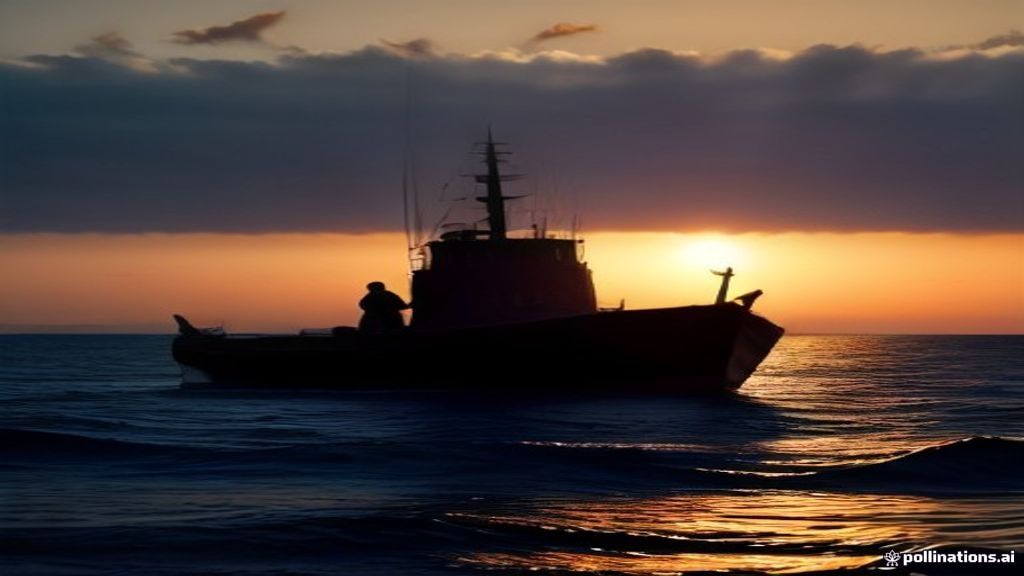
Introduction: The Sea as a Border and a Highway
The ocean has always served as a conduit for movement, trade, and exploration. Today, however, it also represents one of the most contested frontiers of modern geopolitical reality. For millions of people seeking safety, work, or a new beginning, the sea is not merely a boundary to be feared but a highway that must be crossed. Human smuggling and illegal migration via maritime routes have emerged as defining issues of the twenty-first century, touching every region from the Mediterranean to the South China Sea.
Understanding this phenomenon requires looking beyond headlines about boat interceptions. It demands an examination of why people leave, how criminal networks exploit the sea, what the law permits states to do, and the immense human cost of irregular crossings. Unlike land-based migration, maritime routes present unique challenges. A boat in distress cannot easily be redirected, and the waters involved often fall into jurisdictions that complicate rescue and enforcement alike.
This article explores the mechanics of maritime smuggling, the legal distinctions that shape state responses, the geography of the major routes, and the ongoing struggle to balance security with human rights.
What is the difference between human smuggling and human trafficking?
One of the most common points of confusion in public discourse is the distinction between human smuggling and human trafficking. Although both involve the movement of people and both are criminalized under international law, they represent fundamentally different crimes.
Human smuggling is defined by the movement of a person across an international border in violation of immigration or customs laws. It is a transaction-based crime between the smuggler and the migrant. Crucially, the relationship typically ends once the person arrives at the destination. The core element is the facilitation of illegal entry, not the exploitation of the person being moved.
Human trafficking, by contrast, is centered on exploitation. It does not require the movement of a victim across a border. Trafficking involves the recruitment, transportation, transfer, harboring, or receipt of persons through means such as threat, coercion, abduction, or fraud for the purpose of exploitation. Exploitation can include sexual exploitation, forced labor, slavery, or the removal of organs.
This distinction matters legally. Smuggling is a crime against state sovereignty, while trafficking is a crime against the person. Victims of trafficking are protected under specific human rights frameworks and should not be treated as illegal migrants subject to deportation. Victims of smuggling, while sometimes vulnerable, are primarily offenders under immigration law unless they are also found to be victims of trafficking or faces persecution. The Palermo Protocol against Smuggling of Migrants by Land, Sea and Air, an addition to the United Nations Convention against Transnational Organized Crime, provides the primary legal instrument for prosecuting smuggling. It distinguishes the crime clearly from trafficking in persons, ensuring that legal frameworks do not conflate the two.
Why do migrants choose dangerous sea routes?
When safer, legal pathways are unavailable, the sea becomes the only option. The decision to board an overcrowded wooden vessel or an overloaded rubber dinghy is rarely made lightly. It is usually the result of a calculated risk assessment where the risk of death at sea is weighed against the certainty of danger, poverty, or persecution at home.
- Push Factors: Conflict, political instability, extreme economic hardship, and climate-related disasters drive people from their homes. When agriculture fails due to drought or when a government collapses, the immediate need for survival overrides concerns about the journey.
- Blocked Land Routes: Physical barriers, walls, and strict border controls on land can force migrants into maritime corridors. When a land route is sealed, the sea route that was previously secondary becomes the primary path.
- The Availability of Smugglers: Organized criminal networks position themselves in countries of origin and transit. They advertise routes through word of mouth and encrypted messaging apps, creating an infrastructure of movement that makes crossing feasible for those with some funding.
- Lack of Legal Pathways: Perhaps the most significant factor is the absence of safe and legal migration channels. Without visas, humanitarian corridors, or resettlement programs, irregular sea crossings become the only mechanism available.
The sea route offers a sense of speed and relative directness compared to navigating multiple land borders. For many, the danger is an expected cost rather than a deterrent.
Mapping the Major Maritime Corridors
Maritime migration is not uniform. It occurs in specific theaters, each shaped by geography, conflict, and policy.
The Mediterranean Sea is the most heavily scrutinized route. Migrants and refugees depart primarily from North Africa, particularly Libya and Tunisia, heading toward Southern Europe, including Italy, Malta, and Greece. This route is notorious for high fatality rates due to the distance traveled in often unseaworthy vessels.
Central America to North America sees crossings from Mexico and Central American countries toward the United States. While much of this movement occurs on land, there is significant maritime movement around the Caribbean and through the Gulf of Mexico, often using fishing boats or yachts.
Southeast Asia presents a distinct pattern. Rohingya refugees from Myanmar frequently cross the Bay of Bengal and the Andaman Sea to reach Bangladesh and Thailand in small fishing vessels. In this region, the movement is often prolonged, with people stranded at sea for weeks on boats without food or water.
The Middle East features crossings from Iran across the Persian Gulf to countries such as Oman and the United Arab Emirates. These routes are shorter but heavily patrolled, and migrants often face detention upon arrival.
How does the Mediterranean migration route work?
The Mediterranean route operates through a complex network of transit points. People gather in sub-Saharan Africa or the Middle East and travel overland to Libya or Tunisia. Once in North Africa, they are handed over to smuggling networks. These networks operate out of coastal towns, sometimes with the tacit complicity of local officials.
The boats used vary widely. Some are converted fishing trawlers, while others are small, fragile rafts. Passengers are often charged exorbitant fees, sometimes thousands of dollars, which may be borrowed from family with the promise of future remittances. The journey itself can take a few hours or several days, depending on the weather and the vessel's seaworthiness.
Upon reaching European waters, the situation becomes a matter for rescue forces. The coordination between coast guards, naval vessels, and non-governmental organizations occurs under tight political and legal constraints. Disembarkation ports are a frequent point of contention, as flag states and coastal states disagree on where survivors should be taken.
This route highlights the difficulty of enforcing border control in an open maritime environment. A state cannot simply patrol a border when that border is thousands of miles of open water shared by dozens of other nations.
The Economics of the Smuggling Trade
Smuggling is a multi-billion-dollar industry. Like any business, it is driven by supply and demand. The demand comes from people seeking passage; the supply comes from criminal networks willing to provide it for a fee. The profit margins are high relative to the investment, as vessels can be bought cheaply and are often discarded or seized shortly after a crossing.
The business model has become increasingly sophisticated. Smugglers use prepaid phones, social media, and encrypted messaging applications to communicate with clients and coordinate movements without leaving a trace. They use technology such as Global Positioning System devices to navigate, often bypassing traditional routes to avoid patrols.
Corruption plays a significant role. In some regions, officials at border posts, ports, or immigration checkpoints are paid to look the other way. This corruption undermines enforcement and makes it easier for smuggling networks to operate openly in some locations.
Risk management is also part of the operation. Smugglers know that vessels are often intercepted or sink. They factor these losses into their business model, treating seized boats as an operating cost. This cold calculus treats human life as an expendable variable in a profit equation.
How do coast guards handle rescue operations?
When a distress signal is received at sea, the response is governed by international maritime law. The duty to render assistance to persons in distress at sea is a longstanding obligation found in the International Convention for the Safety of Life at Sea. It applies regardless of the legal status of the people on board. A person is a person in distress whether they are a tourist or an irregular migrant.
However, the practical execution of this duty is complicated. The International Maritime Organization divides the oceans into Search and Rescue regions, each assigned to a specific coastal state responsible for coordinating rescues. When a vessel is in distress, the nearest state typically coordinates. But the decision on where survivors are disembarked can be disputed.
A key legal principle is non-refoulement. Under the Refugee Convention and other instruments, states cannot return individuals to places where they face a serious threat to their life or freedom. If migrants are intercepted at sea and pushed back toward the danger zone, this principle may be violated. Yet, states argue that interception at sea is a border control measure rather than a return to the country of origin, a legal debate that remains unsettled.
Disembarkation delays create humanitarian crises. When no port agrees to take survivors, rescued people may remain on naval vessels or fishing trawlers for days or weeks. This delay exacerbates the physical and psychological trauma of the journey.
Legal Responses and the Challenge of Pushbacks
States respond to maritime migration with a mix of cooperation, deterrence, and enforcement. Regional agreements aim to share responsibility. For instance, European Union member states have attempted to create burden-sharing mechanisms, though political disagreements often stall these efforts.
Externalization of border control is a growing trend. Wealthier states pay transit countries to intercept migrants before they reach international waters. While this reduces arrivals at the destination, it often leaves migrants stranded in transit countries with poor conditions and little recourse. Critics argue this outsources the obligation to protect human rights to nations with weaker legal systems.
Pushbacks remain a major concern. A pushback occurs when border forces forcibly return migrants to another territory without assessing their claims for protection. Evidence of pushbacks has been documented in several maritime regions. Under international law, such actions are prohibited when they expose individuals to persecution or danger. However, enforcement of these prohibitions is difficult at sea, where there is little physical evidence and limited independent oversight.
The role of the International Maritime Organization and the International Organization for Migration is advisory and coordinative rather than enforcement-based. They set standards and collect data, but they cannot force states to change policy.
Humanitarian Risks and the Future of Policy
The risks of irregular boat crossings are severe. Drowning remains the leading cause of death among migrants at sea. Vessels often exceed their capacity, lack life-saving equipment, and sail in poor weather. Medical care on board is nonexistent. Many who survive the crossing arrive in poor health, suffering from dehydration, exhaustion, or injuries.
Detention is another risk. Upon arrival, migrants are often held in detention centers while their status is processed. Overcrowding and poor sanitation in these facilities are widely reported. The length of detention varies, sometimes lasting months or years, causing significant psychological harm.
Looking forward, climate change is expected to increase pressure on migration flows. Rising sea levels, desertification, and extreme weather events may displace populations in coastal and agricultural regions. This could lead to more people attempting dangerous crossings as their livelihoods disappear. Legal frameworks designed for conventional migration may not account for climate-induced displacement.
Technology will also play a larger role. Improved satellite monitoring can enhance rescue coordination. Conversely, it can enhance surveillance and interception. The choice of how to use this technology will define the humanitarian outcome of future maritime migration.
Conclusion
Human smuggling and illegal migration via maritime routes are inextricably linked to global inequality, conflict, and the lack of safe legal pathways. While states have a sovereign right to control their borders, international law imposes duties to protect human life and uphold refugee rights. The sea does not distinguish between a smuggler, a trafficked person, or a refugee, but the law must. Moving forward, the international community faces the challenge of developing policies that reduce the reliance on criminal networks without abandoning the obligation to rescue those in peril. Only by addressing the root causes of migration and expanding legal pathways can the human cost of sea crossings be meaningfully reduced.
Comments
No comments yet.