The Doctrine of Unseaworthiness and Shipowner Liability in International Maritime Law
An academic examination of unseaworthiness, due diligence obligations, and shipowner liability under international conventions and jurisprudence.
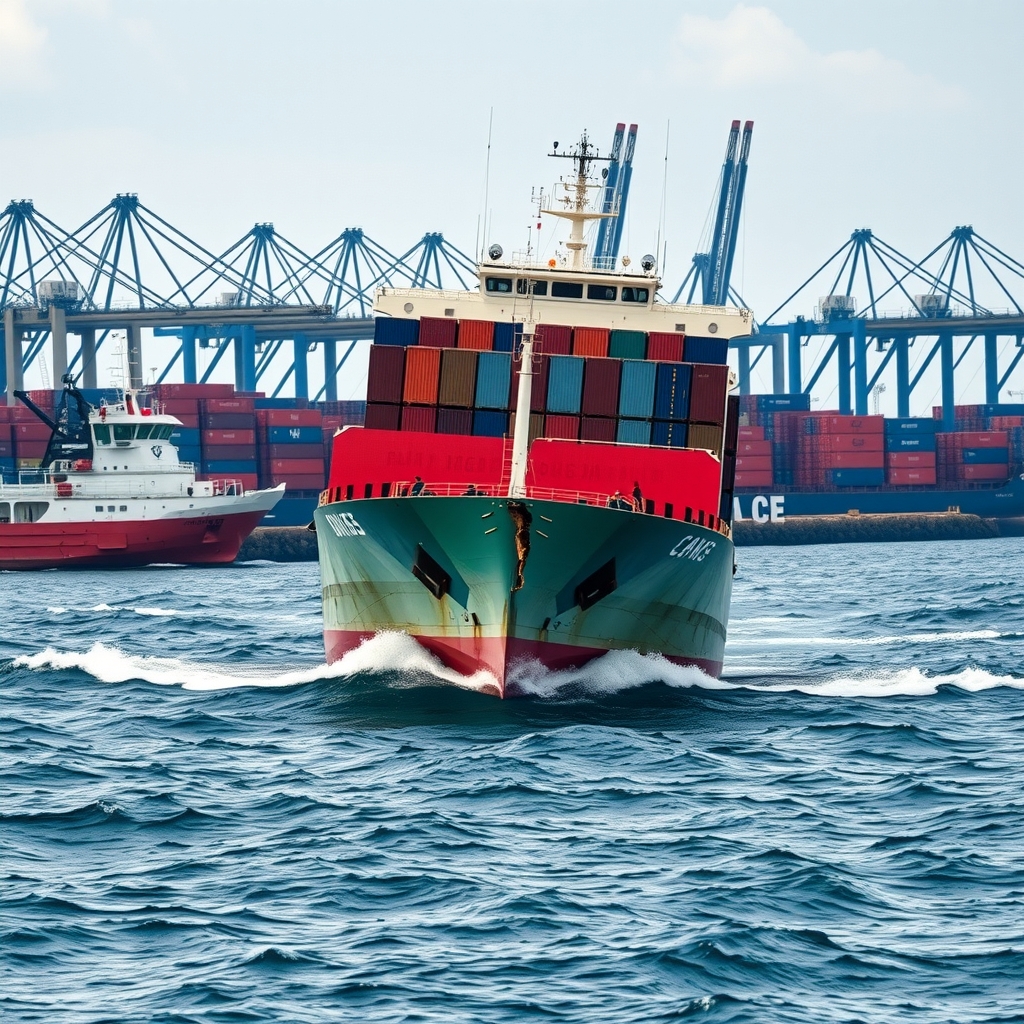
The operational integrity of international maritime commerce rests upon the delicate equilibrium between commercial risk allocation and the non-negotiable imperative of navigational safety. At the heart of this legal architecture lies the doctrine of unseaworthiness—a foundational concept that defines the outer boundaries of a shipowner's liability when structural deficiencies, mechanical failures, or operational inadequacies compromise a vessel's fitness for sea. Across centuries of maritime jurisprudence, the statutory and common law duties incumbent upon vessel owners have evolved from absolute warranties of seaworthiness into nuanced obligations governed by international conventions, standard bill of lading regimes, and landmark judicial decisions. Understanding how international tribunals and national courts interpret these duties requires a rigorous examination of statutory texts, the allocation of evidentiary burdens, and the limits of liability under evolving global frameworks.
Modern maritime law addresses unseaworthiness not merely as a technical defect in hull or machinery, but as a systemic legal status that triggers contractual breaches, invalidates insurance coverages, and strips shipowners of statutory limitation protections. As global shipping encounters increasingly complex technical specifications and commercial pressures, the jurisprudential tension between the absolute nature of safety obligations and the practical limits of due diligence continues to shape modern dispute resolution across arbitral panels and international courts.
What constitutes unseaworthiness under international maritime law?
To evaluate shipowner liability, one must first define the legal threshold of unseaworthiness. Historically rooted in English common law as an implied absolute warranty in every voyage charterparty, the concept required that a vessel be reasonably fit in all respects to encounter the ordinary perils of the anticipated voyage. This absolute nature, however, proved commercially unworkable during the industrial expansion of shipping in the late nineteenth and early twentieth centuries, prompting international diplomatic efforts to standardize liabilities and immunities through uniform legal instruments.
The landmark Hague Rules of 1924, subsequently amended by the Hague-Visby Rules and supplemented by the Hamburg Rules and the recent Rotterdam Rules, fundamentally transformed the doctrine by shifting the standard from absolute warranty to an obligation of due diligence. Under Article 3(1) of the Hague and Hague-Visby Rules, the carrier is bound before and at the beginning of the voyage to exercise due diligence to make the ship seaworthy, properly man, equip, and supply the ship, and make all parts of the ship fit for their intended reception, carriage, and preservation.
Jurisprudence from various jurisdictions, drawing upon principles recognized in international maritime arbitrations and domestic high courts, establishes that unseaworthiness encompasses both physical and operational deficiencies. A vessel may be deemed unseaworthy due to structural flaws in the hull, defective steering gear, inadequate navigational equipment, or expired classification certificates. Furthermore, the doctrine extends beyond hardware to human elements; under the modern application of the rule, an incompetent master, an inadequately trained crew, or an insufficient complement of personnel can render a technically sound vessel legally unseaworthy. The threshold inquiry centers on whether the defect or deficiency was such that a reasonably prudent owner, desiring to protect their own investment and ensure the safety of life and property at sea, would have required its repair or correction before permitting the vessel to break ground.
| Legal Regime | Core Seaworthiness Obligation | Burden of Proof |
|---|---|---|
| Common Law (Pre-Convention) | Absolute warranty of fitness | Strict liability upon the shipowner |
| Hague / Hague-Visby Rules | Exercise due diligence before and at the beginning of the voyage | Carrier must prove due diligence once unseaworthiness is established |
| Rotterdam Rules | Continuous duty to exercise due diligence during the voyage | Balanced allocation between claimant and carrier |
How is due diligence established in shipowner liability disputes?
The operational core of modern unseaworthiness litigation revolves around the concept of due diligence. Unlike strict liability, due diligence requires the shipowner to demonstrate that they, along with their servants, agents, and independent contractors, took all reasonable precautions to ensure the vessel was seaworthy. The definitive judicial interpretation of due diligence was articulated in the seminal House of Lords decision in *The Eurasian Dream*, which reaffirmed that the obligation is personal to the carrier, meaning that even if the owner delegates maintenance to reputable surveyors, managers, or classification societies, the owner remains ultimately responsible for any negligence on the part of those delegates.
Establishing due diligence requires a comprehensive factual inquiry into the vessel's maintenance history, pre-voyage inspection protocols, compliance with International Safety Management (ISM) Code requirements, and adherence to flag state regulations. When cargo is damaged or lost due to an unseaworthy condition, the cargo claimant bears the initial burden of proving that the vessel was unseaworthy at the commencement of the voyage and that this unseaworthiness caused the loss. Once established, the evidentiary burden shifts entirely to the shipowner to prove that they exercised due diligence to prevent or discover the defect.
International tribunals and maritime courts scrutinize the conduct of shipowners through rigorous evidentiary standards. For example, relying solely on classification society certificates or statutory surveys is rarely sufficient to prove due diligence if the underlying defect was discoverable by reasonable examination. Jurisprudence consistently distinguishes between latent defects—those that could not have been discovered by the exercise of utmost care and skill—and patent or discoverable deficiencies that manifest due to systemic maintenance failures. If an owner fails to implement an effective safety management system or ignores recurrent mechanical warnings, courts will readily find a breach of the due diligence obligation, thereby invalidating the carrier's reliance on statutory defenses such as navigational fault or fire exemptions.
What are the legal consequences of establishing unseaworthiness?
When a court or arbitral tribunal determines that a vessel was unseaworthy and that the shipowner failed to exercise due diligence, the legal consequences are severe and multifaceted. Contractually, a breach of the seaworthiness obligation deprives the shipowner of standard immunities and limitations provided under bill of lading terms or international conventions. For instance, under the Hague-Visby regime, an owner who fails to exercise due diligence cannot invoke the defenses listed in Article 4(2), such as errors in navigation or management of the ship, if the loss is causally connected to the unseaworthy state.
Furthermore, unseaworthiness has profound implications for marine insurance contracts. Most hull and machinery (H&M) and protection and indemnity (P&I) policies incorporate express or implied warranties of seaworthiness. While modern insurance terms often mitigate the harshness of absolute warranty breaches through privity clauses—whereby coverage is forfeited only if the owner had actual knowledge of the unseaworthiness—the financial exposure remains immense. An owner facing uninsured liability for cargo destruction, environmental remediation, or wreck removal due to systemic unseaworthiness frequently confronts insolvency.
Beyond private contractual disputes, unseaworthiness intersects with public international law and criminal liability. Flag states and Port State Control (PSC) authorities enforce strict compliance with international conventions such as SOLAS, MARPOL, and the STCW Convention. Operating an unseaworthy vessel can lead to immediate detention, heavy administrative fines, and criminal prosecution of corporate officers and shipmasters under domestic legislation implementing international safety standards. Judicial authorities across major maritime jurisdictions emphasize that the doctrine serves not merely as a mechanism for loss distribution between private commercial parties, but as a vital regulatory pillar safeguarding human life and the marine environment.
Evaluating conflicting doctrines and future legal horizons
The ongoing evolution of international maritime law reveals persistent tensions between differing regional legal traditions and judicial philosophies. Civil law jurisdictions often apply statutory frameworks with strict textual interpretations, whereas common law systems rely heavily on accumulated judicial precedents and equitable doctrines. These differences manifest sharply in disputes involving the apportioning of fault between concurrent causes, such as where navigational error combines with pre-existing unseaworthiness.
Scholarly debate also surrounds the temporal scope of the due diligence obligation. While traditional regimes confine the duty strictly to the period 'before and at the beginning of the voyage,' modern commercial realities and statutory proposals, such as the Rotterdam Rules, advocate for a continuous duty of due diligence throughout the entire voyage. Critics of the continuous duty argue that it imposes an unreasonable commercial burden on shipowners navigating remote oceans where immediate technical intervention is impossible. Conversely, proponents emphasize that advanced satellite communications, remote diagnostic tools, and contemporary fleet management systems render continuous oversight both feasible and necessary to protect modern global supply chains.
Ultimately, the jurisprudence of unseaworthiness and shipowner liability reflects an ongoing negotiation between commercial efficiency and uncompromising safety mandates. As international organizations grapple with decarbonization technologies, alternative marine fuels, and autonomous shipping systems, the legal definitions governing vessel fitness and owner accountability will face unprecedented challenges. Future judicial decisions from international forums and national courts will undoubtedly redefine the boundaries of due diligence, ensuring that the ancient maritime doctrine of seaworthiness adapts to the technological imperatives of the twenty-first century.
Comments
No comments yet.