The Juridical Architecture of the Turkish Straits: Montreux, Sovereignty, and the Lex Specialis Regime
A comprehensive legal analysis of the Montreux Convention, evaluating the historical evolution, current geopolitical challenges, and the interplay between Turkish sovereignty and international law.
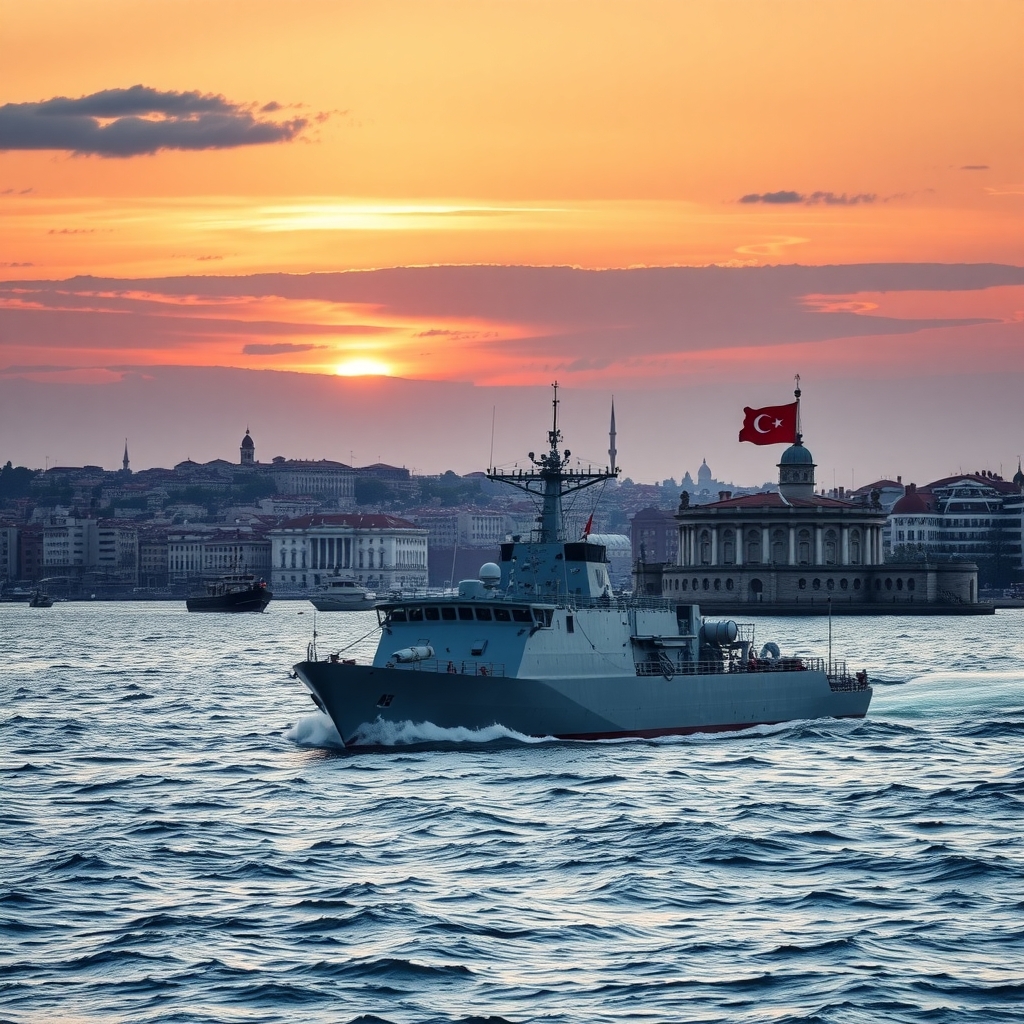
The Turkish Straits, a geographical complex comprising the Bosporus, the Sea of Marmara, and the Dardanelles, represent perhaps the most strategically sensitive maritime bottleneck in the global order. Unlike other international straits regulated under the broad strokes of the United Nations Convention on the Law of the Sea (UNCLOS), the Turkish Straits are governed by a specific, historical, and remarkably resilient legal instrument: the 1936 Montreux Convention Regarding the Regime of the Straits. This regime is not merely a technical treaty but a foundational pillar of regional security in the Black Sea and the wider Mediterranean. It represents a delicate balance between the sovereignty of the Republic of Turkey and the collective interest of the international community in maintaining the freedom of navigation.
To understand the current legal landscape, one must look past the immediate geopolitical frictions and examine the juridical bedrock of the 1936 Convention. It was born out of the failure of the 1923 Lausanne Convention, which had demilitarized the Straits. As the shadows of the Second World War began to lengthen across Europe, Turkey successfully argued for the remilitarization of the area, leading to a new consensus that restored Turkish control while establishing strict protocols for the passage of warships. This duality—sovereign control over the waterway coupled with internationally mandated limits on naval presence—forms the core of the Straits’ unique legal character.
How does the Montreux Convention regulate warship transit?
The regulation of warships under the Montreux Convention is a masterpiece of precision and nuance, distinguishing sharply between Black Sea riparian states (Turkey, Bulgaria, Romania, Ukraine, Russia, and Georgia) and non-Black Sea powers. For non-Black Sea powers, the Convention imposes rigorous quantitative and qualitative constraints. Under Articles 14 and 18, the aggregate tonnage of all non-Black Sea naval forces present in the Black Sea at any given time must not exceed 30,000 tons, though this can be increased to 45,000 tons under specific conditions. Furthermore, no individual vessel from a non-Black Sea power can exceed 15,000 tons, and their stay is limited to a maximum of 21 days.
In contrast, Black Sea powers enjoy greater flexibility. They are permitted to send capital ships of any tonnage through the Straits, provided they transit singly and are escorted by no more than two destroyers (Article 11). Submarines belonging to Black Sea powers also have specific rights to pass through the Straits for the purpose of joining their base or undergoing repairs, provided they travel on the surface and during daylight (Article 12). These distinctions reflect the 1936 geopolitical reality where the Soviet Union sought to secure its 'soft underbelly' while Turkey sought to prevent the Black Sea from becoming a theatre of great power competition.
The procedural requirements for transit are equally strict. For warships, prior notification must be given to the Turkish Ministry of Foreign Affairs. For non-Black Sea powers, this notice period is fifteen days; for Black Sea powers, it is reduced to eight days. This notification is not a request for permission—the right of transit is technically a treaty right—but a mandatory administrative requirement that allows Turkey to monitor compliance with the tonnage and duration limits. The legal significance of these provisions has been brought into sharp focus by recent conflicts, particularly regarding how Turkey interprets its discretionary powers during times of war.
What is the legal status of the Turkish Straits under UNCLOS?
The relationship between the Montreux Convention and the 1982 United Nations Convention on the Law of the Sea (UNCLOS) is one of the most debated topics in maritime jurisprudence. While UNCLOS is widely regarded as the 'constitution of the oceans,' establishing the regimes of transit passage and innocent passage, the Turkish Straits occupy a protected status. Under Article 35(c) of UNCLOS, the general rules for straits used for international navigation do not apply to those straits 'in which passage is regulated in whole or in part by long-standing international conventions in force specifically relating to such straits.'
This 'grandfather clause' ensures that the Montreux Convention remains the primary *lex specialis* for the Bosporus and Dardanelles. Turkey, which is notably not a party to UNCLOS—largely due to disputes with Greece over the Aegean Sea—maintains that the Straits are its internal waters, subject to a special international regime. From a juridical perspective, this means that the doctrine of 'transit passage' found in UNCLOS (which is more permissive than innocent passage) does not apply to the Turkish Straits. Instead, the specific rights and obligations codified in 1936 prevail.
This distinction is crucial because UNCLOS generally favors the rights of the flag state, whereas the Montreux regime grants significant regulatory and safety powers to the coastal state (Turkey). The table below outlines the primary differences between the UNCLOS transit passage regime and the Montreux regime:
| Feature | UNCLOS (Transit Passage) | Montreux Convention |
|---|---|---|
| Sovereignty | Limited by high seas freedoms | Full Turkish sovereignty subject to treaty |
| Warship Notification | Not required | Mandatory (8-15 days) |
| Submarine Passage | Submerged allowed | Surface only (limited cases) |
| Tonnage Limits | No limits | Strict limits for non-Black Sea powers |
| Duration of Stay | Unrestricted (continuous transit) | 21-day limit for non-Black Sea powers |
The legal resilience of Article 35(c) has been tested by attempts to harmonize international maritime law, yet the consensus remains that the specificities of the Turkish Straits require a dedicated framework. The International Court of Justice (ICJ), while not having ruled directly on the Montreux-UNCLOS conflict, has consistently recognized in cases like the *Corfu Channel* (1949) that the status of a strait is determined by its geographical and functional use, but always subject to valid treaty obligations that predated the general convention.
Can Turkey close the Straits during a war?
The authority of Turkey to restrict or close the Straits during times of war is articulated in Articles 19, 20, and 21 of the Convention. Article 19 is particularly pertinent when Turkey is not a belligerent. It states that in a time of war, the vessels of war belonging to belligerent powers shall not pass through the Straits. This is a mandatory prohibition. However, an exception is carved out for vessels returning to their home ports, ensuring that the closure does not result in the permanent stranding of a fleet.
When Turkey is itself a belligerent (Article 20) or considers itself threatened with an imminent danger of war (Article 21), its discretion expands significantly. In these scenarios, the passage of warships is left entirely to the discretion of the Turkish Government. This 'imminent danger' clause is a powerful legal tool, allowing Turkey to effectively militarize the management of the Straits if it perceives a direct threat to its national security. The jurisprudence surrounding these articles suggests that Turkey acts not merely as a local administrator but as a 'guardian' of the Straits on behalf of the international community, albeit with a heavy emphasis on its own defensive needs.
The application of Article 19 during the 2022 Russian invasion of Ukraine serves as a contemporary landmark. By declaring the situation a 'war'—a legal characterization that triggered Article 19—Turkey effectively barred the passage of Russian warships that were not registered to the Black Sea Fleet from entering the theatre of operations. This move was widely supported by the international legal community as a faithful execution of treaty obligations, demonstrating that the Montreux Convention is not a relic of the past but an active instrument of modern conflict management.
Does the Montreux Convention apply to the Black Sea?
While the Montreux Convention is physically concerned with the Straits, its legal and functional reach extends deep into the Black Sea. The Convention regulates the naval equilibrium of the entire basin. By limiting the tonnage and duration of non-Black Sea naval presence, it effectively creates a 'closed' or 'semi-closed' sea regime in a military sense, even if the Black Sea contains high seas areas under general international law.
This creates a complex legal overlapping. While the waters of the Black Sea beyond territorial limits are subject to the freedoms of the high seas (as recognized by the ICJ and ITLOS), the access to those waters is strictly rationed by the Montreux regime. This has led to friction, particularly when non-Black Sea powers wish to conduct prolonged exercises or maintain a persistent presence in response to regional instability. The Turkish position has consistently been that any attempt to circumvent the tonnage limits—for example, by rotating vessels in a way that maintains a constant presence—violates the spirit, if not the letter, of the Convention.
Merchant Shipping and Sanitary Regulations
While naval transit garners the most headlines, the vast majority of traffic through the Straits consists of commercial merchant vessels. Under Article 2, merchant vessels enjoy complete freedom of passage and navigation by day and by night, regardless of flag or cargo. This right is absolute in times of peace, subject only to sanitary and safety regulations.
However, the definition of 'sanitary' and 'safety' has evolved. In the 1990s, Turkey introduced the Maritime Traffic Regulations for the Turkish Straits to address the increasing risk of environmental disasters in the densely populated Bosporus. These regulations include the use of Vessel Traffic Services (VTS), compulsory pilotage recommendations, and restrictions on large tankers during hazardous weather. Some maritime states initially challenged these regulations, arguing they infringed upon the freedom of navigation. However, the International Maritime Organization (IMO) eventually mediated a compromise, recognizing Turkey’s right to manage traffic for the sake of environmental security while maintaining the principles of Montreux.
The legal tension between the 'freedom of navigation' for merchant ships and the 'environmental sovereignty' of the coastal state is a recurring theme in modern maritime law, necessitating a pragmatic interpretation of 1930s treaty language in a 21st-century context.
The Legal Implications of Canal Istanbul
A burgeoning area of legal inquiry is the proposed 'Canal Istanbul,' a man-made waterway intended to bypass the Bosporus. The juridical question is whether this new canal would be subject to the Montreux Convention. If Turkey argues that the Canal is a purely domestic infrastructure project, it could theoretically set its own rules for passage, potentially charging tolls and allowing the passage of warships that would otherwise be prohibited or limited by Montreux.
From a strict textualist perspective, the Montreux Convention applies to the 'Straits,' which it defines as the Bosporus, the Sea of Marmara, and the Dardanelles. A man-made canal is none of these. However, from a functionalist perspective, legal scholars argue that the Montreux regime was intended to regulate the *access* to the Black Sea. If the Canal is used to bypass the naval limitations of the Convention, it could be seen as an act of bad faith (*pacta sunt servanda*) or a fundamental change of circumstances (*rebus sic stantibus*). This debate remains speculative but highlights the potential for future legal volatility in the region.
Conclusion
The legal regime of the Turkish Straits remains a unique phenomenon in international law. The 1936 Montreux Convention has survived the end of the British Empire, the rise and fall of the Soviet Union, and the birth of the modern law of the sea. Its longevity is attributed to its precise balancing of competing interests: the security of the Black Sea states, the global interest in merchant trade, and the sovereign rights of Turkey. As geopolitical tensions continue to rise, the Convention’s clear rules on warship tonnage and its robust framework for wartime closures provide a degree of predictability that is often missing in modern maritime disputes. While challenges such as the Canal Istanbul and environmental safety persist, the Montreux Convention remains the indispensable *lex specialis*, a testament to the enduring power of well-crafted treaty law in managing one of the world's most vital maritime intersections.
Comments
No comments yet.