State Responsibility for Climate Change Effects on the Oceans
An in-depth academic analysis of how the law of the sea and state responsibility frameworks address the ecological crises of ocean warming, acidification, and sea-level rise.
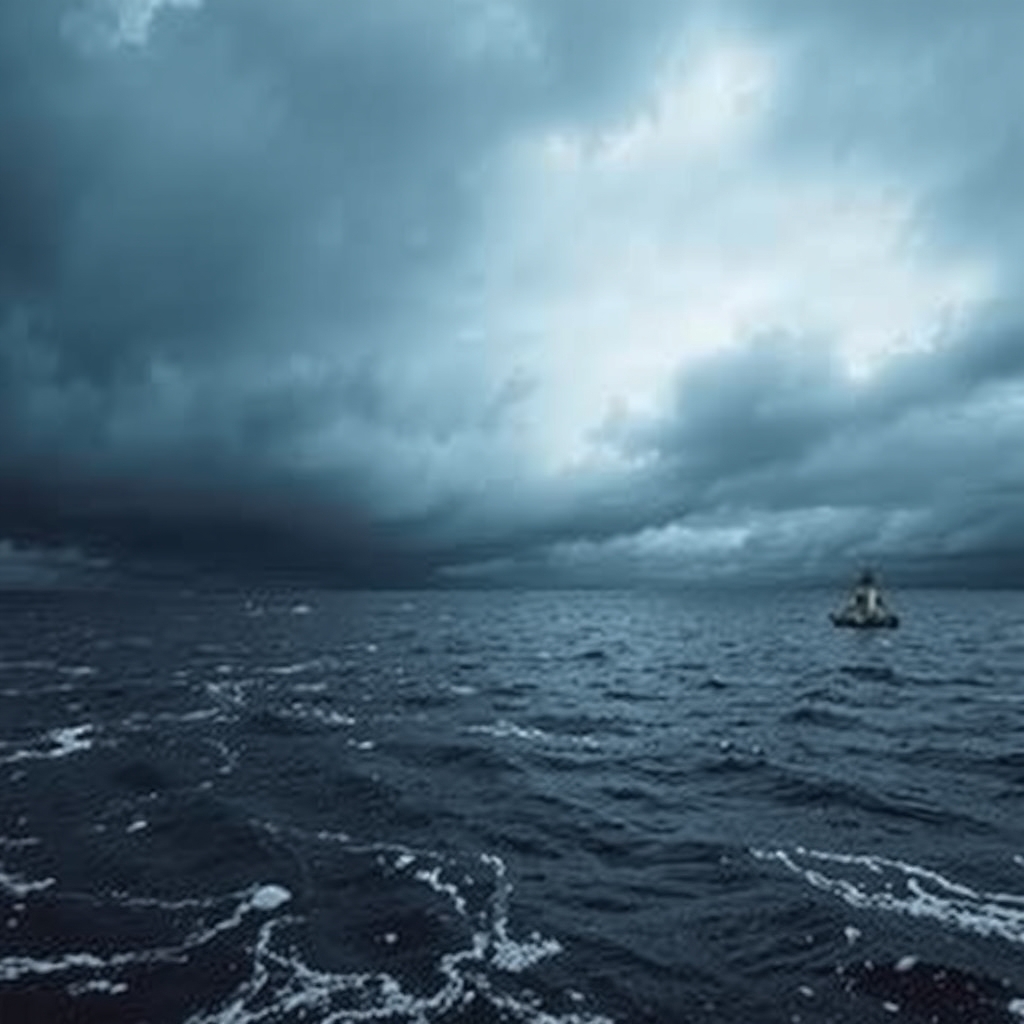
The global ocean is the primary heat sink of the climate system, absorbing over 90 percent of the excess heat trapped by anthropogenic greenhouse gas emissions and roughly 30 percent of human-generated carbon dioxide. This massive absorption of thermal energy and chemical compounds has triggered profound shifts: rapid thermal expansion, systemic acidification, marine deoxygenation, and the shifting of marine habitats. While the international climate change regime—primarily structured around the United Nations Framework Convention on Climate Change (UNFCCC) and the Paris Agreement—operates on a political consensus model of nationally determined contributions, it has long struggled to address the specific, localized, and devastating ecological damages inflicted upon marine environments. Consequently, legal scholars, international lawyers, and vulnerable coastal and small-island states are increasingly looking to the law of the sea and the general law of state responsibility to construct a framework of legal accountability for these oceanic transformations.
This academic inquiry explores the intersection of international environmental law, the law of the sea, and the rules of state responsibility. By analyzing recent developments in international jurisprudence, particularly the landmark advisory opinion of the International Tribunal for the Law of the Sea (ITLOS) in 2024, this paper evaluates the extent to which sovereign states can be held legally responsible for the degradation of marine ecosystems caused by greenhouse gas emissions. In doing so, it navigates the conceptual tensions between treaty-based climate commitments and the hard obligations codified under the United Nations Convention on the Law of the Sea (UNCLOS).
How does UNCLOS define state responsibility for marine pollution from climate change?
To evaluate whether states bear responsibility for the marine consequences of climate change under UNCLOS, one must first determine whether anthropogenic greenhouse gases (GHGs) fall within the treaty's definition of pollution. Article 1, paragraph 1(4) of UNCLOS defines "pollution of the marine environment" as:
"the introduction by man, directly or indirectly, of substances or energy into the marine environment, including estuaries, which results or is likely to result in such deleterious effects as harm to living resources and marine life, hazards to human health, hindrance to marine activities, including fishing and other legitimate uses of the sea, impairment of quality for use of sea water and reduction of amenities."
From a literal and teleological interpretation of this text, carbon dioxide and other greenhouse gases readily satisfy this definition. Carbon dioxide is a gaseous chemical compound—unquestionably a "substance"—which, when dissolved in seawater, alters marine chemistry by lowering pH levels and carbonate ion concentrations, a process known as ocean acidification. Furthermore, greenhouse gases act as a thermal blanket, trapping solar radiation within the earth's atmosphere and transferring this thermal "energy" directly into the upper layers of the ocean, leading to marine heatwaves and thermal expansion. Both pathways cause undeniable "deleterious effects" on marine ecosystems, such as coral bleaching, species migration, and the collapse of artisanal fisheries.
Once greenhouse gases are categorized as marine pollution, the comprehensive legal obligations set forth in Part XII of UNCLOS are activated. Article 192 establishes a foundational, unqualified duty: "States have the obligation to protect and preserve the marine environment." The International Court of Justice (ICJ) and various arbitral tribunals have confirmed that this duty is not merely a passive aspirational goal but a legally binding obligation. It applies to all maritime zones, including the high seas and areas beyond national jurisdiction, and is considered to reflect customary international law.
Furthermore, Article 194 requires states to take, individually or jointly, "all measures consistent with this Convention that are necessary to prevent, reduce and control pollution of the marine environment from any source." Under Article 194(3)(a), these measures must specifically address the release of toxic, harmful, or noxious substances, especially those that are persistent, from land-based sources, from or through the atmosphere, or by dumping. Because the vast majority of anthropogenic greenhouse gases originate from land-based industrial, agricultural, and transportation activities and enter the ocean "through the atmosphere," states are legally bound to implement domestic regulations to limit these emissions to prevent oceanic degradation.
What is the role of ITLOS in defining state obligations for ocean warming?
For decades, the international community treated climate change and the law of the sea as separate regulatory silos. The UNFCCC was viewed as the exclusive forum for climate negotiations, leading some states to argue that UNCLOS obligations could not be applied to greenhouse gas emissions. This artificial separation was decisively dismantled on May 21, 2024, when the International Tribunal for the Law of the Sea (ITLOS) issued its highly anticipated Advisory Opinion on Climate Change and International Law, requested by the Commission of Small Island States on Climate Change and International Law (COSIS).
The Tribunal’s advisory opinion fundamentally transformed the global legal landscape by clarifying that anthropogenic greenhouse gas emissions do indeed constitute "pollution of the marine environment" under UNCLOS. By establishing this link, ITLOS clarified that the specific obligations of Part XII are fully applicable to state actions that drive ocean warming, acidification, and sea-level rise.
Importantly, the Tribunal analyzed the standard of care required of states under Article 194. It determined that the duty to prevent, reduce, and control marine pollution from greenhouse gases is an obligation of due diligence. While this means states are not absolute guarantors that no ocean warming will occur, they must take all necessary steps, using their best efforts, to regulate and restrict emissions within their jurisdictions. ITLOS emphasized that this due diligence standard is "objective" and must be measured against the best available science, particularly the reports of the Intergovernmental Panel on Climate Change (IPCC). Consequently, as scientific certainty regarding the catastrophic impacts of ocean warming increases, the standard of due diligence expected of states becomes proportionately more stringent.
Furthermore, the Tribunal addressed the relationship between UNCLOS and the Paris Agreement. It ruled that while compliance with the Paris Agreement’s temperature goals (limiting warming to well below 2°C, and preferably 1.5°C) is highly relevant, it does not act as a safe harbor or release states from their stricter obligations under UNCLOS. In other words, a state cannot claim it has fulfilled its legal duties under the law of the sea simply by submitting a Nationally Determined Contribution (NDC) under the Paris Agreement if those domestic measures are insufficient to protect and preserve the marine environment from severe degradation. This represents a critical shift from soft-law diplomatic compromise to hard-law environmental accountability.
What due diligence standard applies to greenhouse gas emissions affecting the marine environment?
The conceptual core of state responsibility for environmental damage lies in the principle of due diligence. In international law, obligations are generally divided into "obligations of result" (where a state must achieve a specific outcome) and "obligations of conduct" (where a state must exert its best efforts toward an outcome). The prevention of transboundary environmental harm and the protection of the marine environment fall squarely into the category of obligations of conduct.
To understand the due diligence standard applicable to greenhouse gas emissions, one must look to the customary international law principle of transboundary harm—the "no-harm" rule. Crystallized in the historic Trail Smelter arbitration and reaffirmed in the ICJ's Pulp Mills on the River Uruguay judgment, this rule dictates that states must ensure that activities within their jurisdiction or control do not cause significant damage to the environment of other states or to areas beyond national jurisdiction, such as the high seas.
In the context of the marine environment, this standard requires states to establish, maintain, and enforce a robust domestic regulatory framework capable of controlling public and private emitters of greenhouse gases. The parameters of this due diligence standard are characterized by several key elements:
- Scientific Alignment: The adequacy of a state's regulatory efforts is evaluated against the prevailing scientific consensus. If the IPCC indicates that a certain global emissions trajectory will cause irreversible marine ecological collapse, a state’s failure to align its domestic environmental laws with those scientific benchmarks constitutes a prima facie failure of due diligence.
- The Precautionary Approach: Where there are threats of serious or irreversible damage to marine systems, a lack of full scientific certainty cannot be used as a reason for postponing cost-effective measures to prevent environmental degradation. States must act preemptively to mitigate potential marine harms.
- Environmental Impact Assessments (EIAs): Under Article 206 of UNCLOS, when states have reasonable grounds for believing that planned activities under their jurisdiction or control may cause substantial pollution of or significant and harmful changes to the marine environment, they must, as far as practicable, assess the potential effects of such activities. In modern terms, this means any major industrial or infrastructure project must be assessed for its cumulative greenhouse gas footprint and subsequent impact on ocean systems.
- Vigilance and Enforcement: States cannot merely pass environmental laws; they must actively monitor compliance, penalize violators within their territory, and adapt their administrative systems as new clean technologies become available.
Importantly, the due diligence standard is dynamic and differentiated. While all states share the obligation to protect the marine environment, the capacity to do so varies. Under the principle of Common but Differentiated Responsibilities and Respective Capabilities (CBDR-RC), developed states—historically the largest contributors to cumulative greenhouse gas concentrations—are held to a higher standard of care and are expected to transition away from fossil fuels more rapidly, while also providing financial and technological assistance to developing nations to help them meet their UNCLOS obligations.
Can states be held legally liable for sea level rise under international law?
While the establishment of primary obligations (the duty to prevent marine pollution and protect the oceans) is relatively clear, translating a breach of these duties into legal liability and reparation under international law presents formidable hurdles. The framework for state responsibility is governed by customary international law, largely codified in the International Law Commission's (ILC) Articles on Responsibility of States for Internationally Wrongful Acts (ARSIWA). Under Article 1 of ARSIWA, "Every internationally wrongful act of a State entails the international responsibility of that State." An internationally wrongful act occurs when conduct consisting of an action or omission is attributable to the state under international law and constitutes a breach of an international obligation of the state.
Applying this framework to the consequences of sea-level rise—such as the loss of low-lying territory, saltwater intrusion into freshwater aquifers, and the destruction of coastal infrastructure—reveals three primary challenges: attribution, causation, and the determination of reparations.
The Challenge of Attribution
Under ARSIWA, a state is responsible for its own governmental actions or omissions, as well as the acts of private entities if they are acting under the direction, instigation, or control of the state. In the climate context, the vast majority of greenhouse gases are emitted by private industrial, commercial, and individual actors. However, the state is not held directly responsible for the private emissions themselves; rather, it is held responsible for its own failure to regulate those private actors. If a state permits fossil fuel extraction, subsidizes carbon-intensive industries, or fails to enforce emissions limits, that administrative omission is directly attributable to the state and constitutes a breach of its due diligence obligation.
The Hurdle of Causation
In traditional international law disputes, there is usually a bilateral, linear relationship between the wrongful act of one state and the injury suffered by another (e.g., a factory in State A spills toxic waste into a river flowing into State B). Climate change, however, is a diffuse, cumulative global phenomenon. The emissions of any single state mix globally in the atmosphere, warming the planet and melting glaciers collectively. Consequently, it is scientifically impossible to trace a specific cubic meter of rising sea level in a small island state like Tuvalu to the emissions of a single developed state like Germany or the United States.
To overcome this hurdle, international legal scholars propose models of joint, several, or proportional liability. Under a proportional liability model, a state could be held responsible for a portion of the damage corresponding to its historical contribution to global greenhouse gas concentrations. While this approach has yet to be fully endorsed in a contentious case before the ICJ, the developing jurisprudence of international tribunals suggests a growing willingness to accept cumulative causation as a basis for establishing responsibility.
The Question of Reparations
Under Article 31 of ARSIWA, a responsible state is under an obligation to make full reparation for the injury caused by the internationally wrongful act. Reparation can take the form of restitution, compensation, or satisfaction. In the context of sea-level rise, restitution (restoring the situation to how it was before the wrongful act) is physically impossible; lost islands cannot be easily reclaimed from the sea, and extinct marine species cannot be resurrected. Therefore, financial compensation is the primary realistic remedy.
However, calculating compensation for the loss of state territory, cultural heritage, and ecological services is incredibly complex. Moreover, the loss of an entire state's land territory raises unprecedented sovereign questions: If a state becomes completely submerged, does it retain its maritime zones, including its Exclusive Economic Zone (EEZ) and its rich marine resources? The International Law Commission is currently studying this issue, with a growing consensus emerging in favor of "maritime zone stability" and the "presumption of state continuity" to protect the sovereign rights of affected populations, ensuring they are not doubly victimized by losing both their land and their legal rights over the surrounding ocean.
The Intersection of International Legal Regimes
The evolving landscape of state responsibility for the oceans highlights the critical need for "systemic integration" in international law. As codified in Article 31(3)(c) of the Vienna Convention on the Law of Treaties, treaty provisions must be interpreted in light of "any relevant rules of international law applicable in the relations between the parties." This means that UNCLOS, the UNFCCC, the Paris Agreement, and customary international law must not be viewed as competing, isolated legal regimes, but as mutually reinforcing elements of a single, coherent international legal order.
While the UNFCCC provides the political architecture for global emissions reduction targets, UNCLOS provides the hard environmental standards and dispute resolution mechanisms necessary to protect the marine environment. When a state fails to meet its global climate commitments, that failure can be used as evidence of a breach of its due diligence obligations under UNCLOS. This systemic integration bridges the gap between political compromise and judicial accountability.
Conclusion
The application of state responsibility to the marine effects of climate change represents one of the most significant and complex evolutions in modern international law. For decades, the oceans were treated as an inexhaustible sink for global pollution, shielded from legal accountability by the geographic vastness of the high seas and the diffuse nature of atmospheric emissions. Today, that legal vacuum is rapidly closing.
Through the rigorous application of UNCLOS Part XII and the clarification provided by the ITLOS Advisory Opinion, it is now established that greenhouse gases constitute marine pollution and that states bear a strict, legally binding obligation of due diligence to prevent, reduce, and control this pollution. While significant challenges remain regarding attribution, cumulative causation, and the practical implementation of reparations for catastrophic losses like sea-level rise, the legal tools necessary to hold major emitters accountable are fully assembled. As international courts—including the International Court of Justice and the Interamerican Court of Human Rights—prepare to issue their own opinions on state obligations regarding climate change, the oceans have transitioned from passive victims of global warming to the very arena where the future of international environmental accountability will be decided.
Comments
No comments yet.