Vicarious Responsibility and Systemic Fault: Shipowners Liability for Crew Negligence in International Law
An in-depth scholarly examination of vicarious liability, nautical fault, seaworthiness, and global limitation regimes governing shipowners accountability for crew negligence.
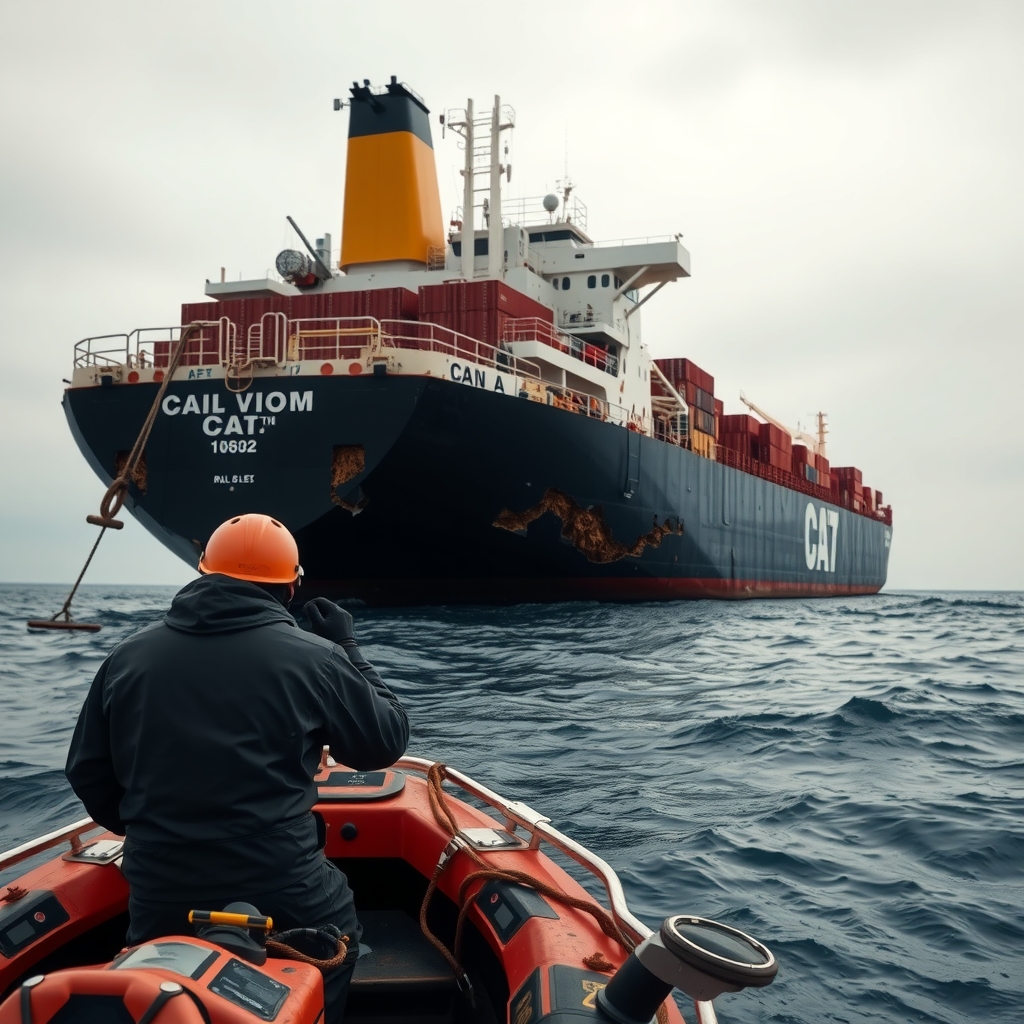
The doctrine of shipowners liability for crew negligence sits at the complex intersection of tortious vicarious responsibility, contractual risk allocation, and statutory limitation regimes. Historically, maritime law treated the vessel as a distinct juridical entity, carving out unique exculpations for vessel owners due to the spatial and operational isolation of ships at sea. In contemporary international maritime jurisprudence, however, this traditional insulation has undergone severe erosion. The expansion of global communication networks, mandatory safety management frameworks, and evolving international conventions have altered how courts assign operational fault to shipowners. To understand modern maritime liability, one must analyze the tension between traditional vicarious liability doctrines like respondeat superior and primary corporate duties regarding vessel seaworthiness, crew competence, and management oversight.
Maritime claims arising from seafarer error span tortious collisions, cargo loss, environmental degradation, and personal injury. In evaluating these claims, international tribunals and national admiralty courts must balance two competing commercial imperatives: protecting innocent third parties and cargo owners from shipboard negligence, and preserving the financial stability of the shipping industry through predictable risk allocation and statutory rights of limitation. The jurisprudential evolution from the nineteenth-century nautical fault defense to modern safety management regimes highlights a systematic shift toward heightened corporate accountability.
When is a shipowner liable for crew negligence?
A shipowner is vicariously liable for crew negligence whenever a master, officer, or crew member commits a negligent act or omission within the course and scope of their employment that directly causes loss, damage, or injury to a third party. Grounded in the common law principle of respondeat superior and echoed across civil law jurisdictions, this vicarious accountability forms the foundational baseline of maritime tort law. Under general maritime law and statutory frameworks such as the United States Jones Act, 46 U.S.C. § 30104, or the English Supreme Court Act 1981, the employer remains answerable for the tortious conduct of its mariners performed in execution of shipboard duties.
However, establishing shipowner liability requires distinguishing between mere operational errors committed by individual crew members during a voyage and fundamental breaches of personal, non-delegable corporate duties by the vessel owner. In third-party tort actions, such as vessel collisions or allisions with port infrastructure, vicarious liability attaches almost automatically once navigational fault or breach of the International Regulations for Preventing Collisions at Sea 1972 (COLREGs) is established against the crew. In contrast, under contractual bills of lading and charterparty agreements, the shipowner liability profile is qualified by statutory regimes and international carriage conventions.
To establish liability when loss occurs, claimants frequently probe whether the crew error was an isolated operational lapse or the predictable outcome of systemic managerial oversight failures. As established in landmark legal precedents such as The Eurasian Dream [2002] EWHC 118 (Comm), a critical legal boundary exists between ordinary operational negligence and crew incompetence. While ordinary negligence involves a temporary failure of a properly qualified seafarer to exercise reasonable care, incompetence denotes a lack of basic knowledge, physical or mental capability, or adequate training that renders the vessel unseaworthy before it sets sail. Where crew error stems from underlying incompetence, the shipowner faces primary, direct liability for failing to exercise due diligence to properly man the vessel prior to the commencement of the voyage.
What is the nautical fault exception under marine law?
The nautical fault exception is a specialized legal defense under Article IV Rule 2(a) of the Hague and Hague-Visby Rules that historically exempted sea carriers from liability for cargo loss or damage resulting from the act, neglect, or default of the master, mariner, pilot, or the servants of the carrier in the navigation or in the management of the ship. Formulated during an era when shipowners possessed limited ability to monitor or communicate with their vessels once they cleared port, this exception transferred navigational risk to cargo interests, provided the shipowner had exercised due diligence to make the ship seaworthy prior to departure under Article III Rule 1.
Judicial interpretation of the nautical fault exception hinges on drawing a clear legal line between management of the ship and management of the cargo. In the authoritative ruling of the English House of Lords in The Hill Harmony [2001] 1 AC 638, the court clarified that choices regarding ocean routeing dictated by commercial considerations do not fall within the scope of navigation or management of the ship under Article IV Rule 2(a). Navigational management encompasses decisions directly impacting the nautical safety and seamanship of the vessel itself, such as ballasting, steering, or anchoring in heavy weather. Conversely, negligent handling of cargo systems or commercial route selection constitutes cargo management negligence under Article III Rule 2, for which the carrier remains fully responsible.
The contemporary legal status of the nautical fault defense is subject to regulatory transformation and international divergence. While the Hague-Visby Rules retain the defense, subsequent international instruments have sought its complete elimination:
- The Hamburg Rules (1978): Article 5 replaced the list of specific exculpatory exceptions with a general standard of presumed fault, removing the explicit nautical fault defense while preserving a narrow exception for shipboard fire mitigation efforts.
- The Rotterdam Rules (2008): Article 17 entirely abolished the nautical fault exception. Under this framework, carriers are liable for cargo loss caused by crew negligence during navigation, placing maritime transport on equal regulatory footing with air, rail, and road transportation regimes.
Despite the conceptual clarity offered by the Rotterdam Rules, their limited international ratification means that the nautical fault defense remains active in jurisdictions operating under Hague or Hague-Visby statutory regimes. Consequently, maritime litigation frequently features intense disputes over whether specific shipboard actions constitute navigational errors or unseaworthiness failures.
Systemic Unseaworthiness, ISM Code Compliance, and Crew Incompetence
The dynamic between crew negligence and vessel seaworthiness represents one of the most critical developments in modern maritime jurisprudence. Under international conventions and national maritime codes, a shipowner owes an non-delegable duty to exercise due diligence to provide a seaworthy ship equipped with a competent master and crew. When crew negligence is shown to be the direct result of systemic incompetence, inadequate training, or fatigue induced by unlawful manning levels, the defense of crew error collapses into a primary breach of the shipowner obligation to ensure seaworthiness.
The implementation of Chapter IX of the International Convention for the Safety of Life at Sea (SOLAS) and the International Safety Management (ISM) Code has reshaped how courts evaluate shipowner liability. The ISM Code requires shipping enterprises to establish a structured Safety Management System (SMS) and designate a specific individual, known as the Designated Person Ashore (DPA), who maintains direct access to top management. The DPA acts as a conduit ensuring operational safety data and deficiency reports flow directly from sea to shore.
The objective of the ISM Code is to establish an unbroken chain of operational awareness between shore-based management and shipboard personnel, effectively closing the historical legal gap between crew error at sea and corporate knowledge on land.
Where a shipowner fails to enforce its own Safety Management System, or where management ignores DPA warnings regarding crew fatigue, lack of certification under the International Convention on Standards of Training, Certification and Watchkeeping for Seafarers (STCW), or defective shipboard equipment, crew negligence ceases to be viewed as an isolated seafarer lapse. In legal proceedings such as The Star Sea [2001] UKHL 1 and The Lady Gwendolen [1965] 1 Lloyd's Rep 335, courts confirmed that structural corporate blindness regarding navigation practices or equipment maintenance converts routine crew errors into non-delegable shipowner fault, eliminating the carrier's ability to disclaim liability.
How does unseaworthiness break limitation of liability?
Unseaworthiness breaks a shipowner's statutory right to limit liability when the unseaworthy condition stems from personal acts, omissions, or systemic management failures of the shipowner executed intentionally or recklessly with knowledge that such damage or loss would probably result. Under global limitation frameworks, most notably the Convention on Limitation of Liability for Maritime Claims 1976 (LLMC 1976) and its 1996 Protocol, shipowners enjoy a nearly unbreakable statutory right to limit their financial liability according to the vessel's tonnage. However, this liability cap is forfeited under Article 4 of the LLMC if the claimant meets an exceptionally demanding burden of proof.
Article 4 of the LLMC 1976 establishes a subjective test for breaking limitation, replacing the older legal standard found in the 1957 Limitation Convention, which turned on whether the loss occurred with the actual fault or privity of the shipowner. Under the actual fault or privity regime, as demonstrated in The Marion [1984] AC 563, a managing director's failure to maintain continuous oversight of vessel charts and navigation manuals was sufficient to constitute personal fault, depriving the shipowner of limitation rights when the master anchored on an underwater pipeline using outdated charts.
Under the modern Article 4 LLMC standard, establishing crew unseaworthiness alone does not automatically break limitation. Claimants must construct a direct evidentiary link demonstrating that top shore-based management knew of the systematic risk or crew incompetence, realized that damage would likely occur as a result, and recklessly permitted the vessel to operate regardless. In cases such as The Saint Jacques II [2002] EWHC 1230 (Admlty), courts recognized that continuous, illegal navigation practices tolerated by vessel owners could meet this conduct barring limitation threshold, effectively connecting crew negligence to management reckless disregard.
Can a shipowner limit liability for crew errors?
A shipowner can limit liability for crew errors in the vast majority of operational tort and contract claims, provided the underlying negligence does not involve intentional or reckless corporate misconduct. The fundamental purpose of global maritime limitation treaties, including the LLMC 1976/1996 and national equivalents such as the United States Limitation of Liability Act of 1851 (46 U.S.C. § 30501 et seq.), is to create a predictable financial ceiling for maritime claims, allowing shipowners to obtain commercial marine insurance through Protection and Indemnity (P&I) Clubs.
Limitation funds are calculated systematically based on the gross tonnage of the vessel involved, establishing separate financial caps for property claims and loss of life or personal injury claims. When crew negligence causes a collision or allision resulting in massive property damage, the shipowner can petition an admiralty court to establish a limitation fund. Once the fund is constituted, all actions against the shipowner arising from the incident are stayed, and claimants must seek recovery exclusively from the pool of assets deposited with the court.
However, statutory limitation rights are subject to specific treaty exceptions and statutory exclusions. Under Article 3 of the LLMC 1976, specific maritime claims are entirely exempt from financial limitation, meaning the shipowner faces unlimited vicarious or direct liability regardless of circumstances:
- Claims for Salvage or General Average: Claims for salvage remuneration or contributions in general average are excluded from statutory limitation funds.
- Oil Pollution Claims: Damage covered by the International Convention on Civil Liability for Oil Pollution Damage 1992 (CLC) is governed by separate statutory limitation pools and strict liability rules.
- Seafarer and Crew Claims: Claims by employees whose duties are connected with the ship, governed by employment contracts subject to protective labor laws, cannot be limited by shipowners if national law prohibits such limitation.
Furthermore, while shipowners retain strong statutory limitation protections against third-party claims, contractual exculpation for crew negligence in charterparties and contracts of affreightment remains subject to mandatory statutory minimum standards, such as Article IV Rule 5 of the Hague-Visby Rules, which prevents carriers from contracting out of baseline seaworthiness obligations.
Comparative Analysis of International Legal Frameworks
The rules governing carrier liability, crew negligence, and financial limitation vary significantly across international conventions. The following matrix illustrates the legal distinctions among the primary international regimes regulating carriage of goods and maritime limitation:
| Legal Convention / Regime | Nautical Fault Exception Available? | Standard for Carrier Due Diligence | Test for Breaking Liability Limitation | Allocation of Risk for Crew Negligence |
|---|---|---|---|---|
| Hague-Visby Rules (1968) | Yes (Article IV Rule 2a) | Before and at the commencement of the voyage (Article III Rule 1) | Intent to cause damage, or recklessly with knowledge of probable loss | Protects carrier from cargo loss caused by crew operational navigational fault |
| Hamburg Rules (1978) | No (Replaced by presumed fault standard) | Continuous standard throughout carriage of goods | Personal act or omission committed recklessly with knowledge | Carrier liable for crew negligence unless proof of all reasonable measures shown |
| Rotterdam Rules (2008) | No (Abolished entirely) | Continuous duty to maintain seaworthiness during entire sea voyage | Intentional or reckless corporate misconduct under Article 61 | Full vicarious liability for crew errors in navigation and cargo handling |
| LLMC Convention (1976/1996) | N/A (Global Limitation Treaty) | N/A (Governs financial limitation limits) | Virtually unbreakable; requires proof of intentional or reckless personal act | Allows shipowners to limit global exposure for third-party crew torts |
Conclusion: Regulatory Convergence and the Future of Maritime Accountability
The legal architecture surrounding shipowners liability for crew negligence has evolved from a protective system designed to shield shipowners from distant operational hazards into a modern framework focused on corporate safety enforcement and systemic risk management. Courts across international maritime jurisdictions increasingly look past the immediate navigational mistakes of mariners to evaluate whether managing owners provided the structural support, adequate crewing, and Safety Management Systems required by modern international safety standards.
As maritime operations transition toward automated navigation systems, digitalized bridge controls, and autonomous vessels, the traditional legal boundaries separating crew negligence from technical unseaworthiness will continue to blur. In an era where shore-side operators can monitor vessel telemetry in real time, the legal justification for exculpating shipowners from the consequences of shipboard errors has largely dissolved. Modern jurisprudence reinforces a clear trajectory: while statutory limitation regimes remain essential for maritime commerce, shipowners can no longer rely on crew error defenses to escape the legal obligations of maintaining safe, competent, and seaworthy vessels at sea.
"業務Comments
No comments yet.