The Lifecycle of Maritime Assets: Legal Architectures of Ship Recycling and Environmental Stewardship
An examination of the evolving legal frameworks governing the end-of-life phase of maritime vessels and the environmental liabilities inherent in ship recycling.
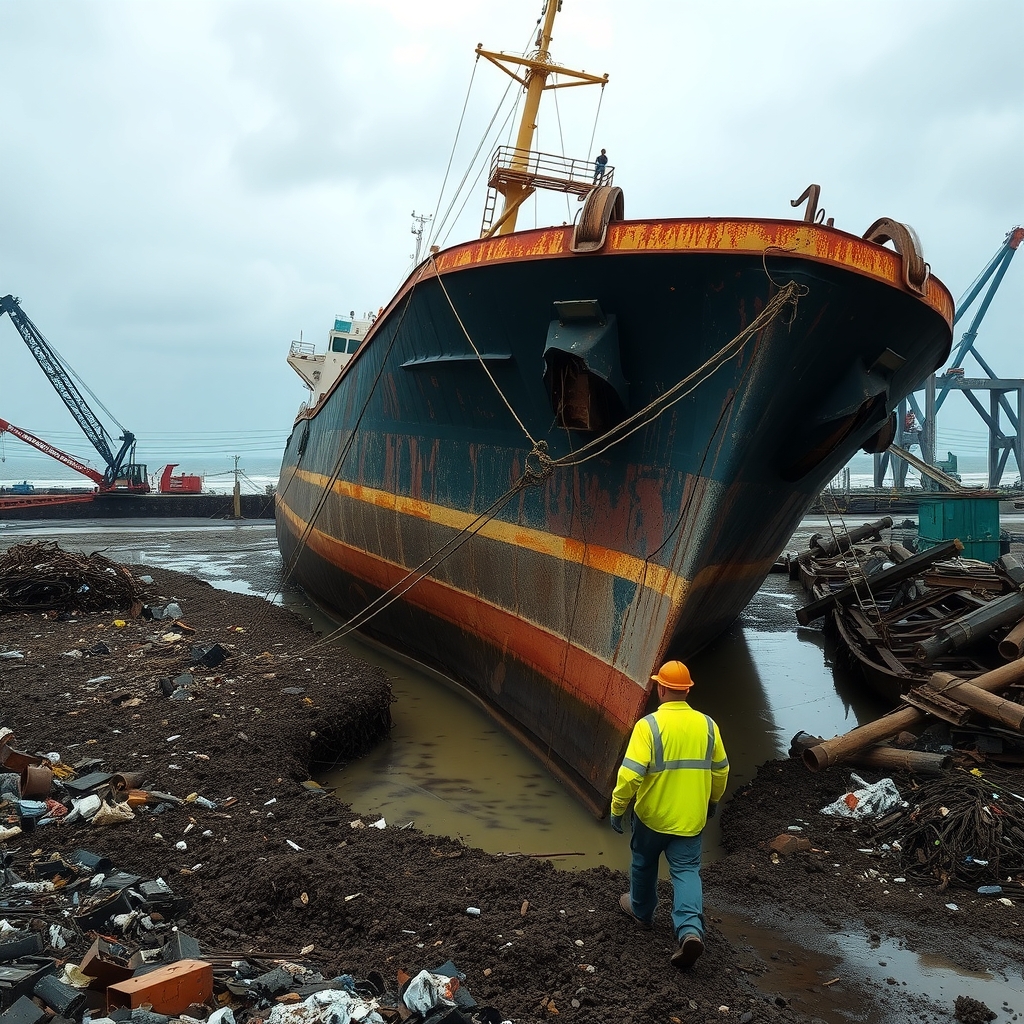
The lifecycle of a maritime vessel, from its initial keel-laying to its eventual decommissioning, represents one of the most complex intersections of international commerce, industrial utility, and environmental risk. While the operational phase of a ship is governed by a robust constellation of treaties—including MARPOL and STCW—the terminal phase, known as ship recycling or shipbreaking, has historically existed in a regulatory lacuna. As global shipping fleets age, the process of deconstructing these massive steel structures presents profound challenges to international environmental law, particularly regarding the management of hazardous materials and the prevention of transboundary pollution.
The transition of a vessel from an active asset to a decommissioned hull involves more than the mere recovery of scrap metal. It is a chemical and structural transformation that releases decades of accumulated pollutants. The legal struggle in this domain centers on a fundamental ontological question: Is a decommissioned vessel a ship, subject to maritime law, or is it waste, subject to the regime of transboundary movement of hazardous substances? This distinction dictates the applicable jurisdiction, the standard of care required, and the mechanisms for liability and remediation.
How is ship recycling regulated?
The regulatory landscape for ship recycling is characterized by a dualistic tension between international maritime standards and regional environmental mandates. At the global level, the primary instrument has long been the Hong Kong International Convention for the Safe and Environmentally Sound Recycling of Ships, 2009 (HKC). Developed under the auspices of the International Maritime Organization (IMO), the HKC seeks to establish a global baseline for the safe management of hazardous materials through the mandatory use of an Inventory of Hazardous Materials (IHM). The IHM serves as a 'passport' for the vessel, documenting the presence of substances such as asbestos, polychlorinated biphenyls (PCBs), and heavy metals, which must be managed throughout the ship's life and during its eventual recycling.
However, the efficacy of the HKC has historically been hampered by its slow progress toward ratification. This regulatory gap facilitated the rise of more stringent regional frameworks, most notably the European Union Ship Recycling Regulation (EU SRR). Unlike the HKC, which focuses on the safe management of materials, the EU SRR imposes a more rigorous market-access restriction. It requires that all vessels flying the flag of an EU member state be recycled only at facilities included on the 'European List' of approved yards. This creates a bifurcated system: while the HKC attempts to harmonize safety standards globally, the EU SRR uses economic leverage to mandate higher environmental performance, effectively exporting stringent standards to the global shipbreaking industry.
The intersection of these regimes with the Basel Convention on the Control of Transboundary Movements of Hazardous Wastes and Their Disposal adds a further layer of complexity. Under the Basel Convention, the movement of hazardous waste across borders is strictly controlled. Legal disputes often arise when a vessel is reclassified as waste. If a ship is deemed 'waste' under the Basel definitions, the flag state's ability to export that vessel to a developing nation's breaking yard is severely curtailed, necessitating 'prior informed consent' from the receiving state. This legal friction highlights the difficulty of applying static environmental definitions to dynamic maritime assets.
What are the risks of shipbreaking?
The environmental and occupational hazards inherent in shipbreaking are both acute and chronic. During the deconstruction process, the structural integrity of the vessel is systematically compromised, often in beaching yards where the hull is driven onto tidal flats. This method of recycling exposes the marine environment to direct, unmitigated contact with toxic substances. The primary risks can be categorized into three distinct environmental vectors:
- Heavy Metal Contamination: The scraping and cutting of hulls release lead, mercury, cadmium, and chromium into the sediment. These metals are bioaccumulative, entering the local food web through benthic organisms and eventually impacting human populations through seafood consumption.
- Persistent Organic Pollutants (POPs): Materials such as PCBs, used in electrical components and paints, and various flame retardants, pose long-term ecological threats due to their stability and toxicity.
- Asbestos and Particulate Matter: The friable nature of asbestos used in older vessel insulation presents a catastrophic respiratory risk to workers and contributes to local air quality degradation.
Beyond the chemical risks, the physical process of shipbreaking in non-regulated environments lacks the necessary engineering controls to prevent catastrophic spills. The draining of fuel tanks, the management of bilge water, and the disposal of oily sludge are frequently handled with insufficient containment, leading to localized but severe ecological devastation in littoral zones. The socio-economic dimension is equally troubling; the reliance on manual labor in many major recycling hubs often results in a disproportionate burden of risk being borne by vulnerable populations in the Global South, raising profound questions of environmental justice and the principle of common but differentiated responsibilities.
Who is liable for ship recycling pollution?
Attributing liability for environmental damage occurring during the recycling phase remains one of the most contentious issues in maritime jurisprudence. The traditional maritime liability regime, designed for collisions and oil spills during transit, does not easily map onto the industrial processes of shipbreaking. Liability typically becomes a contest between three primary actors: the shipowner, the flag state, and the recycling facility owner.
From a contractual perspective, shipowners often attempt to insulate themselves from liability through the sale of vessels to 'cash buyers'—intermediaries who facilitate the transfer of the vessel to breaking yards. If the shipowner can demonstrate that they exercised due diligence in ensuring the vessel was sold to a legitimate entity, they may argue that the responsibility for environmental compliance shifts entirely to the buyer. However, the doctrine of piercing the corporate veil and the increasing scrutiny of 'due diligence' in environmental, social, and governance (ESG) frameworks suggest that shipowners may no longer be able to evade responsibility through complex chains of sale.
The role of the flag state is also central to the liability debate. Under international law, the flag state holds the primary responsibility for ensuring that vessels flying its flag comply with international conventions. If a state fails to enforce the requirements of the HKC or the Basel Convention, it may be held accountable under the principle of state responsibility for failing to exercise due diligence in regulating its vessels. This is particularly relevant when vessels are 'flagged out' to registries with minimal oversight to facilitate cheaper, less regulated recycling.
The following table compares the primary regulatory approaches currently shaping the industry:
| Regulatory Framework | Primary Mechanism | Focus Area | Enforcement Authority |
|---|---|---|---|
| Hong Kong Convention (HKC) | Mandatory IHM and recycling plans | Operational safety and material management | Flag States and Port States |
| EU Ship Recycling Regulation (EU SRR) | Approved facility list (European List) | Market access and waste prevention | EU Member State Competent Authorities |
| Basel Convention | Prior Informed Consent (PIC) | Transboundary movement of hazardous waste | National Competent Authorities |
Why is the Hong Kong Convention important?
The importance of the Hong Kong Convention lies not merely in its technical requirements, but in its potential to provide a unified, global standard that reduces the incentive for 'regulatory arbitrage.' In the absence of a universally accepted standard, shipowners may seek out jurisdictions with the most lenient environmental oversight, creating a 'race to the bottom' that undermines global ecological protections. By establishing a standardized requirement for the Inventory of Hazardous Materials (IHM), the HKC shifts the focus from reactive cleanup to proactive management.
Furthermore, the HKC provides a legal bridge between the maritime sector and the waste management sector. By mandating that recycling facilities meet certain safety and environmental criteria, it elevates the status of shipbreaking from an informal, high-risk industry to a regulated component of the circular economy. The recent momentum toward the convention's entry into force—driven by the ratification of key maritime nations—suggests a paradigm shift. The convention's success will be measured by its ability to harmonize the disparate interests of shipowners, labor unions, environmental NGOs, and coastal states, ensuring that the end-of-life phase of a vessel does not become a permanent liability for the global commons.
"The challenge of ship recycling is not merely a technical problem of dismantling steel; it is a legal challenge of managing the toxic legacies of industrial progress within a fragmented international framework."
Conclusion: Toward a Circular Blue Economy
The evolution of ship recycling regulation reflects a broader maturation of international environmental law. The movement from unregulated, hazardous beaching practices toward a formalized, document-driven regime represents an essential step in reconciling maritime commerce with ecological sustainability. However, legal harmonization remains an ongoing struggle. The tension between the HKC’s focus on safety and the EU SRR’s focus on market restriction highlights the lack of a single, cohesive global authority for maritime end-of-life management.
To achieve a truly circular blue economy, the legal framework must evolve beyond simple containment. Future jurisprudence must address the increasing complexities of automated and robotic shipbreaking, the management of advanced composite materials, and the rigorous application of the polluter-pays principle across transboundary lines. Only through a unified approach—one that integrates the safety of workers, the protection of littoral ecosystems, and the accountability of shipowners—can the maritime industry ensure that the conclusion of a vessel's service does not result in the beginning of an ecological catastrophe.
Comments
No comments yet.