Ship Mortgage Enforcement and Maritime Debt Recovery: Jurisprudential Conflicts and Priority Regimes
A scholarly examination of ship mortgage enforcement, the conflict of laws in maritime debt recovery, and cross-border lien priorities under international conventions.
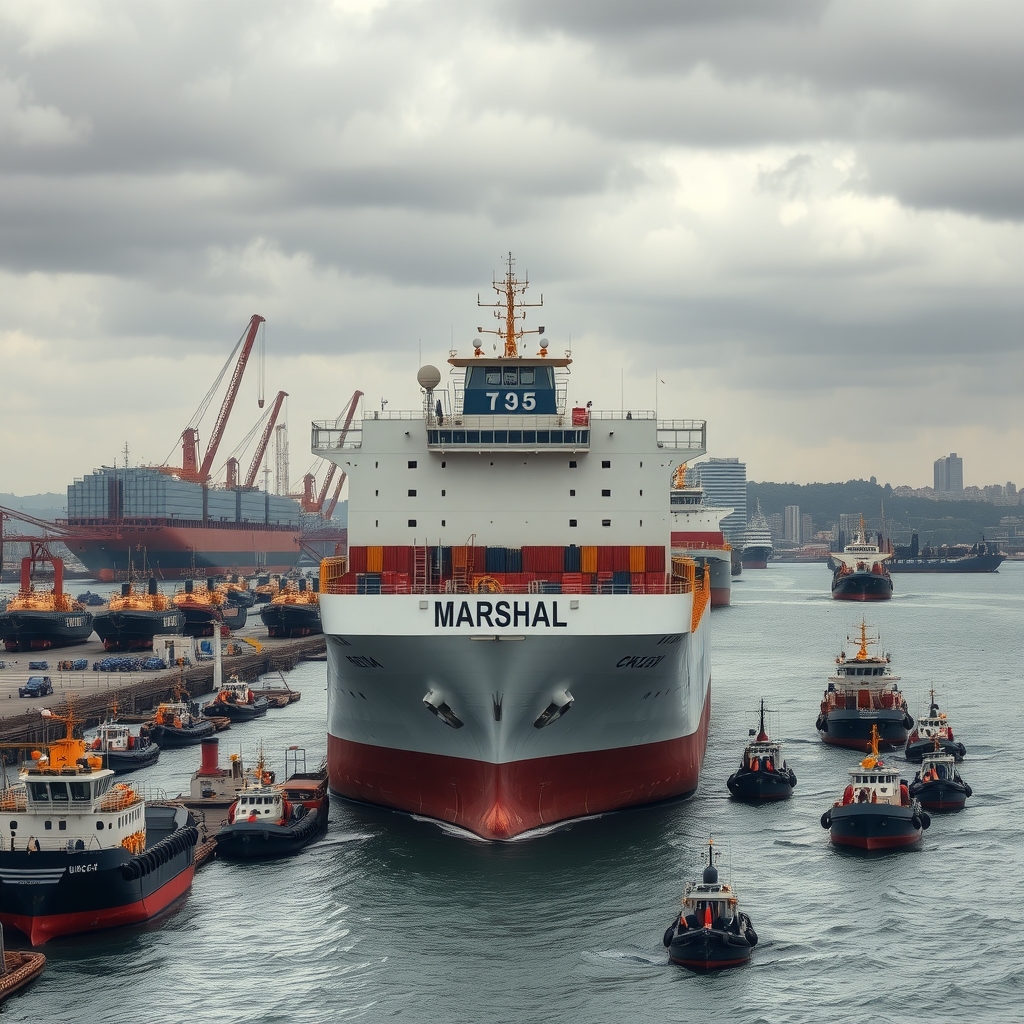
The recovery of maritime debt through the enforcement of ship mortgages sits at the apex of private maritime law and cross-border commercial litigation. At its core, maritime finance depends upon a lender's ability to hypothecate an asset that moves ceaselessly across national borders, entering sovereign jurisdictions characterized by fundamentally incompatible legal systems. A security interest perfected under the domestic statutes of a flag state must withstand the competing claims of foreign bunker suppliers, unpaid crew members, salvage contractors, and tort claimants when arrested in a distant port of refuge or commercial call. The systemic tension between the institutional security demanded by international capital providers and the procedural protections historically granted to maritime service providers forms one of the most volatile arenas of contemporary admiralty jurisprudence.
This structural friction is aggravated by the historical divergence between common law doctrines of procedural personification and civil law systems rooted in maritime hypothecs, alongside a fragmented landscape of international conventions. While multilateral instruments such as the International Convention for the Unification of Certain Rules relating to Maritime Liens and Mortgages (1926, 1967, and 1993) and the International Convention on Arrest of Ships (1952 and 1999) have attempted to harmonize priorities and enforcement modalities, their divergent patterns of ratification have sustained a competitive jurisdictional landscape. Creditors and shipowners navigate a complex matrix of forum shopping, conflict-of-laws determinations, and competing priority rules, a dynamic recently reshaped by the adoption of the United Nations Convention on the International Effects of Judicial Sales of Ships (the Beijing Convention on the Judicial Sale of Ships).
The Doctrinal Architecture of Ship Mortgages and In Rem Enforcement
The legal nature of a ship mortgage diverges markedly from conventional land-based or chattel securities. Within common law admiralty jurisdictions, a registered statutory mortgage does not confer a maritime lien upon the mortgagee. As established in nineteenth-century foundational authorities such as The Neptune (1824) and solidified in The Bold Buccleugh (1851), a true maritime lien (privilège maritime) attaches to the res ex delicto or ex contractu from the exact moment the claim arises, adhering invisibly to the ship irrespective of changes in ownership, and requiring no registration to sustain its vitality. By contrast, a ship mortgage is a consensual statutory charge, effective against third parties through registration in the vessel's registry under the auspices of the flag state.
This distinction governs the operational machinery of debt recovery. Because a ship mortgage does not rank as a high-priority maritime lien, enforcement requires invoking the admiralty court's statutory jurisdiction in rem. Through this procedural vehicle, the mortgagee files a claim against the vessel itself, procuring a warrant of arrest that detains the ship within the territorial waters or internal ports of the forum state. The arrest grounds the court's jurisdiction and secures the res to answer the judgment or proceed toward an interlocutory sale pendente lite if the security is depreciating and the mortgagor fails to provide security.
Civil law traditions treat the maritime hypothec as a real right in an immovable asset by legislative fiction. Under the French Code de commerce and comparable continental codifications, the hypothec (hypothèque maritime) is ranked as a real security subordinate to designated preferred claims (créances privilégiées). While common law systems separate the procedural action in rem from actions in personam, civil law jurisdictions proceed through attachment mechanisms (such as the saisie-conservatoire) directed at the debtor's property, requiring distinct steps to convert protective seizures into executory proceedings (saisie-exécution). These conceptual divergences generate complex conflicts of qualification when international tribunals or domestic admiralty courts adjudicate cross-border recovery actions.
Can a ship mortgage be enforced without arresting the vessel?
While the judicial arrest of a vessel is the standard and safest method for maritime debt recovery, mortgagees frequently examine whether enforcement can occur through self-help remedies or contractual rights without judicial intervention. English maritime law recognizes that a legal mortgagee has the right to take actual or constructive possession of the mortgaged vessel upon default. Once in possession, the mortgagee assumes substantial rights alongside onerous liabilities. Under standard loan covenants, such as those embedded in standard BIMCO or Lloyd's mortgage documentation, the instrument confers an express power of sale permitting the mortgagee to execute a private transfer of the ship.
However, exercising extrajudicial possession or private power of sale carries substantial legal risks:
- Mortgagee in Possession Liabilities: A mortgagee taking physical control of a vessel becomes liable for all subsequent expenses, including crew wages, harbor dues, bunker costs, and potential third-party operational liabilities, while remaining accountable to the mortgagor for any gross negligence or failure to manage the vessel prudently.
- Persistence of Maritime Liens: A private sale executed by a mortgagee conveys only the mortgagor's title subject to all pre-existing maritime liens, possessory liens, and statutory encumbrances. Unlike an admiralty judicial sale, a private contract cannot purge the res of underlying inchoate maritime liens. A third-party buyer through private sale risks immediate re-arrest by dormant maritime lienors.
- Flag State Impediments: Foreign ship registries often refuse to cancel the existing registration or issue a clean bill of sale without a formal court order or explicit consent from the registered owner, frequently unavailable in contentious default scenarios.
Consequently, while extrajudicial enforcement is legally viable within certain common law systems, its utility remains severely circumscribed in international debt recovery. Mortgagees routinely bypass private remedies in favor of formal judicial arrest, as only the coercive decree of an admiralty court acting in rem guarantees the extinction of competing maritime encumbrances.
What is the order of priority in maritime lien claims?
The core dispute in cross-border maritime debt recovery centers on the ranking of competing claims against the fund created by the judicial sale of an arrested vessel. When recovery proceeds are distributed, claims invariably exceed the available equity. The ranking of claims is not harmonized universally; instead, it is determined by the conflict-of-laws principles applied by the lex fori (the law of the arresting forum), which treats priority classification as a procedural matter.
Under English admiralty law and jurisdictions adhering to its tradition, priorities are resolved through an equitable hierarchy shaped by public policy, preservation of the res, and maritime safety:
- Admiralty Marshal and Court Expenses: Costs incurred in arresting, preserving, and auctioning the vessel (custodia legis) take ultimate super-priority over all claimants, as these expenditures directly enabled the preservation and liquidation of the fund.
- Special Statutory Super-Priorities: Statutory rights of harbor, port, and canal authorities to detain and sell vessels for unpaid dues, wreck removal expenses, or channel obstruction charges often supersede even pre-existing maritime liens.
- Maritime Liens (Traditional Classes): These claims rank prior to registered ship mortgages, generally structured in the following order:
- Salvage: Salvage operations preserve the vessel from total destruction; hence, salvage claims take priority over earlier damage liens (the principle of the reverse chronological order—salvage saves the res).
- Damage Done by the Ship (Maritime Tort Liens): Involuntary creditors whose claims arise from collisions, oil pollution, or personal injury caused by the ship.
- Wages and Emoluments: Seafarers' and master's wages, including repatriation expenses and social security contributions, protected due to the maritime labor force's physical vulnerability.
- Master's Disbursements: Necessary liabilities incurred by the master on behalf of the vessel under historical admiralty principles.
- Possessory Liens: Recognized common law possessory liens, such as that of a ship repairer in continuous, lawful physical possession of the vessel, which rank behind maritime liens accrued prior to the inception of possession, but ahead of registered mortgages.
- Registered Ship Mortgages: Validly registered legal and equitable mortgages, ranked inter se strictly by the date and time of registration.
- Statutory Rights in Rem (General Maritime Claims): Unsecured commercial claims including general necessaries, bunker supply, cargo damage claims, and charterparty breaches, ranking equally pari passu after the mortgages have been satisfied.
The primary point of friction emerges over where the ship mortgage sits relative to supply and repair claims. While Anglo-Commonwealth jurisdictions relegate bunker suppliers and shipbuilders to the category of statutory rights in rem, ranking behind the mortgage, other legal systems—most notably the United States under the Commercial Instruments and Maritime Liens Act (CIMLA)—elevate claims for necessaries (goods and services provided for the vessel's operation) to the status of maritime liens. Under US maritime doctrine, these suppliers often rank ahead of foreign-registered mortgages unless the foreign mortgage complies with specific procedural conditions.
What is the difference between a maritime lien and a statutory lien?
A rigorous understanding of ship mortgage enforcement requires distinguishing between a true maritime lien and a statutory lien (or statutory right in rem). The operational and substantive differences between these two concepts define the risks faced by commercial lenders during international enforcement.
A maritime lien exists independently of an arrest or legal proceeding. It confers a substantive property interest that attaches to the vessel at the instant the underlying event occurs—be it a high-seas collision, an act of salvage, or the performance of seafarers' services. This lien remains fully operative despite a subsequent bona fide purchase of the vessel by an innocent third party who lacked notice of the encumbrance. It requires neither registration nor judicial intervention to maintain its legal existence, functioning as a non-consensual hypothec that travels invisibly with the vessel.
In contrast, a statutory right in rem—often characterized colloquially as a statutory lien—does not attach to the vessel at the moment the commercial debt is incurred. When a bunker supplier delivers fuel or an equipment manufacturer supplies navigational instruments without getting paid, they obtain merely a contractual right in personam coupled with a statutory entitlement to invoke the admiralty jurisdiction of the court by issuing a claim form in rem. Crucially, the statutory right in rem only crystallizes against the vessel when the claim form is formally issued or the vessel is arrested, depending on the forum's procedural rules.
This crystallization rule produces severe consequences: if the vessel is sold to a genuine third-party purchaser before the statutory claimant files an action in rem, the statutory right against the ship is completely extinguished. The claimant is left exclusively with an unsecured in personam claim against the original, often judgment-proof, debtor. Furthermore, in virtually all common law jurisdictions, a crystallized statutory right in rem remains subordinate to all pre-existing registered ship mortgages, ensuring the priority of structured vessel finance over general trade debt.
The Jurisprudential Schism: Lex Fori vs. Lex Causae in Lien Recognition
The most acute analytical conflict in maritime debt recovery arises when a foreign court is requested to recognize and enforce a maritime claim created under foreign law that carries a different legal classification under the domestic law of the forum. This doctrinal impasse was crystallized in the landmark decision of the Privy Council in Bankers Trust International Ltd v. Todd Shipyards Corporation (The Halcyon Isle) [1981] AC 221.
In The Halcyon Isle, a Brooklyn ship repairer executed extensive repairs on an English-mortgaged vessel in New York. Under United States maritime law, the repairer acquired a maritime lien for necessaries. The vessel subsequently called at Singapore, where it was arrested by the English mortgagees. Under Singapore law (which mirrored English admiralty law), ship repairs do not generate a maritime lien, but merely a statutory right in rem ranking behind registered mortgages. The proceeds of the judicial sale were insufficient to satisfy both the American repairer and the English mortgagee. The legal question posed was direct: Should the Singapore court classify the foreign claim according to the law under which it arose (lex loci contractus or lex causae) or according to the law of the forum (lex fori)?
By a narrow 3-2 majority, the Privy Council, with the majority judgment delivered by Lord Diplock, ruled that the characterization and ranking of maritime claims is strictly an issue of procedure, remedies, and priority governed by the lex fori. Lord Diplock held that maritime liens are an integral element of the procedural remedy in rem administered by the admiralty court:
"In English admiralty law, maritime liens are granted by the court as part of the legal mechanism for enforcing claims against a vessel. Any question of priority among competing classes of claim depends entirely on the remedies which the lex fori permits to be exercised. If a foreign claimant asserts a maritime lien that has no counterpart in the domestic law of the forum, the court cannot create a preferential right unknown to its own legal order."
Under this procedural characterization, the American repairer was stripped of its maritime lien status in Singapore and reclassified as a statutory lien claimant, resulting in the complete loss of its priority against the mortgage.
Conversely, the forceful minority dissent, authored jointly by Lord Salmon and Lord Scarman, championed the substantive conflict-of-laws approach. They argued that a maritime lien is not a procedural mechanism, but a substantive proprietary right (jus in re aliena) vested in the creditor under the foreign law governing the creation of the debt. Under their view, international comity requires the forum to recognize the substantive property rights acquired under foreign law, while applying the lex fori only to determine the formal ranking of those recognized substantive rights among one another:
"To refuse recognition to a maritime lien validly acquired under the proper law of the contract is to ignore the substantive character of international maritime property. Comity and commercial efficacy demand that a right in the ship, once lawfully created abroad, must be acknowledged by the admiralty court before its final position in the queue is decided."
The substantive doctrine rejected by the majority in The Halcyon Isle remains dynamic across the common law world. It was embraced by the Supreme Court of Canada in Todd Shipyards Corp. v. The Ship Ioannis Daskalelis [1974] SCR 1248, where the court unanimously accepted the recognition of foreign maritime liens created under US law, prioritizing the foreign repairer ahead of the mortgagee. South African jurisprudence has similarly fluctuated, while civil law jurisdictions generally adhere to their own domestic closed lists (numerus clausus) of maritime liens, refusing to import expansive foreign security rights into domestic distribution proceedings.
Comparative Framework: Priorities in Global Maritime Jurisdictions
The practical result of these jurisprudential fractures is that the recovery value of a ship mortgage varies dramatically depending on the geographical location where the vessel is arrested. The following comparative table highlights the statutory and common law ordering of claims across primary maritime jurisdictions and international conventions:
| Regime / Jurisdiction | Super-Priority Claims | Pre-Mortgage Maritime Liens | Registered Ship Mortgage | Post-Mortgage Claims / Statutory Liens |
|---|---|---|---|---|
| English Common Law (Singapore, Hong Kong, Australia) | Marshal's costs of arrest and sale (custodia legis); Port and canal statutory detentions. | Salvage; Collision damage; Seafarers' wages; Master's disbursements; Possessory liens (if possession pre-dates arrest). | Ranked strictly behind traditional maritime liens, but ahead of all foreign non-recognized liens and necessaries. | Ship repair and necessaries (without possession); Bunker claims; Cargo claims; General charterparty breach claims. |
| United States (CIMLA - 46 U.S.C.) | Expenses of administration in custodia legis; Local statutory taxes and pilotage. | Tort/Collision claims; Crew wages; General average; Salvage; Pre-mortgage supply and repair liens (necessaries). | Preferred Ship Mortgage. Foreign mortgages rank behind all maritime liens (including post-mortgage necessaries incurred in the US). | Post-mortgage foreign necessaries; Contract claims without lien status; General unsecured obligations. |
| 1993 Geneva Convention (MLM 1993) | Arrest and sale costs incurred in the common interest of creditors; Wreck removal costs. | Crew wages; Loss of life/personal injury; Salvage; Port/canal dues; Tort claims for physical loss. | National registered mortgages and hypothecs, ranking immediately after the five internationally recognized liens. | Domestic statutory rights and non-convention maritime liens permitted under domestic law (subordinated to mortgage). |
| Civil Law (e.g., France, Panama) | Judicial costs incurred to achieve sale; Port dues and public charges. | Seamen's wages; Salvage remuneration; Collision damage indemnities; Contribution to general average. | Hypothèque maritime registered in public registry, strictly protected against unlisted unsecured commercial claimants. | Ordinary contractual debts; Commercial supply claims; General trade liabilities of the operator or charterer. |
How does the judicial sale of a ship extinguish maritime liens?
The crown jewel of admiralty jurisdiction is the judicial sale in rem. When a court with competent admiralty jurisdiction sells an arrested ship, it exercises a sovereign power fundamentally distinct from a standard commercial conveyance. The execution of a judicial sale operates strictly in rem against the whole world, freeing the vessel of all pre-existing mortgages, maritime liens, hypothecs, encumbrances, and attachments.
The foundational common law expression of this principle was delivered by Dr. Stephen Lushington in The Tremont (1841) and reaffirmed continuously throughout common law and civil traditions:
"The jurisdiction of the Admiralty Court in cases of this description, as well as in all other cases of maritime lien, is exercised through the medium of the ship itself. When the ship is sold under the decree of this court, the property passes cleanly to the purchaser, and all prior liens and claims are transferred from the ship to the purchase money."
Through the legal fiction of subrogation, the res ceases to be the physical vessel and transforms into the net fund deposited into the court's registry. Claimants must assert their rights against this fund in a priority contest. The buyer receives clear, unencumbered title, immune from arrest for any debt or obligation incurred prior to the transfer of ownership.
Despite this established doctrine, international debt recovery has experienced severe disruption when rogue or non-cooperative jurisdictions refuse to respect foreign judicial sales. In multiple high-profile shipping restructurings, buyers who purchased ships at lawful admiralty auctions in common law forums (such as London, Singapore, or New York) have faced subsequent re-arrest of the vessel in foreign ports by aggrieved bunker suppliers or maritime lienors whose claims were wiped out by the prior judicial sale.
The international community resolved this systemic instability on September 5, 2023, with the signing of the United Nations Convention on the International Effects of Judicial Sales of Ships (the Beijing Convention). Drafted by the Comité Maritime International (CMI) and finalized under UNCITRAL auspices, the Beijing Convention establishes an international regime under which every contracting state must recognize the legal effect of a judicial sale conducted in another contracting state.
Under Article 6 of the Beijing Convention, once a competent court issues a standardized Certificate of Judicial Sale confirming that the vessel was sold in accordance with the forum's procedural rules and proper notice was delivered to mortgagees and lienholders, courts in other contracting states are legally obligated to dismiss any arrest applications concerning pre-existing claims, and maritime registries must promptly strike all existing mortgages and transfer title cleanly to the purchaser. The convention closes the jurisdictional loopholes that previously destabilized ship mortgage recovery.
How do cross-border insolvencies affect maritime arrests?
The interface between admiralty in rem jurisdiction and transnational corporate insolvency regimes represents a major systemic friction in international commercial recovery. While admiralty law relies upon the physical detention and liquidation of a distinct operational asset (the ship as defendant), modern insolvency frameworks—typified by Chapter 11 of the United States Bankruptcy Code, the UK Insolvency Act, and the UNCITRAL Model Law on Cross-Border Insolvency (implemented in over 50 jurisdictions)—rely upon universal collective liquidation, debtor rehabilitation, and the imposition of a worldwide automatic stay (moratorium).
This conflict achieved unprecedented scale following the collapse of Hanjin Shipping in 2016 and the structural fallouts from the OW Bunker insolvencies. In The Halcyon Isle tradition, the admiralty arrest operates outside general corporate recovery. However, when an insolvent shipowner files for administration or bankruptcy protection, the insolvency court routinely issues an injunction barring creditors from commencing or continuing enforcement actions against the debtor's assets globally.
Admiralty and commercial courts diverge in how they resolve this collision of priorities:
- The Admiralty Supremacy Doctrine: Several common law jurisdictions historically maintain that if an action in rem is instituted and an arrest warrant is executed before the formal commencement of insolvency proceedings, the creditor attains the status of a secured creditor over the res, and the admiralty court preserves exclusive jurisdiction to sell the vessel and distribute the proceeds, irrespective of subsequent bankruptcy filings. This view was reinforced in English decisions such as The Constellation [1966] 1 WLR 12.
- The Universalist Insolvency Approach: Under the UNCITRAL Model Law framework, domestic courts recognizing a foreign main insolvency proceeding (e.g., in Singapore under the Insolvency, Restructuring and Dissolution Act, or in the UK under the Cross-Border Insolvency Regulations 2006) possess the statutory power to stay admiralty proceedings against the vessel, transferring the asset and its proceeds into the universal insolvency estate for general administrative distribution.
- Jurisprudential Compromises: The landmark Australian Federal Court decision in Kim v. Daewoo Logistics Corp [2011] FCA 537 and the English decision in Cosco Bulk Carrier Co Ltd v. Armada Shipping SA [2011] EWHC 216 demonstrate that courts increasingly lean toward modified universalism. Where the mortgagee or maritime lienor possesses an established, bona fide proprietary security, courts frequently grant relief from the insolvency moratorium, allowing the admiralty marshal to conduct the physical arrest and public sale, but requiring any surplus equity to be remitted directly to the foreign bankruptcy trustee for corporate distribution.
The maritime bankruptcies of recent decades emphasize that secured lenders cannot evaluate ship mortgage enforcement through traditional admiralty paradigms alone. Mortgage recovery demands simultaneous engagement with insolvency cross-border protocols to prevent international anti-suit injunctions and jurisdictional freezes from paralyzing the enforcement process.
The Supply-Chain Paradox: The Residue of the OW Bunker Litigation
Any modern examination of maritime debt recovery must reckon with the legal shockwaves caused by the corporate failure of OW Bunker & Trading A/S in November 2014, which revealed structural defects in traditional maritime lien enforcement mechanisms across dozens of jurisdictions simultaneously.
The resulting global disputes, culminating in the seminal decision of the United Kingdom Supreme Court in PST Energy 7 Shipping LLC and Another v. OW Bunker Malta Ltd and Another (The Res Cogitans) [2016] UKSC 23, arose from a common commercial reality: a vessel owner ordered bunkers from an OW Bunker subsidiary, which sub-contracted the procurement to a physical bunker supplier. OW Bunker collapsed into bankruptcy before paying the physical supplier, while the shipowner had not yet remitted funds to OW Bunker. The physical supplier asserted a maritime lien against the vessel in local jurisdictions, while the assignee of OW Bunker's receivables (ING Bank) sought recovery under the contractual debt.
The UK Supreme Court held that the standard bunker supply contract incorporating retention-of-title clauses combined with an express liberty to burn the fuel for propulsion did not constitute a contract of sale within the meaning of the Sale of Goods Act 1979, but was instead an anomalous sui generis agreement licensing the consumption of the goods before property transferred. Consequently, the shipowners were legally compelled to pay the full contractual price to ING Bank (as assignee), despite facing exposure to potential maritime arrest and supply lien claims from physical suppliers in foreign jurisdictions such as the United States, where CIMLA provisions treat physical delivery as establishing a direct maritime lien.
The Res Cogitans ruling exacerbated the exposure of mortgagees and shipowners to double liability. It underscored the vulnerability of secured lenders: when financial intermediaries collapse, physical suppliers target the underlying asset in jurisdictions recognizing supply-side maritime liens, eroding the residual value available to the mortgagee in subsequent enforcement proceedings.
State Immunity and Public Law Obstacles to Enforcement
Where maritime debt recovery intersects with state-owned shipping enterprises or sovereign commercial entities, the private law machinery of the ship mortgage encounters barriers of international public law. The jurisdictional threshold separating commercial acts (acta jure gestionis) from sovereign governmental acts (acta jure imperii) controls whether a court may issue an arrest warrant against a vessel tied to a state authority.
Under the restrictive doctrine of state immunity, incorporated into the United Nations Convention on Jurisdictional Immunities of States and Their Property (2004) and domestic enactments such as the UK State Immunity Act 1978 and the US Foreign Sovereign Immunities Act (FSIA), state immunity from execution is distinct from immunity from jurisdiction. Even where a state-owned enterprise has submitted to commercial litigation or arbitration regarding a vessel mortgage default, executing an arrest warrant against a ship requires demonstrating that the asset is used exclusively for commercial, non-governmental purposes.
The International Tribunal for the Law of the Sea (ITLOS) and international arbitration under the Permanent Court of Arbitration (PCA) have examined the arrest of state-linked vessels in boundary cases. In the ARA Libertad Case (Argentina v. Ghana, ITLOS Case No. 20, 2012), the tribunal evaluated the detention of an Argentine naval training vessel under a commercial injunction obtained by sovereign debt hedge funds in the Ghanaian courts. ITLOS ordered the immediate, unconditional release of the vessel, ruling that warships and sovereign non-commercial ships enjoy complete immunity from civil arrest under the customary international law reflected in the United Nations Convention on the Law of the Sea (UNCLOS).
For mortgagees financing state-affiliated commercial fleets, these precedents require careful drafting of explicit, comprehensive waivers of jurisdictional immunity and waivers of immunity from pre-judgment and post-judgment execution. Without such explicit waivers, the enforcement of a mortgage against a vessel owned or managed by an entity with sovereign ties risks generating prolonged diplomatic and public international law impasses that suspend traditional admiralty remedies.
Toward a Harmonized Global Enforcement Paradigm
Ship mortgage enforcement and maritime debt recovery remain an intricate study in international legal fragmentation. The persistent clash between the procedural characterization championed by The Halcyon Isle and the substantive conflict-of-laws approach embraced in Canada, alongside the fundamental tension between the Anglo-Commonwealth and American models of maritime lien priority, confirms that global uniformity remains unrealized.
Nevertheless, the international maritime architecture is advancing pragmatically. The Beijing Convention on the Judicial Sale of Ships establishes an international framework providing safe harbor for judicial sales across multiple maritime nations. By securing the worldwide recognition of clean title generated through admiralty auctions, this multilateral mechanism addresses the core vulnerability in post-arrest debt liquidation.
For maritime financiers, transactional counsel, and litigation practitioners, this fragmented ecosystem demands proactive risk management. Successful debt recovery requires anticipating the jurisdictional forum of enforcement at the inception of the loan facility. Structuring cross-default provisions, evaluating global trading routes to avoid hostile lien-recognition forums, drafting comprehensive insolvency waivers, and acting decisively to arrest in jurisdictions that prioritize the registered mortgage over statutory trade debt remain vital requirements for maritime capital recovery in an interconnected commercial world.
Comments
No comments yet.