Port Concession Agreements and Legal Regulation: Contractual Structures, Tariffs, and State Oversight
An in-depth analysis of port concession agreements, examining public-private partnerships, economic tariff controls, competition law, and international arbitration.
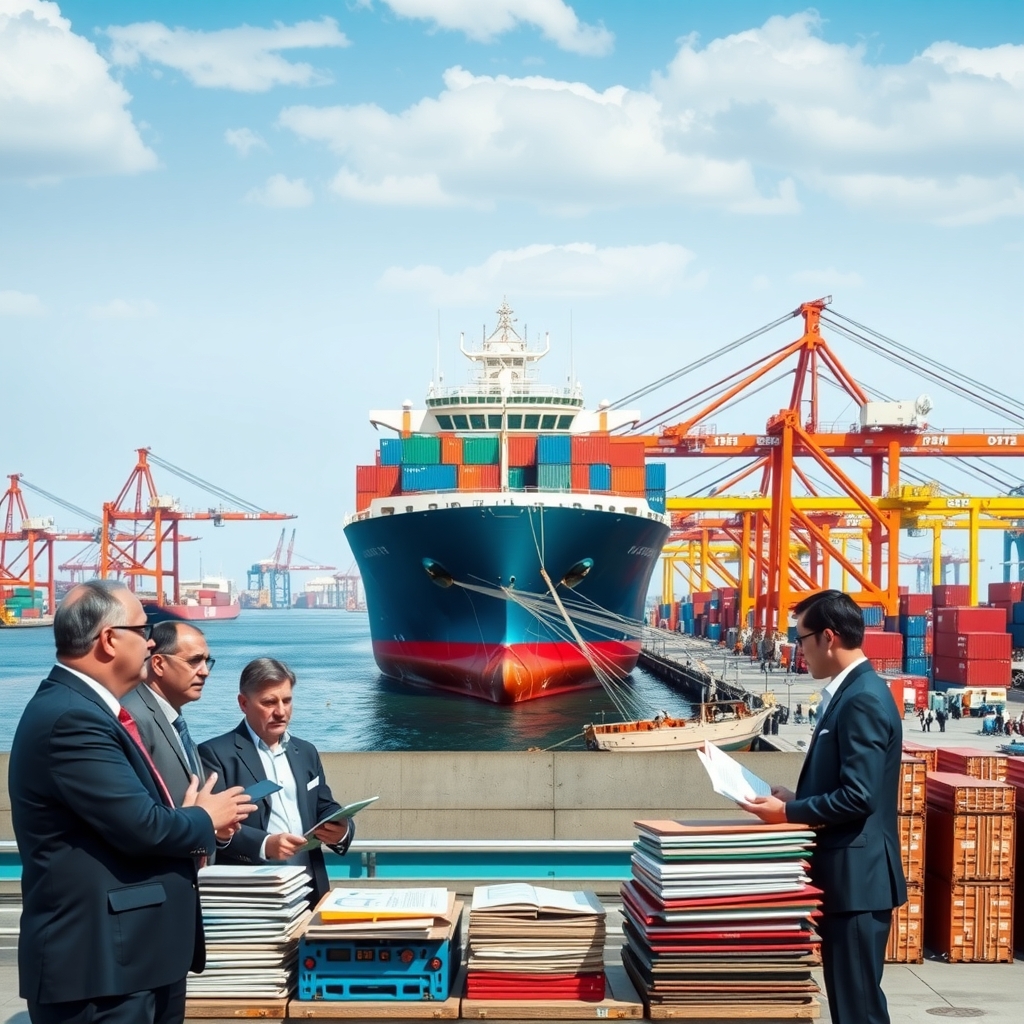
Global maritime logistics relies heavily on the efficiency, modernization, and regulatory stability of ocean terminals. Over the past four decades, the administration of commercial seaports has shifted fundamentally away from state-operated service ports toward decentralized public-private partnerships. At the center of this structural transformation lies the port concession agreement. This complex legal instrument transfers the right to finance, build, rehabilitate, and operate terminal infrastructure from a public port authority or sovereign state to a private terminal operator, while retaining fundamental underlying land ownership within the public domain.
Because maritime terminals constitute critical national infrastructure, natural monopolies, and strategic nodes within global supply chains, port concessions cannot function merely as conventional commercial leases. They exist at the intersection of private contract law, domestic administrative law, international trade standards, and sector-specific public regulation. Balancing the commercial imperative of international terminal operating companies with public interest objectives, including open access, competitive pricing, environmental protection, and national security, represents one of the most intricate challenges in contemporary maritime governance.
What is a port concession agreement?
A port concession agreement is a long-term contractual arrangement under which a statutory port authority grants an operating company the exclusive or non-exclusive right to provide maritime terminal services, develop infrastructure, and commercially exploit designated port assets over an extended timeframe, typically spanning twenty to fifty years. In exchange, the private concessionaire assumes substantial commercial, operational, and financial risks, undertakes specified capital investments, and pays predetermined concession fees, lease rentals, or volume-based royalties to the port authority.
Port concessions are the cornerstone of the landlord port model, which has become the predominant governance structure adopted by major maritime nations worldwide. Under this framework, the public port authority retains ownership of the seabed, quays, basic breakwaters, and access infrastructure, acting primarily as a landlord, planner, and safety regulator. The commercial superstructure, comprising container handling equipment, ship-to-shore gantry cranes, railheads, storage yards, and information management systems, is typically procured, installed, operated, and maintained by the concessionaire.
Typologies of Concession Structures
The specific allocation of capital expenditure and asset transfer dictates the precise form of the concession contract. The most common structures deployed in global maritime infrastructure include:
- Build-Operate-Transfer (BOT): The concessionaire finances and constructs entirely new port facilities on greenfield land, operates the terminal for a defined duration to amortize its investment, and transfers the fully functioning asset back to the port authority at contract expiration without encumbrance.
- Build-Own-Operate-Transfer (BOOT): Similar to BOT, but legal title to the newly constructed physical works remains vested in the private operator throughout the concession period, reverting to public ownership only upon terminal handover.
- Rehabilitate-Operate-Transfer (ROT): Frequently deployed in brownfield developments, the private partner modernizes, deepens, or expands existing public berths and handling yards, operating the upgraded terminal before returning it to the state.
- Design-Build-Finance-Operate (DBFO): A turnkey public-private partnership structure that places end-to-end design, construction, capital procurement, and continuous service delivery squarely on the private concessionaire.
- Long-Term Operating Leases: Agreements where the state has already constructed the essential terminal infrastructure and leases the commercial rights to an operator, often with covenants obligating the tenant to replace handling machinery and maintain performance benchmarks.
Regardless of the contractual variation selected, the legal relationship is governed by the principle of ultimate reversion. Concession assets fall into two main categories: revertible assets, such as quays, docks, and immovable civil works, which return to the grantor without compensation, and non-revertible assets, such as mobile harbor equipment and specialized IT systems, which the concessionaire may either remove, sell, or transfer at residual market value.
How are port concession agreements regulated?
The legal regulation of port concession agreements operates on two parallel planes: the internal governance established by the negotiated terms of the concession contract itself, and external oversight imposed by public regulatory authorities, competition watchdogs, and international legal regimes.
Economic and Tariff Regulation
Maritime container and bulk terminals often function as localized natural monopolies or regional duopolies. Shippers and shipping lines frequently have limited alternative options within a given hinterland. Consequently, public authorities must ensure that private terminal operators do not exploit market power through extortionate terminal handling charges, arbitrary surcharges, or discriminatory practices.
Economic regulation generally adopts one of three models:
- Rate-of-Return or Cost-Plus Regulation: The regulator determines allowable tariffs by permitting the operator to recover verified operating expenses alongside a capped, reasonable rate of return on invested capital. While protective of users, this model offers limited incentive for operational cost efficiency.
- Price-Cap Regulation: Often formulated as the consumer price index minus an expected efficiency gain factor, this structure sets maximum allowable rates while encouraging terminal operators to achieve operational savings that enhance profit margins.
- Market-Based Tariff Freedom with Ex-Post Monitoring: In competitive, multi-port coastal ranges where genuine inter-port and intra-port competition exists, regulators may permit free commercial negotiation of handling tariffs, reserving statutory intervention exclusively for cases involving market abuse or collusion.
The regulatory framework must also oversee minimum guaranteed throughput provisions. Concession agreements customarily mandate that operators process an agreed minimum volume of cargo annually. If the concessionaire fails to meet these volume thresholds, it is obligated to pay shortfall penalties calculated against standard handling fees, thereby safeguarding the port authority revenue streams.
Competition Law and Vertical Integration
The global shipping industry has experienced significant vertical consolidation. Major container shipping lines frequently hold direct equity stakes in international terminal operators or operate dedicated terminals through subsidiary entities. This integration introduces substantial antitrust and regulatory scrutiny.
Regulators must prevent vertical foreclosure, wherein a carrier-affiliated terminal operator grants preferential berthing windows, reduced handling charges, or superior yard dwell arrangements to its parent shipping line or maritime alliance partners, while discriminating against independent third-party carriers. Concession agreements increasingly incorporate non-discrimination covenants, common-user obligations, and structural ring-fencing provisions to guarantee equitable access to deep-water quays and hinterland intermodal connections.
Safety, Environmental, and Security Compliance
Concessionaires do not operate in a legal vacuum; their daily activities are bounded by comprehensive public law regimes. Contracts must integrate mandatory compliance mechanisms with international safety and security conventions, including:
- The International Ship and Port Facility Security Code (ISPS Code): Establishing strict physical access controls, perimeter monitoring, and designated port facility security officer mandates.
- Environmental Protections under MARPOL: Ensuring adequate port reception facilities for ship-generated waste, bilge oil, and sewage, with legal liability placed on the operator for unlawful discharges within the concession footprint.
- Emissions Reduction and Electrification Directives: Modern regulatory frameworks frequently obligate operators to introduce cold ironing infrastructure, alternative maritime power, electrified yard cranes, and decarbonized handling equipment to meet municipal and international air quality targets.
Core Contractual Provisions in Modern Concessions
A well-drafted concession agreement must anticipate market disruptions, political shifts, and operational disputes over several decades. Comprehensive agreements incorporate distinct clauses governing the operational lifecycle of the project.
Key Performance Indicators and Operational Benchmarks
Port authorities rely on objective Key Performance Indicators to maintain port competitiveness. Modern contracts articulate specific operational metrics, such as crane moves per gross hour, average truck turnaround times at the terminal gate, vessel waiting times for designated berths, and dwell times for import containers. Failure to meet these contractual standards triggers graduated sanctions, ranging from financial penalties to formal notices of default.
| Performance Dimension | Standard Metric | Contractual Objective | Legal Remedy for Breach |
|---|---|---|---|
| Quayside Productivity | Gross Crane Moves Per Hour | Ensure efficient berth utilization and minimize vessel turnaround | Liquidated damages; loss of preferential berthing status |
| Landside Efficiency | Truck Turnaround Time | Prevent road congestion and hinterland logistics bottlenecks | Mandatory operating process audits; gate capacity expansion mandates |
| Vessel Processing | Berth Waiting Ratio | Provide predictable access for scheduled carrier strings | Financial rebates to affected maritime carriers; default notices |
| Asset Preservation | Maintenance Expenditure Percentage | Preserve civil infrastructure throughout the concession term | Port authority intervention; draw-down on maintenance letters of credit |
Financial Structure and Royalty Mechanisms
The financial architecture of a port concession balancing public revenue against private investment returns involves multiple payment streams. These typically consist of an upfront concession fee payable at contract signing, fixed periodic ground rents based on yard surface area, and variable royalties tied to operational throughput, such as a calculated fee per twenty-foot equivalent container or per metric ton of liquid or dry bulk handled.
Contracts must also define foreign exchange parameters, particularly in developing economies. Where operating expenditures and debt financing are denominated in foreign currencies while terminal revenues are collected in domestic currency, currency fluctuations pose material insolvency risks. Sophisticated agreements incorporate currency hedging mechanics, access to foreign exchange conversion guarantees, or tariff indexation formulas linked to international exchange baskets.
Lenders Rights and Direct Agreements
Given the scale of capital expenditure required for major terminal developments, concessionaires rarely fund projects entirely through equity. Syndicated project finance from commercial banks, export credit agencies, and multilateral development institutions is standard practice. Lenders require direct agreements entered into jointly with the port authority and the concessionaire.
These direct agreements grant lenders step-in rights. In the event that the concessionaire experiences financial distress or commits an operational breach that would otherwise entitle the port authority to terminate the concession, the lenders are granted notice, a grace period to cure the default, and the legal prerogative to appoint a substitute qualified operator. This mechanism preserves the underlying asset, protects debt recovery, and ensures continuity of vital maritime operations.
What happens when a port concession is terminated early?
The early termination of a port concession agreement constitutes an extraordinary commercial and legal event. Early terminations invariably disrupt trade flows, involve hundreds of millions of dollars in outstanding capital investments, and often prompt extensive domestic litigation or international arbitration.
Termination Categories and Legal Triggers
Concession contracts categorize early termination under three principal legal heads:
- Termination for Operator Default: Triggered by severe breaches, such as insolvency, abandonment of operations, extended failure to meet minimum guaranteed throughputs, unapproved transfers of ownership shares, or critical non-compliance with maritime security and environmental safety laws.
- Termination for Port Authority or Sovereign Default: Arising when the public entity expropriates assets, revokes operating permits without justification, breaches contractual exclusivity protections by licensing competing terminals contrary to express commitments, or fails to deliver state obligations, such as channel dredging and hinterland intermodal road linkages.
- Termination for Force Majeure or Extended Frustration: Occurring when sustained external events, such as prolonged warfare, extreme seismic events, or severe geopolitical embargoes, render contractual performance permanently impossible or commercially impracticable for an uninterrupted period, usually defined as six to twelve consecutive months.
Compensation Regimes and Asset Valuation
The calculation of termination compensation represents the most contentious phase of concession contract administration. The governing formula depends fundamentally on which party initiated or caused the early termination.
In cases of operator default, the port authority generally acquires the permanent civil assets while paying the concessionaire an amount restricted to the depreciated book value of the revertible infrastructure, minus accrued fines, debt obligations, clean-up costs, and the administrative expenses of running a new international procurement tender. In severe defaults, the operator may forfeit its performance bonds and receive minimal compensation.
Conversely, when early termination results from state default, unlawful expropriation, or termination for broad public convenience, international standards mandate full and fair compensation. This requires the state to make the private investor whole. Legal valuation metrics in these circumstances generally encompass:
- Repayment of all outstanding senior and junior project debt and financing cancellation charges;
- Reimbursement of the fair market value or unamortized book value of modern physical assets transferred to the state; and
- Compensation for lost profits, frequently assessed through Discounted Cash Flow methodologies that calculate projected future net revenue streams across the unexpired remainder of the concession term.
Dispute Resolution and International Arbitration
Because the grantor of a port concession is a sovereign entity or an instrument of the state, private operators and their international financiers typically resist subjecting major concession disputes to domestic court systems. Local courts may lack technical maritime expertise, face procedural delays, or be perceived as biased toward state interests.
Consequently, international port concessions uniformly specify binding arbitration as the exclusive dispute resolution mechanism. Depending on the foreign status of the investing entities and the presence of Bilateral Investment Treaties, disputes may be submitted to:
- The International Centre for Settlement of Investment Disputes under the auspices of the World Bank, utilizing investor-state dispute settlement mechanisms to resolve expropriation and regulatory claims;
- The International Chamber of Commerce International Court of Arbitration, handling commercial and contractual disputes; or
- The London Court of International Arbitration, frequently chosen for maritime and commercial transport lease infrastructure conflicts.
The choice of governing law is critical. Concession agreements frequently apply the substantive domestic laws of the host state to issues directly touching public infrastructure, land ownership, and port labor, while mandating that dispute procedural mechanics and contractual interpretation adhere to neutral, widely recognized legal frameworks, such as English law or French administrative contract law.
Comparative Regulatory Frameworks Across Jurisdictions
The legal regulation of port concessions is shaped heavily by regional public policy, constitutional boundaries, and statutory traditions.
The European Union
Within the European Union, port concessions are governed by overarching single-market principles and targeted secondary legislation. The primary legal framework includes the Concessions Directive, Directive 2014/23/EU, alongside Regulation (EU) 2017/352, known as the Port Services Regulation. This body of law establishes transparent, non-discriminatory public procurement standards for awarding terminal concessions, circumscribes state aid to ensure public subsidies do not distort inter-port competition, and guarantees operational transparency regarding harbor infrastructure charges.
Furthermore, European competition law heavily scrutinizes horizontal cooperation between port operators and vertical integration between shipping alliances and terminal facilities under Articles 101 and 102 of the Treaty on the Functioning of the European Union. Regulators focus intensely on anti-competitive market foreclosure and dominant positions in major commercial corridors such as the Northern Range.
The United States
In the United States, port governance remains decentralized across municipal, county, and state-level port authorities operating under public trust doctrines and state legislation. These public landlords frequently execute long-term terminal leases rather than classical administrative concessions.
At the federal level, economic regulatory oversight falls to the Federal Maritime Commission pursuant to the Shipping Act of 1984, as significantly modernized by the Ocean Shipping Reform Act of 2022. The Federal Maritime Commission reviews marine terminal operator agreements, enforces statutory standards concerning unjust or unreasonable practices regarding demurrage and detention charges, and ensures that terminal operational rules do not unduly limit competition across maritime commerce.
Emerging Markets and Developing Economies
In developing nations across Africa, Latin America, and Southeast Asia, port concessions are central to modernizing logistics networks and attracting foreign direct investment. However, these environments present distinct legal complexities involving sovereign risk, changing political administrations, currency devaluations, and regulatory instability.
To de-risk these transactions, concessions often depend on multilateral involvement. International financial institutions, including the International Finance Corporation and the Multilateral Investment Guarantee Agency, provide political risk insurance, long-term financing, and model concession contracts. Concession agreements in these jurisdictions frequently require sovereign guarantee covenants, under which the host nation finance ministry directly backs the contractual and financial obligations assumed by the municipal port authority.
The Future of Port Concessions: Digitalization, Decarbonization, and Geopolitical Pressures
The global port sector is facing structural transformations that necessitate modernizing traditional concession agreements. Standard legal boilerplate drafted in past decades is proving insufficient to manage modern operational realities.
Data Governance and Cyber Resilience
Modern terminal operations depend fundamentally on sophisticated digital platforms, including automated terminal operating systems, optical character recognition gates, smart logistics corridors, and single-window customs processing systems. These technologies generate immense quantities of proprietary, commercially sensitive supply chain data.
New concession agreements must address digital asset ownership. Legal provisions must establish whether transactional shipping data belongs to the private terminal operator, the public authority, or the maritime carriers. Furthermore, critical infrastructure cyber security regulations impose mandatory incident reporting, operational redundancy protocols, and direct financial liability on concessionaires if cyber vulnerabilities halt national trade flows.
Environmental Transition and Decarbonization Mandates
The International Maritime Organization strategy on reduction of greenhouse gas emissions from ships, coupled with regional decarbonization measures, has created an urgent need for green port infrastructure. New concession frameworks must delineate legal responsibility for deploying capital-intensive environmental technologies.
Contracts must explicitly state whether the port authority or the private concessionaire bears the capital expenditure and operating costs of shore-side green power installations, zero-emission hydrogen and electric bunkering stations, and renewable energy capture systems within terminal real estate. Green concessions are emerging as a distinct legal category, incorporating dynamic tariff discounts for vessels meeting designated environmental indices and penalizing concessionaires that fail to attain net-zero yard operational milestones.
Geopolitical Oversight and Foreign Investment Controls
Because major seaports represent strategic assets critical to economic resilience and military readiness, foreign direct investment in maritime terminals faces unprecedented national security screening. Sovereign states across North America, Europe, and Asia have tightened their foreign direct investment oversight bodies, including the Committee on Foreign Investment in the United States and national equivalents under European Union coordination frameworks.
Port authorities and prospective concessionaires must navigate regulatory reviews focused on beneficial ownership, geopolitical alignment, and control over dual-use infrastructure. Modern concession drafting routinely includes rigorous change-of-control clauses. These provisions declare any unapproved transfer of terminal shares, corporate restructuring, or acquisition of voting rights by foreign state-owned enterprises or non-cleared entities to constitute an immediate, incurable event of default resulting in forfeiture of the concession.
Conclusion
Port concession agreements are the definitive legal frameworks governing contemporary maritime trade infrastructure. Far from simple property leases, these agreements serve as multi-decade instruments that must balance complex commercial financing arrangements against essential public welfare mandates, open economic competition, national security considerations, and environmental sustainability.
Drafting and regulating these agreements demands a deep synthesis of private project finance mechanics, admiralty traditions, dynamic administrative law, and global supply chain realities. As the international logistics sector continues to adapt to automation, energy transitions, and changing global political landscapes, the legal architecture of port concessions must remain flexible, transparent, and legally rigorous. Achieving this balance protects investor capital while ensuring that maritime gateways continue to anchor domestic economic growth and fluid international commerce.
Comments
No comments yet.