Particular Average and Maritime Cargo Damage: Jurisprudence and Legal Frameworks
An in-depth academic examination of Particular Average, maritime cargo damage, and the international legal frameworks governing marine insurance claims.
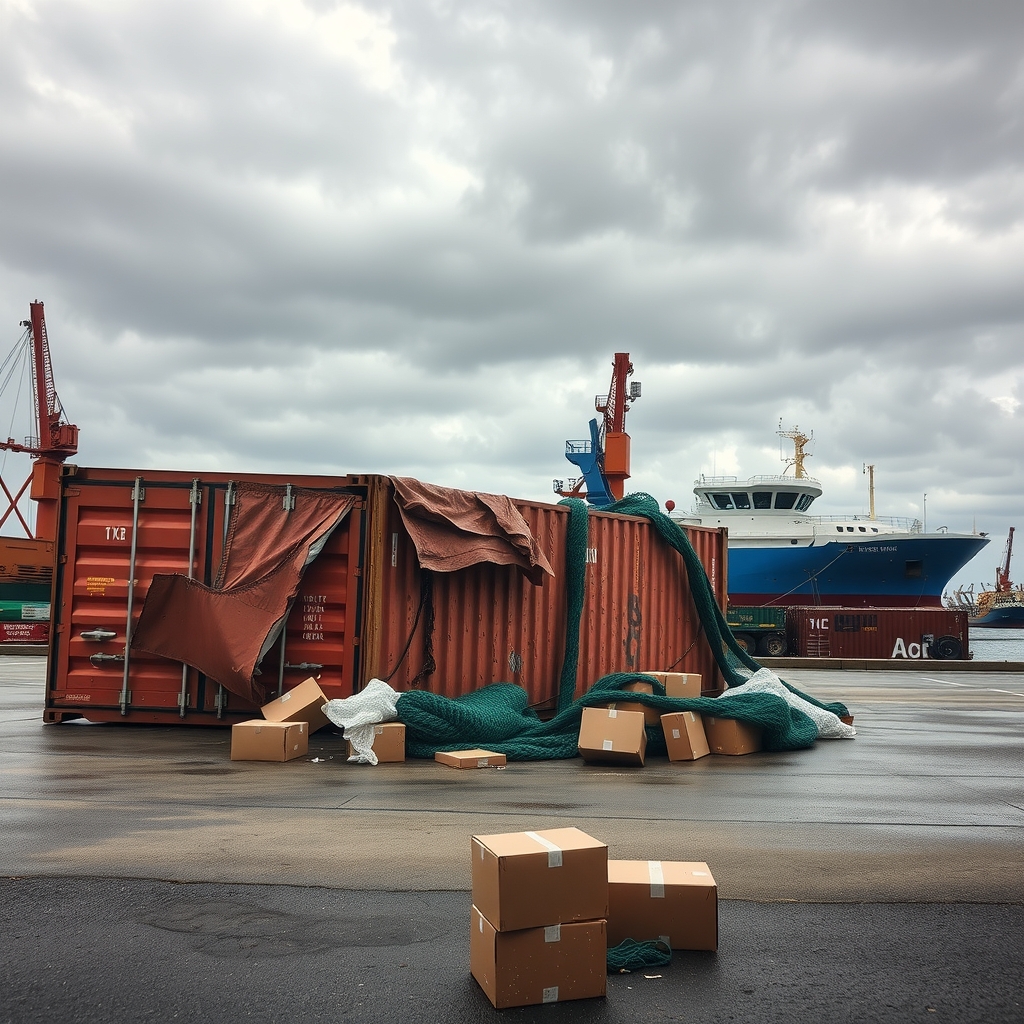
The architecture of maritime commerce relies heavily on the equitable allocation of fortuitous loss. When marine perils strike a commercial voyage, the financial fallout is distributed according to centuries-old doctrines that separate shared sacrifices from individual misadventures. Among these foundational legal concepts, Particular Average occupies a central yet frequently contested space in marine insurance jurisprudence. Unlike General Average, which demands a proportional contribution from all parties to a maritime venture when an intentional sacrifice is made for the common safety, Particular Average rests entirely where it falls. It denotes partial loss of or damage to a specific cargo interest or ship caused by a peril insured against, which falls exclusively on the owner of the damaged property or their underwriters.
Navigating the boundaries between General Average, Particular Average, and total loss requires an exacting analysis of international marine insurance acts, standard policy forms, and landmark judicial decisions. Courts and arbitral tribunals across major maritime jurisdictions continually grapple with the friction points of causation, the quantification of loss, and the interplay between contractual exceptions and statutory liabilities. This paper evaluates the doctrinal underpinnings of Particular Average, examining how international conventions and foundational case law define partial cargo losses and distribute financial risk among shipowners, cargo interests, and underwriters.
What constitutes Particular Average in maritime cargo damage claims?
Historically and legislatively rooted in marine insurance statutes such as the United Kingdom's Marine Insurance Act 1906—which has served as a legislative template for numerous jurisdictions globally—Particular Average is defined by exclusion. Section 64(1) of the Act establishes that a Particular Average loss is a partial loss of the subject-matter insured, caused by a peril insured against, and which is not a general average loss. Section 64(2) further clarifies that expressions like 'particular average warranty' or clauses excluding particular average are designed to protect underwriters against minor, wear-and-tear type claims, restricting indemnification to substantial, fortuitous damage.
To establish a valid claim for Particular Average in the context of maritime cargo damage, a claimant must satisfy several foundational legal criteria:
- Fortuitous Event: The damage must arise from an accidental or fortuitous occurrence connected to maritime navigation, such as heavy weather, stranding, collision, or fire, rather than inherent vice or ordinary wear and tear.
- Causational Nexus: There must be a direct proximate cause between the insured peril and the physical damage sustained by the cargo, adhering to the legal maxim *causa proxima non remota spectatur*.
- Exclusion of Common Safety: The loss must not have been incurred as a result of a deliberate sacrifice or extraordinary expenditure undertaken for the common safety of the adventure, which would otherwise categorize it under General Average.
- Proprietary Interest: The party claiming indemnity must possess an insurable interest in the cargo at the time of the loss.
The practical application of these criteria is frequently tested in high-stakes litigation. For instance, in landmark cases addressing heavy weather damage, English and American courts have consistently held that encountering adverse sea conditions does not automatically trigger recovery under a marine cargo policy unless the weather conditions are so exceptional that they exceed the normal expectancy of the route in question. Underwriters frequently deploy the defense of inherent vice, arguing that the cargo deteriorated due to its own internal composition—such as moisture content in grain or chemical instability in minerals—rather than extraneous sea perils.
How do international conventions and standard clauses regulate cargo loss distribution?
The governance of maritime cargo damage extends far beyond domestic marine insurance law, intersecting directly with international carriage regimes. The Hague Rules, the Hague-Visby Rules, and the Hamburg Rules establish the baseline liabilities and immunities of the ocean carrier. While these conventions govern the carrier's liability for loss or damage occurring during the custody of the vessel, the cargo owner's ultimate financial recourse often depends on the insurance contract written against the backdrop of standard institutional wordings, such as the Institute Cargo Clauses.
The following table provides a comparative overview of how different regimes and clauses characterize and address cargo loss allocations:
| Legal Regime / Clause Set | Primary Focus / Scope | Treatment of Partial / Average Loss | Notable Jurisprudential Considerations |
|---|---|---|---|
| Marine Insurance Act 1906 (UK) | Statutory framework for marine insurance contracts. | Defines Particular Average as partial loss caused by an insured peril, falling exclusively on the property owner. | Establishes statutory rules for measure of indemnity and unvalued versus valued policies. |
| Institute Cargo Clauses (A) | All-risks marine cargo insurance coverage. | Covers all risks of loss of or damage to the subject-matter insured except as excluded. | Shifts the burden to underwriters to prove an exclusion applies once fortuitous damage is proven. |
| Institute Cargo Clauses (B) & (C) | Named-perils marine cargo insurance coverage. | Covers specified perils (e.g., fire, explosion, stranding, washing overboard). | Requires the cargo claimant to explicitly prove the damage was caused by a specifically enumerated peril. |
| Hague-Visby Rules | Carrier liability for carriage of goods by sea. | Regulates carrier's duty of due diligence and sets statutory liability limits per package or kilo. | Interacts with insurance subrogation; carriers often attempt to contract out of liability via navigational error exceptions. |
International tribunals and national courts regularly adjudicate disputes where cargo interests attempt to bypass the limitations of carrier liability by filing direct claims under marine policies, or conversely, where underwriters seek subrogation against carriers. A critical area of contention involves the quantification of the Particular Average loss. Under standard marine insurance principles, the measure of indemnity for a partial loss of cargo is calculated by comparing the sound value of the goods at the port of destination with their damaged value, applying that same percentage depreciation to the insured value.
Jurisprudence from common law jurisdictions dictates that market fluctuations occurring after the voyage do not alter the percentage of depreciation, preserving the integrity of the indemnity calculation. However, civil law jurisdictions may apply distinct valuation metrics, sometimes prioritizing the actual cost of repair or reprocessing where feasible. This divergence underscores the importance of choice-of-law clauses in international bills of lading and insurance certificates.
What are the primary doctrinal ambiguities and evidentiary hurdles in average adjustments?
The operational administration of Particular Average relies heavily on Average Adjusters—independent professionals who compute losses and prepare adjustment statements. Despite their quasi-judicial standing in commercial maritime practice, their calculations frequently become the subject of intense judicial scrutiny. One of the most persistent doctrinal ambiguities centers on mixed causation. When cargo sustains damage attributable concurrently to an insured peril (such as sea water ingress) and an excluded cause (such as inherent vice or inadequate packaging), courts must apply rigorous causation analysis.
In the seminal English jurisprudence surrounding proximate cause in marine insurance, courts have rejected the apportionment of loss between concurrent causes unless the policy explicitly provides otherwise. If the proximate cause is an insured peril, the underwriter is liable for the entire loss; if it is an excluded peril, the claim fails entirely. This all-or-nothing approach contrasts sharply with comparative negligence frameworks found in other branches of tort law, creating significant evidentiary burdens for both cargo owners and insurers.
The determination of proximate cause in marine insurance is not a matter of scientific precision, but of common-sense interpretation of the intent of the contracting parties when applied to the shifting and turbulent realities of maritime transit.
Furthermore, the evidentiary threshold required to prove that cargo damage occurred due to a fortuitous sea peril rather than pre-shipment defects remains a formidable hurdle. Cargo interests must maintain meticulous documentation, including clean bills of lading, mates' receipts, joint survey reports, and temperature or humidity logs for refrigerated containers. Judicial bodies, including arbitral panels operating under the auspices of the International Chamber of Commerce (ICC), routinely dismiss claims where the chain of custody or condition reporting is compromised by delayed inspections.
How do contemporary courts address subrogation and multi-party liability in cargo claims?
When an underwriter indemnifies a cargo owner for a Particular Average loss, the doctrine of subrogation steps into effect, allowing the insurer to stand in the shoes of the cargo owner and pursue recovery against liable third parties, such as the carrier, terminal operator, or port authority. However, multi-party maritime ventures frequently feature complex contractual webs, including Himalaya clauses in bills of lading that extend carrier liability protections to stevedores and independent contractors.
International jurisprudence has progressively refined the limits of subrogation rights. Courts must balance the carrier's statutory immunities under international conventions against the equitable rights of the cargo insurer. If the bill of lading incorporates a paramount clause subjecting the carriage to the Hague-Visby Rules, the carrier may successfully invoke defenses such as the error in navigation or management exception. In such scenarios, the cargo underwriter absorbs the ultimate financial impact of the Particular Average loss, unable to recover from the shipowner.
Conversely, where unseaworthiness is established—specifically that the vessel was not reasonably fit to safely perform the voyage at the commencement of the loading—the carrier's immunities are stripped away. Landmark decisions from maritime appellate courts emphasize that the carrier's obligation to exercise due diligence to make the ship seaworthy is non-delegable. When unseaworthiness directly causes or contributes to cargo damage, the Particular Average loss transitions into a recoverable claim against the carrier, altering the final distribution of maritime risk.
Conclusion
Particular Average remains a cornerstone of maritime commerce, ensuring that fortuitous partial losses are managed through predictable legal mechanisms and insurance instruments. The interplay between domestic marine insurance statutes, international carriage conventions, and centuries of judicial precedent creates a rigorous framework for risk allocation. While doctrinal ambiguities regarding causation, valuation, and concurrent perils continue to test the ingenuity of courts and arbitrators, the core objective persists: maintaining a stable, equitable environment for global trade. As maritime logistics evolve with technological advancements and shifting trade routes, the fundamental principles governing cargo damage and Particular Average will continue to adapt, guided by the enduring tenets of international jurisprudence.
Comments
No comments yet.