Holding the Maritime Industry Accountable: The Global Legal Framework for Tanker Oil Spills
A deep dive into the CLC and Fund Conventions, exploring the strict liability rules, compensation limits, and institutional mechanisms that govern maritime oil pollution.
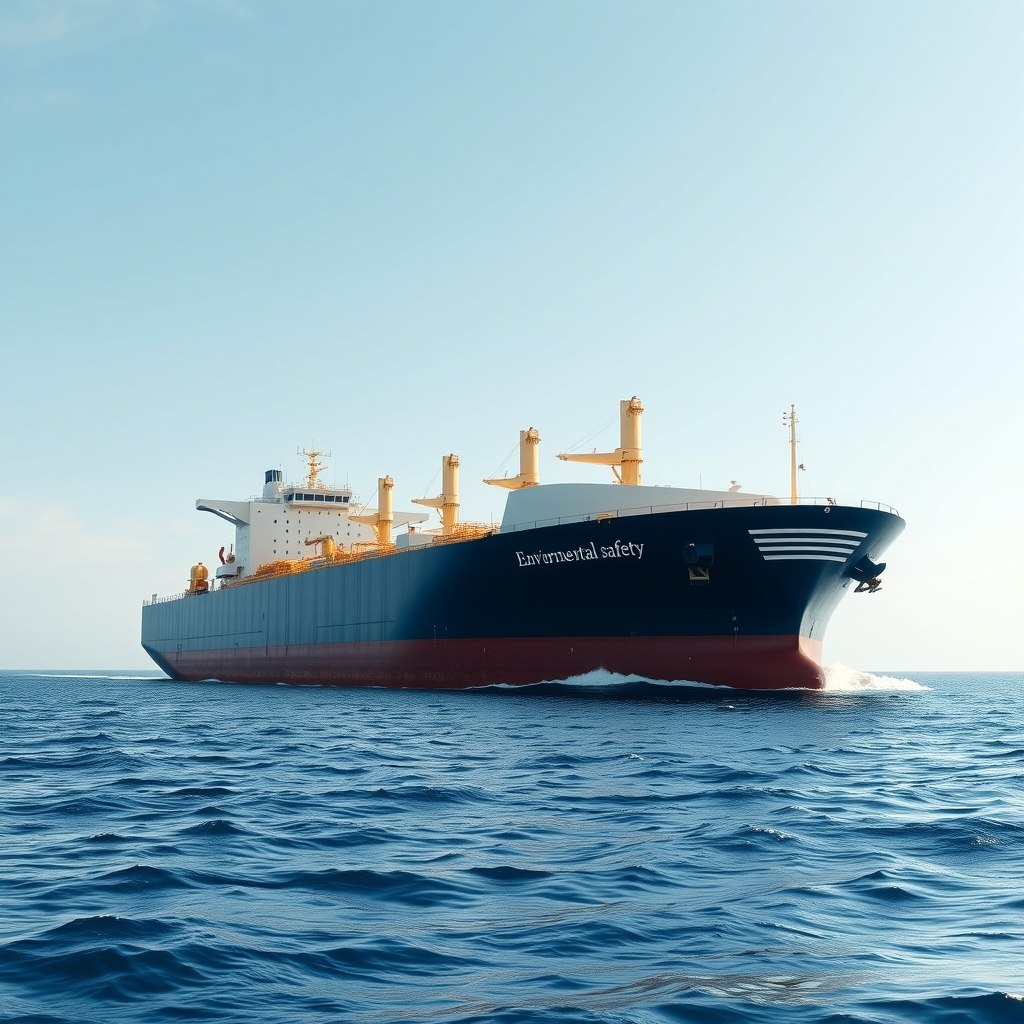
For decades, the world's oceans have served as the vital arteries of global commerce, with massive tankers transporting millions of barrels of crude and refined petroleum daily. While this maritime conveyor belt powers the global economy, it also presents persistent ecological and financial risks. When a laden tanker suffers a hull breach, grounding, or collision, the resulting environmental and economic devastation can overwhelm coastal states and local communities. The catastrophic grounding of the Torrey Canyon off the United Kingdom in 1967, which spilled approximately 119,000 tonnes of crude oil, exposed a glaring void in international law: there was no unified, effective legal framework to hold shipowners accountable or to ensure prompt, adequate compensation for victims of oil pollution.
In response to this vulnerability, the international community, under the auspices of the International Maritime Organization (IMO), developed a sophisticated, multi-tiered legal regime. At the heart of this system lie two complementary treaties: the International Convention on Civil Liability for Oil Pollution Damage (CLC) and the International Convention on the Establishment of an International Fund for Compensation for Oil Pollution Damage (the Fund Convention). Over the decades, these conventions have been updated through various protocols—most notably in 1992 and 2003—to establish a robust legal mechanism that balances the operational realities of global shipping with the critical need for environmental protection and victim restitution.
Who is liable for oil pollution from ships?
Under the international regime established by the 1992 CLC Protocol, liability for oil pollution damage is governed by the principle of strict liability. This means that the registered owner of the ship at the time of an incident is held liable for any pollution damage caused by the escape or discharge of persistent oil from the vessel. Unlike traditional common law torts, the affected parties do not need to prove fault, negligence, or a lack of due diligence on the part of the shipowner or the crew to secure compensation. The mere occurrence of the pollution damage is sufficient to trigger the shipowner's liability.
This strict liability framework is paired with a legal concept known as the channeling of liability. To simplify litigation and ensure that claims are processed efficiently, the CLC channels all claims exclusively to the registered shipowner. Claimants cannot bypass the shipowner to sue individual crew members, charterers, managers, operators, or salvors, unless it is proven that the damage resulted from their personal act or omission, committed with the intent to cause such damage, or recklessly and with knowledge that such damage would probably result. This strict channeling ensures that victims have a single, clearly identified target for their legal claims, preventing protracted multi-party litigation in national courts.
However, the shipowner's liability is not absolute. The CLC outlines narrow, specific exemptions under which the owner can escape liability entirely. To do so, the owner must prove that the pollution damage:
- Resulted from an act of war, hostilities, civil war, insurrection, or a natural phenomenon of an exceptional, inevitable, and irresistible character;
- Was wholly caused by an act or omission done with intent to cause damage by a third party; or
- Was wholly caused by the negligence or other wrongful act of any government or other authority responsible for the maintenance of lights or other navigational aids in the exercise of that function.
To guarantee that shipowners can meet their financial liabilities, the CLC mandates compulsory insurance. Every tanker carrying more than 2,000 tonnes of persistent oil as cargo must maintain insurance or other financial security, such as a bank guarantee, up to the limits of their liability. Ships are issued a State-certified certificate confirming this coverage, which must be carried on board. Crucially, the convention grants victims the right of direct action against the insurer or financial guarantor, allowing claimants to pursue the insurance provider directly even if the shipowner becomes insolvent or undergoes liquidation.
What is the limit of liability for oil spills?
While the CLC imposes strict liability on shipowners, it balances this burden by allowing them to limit their financial liability for any single incident. This limitation is calculated using Special Drawing Rights (SDR), an international reserve asset defined by the International Monetary Fund (IMF), to prevent fluctuations in national currencies from destabilizing the compensation pool.
Under the 1992 CLC Protocol, the financial limits of a shipowner's liability are directly tied to the size of the vessel, measured in gross tonnage (GT):
- For a ship not exceeding 5,000 GT, the liability is limited to a flat rate of 4.51 million SDR.
- For a ship with a tonnage between 5,000 and 140,000 GT, the limit increases by 631 SDR for each additional gross ton beyond the initial 5,000 GT.
- For any ship exceeding 140,000 GT, the liability is capped at a maximum of 89.77 million SDR.
This tiered structure ensures that smaller vessels, which typically carry less cargo and present lower environmental risks, are not disproportionately burdened by the same financial requirements as ultra-large crude carriers. However, a shipowner can forfeit the right to limit their liability. If claimants can prove that the spill resulted from the owner's personal act or omission, committed either with direct intent to cause pollution or recklessly with prior knowledge that such damage was highly likely, the liability caps are broken, and the owner faces unlimited liability.
To enforce these limits, the shipowner must establish a limitation fund in the court or other competent authority of the contracting state where the damage occurred. This fund, consisting of the total liability amount in cash or an acceptable guarantee, is distributed among the claimants in proportion to their established claims. If the total valid claims exceed the shipowner's liability limit, the CLC framework alone is insufficient, necessitating the activation of the second tier of international compensation: the Fund Convention.
How does the IOPC Fund work?
The International Oil Pollution Compensation (IOPC) Funds represent the second and third tiers of the global oil spill compensation regime. Established to supplement the CLC, the 1992 Fund Convention is designed to provide additional financial compensation when the damage exceeds the shipowner's liability limits under the CLC, when the shipowner is financially incapable of meeting their obligations, or when the shipowner is legally exempt from liability under the CLC's narrow exceptions.
The IOPC Fund is financed through a unique mechanism that shifts part of the financial burden of oil spills from the shipping sector to the oil cargo industry. The Fund is not financed by taxpayer money or government budgets; instead, it is funded by levies collected from individual companies or entities that receive more than 150,000 tonnes of contributing oil (crude oil and heavy fuel oil) after sea transport in a calendar year. These contributions are paid directly to the IOPC Funds Secretariat, headquartered in London, which administers the claims process and manages the capital reserves.
When an oil spill occurs in a member state, victims—including public authorities, private businesses, fishermen, and hoteliers—can submit claims directly to the IOPC Funds. The Fund covers three main categories of damage:
- Preventive Measures and Cleanup Costs: The expenses incurred in taking action to prevent or minimize pollution damage, such as deploying booms, skimming oil, dispersant application, and shoreline cleanup.
- Economic Loss: Loss of earnings sustained by persons who depend on marine resources, such as fishermen whose catches are contaminated, or coastal tourism operators facing booking cancellations due to polluted beaches.
- Environmental Restoration: The cost of reasonable measures actually undertaken or to be undertaken to restore the polluted marine environment to its pre-spill state. Unlike some domestic jurisdictions, the international regime does not compensate for abstract ecological damage that cannot be quantified or restored.
The maximum compensation payable under the 1992 Fund Protocol for a single incident is 203 million SDR, a figure that includes the amount paid by the shipowner or their insurer under the CLC. To address catastrophic spills that could exhaust even this substantial pool, the international community adopted the 2003 Supplementary Fund Protocol. This third tier is optional for member states and provides an additional layer of compensation, raising the total maximum payable amount to 750 million SDR per incident. This ensures that even the most severe ecological disasters have access to sufficient funding for cleanup and economic rehabilitation.
Which tankers are covered by the CLC?
The scope of the CLC and the Fund Conventions is strictly defined to target specific vessel types, cargo types, and geographic zones. Understanding which ships fall under these regulations is critical for maritime operators, insurers, and coastal states planning emergency response protocols.
First, the conventions apply exclusively to sea-going vessels and seaborne crafts of any type constructed or adapted for the carriage of oil in bulk as cargo. This primary definition targets commercial oil tankers. However, the convention also extends to unladen tankers. An unladen tanker is covered by the CLC during voyages following the carriage of oil in bulk, unless it is proved that there are no residues of such carriage remaining on board. It is important to note that dry bulk carriers, container ships, and passenger liners are generally excluded from the CLC, as their oil pollution risk is limited to their bunker fuel rather than their cargo; bunker spills from non-tankers are instead governed by the separate 2001 International Convention on Civil Liability for Bunker Oil Pollution Damage.
Second, the regime only applies to pollution damage caused by persistent hydrocarbon mineral oils. Persistent oils are those that do not dissipate rapidly through evaporation or natural processes, thereby posing a long-term threat to coastal environments. Examples include:
- Crude oil
- Heavy fuel oil
- Heavy diesel oil
- Lubricating oil
In contrast, non-persistent oils, such as gasoline, light diesel oil, kerosene, and liquefied petroleum gas (LPG), are excluded from the scope of the CLC and Fund Conventions. Because these substances evaporate quickly when spilled, they rarely require the extensive, long-term shoreline cleanups associated with heavy crude spills, though they still carry localized fire and toxicity risks.
Third, the geographic scope of the conventions is precisely defined. They cover pollution damage occurring in the territory, the territorial sea (typically up to 12 nautical miles from the coast), and the Exclusive Economic Zone (EEZ) of a contracting state. The conventions also apply to preventive measures, wherever they are taken, to prevent or minimize such damage within these zones. Therefore, even if a tanker spills oil on the high seas, the cost of preventive measures taken to stop that oil from reaching a state's EEZ or coastline remains compensable under the regime.
Comparing International Regimes and National Laws
The global framework established by the CLC and Fund Conventions operates successfully across more than 110 member states. However, it is not the only legal framework governing oil spill liability. The most notable exception to the international regime is the United States, which chose not to ratify the CLC and Fund Conventions. Instead, following the devastating Exxon Valdez spill in Prince William Sound, Alaska, in 1989, the U.S. Congress enacted the Oil Pollution Act of 1990 (OPA 90).
OPA 90 establishes a unilateral liability framework that differs significantly from the international regime. While both systems emphasize strict liability and compulsory insurance, OPA 90 allows for much higher liability limits and features broader definitions of compensable damages, including natural resource damage assessments that go beyond physical restoration costs. Furthermore, OPA 90 allows individual U.S. states to implement their own legislation, some of which impose unlimited liability on shipowners. This dual existence of the international CLC/Fund regime and the domestic U.S. OPA 90 requires global shipping lines and Protection and Indemnity (P&I) Clubs to navigate two distinct legal landscapes depending on their trading routes.
Contemporary Challenges in Marine Liability
Despite the historical success of the CLC and Fund regimes, the modern maritime sector faces emerging challenges that test the limits of these treaties. One of the most pressing concerns is the rise of the "shadow fleet"—a network of older, poorly maintained tankers operating under flags of convenience to transport sanctioned oil. Many of these vessels bypass standard maritime insurance markets, utilizing falsified documentation or unstable, unrated insurers. If a shadow fleet tanker experiences a catastrophic structural failure in busy shipping lanes, there is a severe risk that the shipowner's compulsory insurance will prove worthless, forcing the IOPC Funds or the affected coastal state to bear the entire financial burden of the cleanup.
Additionally, the global energy transition presents novel legal questions. As the shipping industry adopts alternative fuels to reduce greenhouse gas emissions, vessels are increasingly powered by non-hydrocarbon substances such as green methanol, ammonia, and hydrogen. While these fuels do not fall under the definition of persistent hydrocarbon mineral oils, a large-scale spill of ammonia or methanol could cause catastrophic local ecological damage. Legal scholars and maritime regulators are actively debating whether the existing liability conventions must be expanded, or if entirely new international liability instruments must be drafted to govern the risks associated with the next generation of marine fuels.
Conclusion
The International Convention on Civil Liability for Oil Pollution Damage (CLC) and the Fund Conventions represent a landmark achievement in international environmental law. By establishing a balanced, two-tiered mechanism of strict shipowner liability and cargo industry contribution, these treaties have successfully ensured that the victims of maritime oil spills receive prompt, structured compensation without destroying the economic viability of global maritime trade. Through decades of updates, the regime has proved resilient, adapting to rising cleanup costs and changing patterns of sea transport. As the maritime world enters an era of geopolitical volatility and technological transition, the preservation and modernization of this global liability framework remain essential for safeguarding the world's oceans and the coastal communities that depend on them.
Comments
No comments yet.