Offshore Wind Farms and Maritime Regulatory Conflicts
Explore the complex intersection of offshore wind energy development and traditional maritime law, addressing jurisdictional clashes and navigational rights.
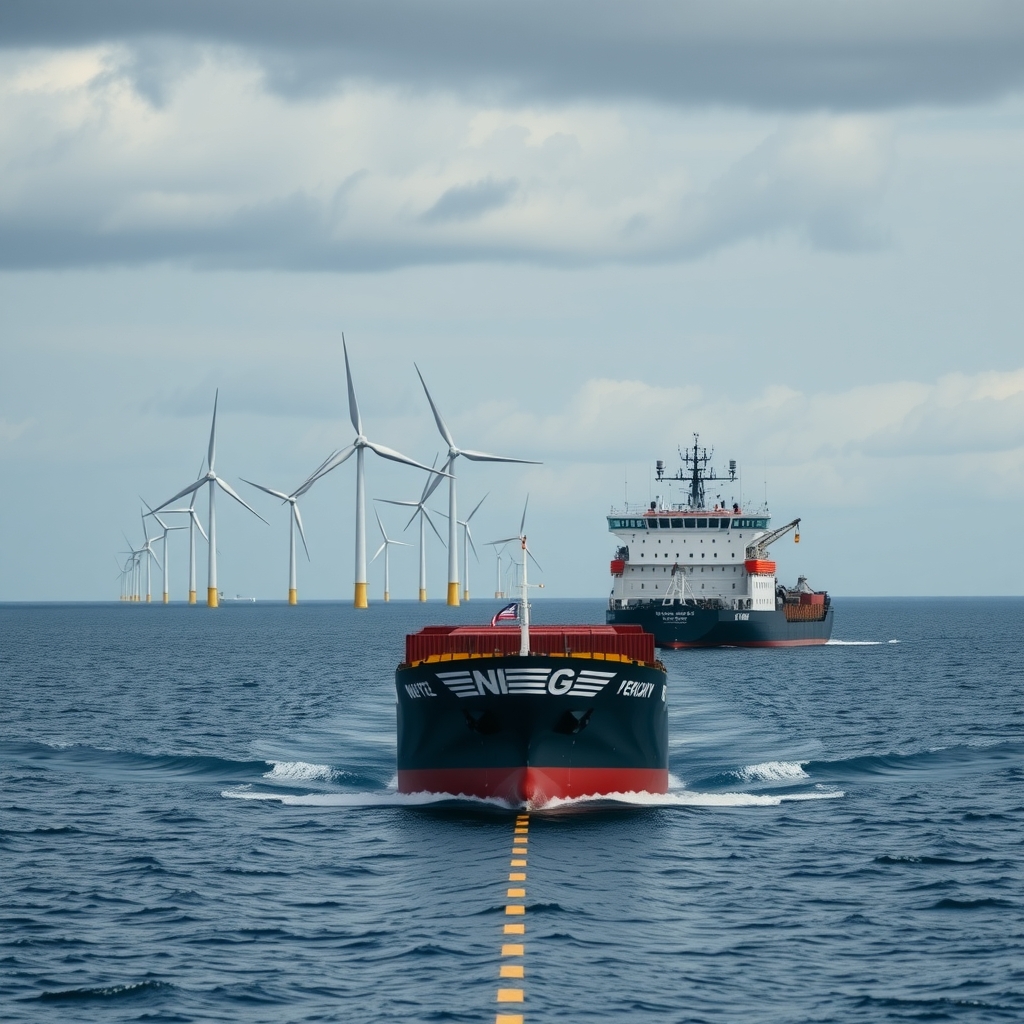
The global transition toward renewable energy has placed the world's oceans at the center of an unprecedented infrastructural boom. Offshore wind farms are rising along coastlines across Europe, Asia, and North America, transforming empty horizons into towering arrays of steel, composites, and rotating blades. Yet, this rapid maritime expansion is unfolding within a legal and regulatory framework that was largely designed centuries ago for traditional shipping, fishing, and sovereign defense. As massive wind turbine generators occupy thousands of square kilometers of the marine space, a profound collision is taking place between clean energy ambitions and established maritime commerce.
Maritime law is traditionally built upon principles of freedom of navigation, shared commons, and international treaties that prioritize the safe and unhindered movement of vessels. Conversely, offshore wind energy requires exclusivity, permanent seabed alteration, and rigid exclusion zones to protect both the capital-intensive installations and passing mariners. When these two worlds meet, the result is a complex web of regulatory friction, jurisdictional ambiguity, and economic tension. Understanding these conflicts requires examining how modern energy infrastructure intersects with centuries-old admiralty doctrines.
How do offshore wind farms impact traditional maritime navigation?
For centuries, the fundamental tenet of the law of the sea has been the freedom of navigation. Under the United States Constitution, international conventions, and customary international law, commercial vessels have enjoyed the right to transit coastal waters, territorial seas, and exclusive economic zones without undue interference. The sudden proliferation of offshore wind farms directly challenges this presumption. A modern wind turbine can exceed two hundred and fifty meters in height, with rotor diameters that dwarf many historical maritime structures.
When developers anchor dozens or hundreds of these structures into the seabed, they create physical barriers that fragment traditional shipping lanes. Even where transit corridors are left open between wind farm arrays, commercial shipowners and captains face increased navigational risks. Maneuvering a container ship or a bulk carrier through narrow corridors bounded by high-voltage cables and massive steel pillars requires heightened precision, particularly during severe weather events or periods of reduced visibility. Furthermore, wind turbines generate significant electromagnetic fields and radar interference, which can distort shipboard navigation equipment, GPS signals, and automatic identification systems.
To mitigate these risks, coastal states and international maritime organizations establish safety zones around offshore installations, typically restricting unauthorized vessels from entering a specified radius, such as five hundred meters. While necessary for physical protection, these exclusion zones cumulatively withdraw vast tracts of ocean from traditional public use, forcing vessels to take longer, less efficient routes. This rerouting increases fuel consumption, operational costs, and greenhouse gas emissions, creating an ironic paradox where the pursuit of green energy actively disrupts the efficiency of maritime transport.
What are the jurisdictional boundaries governing marine renewable energy?
The governance of the world's oceans is tiered according to distance from the baseline, as codified in the United Nations Convention on the Law of the Sea. Jurisdiction over offshore wind installations varies significantly depending on whether the project is located within territorial waters, the contiguous zone, or the exclusive economic zone. This layered legal geography creates substantial regulatory fragmentation for project developers and maritime operators alike.
- Internal Waters and Territorial Seas: Within twelve nautical miles of the baseline, coastal states exercise full sovereignty, subject to the right of innocent passage. National and local governments retain broad authority to permit or deny wind farm construction, enforce environmental laws, and regulate maritime traffic.
- Exclusive Economic Zones: Beyond the territorial sea, coastal states do not possess full sovereignty but rather sovereign rights for the purpose of exploring, exploiting, conserving, and managing natural resources, including energy production from wind and currents. However, freedom of navigation and overflight remains the primary regime for other nations in these waters.
- High Seas: While most current wind projects are coastal, future floating installations may push further offshore into international waters, introducing unprecedented questions regarding state jurisdiction, enforcement, and international arbitration.
This jurisdictional patchwork means that a single offshore wind project may be subject to overlapping authorities, including energy ministries, environmental protection agencies, maritime safety administrations, and local municipal boards. These agencies often operate under conflicting mandates; an environmental regulator might prioritize the preservation of avian migratory paths, while a maritime authority demands wider shipping lanes, and an energy ministry pushes for maximum turbine density to optimize electricity generation.
Who is liable for maritime accidents involving wind turbines and commercial vessels?
One of the most legally intricate areas of the offshore wind boom involves liability and risk allocation in the event of an allision—where a moving vessel strikes a stationary object—or a collision between service vessels. Admiralty law has long-established frameworks for determining fault and apportioning liability between ships, but applying these doctrines to fixed artificial islands and energy installations remains legally contentious.
When a cargo vessel loses power and drifts into an offshore wind turbine, causing catastrophic damage to the turbine and potential environmental hazards from transformer oil spills, courts must untangle a web of contractual, statutory, and tort liabilities. Key legal questions include:
- Was the wind farm adequately marked on official nautical charts and equipped with functioning aids to navigation, such as radar reflectors, foghorns, and high-intensity aviation lighting?
- Did the vessel maintain a proper lookout and comply with the International Regulations for Preventing Collisions at Sea?
- Did the coastal state properly vet the location of the wind farm relative to established traffic separation schemes?
Maritime lien law further complicates these scenarios. If a contractor or supplier is unpaid during the construction of an offshore wind farm, questions arise as to whether a maritime lien can attach to a fixed structure in the same manner as it would to a navigable vessel. Most jurisdictions hold that fixed structures are governed by real property law rather than maritime law regarding liens, creating distinct financial security risks for maritime service providers, tugboat operators, and subsea cable layers who support the offshore wind industry.
How can maritime spatial planning resolve ocean use conflicts?
As the demand for ocean space intensifies, maritime spatial planning has emerged as the primary governance tool to reconcile competing marine uses. Rather than handling offshore wind development on a piecemeal, project-by-project basis, comprehensive marine spatial planning seeks to map out ocean space proactively, designating specific zones for shipping corridors, commercial fishing, military operations, marine conservation, and renewable energy generation.
Effective spatial planning requires unprecedented levels of international and cross-sectoral cooperation. Coastal nations must consult with neighboring countries, particularly in enclosed or semi-enclosed seas where exclusive economic zones overlap and transboundary shipping routes are dense. Furthermore, dialogue between renewable energy developers and traditional maritime stakeholders—such as fishermen's associations, commercial port authorities, and cruise line operators—is essential to identify potential bottlenecks before multi-billion-dollar investments are anchored to the seabed.
Innovative engineering solutions are also playing a role in regulatory harmonization. Modern wind farm designs are increasingly incorporating multi-use concepts, such as permitting low-impact aquaculture or passive fishing within turbine arrays, or integrating wave and tidal energy converters. By transforming single-use exclusion zones into collaborative multi-use marine zones, developers can alleviate some of the hostility from traditional maritime sectors.
Conclusion
The expansion of offshore wind farms represents a monumental shift in how humanity utilizes the marine environment. Yet, this green energy revolution cannot occur in a regulatory vacuum. The friction between renewable energy installations and maritime commerce highlights the urgent need to modernize international maritime law and national legal frameworks. By embracing robust maritime spatial planning, clarifying jurisdictional boundaries, and fostering open dialogue between the shipping and energy sectors, governments can navigate these regulatory conflicts. Ultimately, a balanced approach will ensure that the transition to a low-carbon future does not compromise the safety, efficiency, and legal clarity of the world's oceans.
Comments
No comments yet.