Liability Regimes in Multimodal Transport: Navigating Jurisdictional Complexity
This analysis examines the legal complexities of multimodal transport, focusing on carrier liability within international maritime law and convention conflicts.
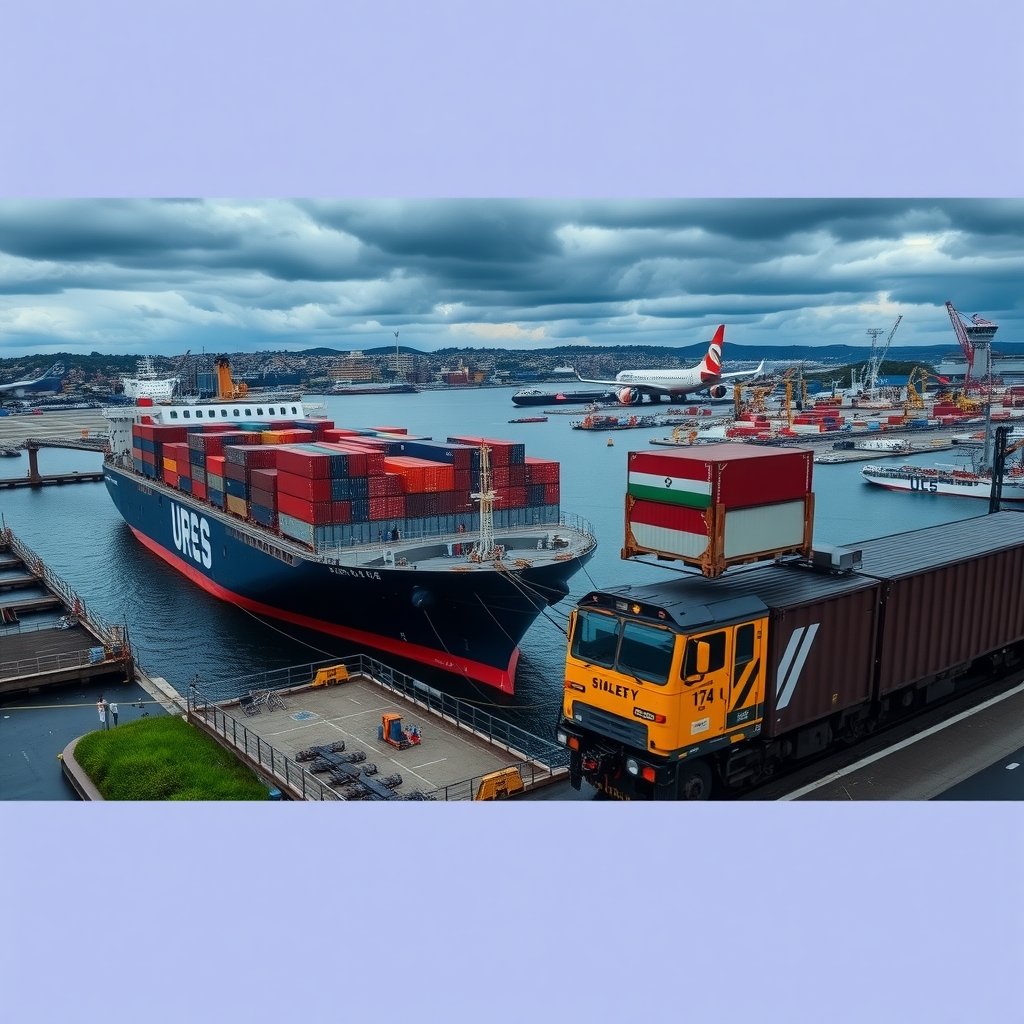
The Conceptual Architecture of Multimodal Carriage
The transition of global trade from point-to-point maritime transit to integrated door-to-door multimodal logistics has outpaced the development of a unified legal regime. Historically, the law of the sea developed in isolation, governed by regimes that assumed goods remained on a single vessel for the duration of the journey. As global supply chains have become increasingly intertwined with inland rail, road, and air transport, the divergence between maritime conventions and general multimodal instruments has created a fragmented landscape that challenges the principle of legal certainty.
At the center of this tension is the conflict between the Hague-Visby Rules and the subsequent efforts to codify multimodal liability, such as the UN Convention on International Multimodal Transport of Goods (the Geneva Convention). While Hague-Visby provides a robust framework for maritime liability, it ceases to operate once the cargo crosses the ship’s rail or is discharged, leaving a jurisdictional vacuum that necessitates a shift toward the uniform liability system or the network system of carrier accountability.
How does the network system define carrier liability?
The network system is the dominant operational doctrine in contemporary multimodal transport. Under this framework, the liability of the multimodal transport operator (MTO) is determined by the legal regime applicable to the specific leg of the journey where the loss or damage occurs. If goods are damaged during the maritime segment, the carrier is held to the standards of the Hague-Visby or Hamburg Rules; if the damage occurs during road transport, the Convention on the Contract for the International Carriage of Goods by Road (CMR) applies.
This approach effectively imports the limitations and defenses of various unimodal conventions into the multimodal contract. While this preserves a degree of stability for underwriters, it imposes a heavy evidentiary burden on the cargo interest. Claimants must precisely identify the point of damage, a task often complicated by sealed containerization and long-duration transit. The legal complexity here lies in the intersection of conflicting limitation-of-liability clauses, which often vary significantly between the maritime and terrestrial regimes, leading to what practitioners describe as an intractable game of jurisdictional chess.
What are the primary jurisdictional frictions in multimodal disputes?
Jurisdictional friction arises most acutely when the damage occurs in a non-localized manner, such as in a container depot where custody is shared between rail and maritime operators. In such instances, courts often resort to the principle of lex loci delicti or the hierarchy of contract terms established in the multimodal bill of lading. However, when the contract is silent or ambiguous, international tribunals often refer to the principles of the United Nations Convention on Contracts for the International Carriage of Goods Wholly or Partly by Sea (the Rotterdam Rules).
Although the Rotterdam Rules have not achieved universal ratification, their influence on judicial interpretation remains profound. They introduce a nuanced approach to the carrier’s duty of care, extending the scope of responsibility beyond the tackle-to-tackle limitations of older conventions. The friction persists because national courts, often influenced by local jurisprudence such as the United States Carriage of Goods by Sea Act (COGSA), frequently resist the application of unified international standards in favor of domestic interpretation of contract clauses.
Comparative Liability Frameworks
| Convention/System | Primary Scope | Limitation Doctrine |
|---|---|---|
| Hague-Visby Rules | Maritime Transit | Per package/unit limitation |
| CMR Convention | Road Transport | SDR per kilogram |
| Rotterdam Rules | Multimodal (Maritime) | Volume-based accountability |
| Network System | Case-by-case/Hybrid | Applicable law of the segment |
The Role of International Arbitration and Precedent
Dispute resolution in multimodal transport has increasingly shifted away from national courts toward specialized maritime arbitration centers. Organizations such as the ICC International Court of Arbitration provide a venue for navigating the technical complexities of multimodal contracts. The jurisprudence generated here—while often confidential—has solidified the understanding that the MTO functions not merely as a carrier, but as an agent of transit who assumes responsibility for the entire duration of the carriage.
The influence of international conventions is filtered through the lens of contract law. Because few nations have adopted a holistic multimodal convention, the multimodal bill of lading has become the primary source of law. This creates a reliance on the freedom of contract, which critics argue undermines the protection of smaller shippers. However, the consistent application of principles found in the Hague-Visby Rules—such as the carrier’s due diligence to provide a seaworthy vessel—is often imported by analogy into inland transport disputes, creating a pseudo-unified regime through judicial practice rather than treaty ratification.
Synthesis and Future Trajectories
The evolution of maritime carrier liability reflects a broader tension between the historical protections afforded to shipowners and the modern requirements of door-to-door logistical efficiency. As digitalization continues to permeate the shipping industry, the reliance on electronic bills of lading and blockchain-based smart contracts will likely force a further harmonization of liability standards. The shift toward a comprehensive, multimodal-first legal structure is no longer merely a theoretical aspiration but a pragmatic necessity for global trade.
Legal practitioners must prepare for a future where the distinction between maritime and inland carriage continues to erode. By prioritizing the development of uniform contract clauses and engaging with the emerging jurisprudence of international arbitral bodies, stakeholders can mitigate the risks inherent in a fragmented system. The goal remains the realization of a predictable, equitable framework that balances the rights of carriers and cargo interests in an increasingly integrated global economy.
Comments
No comments yet.