The Jurisprudential Architecture of Command: Master’s Legal Authority and Responsibilities
An examination of the dual legal status of the shipmaster, analyzing the tensions between commercial agency and sovereign duty under international maritime law.
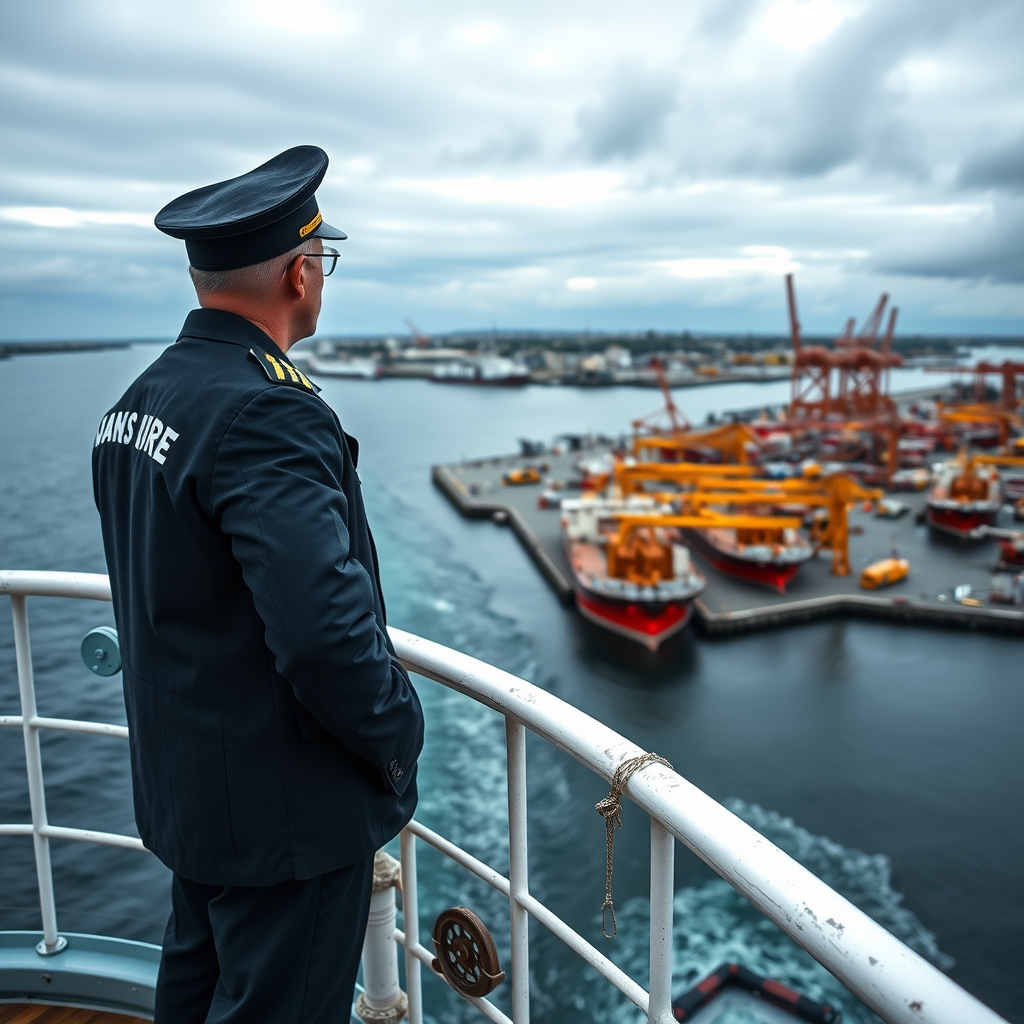
The office of the Master represents one of the most unique legal constructs in the contemporary international order. Unlike a typical corporate officer or a land-based manager, the Master of a vessel operates within a multi-layered jurisdictional framework that simultaneously treats them as a private agent of the shipowner, a statutory officer of the Flag State, and a representative of the international community in the high seas. This dual, and at times conflicting, nature of authority creates a complex jurisprudential landscape where commercial imperatives frequently collide with environmental protections and the safety of life at sea.
To understand the Master's legal standing, one must look beyond the simple hierarchy of a vessel. The Master is the nexus where private maritime contract law meets the public international law of the sea. This article evaluates the scope of this authority, the limits imposed by international conventions, and the evolving nature of liability in an era of increasing regulatory scrutiny and technological transition.
The Dual Nature of Maritime Command: Agent and Officer
The fundamental tension in maritime law arises from the Master's capacity to act in two distinct legal roles. In the first instance, the Master is an agent of the shipowner, bound by the terms of a contract of employment and the principles of agency law. Under this role, the Master is tasked with the commercial success of the voyage—ensuring cargo is delivered efficiently, fuel is conserved, and the owner's interests are protected. This is a fiduciary relationship, governed largely by domestic laws and the specific terms of the Seafarers' Employment Agreement (SEA).
However, the second role is arguably more profound: the Master is an officer of the Flag State. Under the United Nations Convention on the Law of the Sea (UNCLOS), particularly Article 94, the Flag State is required to exercise effective jurisdiction and control over ships flying its flag. The Master is the personification of this control. When a vessel is in international waters, the Master's authority is an extension of the sovereign power of the Flag State. This confers a quasi-judicial status, granting the Master the power to maintain order, enforce discipline, and take necessary actions to ensure the vessel complies with international regulations such as SOLAS (Safety of Life at Sea) and MARPOL (Prevention of Pollution from Ships).
This duality creates significant legal friction. For example, if a shipowner issues an instruction that prioritizes commercial speed over a safety margin prescribed by the ISM Code, the Master is caught between a contractual duty to the employer and a statutory duty to the international community. The jurisprudence of maritime law has increasingly trended toward prioritizing the latter, recognizing that the Master's public duties must supersede private commercial interests in matters of safety and environmental protection.
| Legal Capacity | Primary Relationship | Governing Legal Framework | Core Objective |
|---|---|---|---|
| Commercial Agent | Shipowner / Employer | Contract Law / Agency Law | Economic efficiency and cargo integrity |
| Flag State Officer | Sovereign State | UNCLOS / Flag State Legislation | Exercise of jurisdiction and control |
| International Agent | Global Community | IMO Conventions (SOLAS, MARPOL, STCW) | Safety of life and environmental protection |
What are the legal limits of a Master's authority?
While the Master is often described as having absolute authority on board, this is a legal misconception. The authority is not plenary; it is strictly circumscribed by the principle of ultra vires—acts performed beyond the scope of legal power. A Master's authority is limited by three primary boundaries: the scope of the employment contract, the regulations of the Flag State, and the international standards set by the International Maritime Organization (IMO).
One of the most significant legal safeguards is the concept of "overriding authority" established under the International Safety Management (ISM) Code. Section 5 of the ISM Code explicitly mandates that the Company must ensure that the Master has the overriding authority and responsibility to make decisions regarding safety and pollution prevention. This is a crucial legal mechanism that provides the Master with a "shield" against commercial pressure. If a Master deviates from a planned route to avoid a storm, thereby increasing fuel costs, the Master is protected from claims of breach of contract provided the decision was made in accordance with safety imperatives.
However, this authority is also limited by the rights of the crew. The Master's power to discipline is not an absolute license for tyranny. Under the Maritime Labour Convention (MLC, 2006), the Master's authority must be exercised in a manner that respects the fundamental rights of seafarers. Any disciplinary action that violates these international standards can be challenged in maritime courts, and the Master may find themselves personally liable for abuses of power.
Furthermore, the Master's authority is geographically limited. While the Master's command is absolute regarding the internal discipline of the ship, their authority to interact with external entities (such as coastal states) is strictly governed by the jurisdictional zones defined by UNCLOS. A Master cannot, for instance, unilaterally decide to ignore the lawful instructions of a Port State Control (PSC) officer, as the Master's authority is subject to the coastal state's jurisdiction within its Territorial Sea and Contiguous Zone.
Who is liable for a Master's error in navigation?
The question of liability following a maritime incident—be it a collision, grounding, or pollution event—is one of the most litigated areas in maritime jurisprudence. Liability is generally bifurcated into civil liability and criminal liability, and it distinguishes between the actions of the Master as an employee and the Master as an individual.
In the realm of civil liability, the doctrine of respondeat superior (vicarious liability) typically applies. If a Master makes a navigational error while acting within the scope of their employment, the shipowner is generally held liable for the resulting damages. This is often settled through the shipowner's Protection and Indemnity (P&I) insurance. In cases of collision, the determination of fault is governed by the principle of proportional fault, as articulated in various national laws and international conventions, such as the 1910 Collision Convention. The court examines whether the Master's error was a result of negligence, a breach of the COLREGs (International Regulations for Preventing Collisions at Sea), or an unavoidable accident.
However, the landscape changes dramatically when considering criminal liability. In recent decades, there has been a marked shift toward holding Masters personally accountable for environmental crimes and gross negligence. Under MARPOL, if a vessel is found to have discharged oily waste in violation of international standards, the Master can face criminal prosecution. The legal standard often revolves around mens rea (guilty mind)—did the Master intend the discharge, or were they willfully blind to the actions of their crew?
"The Master is not merely a passenger on the ship's commercial journey, but the guardian of its legal compliance. When the law is broken, the Master's command responsibility becomes the focal point of criminal inquiry."
The concept of "command responsibility" is particularly relevant in cases of systemic failure. If a Master fails to implement the safety management system (SMS) required by the ISM Code, they may be held liable not just for their own mistakes, but for the foreseeable errors of their subordinates. This creates a rigorous standard of care that requires the Master to be actively engaged in the oversight of all critical shipboard operations.
Does a Captain have overriding authority?
To answer this, one must distinguish between de facto authority (the power exercised in practice) and de jure authority (the power granted by law). In a practical sense, the Captain (Master) possesses nearly absolute control over the vessel's immediate operations. In an emergency, such as a fire or a sinking, the Master's decisions regarding the abandonment of the vessel or the order to change course are effectively beyond the reach of real-time judicial review. This is known as the "emergency exception" in maritime law.
However, de jure, this overriding authority is specifically tethered to the safety of the vessel, its crew, and the marine environment. The ISM Code provides the legal basis for this overriding authority, ensuring that the Master can prioritize safety over the commercial instructions of the shipowner. This is not an unlimited license to ignore orders; rather, it is a mandated responsibility to act when safety is at risk.
The legal tension arises when the Master's decision to exercise this authority results in significant economic loss. For instance, if a Master orders a vessel to heave-to (stop) in heavy weather to protect the crew, causing the vessel to miss a critical commercial window, the shipowner might attempt to claim a breach of the employment contract. The legal defense for the Master rests on the statutory obligation under SOLAS and the ISM Code. Most modern maritime courts have upheld that the Master's duty to ensure the safety of life and the vessel is a non-negotiable prerequisite that overrides any commercial obligation.
| Scenario | Commercial Instruction | Master's Overriding Authority Action | Legal Justification |
|---|---|---|---|
| Severe Weather | Maintain speed to meet charter deadline. | Slow down or change course to ensure stability. | SOLAS / ISM Code (Safety of Life) |
| Environmental Risk | Continue transit through a protected area. | Reroute to avoid potential pollution risk. | MARPOL / ISM Code (Environmental Protection) |
| Equipment Failure | Proceed with voyage despite minor engine issues. | Stop at the nearest port for repairs. | ISM Code (Safety Management System) |
The Evolution of Liability in the Age of Autonomy
As the maritime industry moves toward Maritime Autonomous Surface Ships (MASS), the traditional legal framework of the Master's authority faces an existential challenge. The current legal architecture is built upon the assumption of a human presence on board—a person capable of exercising judgment, commanding a crew, and being held criminally responsible.
The emergence of remote-control centers and AI-driven navigation systems creates a "responsibility gap." If an autonomous vessel causes a collision, where does the liability lie? If there is no Master on board to exercise overriding authority, who is responsible for the immediate decision to deviate for safety? The current international conventions (UNCLOS, COLREGs, SOLAS) are heavily anthropocentric, focusing on the "Master" and the "crew."
Legal scholars are currently debating several models for this transition:
- The Remote Master Model: A human Master remains legally responsible but operates from a shore-based station. This maintains the existing command responsibility framework but complicates issues of jurisdictional authority.
- The System-as-Master Model: The software and its developers are treated as the functional equivalent of the Master, shifting liability toward product liability and software certification standards.
- The Hybrid Model: A combination where certain high-level decisions are made by a remote human, while tactical navigation is handled by AI, requiring a new legal definition of "command."
The transition will require a fundamental reassessment of the Master's role. The jurisprudence must move from a model of physical command to one of algorithmic oversight. This will not only change how we define the Master's authority but also how we assign liability when the "decision-maker" is a line of code rather than a human being.
Conclusion
The Master's legal authority remains a cornerstone of maritime order, serving as the bridge between the private sphere of commerce and the public sphere of international law. The complexity of this role arises from the necessity of balancing competing interests: the owner's profit, the crew's safety, the Flag State's sovereignty, and the global community's environmental health. While the ISM Code and various IMO conventions have provided a framework for the Master's overriding authority, the dual nature of their responsibility continues to create legal ambiguity and professional risk.
As we have seen, the Master's authority is not absolute but is instead a carefully balanced set of duties and powers, circumscribed by international law. Whether in the face of navigational errors or environmental crises, the legal system continues to demand a high standard of command responsibility. Looking forward, the advent of autonomous shipping will undoubtedly test the limits of these centuries-old legal principles, requiring a new jurisprudential architecture that can accommodate the shift from human command to digital oversight. The fundamental challenge remains the same: ensuring that wherever a vessel travels, there is a clear, accountable, and legally recognized authority responsible for the safety of the seas.
Comments
No comments yet.