The Jurisprudential Friction of Sanctions Compliance in International Maritime Trade
An examination of the legal tensions between the principle of freedom of navigation under UNCLOS and the escalating complexity of global economic sanctions regimes.
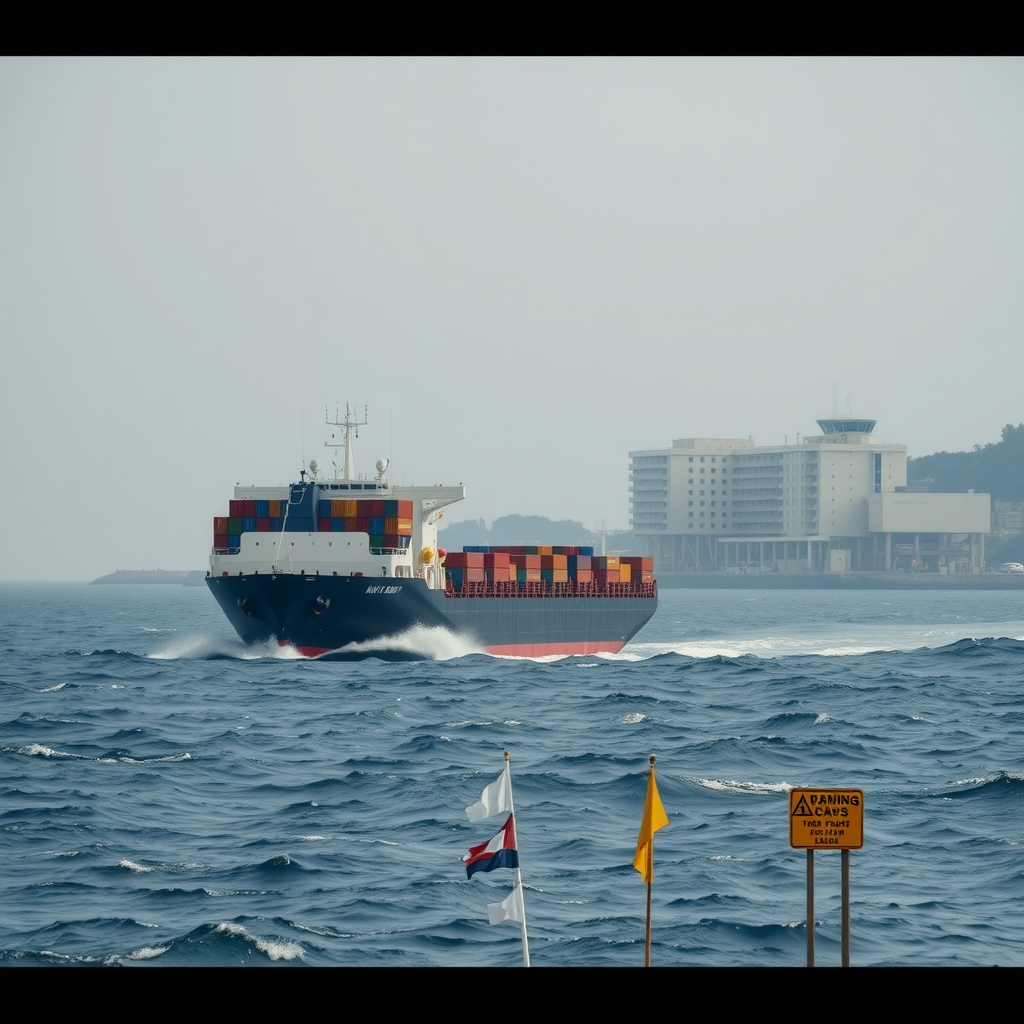
The maritime domain has historically functioned as the primary artery of global commerce, governed by a delicate equilibrium between the principle of mare liberum—the freedom of the seas—and the regulatory authority of sovereign states. However, the contemporary geopolitical landscape has introduced a profound destabilizing variable: the systematic use of economic sanctions as a tool of statecraft. This evolution has created a deep-seated jurisprudential friction between the established norms of the United Nations Convention on the Law of the Sea (UNCLOS) and the extraterritorial reach of unilateral and multilateral sanctions regimes. As maritime operators navigate increasingly fragmented legal waters, the intersection of international trade law, sanctions compliance, and maritime enforcement has become a crucible of legal ambiguity and significant financial risk.
The Divergence of Maritime Freedom and Geopolitical Enforcement
At the heart of this conflict lies the fundamental tension between the rights of flag states and the enforcement mandates of sanctioning bodies. Under UNCLOS, the high seas are reserved for peaceful purposes, and the principle of freedom of navigation remains a cornerstone of international maritime law. Articles 87 and 92 of the Convention underscore the primacy of the flag state's jurisdiction over vessels on the high seas. Yet, when the United Nations Security Council (UNSC) issues mandates under Chapter VII of the UN Charter, these traditional protections are frequently superseded by the necessity of international peace and security.
The complexity intensifies when moving from multilateral UN sanctions to unilateral measures imposed by powerful individual states, such as the United States via the Office of Foreign Assets Control (OFAC) or the European Union through its Council regulations. These regimes often assert extraterritorial jurisdiction, claiming a nexus to their domestic economy—such as the use of US dollars or US-origin technology—to regulate maritime activities that occur entirely outside their physical borders. This practice challenges the traditional concept of territoriality and creates a bifurcated reality for shipowners: compliance with the laws of the flag state may simultaneously constitute a violation of the laws of a major economic power.
How do maritime sanctions affect international trade?
The implementation of sanctions fundamentally alters the operational and economic architecture of maritime trade. One of the most visible impacts is the emergence of what industry analysts frequently term the "dark fleet" or "shadow fleet." These are vessels that operate outside the standard regulatory framework, often utilizing aged hulls, opaque ownership structures, and falsified documentation to circumvent economic restrictions. This phenomenon introduces systemic risks into the global maritime ecosystem, including increased environmental hazards due to substandard maintenance and the degradation of maritime safety standards.
Furthermore, sanctions compliance necessitates a level of due diligence that extends far beyond the immediate parties to a contract. The impact can be categorized into several operational disruptions:
- Complexity in Ship-to-Ship (STS) Transfers: Historically a standard method for optimizing logistics, STS transfers are now heavily scrutinized as potential vehicles for sanctions evasion, particularly in the oil and gas sectors.
- AIS Manipulation: The practice of "going dark"—disabling the Automatic Identification System (AIS) to mask a vessel's true location—has become a critical red flag for compliance officers, yet it remains a primary method for evading detection in sanctioned waters.
- Increased Transactional Costs: The necessity for rigorous "Know Your Customer" (KYC) and "Know Your Cargo" (KYC) protocols adds significant administrative and financial burdens to charterers, owners, and financiers.
- Disruption of Insurance Markets: Sanctions create volatility in the P&I (Protection and Indemnity) insurance market, as insurers must navigate the risk of providing coverage to vessels that may inadvertently engage in sanctioned activities.
The following table illustrates the divergent approaches to sanctions implementation in the maritime sector:
| Sanctions Type | Legal Basis | Primary Enforcement Mechanism | Impact on Maritime Operations |
|---|---|---|---|
| Multilateral (UN) | UN Charter, Chapter VII | Member State domestic legislation | Universally binding; high legal certainty. |
| Unilateral (e.g., US) | Domestic Statutory Law | Extraterritorial enforcement/Secondary sanctions | High risk of "de-risking" by banks and insurers. |
| Regional (e.g., EU) | EU Treaties/Regulations | Member State regulatory bodies | Uniform within the bloc; complicates non-EU trade. |
What are the legal risks of sanctions non-compliance?
For maritime entities, the risks of non-compliance are not merely regulatory; they are existential. The legal consequences of violating sanctions regimes span the spectrum from civil penalties to criminal prosecution and the total loss of operational capability. The concept of "strict liability" often dominates the regulatory landscape, meaning that an entity may be held liable for a violation even in the absence of intent or negligence.
Financial and Asset Risks: The most immediate consequence is often the freezing of assets. Sanctioning authorities have the power to block access to the international banking system, effectively preventing a vessel or its owner from conducting any business in major currencies. This "financial death penalty" can render a shipping company insolvent almost overnight.
Contractual and Insurance Risks: Non-compliance frequently triggers "sanctions clauses" within maritime contracts, such as those developed by BIMCO. These clauses allow parties to terminate contracts or suspend performance without being in breach, should the voyage involve sanctioned territories or entities. Similarly, P&I clubs and hull and machinery (H&M) insurers often include explicit sanctions exclusion clauses, meaning that in the event of an incident, the vessel may be left without essential coverage, exposing the owner to unlimited liability.
Criminal Liability: In jurisdictions such as the United States and the United Kingdom, intentional or even grossly negligent evasion of sanctions can result in criminal indictments against individual directors and officers. The piercing of the corporate veil is a growing reality in sanctions enforcement, where authorities look past shell companies to the ultimate beneficial owners (UBOs) to establish accountability.
How does UNCLOS impact sanctions enforcement?
The interaction between UNCLOS and sanctions enforcement creates one of the most complex legal puzzles in modern maritime law. The central question is whether the enforcement of sanctions by a state—particularly through the boarding and inspection of vessels on the high seas—is compatible with the sovereign rights granted to flag states under UNCLOS.
Under Article 92 of UNCLOS, ships sail under the exclusive jurisdiction of their flag state on the high seas. Any interference by another state generally requires the consent of the flag state or a specific exception, such as those found in Article 110 (Right of Visit) relating to piracy or slave trade. However, the enforcement of UN Security Council resolutions often creates a conflict of norms. If a UNSC resolution mandates that states must intercept vessels suspected of violating an arms embargo, this mandate, by virtue of being under Chapter VII, theoretically overrides the traditional jurisdictional protections of UNCLOS.
The ambiguity arises in the case of unilateral sanctions. If a state attempts to enforce its own sanctions by intercepting a foreign-flagged vessel in international waters, it may be acting in violation of UNCLOS. This has led to significant diplomatic and legal tension, as seen in various maritime standoffs where coastal states attempt to project authority beyond their territorial limits to enforce economic mandates. The lack of a clear judicial mechanism to adjudicate the hierarchy between UNCLOS and unilateral economic enforcement remains a significant gap in international law.
Who is liable for maritime sanctions violations?
Determining liability in the complex web of maritime commerce is a task of immense difficulty. The supply chain of a single voyage can involve dozens of actors, each with different levels of involvement and oversight. Liability typically follows a tiered structure, though the lines are increasingly blurred by the use of sophisticated evasion techniques.
The Vessel Owner and Operator: As the primary entity responsible for the vessel's conduct, the owner bears the most direct risk. This includes responsibility for the vessel's routing, the vetting of charterers, and the monitoring of AIS data. Under many regimes, the owner is expected to maintain a robust compliance program that accounts for the activities of the crew and the cargo.
The Charterer and Cargo Owner: Charterers who instruct a vessel to visit a sanctioned port or transport sanctioned goods are direct participants in the violation. Liability here is often established through the contractual relationship and the instruction provided to the master. The difficulty lies in identifying the true cargo owner when multiple layers of intermediaries are employed.
The Financier and Insurer: Perhaps the most significant shift in recent years is the targeting of the "enablers." Banks and insurance providers are now held to an extremely high standard of due diligence. If a bank processes a payment for a voyage that is later found to have violated sanctions, the bank can face massive fines and loss of its banking license. This has led to a widespread phenomenon of "de-risking," where financial institutions refuse to provide services to entire sectors or regions to avoid any possible exposure to sanctions risk.
The Beneficial Owner: In the era of shell companies, enforcement agencies are increasingly focused on the ultimate beneficial owner (UBO). The legal doctrine of "control" is often used to link the actions of a nominally independent operator back to the individual or entity that ultimately directs its economic activity. This approach aims to prevent the use of maritime structures as shields for sanctioned actors.
"The evolution of maritime sanctions compliance marks a transition from a regime of mere regulatory oversight to one of active, technological, and often extraterritorial enforcement. The challenge for the maritime industry is to reconcile the ancient principle of freedom of navigation with the modern reality of economic warfare."
Conclusion
The landscape of international maritime trade is undergoing a profound transformation. The traditional reliance on flag state jurisdiction and the principle of freedom of navigation is being challenged by the strategic necessity of economic sanctions. As the "dark fleet" expands and the enforcement reach of major economies extends further into the high seas, the legal risks for maritime actors will only increase. For shipowners, charterers, and financiers, compliance can no longer be a secondary administrative function; it must be a core strategic imperative. The future of maritime law will likely be defined by how the international community resolves the growing tension between the rights of the sea and the dictates of global economic policy, and whether existing frameworks like UNCLOS can remain resilient in a more fragmented and sanctioned world.
Comments
No comments yet.