Maritime Salvage Law and the Jurisprudence of Salvage Awards
An in-depth academic examination of international maritime salvage law, the 1989 Salvage Convention, and the judicial calculation of awards.
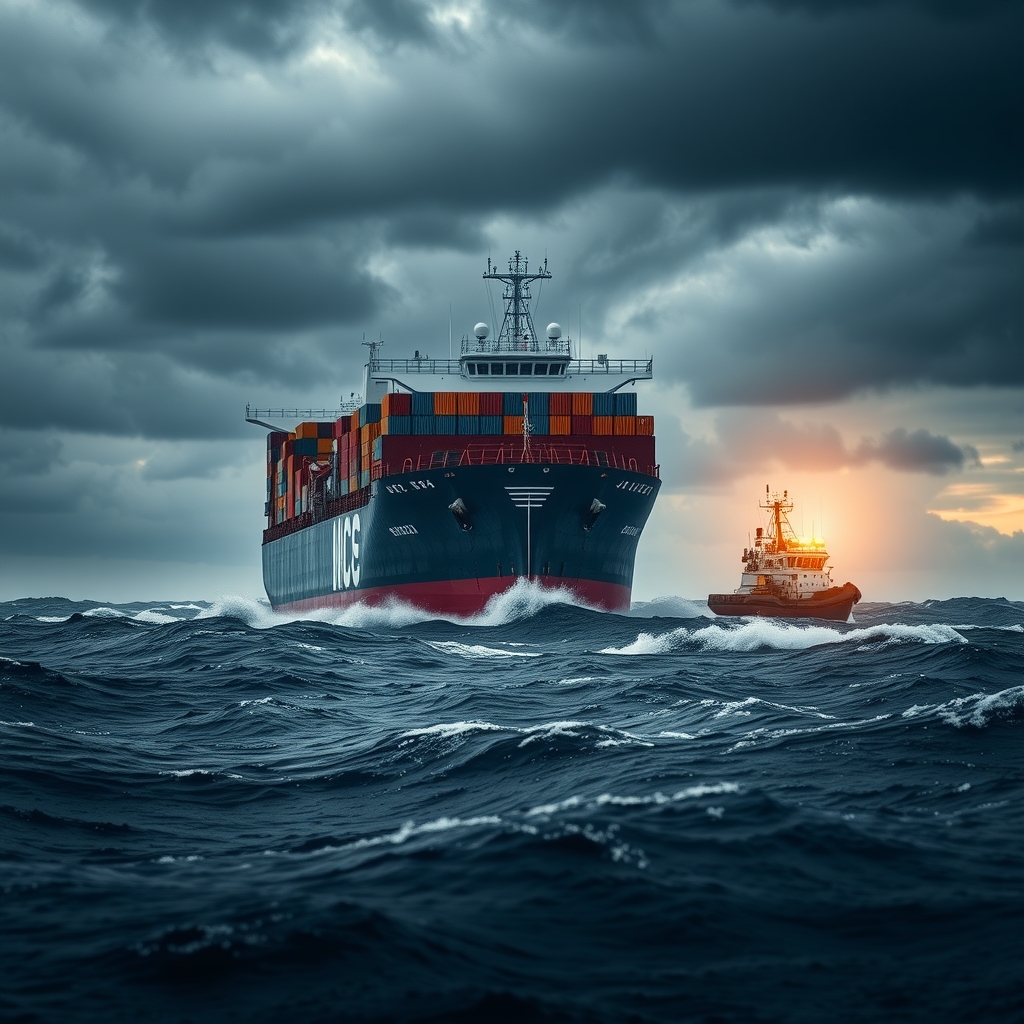
Maritime salvage represents one of the most enduring pillars of international admiralty law, balancing the commercial incentives required to rescue imperiled property at sea with the broader public imperatives of environmental protection. Unlike the common law of finders, which historically favored possession and immediate acquisition, maritime salvage is governed by a distinct legal regime rooted in reciprocity, voluntary intervention, and the unique perils of navigation. When a vessel, cargo, or other marine property faces imminent danger on navigable waters, any third party that intervenes voluntarily to avert that danger acquires a distinct legal right to compensation. This foundational construct, evolved from the ancient lex maritima and codified through successive international conventions, transforms what would otherwise be a gratuitous act or a trespass into a highly regulated commercial and judicial undertaking.
The contemporary framework governing these operations has largely shifted from the Brussels Convention of 1910 to the International Convention on Salvage, 1989. While the 1910 Convention focused primarily on the preservation of property and the traditional 'no cure, no pay' principle, the 1989 instrument introduced crucial modern adaptations. Most notably, it addressed the catastrophic environmental risks posed by modern tanker traffic and hazardous cargoes by establishing a legal mechanism for environmental salvage. This evolution reflects a profound jurisprudential shift: property preservation is no longer the sole metric of maritime utility. The prevention of marine pollution has been elevated to an equal, and occasionally paramount, objective within the calculus of salvage law.
How are maritime salvage operations legally defined and initiated?
At the heart of any salvage claim lies a strict legal definition of salvage operations, which distinguishes true salvage from towage, pilotage, or gratuitous assistance. Under Article 1 of the 1989 Salvage Convention, a salvage operation is defined as any act or activity undertaken to assist a vessel or any other property in danger in navigable waters or in any other waters whatsoever. For a valid salvage claim to arise, three indispensable elements must concur: first, the property must be exposed to a marine peril that is real and apprehended, though not necessarily immediate; second, the salvage service must be rendered voluntarily, meaning the salvor owes no preexisting contractual or official duty to render assistance; and third, the operation must be successful in whole or in part.
The establishment of marine peril is often the most contentious threshold issue in litigation. Jurisprudence across major maritime jurisdictions establishes that the danger need not be absolute or catastrophic, but it must be sufficiently grave that, absent intervention, the vessel or cargo would suffer inevitable damage, destruction, or loss. The subjective apprehension of the master, while relevant, is subordinated to an objective assessment of the surrounding circumstances—such as engine failure in heavy weather, grounding on a charted reef, or fire within a cargo hold. Once peril is established, the voluntariness requirement ensures that professional salvors, tug operators acting outside their towage contracts, and even crew members acting beyond the scope of their employment (under exceptional circumstances) can assert a maritime lien against the rescued property.
The initiation of these operations typically occurs under standard contractual forms that modify or supplement the baseline provisions of the general maritime law. The most prominent among these is the Lloyd's Open Form (LOF), a standardized 'no cure, no pay' agreement that incorporates the provisions of the 1989 Convention. By utilizing the LOF, parties bypass protracted negotiations regarding day rates or hourly fees while a vessel is sinking, deferring the determination of the final reward to arbitration in London under the auspices of the Lloyd's Salvage Arbitration Branch. This contractual architecture provides speed and legal certainty, allowing master mariners and salvors to focus exclusively on the technical execution of the rescue.
What is the strict legal meaning of the no cure, no pay principle?
The doctrine of 'no cure, no pay' stands as the defining cornerstone of traditional salvage law. Encapsulated in Article 12 and Article 14 of the 1989 Convention, the principle dictates that a salvor is entitled to no remuneration whatsoever unless the salvage operation produces a useful result—meaning the vessel or property is saved from peril. If the salvor expends millions of dollars in equipment, fuel, and labor, but the ship ultimately sinks into deep water with total loss of cargo, the salvor absorbs the entirety of the financial loss. This harsh rule aligns the economic interests of the salvor directly with the preservation of the shipowner's property, creating an absolute incentive for success.
However, the absolute nature of 'no cure, no pay' created severe commercial vulnerabilities in the latter half of the twentieth century, particularly regarding environmental threats. If a loaded oil tanker suffered structural failure in heavy weather, a commercial salvor would calculate the risk of failure and decline to intervene if the salved value of the leaking hull was less than the exorbitant cost of preventing an oil spill. Recognizing this market failure, the international community integrated special compensation provisions into the 1989 Convention. Under Article 14, if a salvor carries out operations concerning a vessel which by itself or its cargo threatened damage to the environment and failed to earn a traditional salvage reward, the salvor is entitled to fair compensation for its expenses from the shipowner, equivalent to out-of-pocket costs plus a fair rate for equipment and personnel.
The interplay between traditional salvage awards and special compensation was further refined through industry-standard amendments such as the SCOPIC (Special Compensation P&I Club) clause. Incorporated into LOF contracts, SCOPIC provides an alternative tariff-based compensation mechanism that guarantees salvors their expenses and profit margins from the outset of an environmental threat, bypassing the complex legal hurdles and evidentiary burdens associated with establishing an Article 14 claim. The following table illustrates the comparative structural differences between these complementary frameworks:
| Legal Framework | Primary Objective | Basis of Remuneration | Financial Risk Allocation |
|---|---|---|---|
| Traditional Salvage (LOF / 1989 Convention) | Preservation of ship and cargo | Proportion of salved value (No Cure, No Pay) | Salvor bears full financial risk of zero success |
| Special Compensation (Article 14) | Prevention of environmental damage | Expenses plus fair rate assessed by tribunals | Shipowner bears operational expense risk upon threat |
| SCOPIC Clause (Contractual Tariff) | Immediate environmental mitigation and certainty | Pre-agreed daily rates and out-of-pocket costs | P&I Clubs underwrite operational cost floors |
How do international tribunals and arbitrators calculate salvage awards?
When salvage operations succeed and property is brought to a place of safety, determining the financial reward requires a rigorous judicial or arbitral assessment. Under Article 13 of the 1989 Salvage Convention, the award must be fixed with a view to encouraging salvage operations, taking into account a statutory list of criteria. These criteria are balanced carefully by arbitrators, such as those presiding under Lloyd's arbitration or designated judges in maritime courts, to arrive at a lump-sum figure that reflects both the heroism of the service and the economic realities of the maritime industry.
The calculation methodology begins with the determination of the 'salved value'—the market value of the ship, cargo, and freight at the termination of the salvage service, minus the costs incurred subsequent to the casualty to land, store, and appraise the property. Once this aggregate pool of value is established, the tribunal evaluates the statutory criteria, which include:
- The salved value of the vessel and other property.
- The skill and efforts of the salvors in preventing or minimizing environmental damage.
- The measure of success obtained by the salvor.
- The nature and degree of the danger facing the property.
- The skill and efforts of the salvors in rendering the service.
- The time used and expenses and losses incurred by the salvors.
- The risk of liability and other risks run by the salvors or their equipment.
- The promptness of the services rendered.
- The availability and use of vessels or other equipment intended for salvage operations.
- The state of readiness and efficiency of the salvor's equipment and the value thereof.
In landmark judicial pronouncements, appellate courts and arbitration panels have emphasized that no single criterion is determinative. For instance, in deep-sea towing operations involving minimal personal danger to the salvor but massive capital exposure and high equipment value, the sophistication and readiness of the salvor's gear heavily influence the award percentage. Conversely, where salvors board a burning tanker in volatile weather, the element of personal hazard and exceptional bravery scales the award upward, even if the absolute salved value is modest. The ultimate award rarely exceeds a fraction of the salved value, typically capped by the total value of the property saved, ensuring that the owner is never left in a worse financial position than if the property had been completely lost.
What jurisdictional conflicts and legal ambiguities complicate transnational salvage disputes?
Transnational maritime salvage operations frequently trigger complex conflicts of law and jurisdictional competition among coastal states, flag states, and international tribunals. When a casualty occurs within the territorial sea or Exclusive Economic Zone (EEZ) of a sovereign state, tensions invariably arise between the private rights of the professional salvor under international maritime law and the public law prerogatives of the coastal state under the United Nations Convention on the Law of the Sea (UNCLOS).
Coastal states possess legitimate police powers to protect their marine environment, coastlines, and fisheries from imminent ecological disaster. Consequently, port state authorities and maritime administrations frequently intervene in salvage operations, issuing mandatory directives to tow a casualty away from sensitive reefs, dictating the place of refuge, or even denying entry to a damaged ship entirely. These administrative interventions can directly conflict with the professional judgment of the salvor and master, creating severe legal ambiguities regarding liability if the coastal state's forced intervention exacerbates the damage or results in the total loss of the vessel. International jurisprudence, notably observed in advisory opinions and disputes before international tribunals like ITLOS, underscores that while coastal states hold broad enforcement powers in their EEZs, these powers must be exercised with due regard to the rights of navigation and the professional autonomy of maritime operators.
Furthermore, enforcement of maritime salvage liens introduces procedural friction across different legal systems. A salvage lien is a privileged, in rem claim that arises automatically upon the successful rendering of services, ranking exceptionally high in the priority of maritime liens—typically superior to mortgagees and possessory lienholders. However, executing this lien through ship arrest requires navigating disparate national procedural rules. Civil law jurisdictions may require immediate judicial deposits or burdensome security bonds before permitting the release of arrested cargo, whereas common law jurisdictions rely on flexible admiralty court discretion. These divergences necessitate careful contractual foresight, reinforcing why the vast majority of international salvage disputes incorporate standardized arbitration clauses that channel controversies away from chaotic domestic court systems into specialized international forums.
Conclusion
Maritime salvage law remains a dynamic intersection of commercial enterprise, equitable jurisprudence, and environmental stewardship. The transition from pure property-based salvage under the 1910 Brussels Convention to the integrated ecological framework of the 1989 Salvage Convention illustrates the law's capacity to adapt to industrial and technological transformation. As maritime trade expands and vessels grow in size and complexity, the legal mechanisms governing emergency response, risk allocation, and award calculation will continue to be tested by novel operational challenges. Through the disciplined application of international conventions, standard forms like LOF, and nuanced arbitral jurisprudence, the maritime legal order successfully balances the commercial demands of salvors with the preservation of global shipping and the marine environment.
Comments
No comments yet.