Navigating the Depths of Maritime Oil Pollution Liability
A rigorous legal analysis of the international regimes governing liability, compensation, and environmental remediation following maritime oil spills.
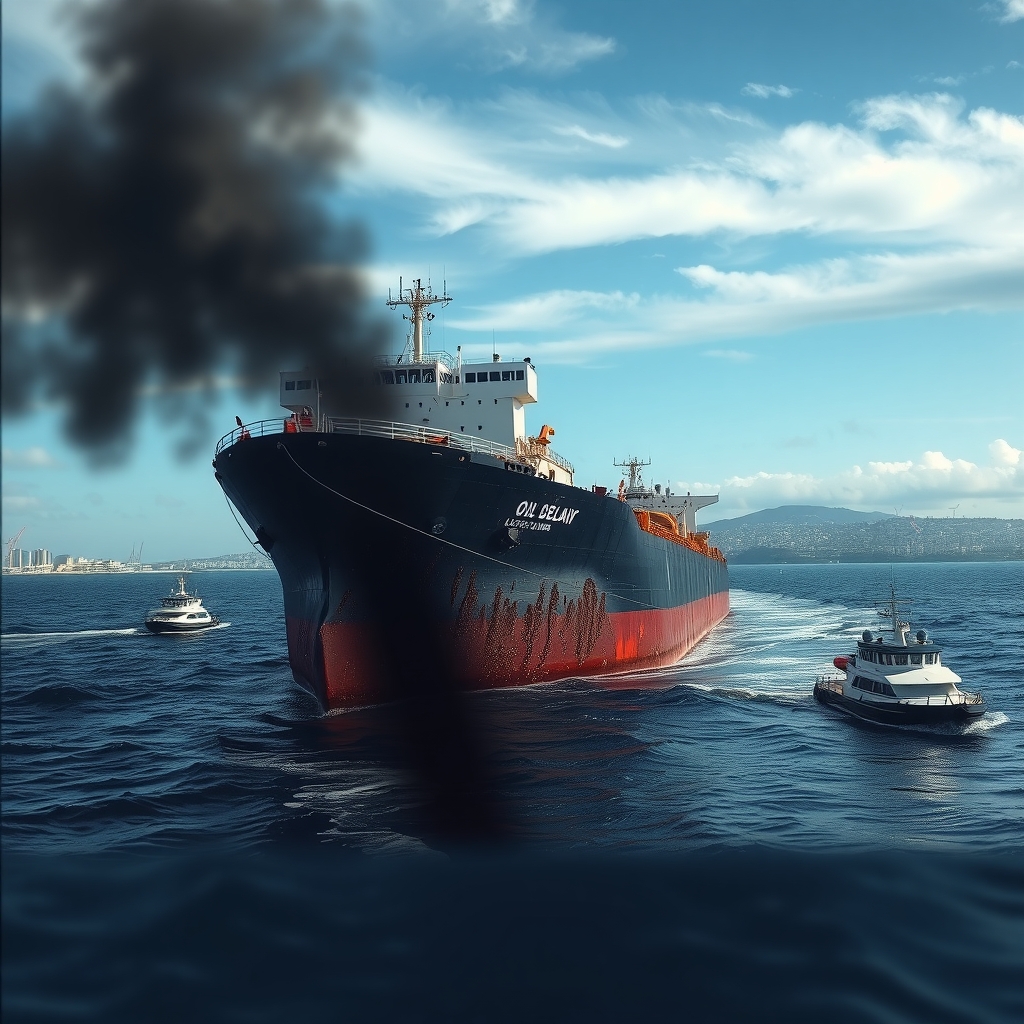
The maritime domain represents the primary artery of global commerce, facilitating the movement of vast quantities of energy resources across the world's oceans. Yet, this economic vitalization carries a persistent and devastating ecological risk: the discharge of hydrocarbons into the marine environment. When a vessel suffers a structural failure, a collision, or a grounding, the resulting oil spill triggers a complex cascade of legal obligations. The transition from traditional fault-based liability to the modern regime of strict liability marks a profound shift in international maritime law, seeking to balance the commercial interests of shipowners with the urgent necessity of environmental protection and the rights of coastal states to seek remediation.
The Normative Framework: Which international conventions govern oil pollution?
The architecture of maritime environmental law is not a singular monolith but rather a layered system of conventions, treaties, and soft law instruments. At the highest level, the United Nations Convention on the Law of the Sea (UNCLOS) provides the constitutional framework, establishing the rights and duties of states regarding the protection and preservation of the marine environment. UNCLOS mandates that states take all necessary measures to prevent, reduce, and control pollution from vessels, yet it leaves the specific mechanisms of liability and compensation to specialized international instruments.
The primary instruments governing oil pollution are the International Maritime Organization (IMO) conventions. For pollution caused by the carriage of persistent oil in bulk (cargo oil), the 1992 Civil Liability Convention (CLC) and the 1992 Fund Convention form the cornerstone. These are supplemented by the 2001 Bunkers Convention, which addresses the pollution risks posed by the fuel oil carried by all types of vessels, not just tankers. Furthermore, the International Convention for the Prevention of Pollution from Ships (MARPOL) serves as the technical regulatory standard, dictating the operational requirements to prevent accidental and operational discharges.
This regulatory landscape creates a dual-track system: one track for the massive scale of tanker spills and another for the more dispersed, but equally problematic, risks associated with the fuel oil of the global merchant fleet. The interaction between these regimes is critical for determining the jurisdictional competence of courts and the availability of insurance-backed compensation.
Who is liable for an oil spill from a ship?
Determining the identity of the liable party is a central tension in maritime jurisprudence. In many areas of maritime law, liability is determined by negligence or fault. However, in the specialized realm of oil pollution, the law has moved toward a model of strict liability to ensure that victims—ranging from coastal communities to fisheries—are not left without recourse due to the difficulties of proving human error in the complex environment of a sea voyage.
Under the 1992 CLC, liability is 'channeled' almost exclusively to the registered owner of the ship. This principle of channelling is designed to provide legal certainty and facilitate the claims process. By focusing liability on a single, identifiable entity, the convention ensures that claimants do not need to litigate against a myriad of subcontractors, crew members, or charterers. The registered owner is required to maintain compulsory insurance to cover their potential liability, and victims have a direct right of action against the insurer.
However, the definition of a 'shipowner' shifts depending on the type of oil involved. While the CLC focuses on the registered owner of a tanker, the Bunkers Convention 2001 adopts a much broader definition. Under the Bunkers Convention, the 'shipowner' includes the registered owner, any person having the authority to use the ship from the time of the incident, the manager, and the bareboat charterer. This broader scope is intended to address the reality of modern vessel management, where the entity controlling the vessel may be distinct from the one on which the vessel is registered.
The distinction is vital. If a non-tanker vessel spills its fuel oil, the CLC does not apply, and the claimant must navigate the Bunkers Convention. This distinction can lead to significant differences in the available compensation pools and the ease with which a claimant can identify a solvent defendant.
Compensation Mechanisms: How is maritime oil pollution compensation calculated?
One of the most complex aspects of maritime environmental law is the quantification of damages. The calculation of compensation is not merely a matter of adding up the costs of cleaning up oil from a beach; it involves a sophisticated analysis of economic, environmental, and restorative losses.
The 1992 Fund Convention provides a secondary layer of compensation when the damages exceed the limits of the shipowner's liability under the CLC. The International Oil Pollution Compensation (IOPC) Funds are financed by levies on the receivers of financed oil, ensuring that the 'polluter pays' principle is applied not just to the shipowner, but to the industry that benefits from the transport of oil.
When calculating compensation, the following categories are generally considered:
- Preventive Measures: The costs incurred in taking reasonable measures to prevent or minimize pollution damage after an incident has occurred.
- Clean-up Costs: The actual expenditure required to remove oil from the water, coastlines, and sensitive ecosystems.
- Economic Loss: Proven loss of income suffered by third parties, such as fishermen, tourism operators, and aquaculture businesses, directly resulting from the spill.
- Environmental Damage: The cost of reasonable measures of reinstatement to the marine environment. This is a contentious area, as many legal systems struggle to assign a monetary value to 'pure' environmental damage—damage to the ecosystem that does not result in direct economic loss to humans.
A significant jurisprudential hurdle remains the exclusion of 'consequential' or 'indirect' economic loss that is too remote from the incident. Courts often apply a strict test of causation, requiring that the economic harm be a direct and foreseeable result of the spill. This often leaves large-scale ecological damage, which may not have immediate commercial impact, under-compensated.
The Limits of Recourse: What are the limitations on shipowner liability for oil pollution?
A fundamental principle of maritime commerce is the right of a shipowner to limit their liability. This is not a way to escape responsibility, but rather a mechanism to ensure that the risks of shipping remain predictable and insurable, preventing a single catastrophic event from bankrupting an entire sector of the global economy.
The 1992 CLC provides specific limits on liability based on the tonnage of the vessel. These limits are calculated according to a prescribed scale, ensuring that larger vessels bear a proportionally greater share of the potential liability. However, these limits are not absolute. A claimant may 'break' the limit of liability if they can prove that the pollution damage resulted from the owner's personal act or omission, committed with the intent to cause such damage, or recklessly and with knowledge that such damage would probably result.
The threshold for breaking the limit is extraordinarily high. In practice, it is very difficult for a claimant to prove 'knowledge' of the probability of damage, which requires more than mere negligence. This creates a legal tension: while the strict liability regime protects claimants from having to prove fault, the limitation regime protects owners from unlimited exposure, often at the expense of the total environmental cost of the spill.
The Bunkers Convention: Addressing the non-tanker gap and how does the bunkering convention work?
Before 2001, there was a significant legal gap regarding the pollution caused by the fuel oil (bunkers) of non-tanker ships. While tankers were covered by the CLC/Fund regime, a container ship or a bulk carrier spilling its fuel oil fell into a legal vacuum regarding standardized, internationalized compensation. The Bunkers Convention 2001 was designed to bridge this gap.
The Bunkers Convention works by imposing strict liability on the shipowner for pollution damage caused by any hydrocarbon mineral oil used or intended to be used for the operation or propulsion of the ship. Unlike the CLC, the Bunkers Convention does not have a corresponding international fund for supplementary compensation. Instead, compensation is subject to the limits of liability set by the Convention on Limitation of Liability for Maritime Claims (LLMC), unless the national law of the state where the claim is brought provides more favorable terms.
The following table provides a comparative overview of the primary regimes:
| Feature | 1992 CLC | 1992 Fund Convention | 2001 Bunkers Convention |
|---|---|---|---|
| Primary Target | Cargo oil (tankers) | Excess claims (tankers) | Fuel oil (all vessels) |
| Basis of Liability | Strict Liability | Financial Contribution | Strict Liability |
| Primary Payer | Registered Owner | IOPC Funds | Shipowner (Broad definition) |
| Limitation Regime | CLC-specific scales | N/A (Fund-based) | LLMC 1976/1996 |
Jurisprudential Evolution: From Erika to Prestige
The development of oil pollution law has been driven as much by courtroom battles as by treaty negotiations. Two landmark cases, the Erika and the Prestige, fundamentally reshaped the understanding of liability and the extent to which parties beyond the registered owner could be held accountable.
In the Erika litigation, which followed a massive spill off the coast of France, the French courts took a revolutionary step by holding the cargo owner (Total) liable for the pollution. The court reasoned that the cargo owner had a duty of care to ensure that the vessel chosen for transport was seaworthy. This decision challenged the 'channelling' principle of the CLC, suggesting that if a party's negligence contributed to the selection of an unsafe vessel, they could be held liable for environmental damage regardless of the strict liability regime's protections for third parties.
Similarly, the Prestige disaster off the coast of Spain highlighted the difficulties of managing a large-scale spill involving a vessel that was not a tanker in the traditional sense of carrying oil as cargo, but whose fuel oil caused catastrophic damage. The Prestige litigation emphasized the necessity of international cooperation and the need for a more robust regime for non-tanker pollution, eventually contributing to the momentum behind the Bunkers Convention. These cases demonstrated that while the conventions provide a framework, the evolving standards of corporate social responsibility and environmental duty of care can push the boundaries of established maritime law.
"The tension between the channelling of liability to protect the shipping industry and the demand for accountability from those who profit from the movement of hazardous goods remains one of the most significant unresolved issues in maritime environmental jurisprudence."
Conclusion
The legal regime governing oil pollution from ships is a testament to the international community's attempt to internalize the environmental costs of maritime trade. Through the CLC, the Fund Convention, and the Bunkers Convention, a sophisticated system of strict liability and tiered compensation has been established. However, the system is not without its fractures. The high evidentiary threshold for breaking liability limits, the difficulty in quantifying ecological damage, and the varying definitions of 'shipowner' across different conventions create a landscape of legal uncertainty.
As the maritime industry moves toward greater digitalization and the potential introduction of autonomous vessels (MASS), the legal definitions of 'owner,' 'operator,' and 'fault' will require further refinement. The future of maritime oil pollution liability will likely be defined by how effectively international law can adapt to these technological shifts while maintaining the core principle that those who engage in the transport of hazardous substances must bear the responsibility for the environmental consequences of their operations.
Comments
No comments yet.