Maritime Negligence and Duty of Care in International Law
An academic examination of maritime negligence, duty of care, and international jurisprudence governing maritime liability regimes.
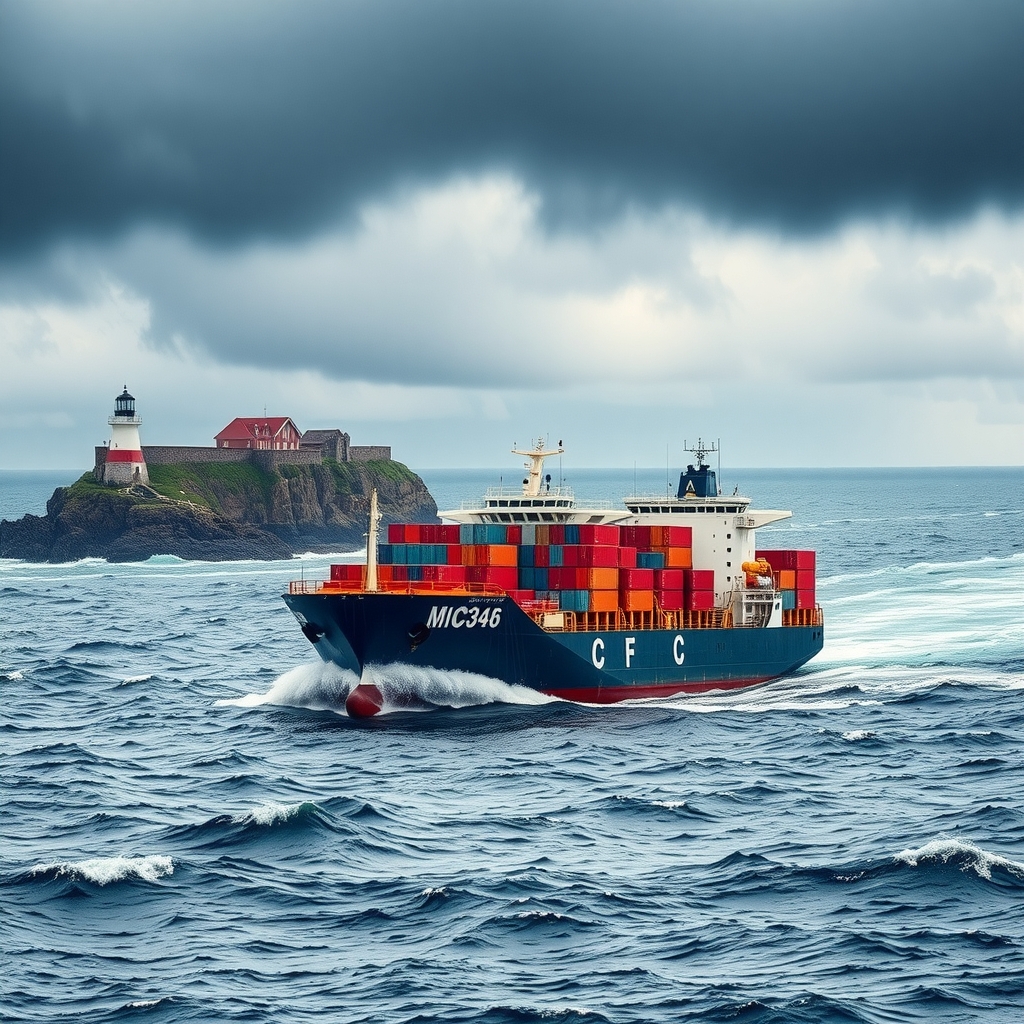
The architecture of international maritime law rests upon a foundational premise that navigation upon the open seas entails extraordinary risks, thereby demanding a commensurately elevated standard of care from all actors who design, command, maintain, and operate commercial vessels. Unlike terrestrial tort regimes, which typically evolve within discrete municipal boundaries and established common law or civil code traditions, maritime negligence operates at the intersection of domestic legislation, bilateral treaties, and a dense corpus of international public law. The duty of care owed by shipowners, masters, charterers, and maritime infrastructure operators is not merely a reflection of moral responsibility; it is an enforceable legal obligation codified through centuries of maritime custom, codified international conventions, and the rigorous scrutiny of specialized international tribunals and domestic courts alike.
To analyze maritime negligence requires a careful parsing of how traditional concepts of fault and causation translate across jurisdictional lines, particularly when maritime casualties occur within exclusive economic zones, the high seas, or foreign territorial waters. International conventions—such as the United Nations Convention on the Law of the Sea (UNCLOS), the International Convention for the Safety of Life at Sea (SOLAS), and various protocols administered by the International Maritime Organization (IMO)—establish the baseline technical and operational duties required of vessels. However, when these operational standards are breached, the determination of liability, the allocation of fault, and the execution of remedies frequently devolve into complex legal disputes adjudicated under differing national laws, universal limitation conventions, and international arbitral frameworks.
What constitutes maritime negligence and duty of care?
At its core, maritime negligence shares the fundamental triad of common law tort: the existence of a recognized legal duty, a breach of that duty through act or omission, and resultant damage proximately caused by that breach. In the maritime context, however, the scope and texture of this duty are uniquely defined by the pervasive hazards of the marine environment. The duty of care is incumbent upon a multiplicity of actors, ranging from the corporate shipowner who provides a seaworthy vessel to the individual watch officer executing navigational duties under conditions of reduced visibility.
Jurisprudence from the International Court of Justice (ICJ) and specialized bodies like the International Tribunal for the Law of the Sea (ITLOS) has consistently emphasized that due diligence is an obligation of conduct rather than result. In environmental disputes and navigation safety cases, international courts have interpreted due diligence as requiring States and private operators to deploy all appropriate administrative, technical, and financial means available to prevent foreseeable harm. For commercial shipping, this standard translates into strict expectations regarding vessel maintenance, proper manning, adherence to the International Regulations for Preventing Collisions at Sea (COLREGs), and the implementation of comprehensive Safety Management Systems mandated by the International Safety Management (ISM) Code.
When evaluating whether a breach has occurred, maritime tribunals routinely examine the conduct of the mariner against the standard of the reasonably prudent navigator placed under similar circumstances. This objective standard accounts for the pressures of command, the limitations of contemporary marine technology, and the inherent unpredictability of weather and sea states. Nevertheless, systemic failures—such as deferred maintenance programs authorized by shore-based management or the systematic flouting of rest-hour regulations—shift the character of the negligence from individual operational error to corporate default, thereby piercing the traditional veils of operational limitation.
How do international conventions govern maritime fault and liability?
The harmonization of maritime negligence law relies heavily upon international treaties that seek to reconcile conflicting domestic legal philosophies. Chief among these are conventions dealing with collision liability, salvage, limitation of liability, and marine pollution. The 1910 Brussels Collision Convention, alongside subsequent updates and modern interpretations applied by courts worldwide, established the proportional fault regime, moving away from the harsher all-or-nothing rules of early common law toward a system where damages are apportioned strictly according to the degree of comparative fault established.
Furthermore, the International Convention on Civil Liability for Oil Pollution Damage (CLC) and the International Convention on the Establishment of an International Fund for Compensation for Oil Pollution Damage (FUND) construct strict liability frameworks for specific categories of maritime harm. Under these regimes, the traditional requirement for a plaintiff to prove subjective negligence is replaced by a statutory imposition of liability upon the shipowner, subject to limited defenses such as act of war or intentional sabotage by a third party. This structural shift reflects a policy determination that enterprises profiting from maritime commerce should internalize the environmental and social costs of catastrophic casualties.
| International Convention | Primary Focus | Liability Standard | Key Enforcement Mechanism |
|---|---|---|---|
| UNCLOS (1982) | Global ocean governance and jurisdiction | State responsibility and due diligence | ITLOS, arbitral tribunals, and flag state enforcement |
| SOLAS (1974/1978) | Vessel safety standards and construction | Statutory compliance and certification | Port State Control inspections and detentions |
| COLREGs (1972) | Navigational rules to prevent collisions | Operational standard of prudent seamanship | Flag and coastal state judicial proceedings |
| CLC (1969/1992) | Oil pollution damage compensation | Strict liability channeled to the registered owner | Compulsory insurance certificates and direct actions |
The interplay between these international instruments and municipal tort law frequently generates complex jurisdictional conflicts. For instance, while international conventions attempt to establish uniform limits on financial liability to preserve the economic viability of global trade, national courts exercising admiralty jurisdiction may interpret exceptions to these limits—such as the actual fault or privity of the owner—differently. This divergence underscores the enduring tension between uniform international standards and local judicial sovereignty.
What is the legal impact of navigational error and operational breach?
Historically, maritime law recognized the defense of navigational error, shielding shipowners from liability for cargo loss or damage resulting strictly from the negligent navigation or management of the vessel by the master or crew, provided the shipowner had exercised due diligence to make the vessel seaworthy at the inception of the voyage. Codified in the Hague and Hague-Visby Rules, this defense was designed to balance the extreme risks faced by ships at sea against the commercial interests of cargo owners.
However, modern international jurisprudence and subsequent legislative updates, such as the Rotterdam Rules, reflect a progressive erosion of traditional immunities. Courts increasingly scrutinize the antecedent failures of shore-based management when evaluating operational casualties. If a collision or grounding caused by immediate navigational negligence can be traced back to inadequate training, obsolete charts, or systemic fatigue induced by commercial pressures, tribunals are increasingly willing to attribute concurrent fault to the owning entity.
Due diligence is not a static checklist fulfilled upon departure, but a continuous obligation of oversight that persists across every nautical mile of the maritime venture.
This evolving judicial posture redefines the boundary between personal negligence of the crew and systemic negligence of the enterprise. Arbitral panels operating under the auspices of the Permanent Court of Arbitration (PCA) and municipal admiralty courts alike now demand robust empirical proof that safety management systems were not merely paper exercises, but actively enforced operational cultures.
How do international tribunals adjudicate complex maritime disputes?
The peaceful settlement of maritime disputes involving negligence, boundary delimitation, and environmental damage is entrusted to a sophisticated network of international courts and tribunals. The International Tribunal for the Law of the Sea, based in Hamburg, plays a pivotal role in interpreting UNCLOS provisions regarding prompt release of vessels, marine environmental protection, and the exercise of coastal state jurisdiction. ITLOS decisions frequently hinge on whether a coastal state or flag state exercised its statutory duties with reasonable regard for the rights of other maritime users.
Similarly, ad hoc arbitral tribunals constituted under Annex VII of UNCLOS have addressed contentious matters concerning marine negligence, such as incidents involving naval collisions, unilateral enforcement of environmental regulations in polar waters, and economic losses arising from interference with navigation. These tribunals must navigate the intricate relationship between general international law and lex specialis maritime regimes, balancing the sovereign rights of coastal states against the foundational freedom of navigation.
The evidentiary burden in these high-level proceedings is exceptionally stringent. Establishing causation in a marine casualty requires advanced maritime forensics, expert reconstruction of voyage data recorder (VDR) information, meteorological analysis, and hydrodynamic modeling. International tribunals evaluate these technical inputs through the lens of legal causation, filtering complex scientific data to determine whether an established breach of duty was the direct and legally cognizable cause of the resulting loss.
What are the emerging legal challenges in maritime due diligence?
As maritime commerce adapts to technological innovation, climate change, and shifting geopolitical landscapes, the doctrine of maritime negligence faces novel frontiers. The advent of autonomous and remotely operated commercial vessels challenges traditional statutory definitions of the master, the crew, and the human element in watchkeeping. Determining where the duty of care resides when a vessel is controlled by artificial intelligence algorithms or shore-based remote operators requires a fundamental reimagining of legal fault.
Furthermore, climate litigation is increasingly intersecting with maritime law. Coastal states and affected communities are exploring legal avenues to hold shipowners and maritime corporate entities accountable for greenhouse gas emissions, ballast water ecosystem disruption, and inadequate disaster response protocols. These emerging claims test the elasticity of international conventions, forcing courts to consider whether traditional limitations of liability remain tenable in an era of systemic global environmental risk.
In conclusion, the legal framework governing maritime negligence and the duty of care remains a dynamic and vital pillar of international law. Balancing the commercial imperatives of global shipping with the imperative safety and environmental standards requires constant jurisprudential refinement. As international tribunals and domestic courts grapple with technological disruption and complex multi-jurisdictional claims, the underlying mandate of maritime law endures: to ensure that those who harness the perils of the sea do so with unwavering diligence, accountability, and respect for the global maritime commons.
Comments
No comments yet.