Risk and Reciprocity: The Jurisprudential Foundations of Marine Insurance and Indemnity
A rigorous examination of the legal doctrines governing maritime insurance, exploring the transition from traditional warranties to modern duty of fair presentation.
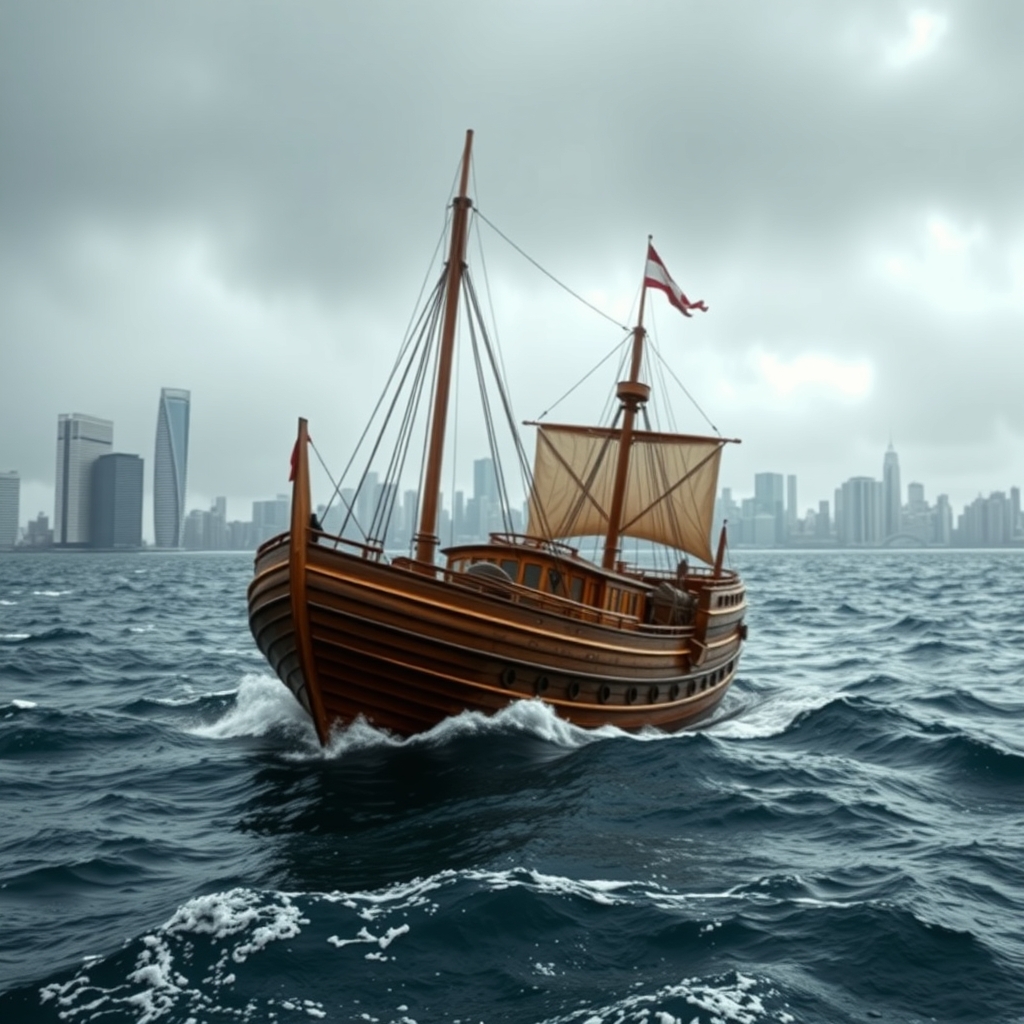
The maritime adventure is inherently defined by the presence of peril. From the antiquity of the Rhodian Law to the sophistication of the Lloyd’s market, the mechanism of marine insurance has served as the financial ballast for global commerce. It is not merely a contract of indemnity but a complex legal instrument rooted in centuries of mercantile custom, now governed by a synthesis of statutory frameworks and evolving case law. To understand the marine insurance contract is to navigate the tension between the strict adherence to warranties and the modern push toward a more equitable distribution of risk between the insurer and the assured.
The Doctrinal Genesis of Uberrimae Fidei
Unlike standard commercial contracts, which are often governed by the principle of caveat emptor (let the buyer beware), marine insurance operates under the doctrine of uberrimae fidei, or utmost good faith. This principle, codified in Section 17 of the Marine Insurance Act (MIA) 1906, posits that because the insurer is often unable to inspect the vessel or the cargo personally, they must rely entirely on the representations made by the assured. The contract is, therefore, based on a foundation of mutual trust and full disclosure.
The landmark case of Carter v Boehm (1766) established that the assured is under an obligation to disclose every material circumstance known to them that would influence the judgment of a prudent insurer in fixing the premium or determining whether to take the risk. Failure to observe this duty traditionally rendered the contract voidable ab initio. However, the rigor of this doctrine has been softened in recent years, particularly in the United Kingdom by the Insurance Act 2015, which introduced the concept of the duty of fair presentation, moving away from the binary outcome of avoidance toward more proportionate remedies.
How does the principle of utmost good faith affect marine insurance contracts?
The principle of utmost good faith is the cornerstone of the pre-contractual relationship. In the maritime context, this affects the contract by placing an active burden on the shipowner or cargo owner to disclose not just what they know, but what they ought to know in the ordinary course of business. For instance, if a shipowner is aware of a structural defect in a vessel’s hull or a history of engine failure and neglects to mention it during the placement of the risk, the insurer may have the right to avoid the policy entirely.
The impact of this principle extends to the post-contractual phase, though its application there remains a subject of intense judicial debate. In Manifest Shipping Co Ltd v Uni-Polaris Insurance Co Ltd (The Star Sea) [2001], the House of Lords clarified that while the duty of good faith exists throughout the life of the contract, the specific duty of disclosure ends once the contract is concluded. After that point, the duty of good faith is primarily concerned with the presentation of claims and the prevention of fraud. If an assured presents a fraudulent claim, they forfeit all benefits under the policy, but the underlying contract may remain intact for legitimate prior claims.
The Concept of Materiality
Central to the application of utmost good faith is the definition of materiality. Under Section 18(2) of the MIA 1906, a circumstance is material if it would influence the mind of a prudent insurer. This objective test ensures that the assured cannot plead ignorance of the significance of a fact if a reasonable professional in the industry would have recognized its importance. Legal ambiguities often arise when defining the boundary between a material fact and a mere matter of opinion, a distinction that frequently requires expert testimony in maritime litigation.
What are the legal implications of a breach of warranty in maritime insurance?
In maritime law, a warranty is not a minor term; it is a promissory condition that must be exactly complied with, whether material to the risk or not. Under the traditional regime of the MIA 1906, specifically Section 33(3), a breach of warranty automatically discharged the insurer from liability from the date of the breach. This was a draconian measure, as the insurer was not required to prove a causal link between the breach and the subsequent loss. For example, if a ship was warranted to sail with a crew of thirty but sailed with twenty-nine, the insurer could deny a claim for a loss caused by a lightning strike that had nothing to do with the crew size.
The legal implications of such a breach have undergone a paradigm shift with the introduction of the Insurance Act 2015. Under the new regime, warranties no longer automatically discharge liability. Instead, they act as a suspensive condition. This means that if the assured breaches a warranty, the insurer’s liability is suspended until the breach is remedied. If a loss occurs during the period of the breach, the insurer is not liable; however, if the breach is cured before the loss, the insurer remains on risk. Furthermore, Section 11 of the 2015 Act prevents an insurer from relying on a breach of warranty to deny a claim if the assured can show that the breach could not have increased the risk of the loss which actually occurred.
Express vs. Implied Warranties
- Express Warranties: These are specifically written into the policy, such as a warranty that a vessel will not enter certain high-risk geographic zones or will be engaged in a specific trade.
- Implied Warranties: These are read into the contract by law. The most significant is the implied warranty of seaworthiness (Section 39, MIA 1906). In a voyage policy, the vessel must be seaworthy at the commencement of the voyage. In a time policy, there is no implied warranty of seaworthiness, but if the ship is sent to sea in an unseaworthy state with the privity (knowledge) of the assured, the insurer is not liable for any loss attributable to that unseaworthiness.
The Doctrine of Proximate Cause: Causa Proxima Non Remota Spectatur
Determining liability in maritime insurance requires an analysis of causation. The traditional rule, causa proxima non remota spectatur (the proximate and not the remote cause is to be looked at), has evolved from a focus on the last cause in time to the dominant or effective cause of the loss. This was famously articulated in Leyland Shipping Co Ltd v Norwich Union Fire Insurance Society Ltd [1918], where a ship was torpedoed (an excluded war risk) but eventually sank in a harbor due to a storm (a covered peril). The court ruled that the torpedoing was the proximate cause, as it set in motion a chain of events from which the ship never recovered.
The interpretation of proximate cause becomes particularly complex when there are concurrent causes. If one cause is an insured peril and the other is an excluded peril, the exclusion generally prevails. However, if one cause is insured and the other is simply not mentioned (neither insured nor excluded), the policy will usually cover the loss. This nuanced hedging allows the court to interpret the intention of the parties while adhering to the technicalities of the policy wording.
What is the difference between actual and constructive total loss?
Marine insurance distinguishes between two types of total loss: Actual Total Loss (ATL) and Constructive Total Loss (CTL). This distinction is vital for determining the procedures for filing a claim and the transfer of ownership of the subject matter.
An Actual Total Loss occurs when the subject matter is destroyed, or so damaged as to cease to be a thing of the kind insured, or where the assured is irretrievably deprived thereof. Examples include a ship foundering in the deep ocean or cargo that has fermented so badly it is no longer merchantable as the original product. In such cases, no notice of abandonment is required.
A Constructive Total Loss, governed by Section 60 of the MIA 1906, occurs when the subject matter is reasonably abandoned because its actual total loss appears to be unavoidable, or because it could not be preserved from actual total loss without an expenditure which would exceed its value when the expenditure had been incurred. For a ship, this usually means the cost of repair would exceed the repaired value. For cargo, it means the cost of recovery and forwarding would exceed the value on arrival. To claim for a CTL, the assured must usually give a Notice of Abandonment (NOA) to the insurer, indicating their intention to cede their interest in the property to the insurer in exchange for the full insured value.
| Feature | Actual Total Loss (ATL) | Constructive Total Loss (CTL) |
|---|---|---|
| Physical State | Destroyed or irretrievably lost. | Physically exists but is commercially irreparable. |
| Economic Test | Not applicable. | Repair/recovery costs exceed final value. |
| Notice of Abandonment | Not required. | Required (unless excused). |
| Legal Basis | Section 57, MIA 1906. | Section 60, MIA 1906. |
How does general average work in maritime law?
General Average is a principle of maritime law that predates insurance itself, originating in the Lex Rhodia. It is based on the concept that a sacrifice made for the common safety of the ship, cargo, and freight should be shared proportionately by all parties whose property was saved. Under the York-Antwerp Rules, a General Average act exists when, and only when, any extraordinary sacrifice or expenditure is intentionally and reasonably made or incurred for the common safety for the purpose of preserving from peril the property involved in a common maritime adventure.
The mechanism works as follows: if a vessel runs aground and the master decides to jettison part of the cargo to lighten the ship and prevent it from breaking up, the owners of the jettisoned cargo are entitled to a contribution from the shipowner and the other cargo owners whose goods were saved. Marine insurance policies typically cover the assured’s liability for General Average contributions and the losses they suffer as a result of a General Average sacrifice. The complexity arises in the adjustment process, which can take years and involves specialized General Average adjusters who calculate the values and contributions of all interested parties.
The Role of Protection and Indemnity (P&I) Clubs
While standard hull and machinery (H&M) policies cover physical damage to the vessel, they often leave gaps regarding third-party liabilities, such as crew injury, pollution, or damage to fixed and floating objects. These risks are covered by Protection and Indemnity (P&I) Clubs. These are not commercial insurance companies but mutual associations of shipowners who “pool” their risks together.
The P&I Club system is unique because it operates on the principle of mutuality; the members are both the insurers and the insured. If the club faces high claims in a given year, it may call for additional premiums (calls) from its members. This structure ensures that even catastrophic risks, such as major oil spills covered under the International Convention on Civil Liability for Oil Pollution Damage (CLC), can be managed through the International Group of P&I Clubs’ reinsurance program.
Comparison of Commercial Insurance and P&I Mutuality
Commercial marine insurers are profit-driven and operate on fixed premiums, whereas P&I Clubs are non-profit and operate on a call system. The H&M policy is usually restricted by the vessel’s insured value, but P&I coverage for many risks (excluding oil pollution) is technically unlimited, or at least capped at extremely high levels through global reinsurance layers. This distinction is critical for shipowners when structuring their risk management profiles.
Evolution of the Institute Clauses
The standardization of marine insurance contracts is largely achieved through the use of Institute Clauses, developed by the International Underwriting Association of London (IUA). These clauses provide a uniform set of terms that are incorporated into the policy. The Institute Cargo Clauses (A, B, and C) offer varying levels of coverage:
- Clause A: Provides “all-risks” coverage, subject to specific exclusions.
- Clause B: Covers specified perils, such as fire, explosion, or washing overboard.
- Clause C: Provides the most limited cover, usually restricted to major accidents like sinking, grounding, or collision.
The precision of these clauses minimizes legal ambiguity and provides a predictable framework for both insurers and the assured across different jurisdictions. However, courts must still grapple with the interpretation of terms like “inherent vice” or “perils of the seas.” In Global Process Systems Inc v Syarikat Takaful Malaysia Berhad (The Cendor MOPU) [2011], the UK Supreme Court provided a definitive interpretation of “perils of the seas,” clarifying that if a loss is caused by the action of the sea, it can be covered even if the vessel’s condition made it susceptible to that action, provided the weather encountered was not “bound to happen” in the ordinary course of the voyage.
Synthesis and Future Perspectives
The landscape of marine insurance is currently facing a dual challenge from digitalization and the transition to green energy. The emergence of autonomous vessels (MASS) raises significant questions regarding the “privity” of the shipowner and the definition of a “master” or “crew” under the MIA 1906. If an algorithm causes a collision, does it constitute a “peril of the sea” or a failure in the duty of seaworthiness?
Furthermore, as the maritime industry adopts new fuels like ammonia and hydrogen, the risk profiles of vessels are changing. The jurisprudential framework must adapt to these technological shifts without abandoning the core principles of indemnity and good faith. The transition from the rigid application of warranties to the more nuanced “proportionate remedies” under modern statutes suggests a move toward a more flexible and commercially realistic legal environment. Ultimately, the marine insurance contract remains a vital instrument of international law, balancing the necessity of protection for the assured with the requirement of transparency for the insurer, ensuring that the global maritime adventure remains a viable economic enterprise.
Comments
No comments yet.