Navigating Maritime Insolvency: Admiralty Rights, Cross-Border Bankruptcy, and Asset Restructuring
When shipping companies face insolvency, maritime liens and admiralty arrests clash with cross-border bankruptcy stays. Here is how courts, creditors, and owners navigate collapse.
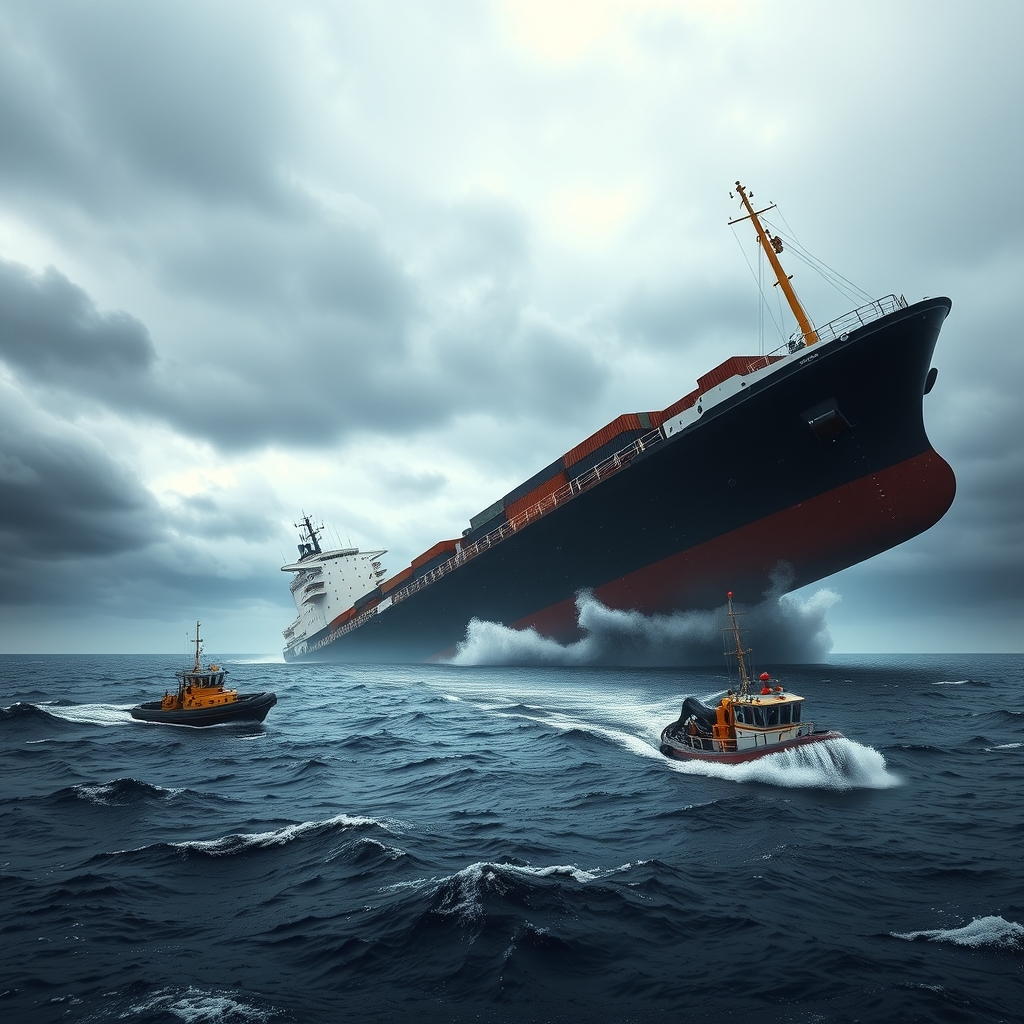
The global shipping industry operates on capital intensity, tight margins, and cyclical swings driven by geopolitical tensions, shifting demand, and volatile fuel prices. When economic conditions deteriorate or operational costs escalate beyond manageable thresholds, shipping enterprises face the threat of financial insolvency. However, resolving the insolvency of a maritime corporate group is fundamentally unlike restructuring a standard land-based enterprise. Vessels are mobile assets that traverse international jurisdictions, frequently owned through layered single-purpose vehicle corporate networks, flying flags of convenience, and carrying cargo owned by third parties across multiple continents.
The central difficulty of maritime insolvency lies in the direct collision between two ancient and largely incompatible legal traditions. On one side stands admiralty law, a historically individualistic, asset-focused regime that grants creditors robust in rem rights to seize vessels and satisfy distinct claims directly from the proceeds of judicial sale. On the other side stands modern insolvency law, a collective regime rooted in universalism, aimed at staying all creditor actions, consolidating global assets, and facilitating either an equitable liquidation or an orderly corporate reorganization for the benefit of the general creditor pool. Reconciling these competing frameworks presents complex legal puzzles for shipowners, financiers, charterers, bunker suppliers, and admiralty courts worldwide.
The Clash of Legal Regimes: Admiralty In Rem Jurisdiction Versus Insolvency Universalism
To understand the mechanics of maritime insolvency, one must examine the doctrinal clash between the law of the sea and the law of corporate distress. Admiralty law operates primarily through actions in rem, where a maritime lien or statutory right of action attaches directly to the vessel itself, treating the ship as the legal wrongdoer or obligor irrespective of changes in ownership. This doctrine empowers an unpaid bunker supplier, an injured crewmember, or a salvor to arrest a ship in almost any port where it calls, invoking the local court's admiralty jurisdiction to secure an immediate pre-judgment security or compel a judicial sale.
Conversely, corporate insolvency law relies on modified universalism. Under this paradigm, a single court in the debtor's home jurisdiction asserts comprehensive authority over all the debtor's property, wherever located around the globe. This authority is backed by an automatic stay or provisional moratorium that halts all individual enforcement initiatives, including pending lawsuits, foreclosures, and asset attachments. The fundamental purpose of the stay is to prevent a destructive run on assets, giving the debtor breathing room to propose a restructuring plan or enabling a court-appointed administrator to preserve the going-concern value of the enterprise.
When a shipping group collapses, these two doctrines meet head-on. An admiralty creditor holding a maritime lien asserts that their property right in the vessel exists independently of the shipowner's corporate status, arguing that local admiralty courts should execute the arrest without regard to a foreign bankruptcy declaration. Concurrently, the foreign bankruptcy trustee or debtor-in-possession insists that the global stay applies worldwide, demanding that foreign admiralty courts release arrested vessels and yield to the centralized restructuring forum. The resolution of this friction determines whether a carrier can reorganize successfully or if its fleet will be dismantled through piecemeal judicial auctions across disconnected jurisdictions.
What Happens When a Shipping Company Goes Bankrupt?
When an international ocean carrier, shipowner, or fleet operator reaches the point of insolvency, operational dislocation occurs almost instantaneously across global supply chains. The progression from financial distress to formal insolvency typically unfolds through a sequence of logistical, contractual, and judicial crises.
Vessel Interdiction and Port Gridlock
As news of an impending collapse circulates among maritime creditors, trade counterparties seek to secure their claims. Bunker suppliers, port authorities, pilotage providers, container leasing firms, and towage operators demand upfront cash payments or refuse essential services. Terminals often refuse permission for distressed vessels to berth or discharge cargo until past stevedoring fees and dockage charges are settled. Consequently, ships are left stranded at anchor outside major international ports, unable to enter harbors, discharge cargo, or replenish drinking water, provisions, and bunkers.
The Fate of Cargo and Supply Chain Fallout
Cargo interests face immediate complications. Thousands of containers belonging to innocent third-party shippers become trapped aboard idling vessels or locked within terminal yards. Even if an ocean carrier has collected full freight at the origin, terminal operators and stevedores may assert common-law possessory liens over the cargo to cover unpaid terminal handling charges owed by the defunct shipping line. Importers must often pay duplicate fees, arrange replacement road or rail transportation, or seek emergency court orders to gain access to their containers.
Charterparty Repudiation and Domino Insolvencies
Most commercial fleets are not owned outright by the corporate entity providing commercial liner services. Instead, shipping networks rely on complex charterparty chains, including bareboat charters, long-term time charters, and sub-charters. When an operating entity files for insolvency, it routinely defaults on hire payments. Vessel owners immediately issue notices of withdrawal, terminating the charterparties and attempting to retake possession of their vessels. This sudden termination exposes mid-tier operators, cargo consolidators, and non-vessel-operating common carriers to contractual liabilities, frequently initiating a cascade of cross-defaults that can destabilize other maritime companies.
| Insolvency Phase | Primary Manifestation | Affected Stakeholders | Key Legal Mechanism |
|---|---|---|---|
| Liquidity Freeze | Terminal service denials, withheld bunkering | Vessel crews, bunker suppliers, port authorities | Possessory liens, cash-in-advance demands |
| Judicial Action | Arrests of vessels across global transit hubs | Shipowners, maritime lienholders, mortgagees | Warrants of arrest, in rem proceedings |
| Formal Filing | Application for Chapter 11, administration, or rehabilitation | Debtor entity, unsecured creditors, financiers | Worldwide automatic stay, moratoriums |
| Fleet Resolution | Fleetwide restructuring or piecemeal judicial auctions | Bondholders, syndicated lenders, charterers | Judicial sale, confirmation of reorganization plan |
How Does an Automatic Stay Affect Ship Arrest?
The enforceability of an insolvency stay against an admiralty arrest depends heavily on the jurisdiction where the vessel is physically located, whether that jurisdiction has adopted modern cross-border insolvency frameworks, and the character of the underlying claim.
Extraterritorial Reach of Domestic Moratoriums
Under domestic restructuring regimes such as Chapter 11 of the United States Bankruptcy Code, the automatic stay provided by Section 362 is explicitly extraterritorial. It purports to protect all property of the debtor's estate wherever located and by whomever held. If a creditor subject to personal jurisdiction in the United States attempts to arrest a debtor's vessel in Singapore, Rotterdam, or Panama, the US bankruptcy court may sanction that creditor for civil contempt, imposing fines or invalidating the arrest. However, if the arresting creditor has no physical presence or assets within the restructuring jurisdiction, an extraterritorial stay alone offers limited practical protection unless recognized by the local courts of the arresting forum.
The Role of the UNCITRAL Model Law and Chapter 15
To mitigate international coordination failures, the United Nations Commission on International Trade Law created the UNCITRAL Model Law on Cross-Border Insolvency in 1997. Enacted in significant maritime jurisdictions—including the United States through Chapter 15, the United Kingdom, Singapore, and Australia—the Model Law provides clear mechanisms for recognizing foreign insolvency proceedings and extending local injunctive relief to shield a debtor's assets from domestic execution.
Under the Model Law framework, once a local court recognizes a foreign proceeding as a Foreign Main Proceeding, an automatic stay against creditor actions takes effect within that territory, or discretionary relief is granted to prevent vessel arrests. When South Korea's Hanjin Shipping filed for corporate rehabilitation in Seoul in 2016, its court-appointed administrators sought immediate recognition under Chapter 15 in the United States and under equivalent cross-border statutes in the United Kingdom, Singapore, and Japan. This international coordination halted arrests, gave port authorities legal clarity to dock ships, and allowed billions of dollars in stranded cargo to be discharged without the immediate threat of asset seizure.
Exceptions for True In Rem Maritime Liens
Even where cross-border insolvency statutes are enacted, admiralty courts sometimes decline to subordinate traditional maritime liens to a general insolvency stay. In many common law and civil law jurisdictions, judges distinguish between statutory rights in rem, which arise only upon the formal filing of an arrest claim, and maritime liens, which attach automatically at the moment the underlying service or injury occurs. Because a maritime lien constitutes a substantive property right running with the res, some courts hold that the vessel's value is encumbered to the extent of that lien before entering the debtor's insolvency estate. Consequently, admiralty courts in certain jurisdictions may allow an arrest to proceed to judicial sale to satisfy high-priority maritime liens, remitting only the surplus proceeds to the foreign bankruptcy administrator.
Center of Main Interests in Maritime Corporate Structures
Under the UNCITRAL Model Law and the European Union Restructuring and Insolvency frameworks, the scope of international recognition depends on determining the debtor's Center of Main Interests, commonly abbreviated as COMI. If an insolvency proceeding takes place in the jurisdiction of the debtor's COMI, it qualifies as a Foreign Main Proceeding, unlocking comprehensive automatic stays and mandatory relief. If it takes place where the debtor possesses only an establishment, meaning a place of non-transitory economic activity, it qualifies merely as a Foreign Non-Main Proceeding, where relief is purely discretionary and far more restricted.
Determining the COMI of a maritime enterprise presents substantial evidentiary hurdles due to the fragmented nature of shipping corporate groups. A standard shipping structure often features:
- A parent holding company incorporated in an offshore tax jurisdiction such as the Cayman Islands or Bermuda.
- Commercial and pool management offices situated in global maritime hubs such as London, Athens, Singapore, or Geneva.
- Technical and operational managers located in India, Cyprus, or the Philippines.
- Dozens of single-purpose vehicle subsidiaries, each incorporated in Panama, the Marshall Islands, or Liberia, owning exactly one vessel registered under that state's flag.
- Syndicated financing agreements governed by English or New York law, with bank accounts maintained across major global financial centers.
When a shipping group files for restructuring, creditors seeking to preserve their arrest rights regularly contest the debtor's asserted COMI. Under established jurisprudence, COMI is determined based on criteria that are objective and readily ascertainable by third parties, particularly creditors. Courts evaluate where the key commercial decisions are formulated, where corporate board meetings are held, where bank accounts are managed, and where the primary debt financing was arranged. The registered office of an offshore vessel-owning entity creates a rebuttable presumption of COMI, but that presumption is routinely displaced if the day-to-day administrative and financial management is coordinated from a central operational headquarters elsewhere.
Priority of Claims: Who Gets Paid First When a Shipping Company Collapses?
When a shipping entity cannot reorganize and its fleet is sold either through an admiralty judicial sale or an insolvency liquidation, the distribution of proceeds is dictated by strict priority regimes. The fundamental tension is that admiralty law and bankruptcy law follow divergent rules of priority, and the order of payment depends on whether proceeds are distributed by an admiralty marshal or an insolvency liquidator.
The Admiralty Priority Waterfall
When a vessel is arrested and auctioned by an admiralty court, the distribution of the purchase fund adheres to a specialized hierarchy designed to protect the court, essential mariners, and secured maritime creditors. While minor variations exist between legal systems, the traditional admiralty waterfall generally follows this sequence:
- Marshal and Custodial Expenses: The court's administrative costs, known as expenses in custodia legis, must be paid first. These encompass berthage, harbor fees, insurance, and the physical maintenance of the vessel incurred while under arrest to preserve its condition for auction.
- Special Maritime Liens: These substantive rights enjoy top priority over all mortgages and unsecured claims. They traditionally include salvage claims, general average contributions, crew wages, and maritime tort claims such as damage caused by vessel collision.
- Preferred Ship Mortgages: Recorded mortgages in favor of institutional banks and syndicates follow maritime liens. In major admiralty hubs, foreign and domestic registered mortgages take precedence over all subsequent claims, preserving the security required for ship financing.
- Statutory Liens and Rights In Rem: These secondary maritime claims encompass necessaries supplied to the vessel, including bunker fuel, ship repairs, towage, and stevedoring services. In common law systems like the United Kingdom and Singapore, these statutory rights in rem do not outrank a previously registered mortgage.
- General Unsecured Creditors: Any remaining surplus proceeds are transferred to the shipowner or, if the shipowner is insolvent, to the bankruptcy estate for equitable distribution among trade creditors, container lessors, and cargo damage claimants.
The Insolvency Waterfall
In contrast, if a vessel is sold directly by a bankruptcy trustee or administrator outside of admiralty process, insolvency statutes govern the distribution. Statutory priority structures in bankruptcy often elevate government tax claims, general administrative expenses of the restructuring professionals, and employee claims across the entire corporate group, while grouping ordinary contractual suppliers and maritime necessaries providers into the broad class of unsecured creditors. This substantial divergence explains why bunker suppliers and maritime service providers fight vigorously to arrest vessels and assert admiralty jurisdiction before an insolvency stay can halt their recovery.
The Bunker Supply Chain Conundrum: Lessons from OW Bunker
Few events have reshaped maritime insolvency practice as dramatically as the sudden 2014 collapse of OW Bunker, one of the world's largest marine fuel traders. Headquartered in Denmark, OW Bunker served as an intermediary connecting shipowners with physical fuel suppliers across the globe. The company's collapse generated hundreds of cross-border legal actions, exposing structural vulnerabilities in modern shipping contracts and multi-tiered procurement chains.
The Dual-Payment Threat
The standard procurement process involved a shipowner ordering fuel from OW Bunker or its local subsidiaries, which then contracted with third-party physical bunker suppliers to deliver the marine oil directly to the vessel. When OW Bunker filed for bankruptcy, it had received payments from some owners while leaving its physical suppliers unpaid. Elsewhere, owners had not yet paid OW Bunker, but physical suppliers asserted maritime liens against the vessels to secure payment.
This arrangement created a serious dilemma for shipowners. The insolvency administrators of OW Bunker and their secured financing banks demanded payment under the primary bunker supply contracts. Simultaneously, the physical suppliers initiated ship arrests in multiple jurisdictions, claiming that they had supplied necessaries to the vessel and held independent maritime liens under local or maritime law. Shipowners faced the genuine risk of paying twice for a single bunkering operation: once to the insolvency estate under contract law, and once to the physical supplier under admiralty law to lift the arrest.
The Res Cogitans Precedent
The resulting litigation reached the United Kingdom Supreme Court in the notable case of PST Energy 7 Shipping LLC v OW Bunker Malta Ltd (The Res Cogitans). The court examined whether a standard bunker supply contract constituted a contract for the sale of goods under the Sale of Goods Act 1979. Because the contract contained a retention of title clause while explicitly permitting the vessel to burn the fuel for propulsion before title transferred upon payment, the court determined that the transaction was not a straightforward sale of goods, but rather a sui generis commercial license to consume the bunkers.
The commercial reality is that bunker contracts combine a conditional contract for the transfer of property with an immediate license to consume the goods for propulsion, precluding the standard statutory defenses available under conventional sales legislation.
The legal determination confirmed that the shipowner remained contractually bound to pay OW Bunker's insolvency estate, even though the physical supplier had not been compensated and could attempt to assert independent maritime claims in favorable foreign ports. The OW Bunker saga prompted widespread revisions to maritime fueling contracts, with owners insisting on strict payment mechanisms, clear identification of agency relationships, and express waivers of maritime liens by intermediate suppliers.
Crew Welfare and the Human Cost of Maritime Insolvency
While corporate restructuring proceedings focus on balance sheets, debt-for-equity swaps, and fleet asset valuations, the immediate human toll of shipping bankruptcies falls on seafarers. When an operator runs out of liquidity, crewmembers are frequently abandoned aboard idle vessels without wages, adequate provisions, fresh water, fuel for heating and air conditioning, or medical supplies.
The 2006 Maritime Labour Convention Safeguards
To address this systemic vulnerability, the International Labour Organization integrated strict protections into the Maritime Labour Convention, 2006, frequently known as the MLC. Amendments adopted in 2014, which took effect in 2017, require registered shipowners to maintain verifiable financial security, usually provided by Protection and Indemnity Clubs or financial guarantors, to cover crew abandonment.
Under the MLC framework, abandonment occurs when the shipowner fails to cover the costs of the seafarer's repatriation, leaves the seafarer without the necessary maintenance and support, or unilaterally severs ties with the seafarer, including failing to pay contractual wages for at least two months. The mandatory financial security system provides direct financial access, guaranteeing payment of:
- Outstanding wages and other entitled contract benefits up to a cap of four months.
- All necessary expenses incurred by the seafarer, including food, drinking water, essential fuel supplies, and medical care.
- The full financial cost of repatriation to the seafarer's home country via commercial air travel.
Because the claims of seafarers enjoy the status of premier maritime liens in virtually all legal traditions, crewmembers hold rights that outrank registered ship mortgages. When vessels are arrested and sold under judicial process, the master and crew typically recover their back wages directly from the auction proceeds before mortgage banks receive payment. However, because judicial auction timelines can extend across many months, the financial security provisions of the MLC serve as an essential safety net, protecting vulnerable mariners from bearing the immediate burden of corporate insolvencies.
Strategic and Procedural Considerations for Creditors
Protecting claims during an international maritime insolvency requires a coordinated approach that balances rapid procedural intervention with cross-border legal compliance. Creditors who act without evaluating the jurisdictional framework risk substantial financial losses, protracted litigation, or judicial sanctions.
Jurisdictional Forum Shopping and Enforcement Timing
The defining rule for maritime trade creditors when insolvency approaches is speed and jurisdiction. Because maritime lien recognition varies considerably across national laws, creditors routinely monitor vessel movements to execute arrests in creditor-friendly jurisdictions. For example, the United States maritime legal framework recognizes generous maritime liens for necessaries, such as bunkers, stevedoring, and vessel repairs, provided directly to the ship. In contrast, English admiralty law treats many of these items merely as statutory rights in rem, which will not take precedence over an existing preferred ship mortgage.
As a result, a supplier may closely track a debtor's fleet and initiate an arrest in a jurisdiction applying US maritime choice of law rules, where their claim receives lien status, rather than waiting for the vessel to berth in a jurisdiction that subordinates their claim below commercial mortgages or subjects it to a recognized insolvency stay.
Protecting Secured Financiers and Mortgagees
For syndicated banks and institutional maritime lenders, the primary objective during a borrower's distress is to preserve the integrity of their secured collateral and prevent value destruction through piecemeal vessel seizures. Lenders typically evaluate whether to support a consensual restructuring—such as an English Scheme of Arrangement or a US Chapter 11 pre-packaged plan—or initiate coordinated mortgage foreclosure proceedings through admiralty courts.
While a collective restructuring can preserve fleet operating value, lenders face continuous risks from accruing maritime liens, port dues, and custodial liabilities that erode their underlying asset coverage. If an owner's operational cash flow is insufficient to fund ongoing crew wages and insurance, lenders often step in to provide debtor-in-possession financing or directly arrest the fleet through friendly proceedings to trigger a court-supervised sale. A clean judicial sale conducted by a recognized admiralty court provides an internationally recognized title free and clear of all prior liens, mortgages, and encumbrances, allowing vessels to be re-flagged, repositioned, or sold at market rates without carrying forward historical maritime liabilities.
The Evolving Architecture of International Maritime Insolvency
The global maritime industry remains structurally vulnerable to financial instability. The capital-intensive nature of vessel acquisition, reliance on complex corporate entities, and exposure to fluctuating global trade patterns mean that shipping company bankruptcies will continue to present cross-border legal challenges.
While international instruments such as the UNCITRAL Model Law on Cross-Border Insolvency and the MLC 2006 have introduced greater order, coordination, and humanitarian protections into the system, the fundamental conflict between admiralty in rem rights and insolvency universalism is not fully resolved. Admiralty law prioritizes security, liquidity, and immediate enforcement against the individual asset, whereas corporate restructuring prioritizes collective asset protection, corporate rehabilitation, and equal distribution among creditor classes.
Navigating this complex intersection requires a clear understanding of both maritime and insolvency procedures. Whether advising institutional lenders, distressed corporate groups, commercial charterers, or trade suppliers, stakeholders must coordinate across multiple forums, balance competing court orders, and respect the operational realities of global logistics to manage financial distress on the high seas.
Comments
No comments yet.