Lex Maritima in Conflict: The Juridical Evolution of Maritime Exclusion Zones and War Zones
A deep analysis of the legal complexities surrounding maritime exclusion zones, evaluating the tension between military necessity and the rights of neutral shipping.
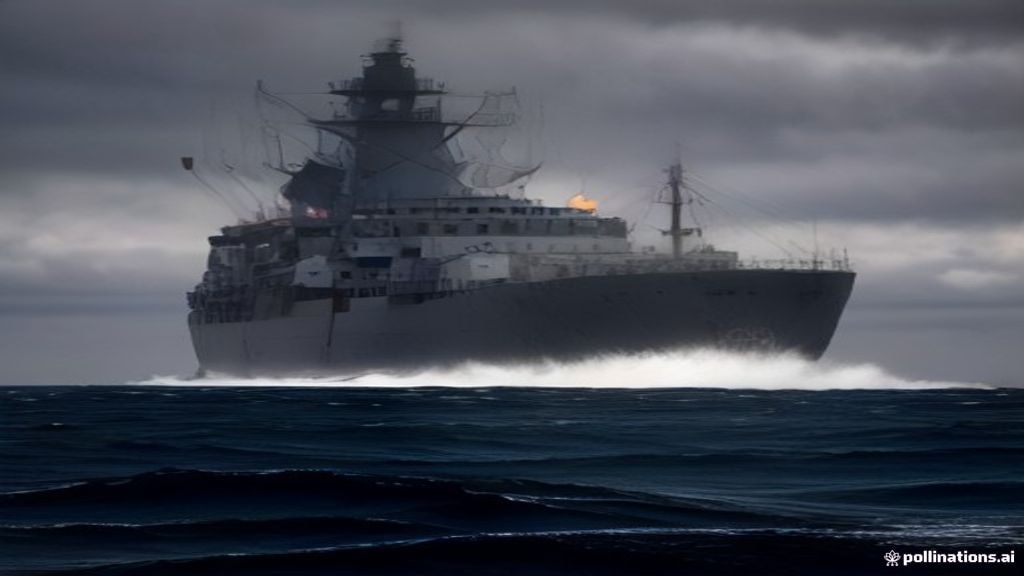
The historical evolution of naval warfare has consistently grappled with a fundamental tension: the preservation of the freedom of the high seas versus the operational imperatives of belligerent states. In the contemporary era, this tension is most acutely manifested in the declaration of Maritime Exclusion Zones (MEZs) and war zones. These constructs, while frequently utilized in conflicts ranging from the Falklands/Malvinas War to the current hostilities in the Black Sea and the Red Sea, exist in a precarious legal gray area. They are not explicitly defined in the United Nations Convention on the Law of the Sea (UNCLOS), yet they derive a contentious legitimacy from the customary laws of armed conflict and the principles of military necessity. To understand the legitimacy of these zones, one must navigate the intersection of the jus ad bellum, the jus in bello, and the enduring framework of international maritime law.
The conceptual origin of the exclusion zone lies in the traditional practice of naval blockades. However, the modern MEZ is a distinct legal species. Unlike a blockade, which seeks to prevent all maritime ingress and egress from an enemy coast, an exclusion zone often purports to regulate or prohibit navigation within a specific geographic area of the high seas, ostensibly to protect neutral shipping from the hazards of combat or to facilitate the identification of hostile actors. The legal ambiguity arises when these zones are used not merely as warnings, but as 'kill-on-sight' areas where any vessel—civilian or military—is deemed a legitimate target. This practice challenges the core tenets of the principle of distinction, a cornerstone of international humanitarian law (IHL).
Are maritime exclusion zones legal under international law?
The legality of Maritime Exclusion Zones is not settled by a single treaty but is evaluated through the lens of customary international law and the general principles of the law of armed conflict. Historically, the declaration of 'war zones' or 'operational zones' during the World Wars was often criticized as a violation of the freedom of the high seas. The 1936 London Protocol explicitly prohibited the sinking of merchant vessels without first ensuring the safety of the crew, a rule that many argued made vast, indiscriminate exclusion zones illegal. However, the practice persisted, leading to a pragmatic, albeit restrictive, acceptance of such zones in modern discourse.
Legal scholars generally argue that for an MEZ to be considered lawful, it must meet several criteria derived from the San Remo Manual on International Law Applicable to Armed Conflicts at Sea. First, the zone must be established for a clear military purpose and must not be used as a substitute for a blockade if the state lacks the means to enforce it. Second, the declaration must provide sufficient notification to neutral states, specifying the geographic coordinates and the nature of the restrictions. Third, and perhaps most importantly, the zone does not exempt the belligerent from the obligation to distinguish between military objectives and civilian vessels. The mere presence of a neutral vessel within a declared zone does not, in itself, render that vessel a lawful target.
Furthermore, the principle of proportionality dictates that the size and duration of the zone must be commensurate with the military objective. An indefinite exclusion of vast swaths of the ocean would likely be viewed as an unlawful infringement on the freedom of navigation. The International Court of Justice (ICJ), in its Advisory Opinion on the Legality of the Threat or Use of Nuclear Weapons, emphasized that while the law of the sea continues to apply during armed conflict, it must be interpreted in a way that allows for the exercise of the right of self-defense. This suggests a balancing test where the rights of neutrals are weighed against the existential security needs of the belligerent.
The San Remo Manual and the Codification of Practice
The San Remo Manual, while not a binding treaty, serves as the most authoritative restatement of the customary law governing naval warfare. Paragraphs 105 through 108 specifically address 'neutralized zones' and 'exclusion zones.' The manual acknowledges that if a belligerent establishes an exclusion zone, it cannot absolve itself of its duties under IHL. Specifically, the manual asserts that 'a belligerent is not absolved of its duty under the law of armed conflict to take all feasible precautions to distinguish between military objectives and civilian objects' simply by declaring a zone.
The manual also addresses the controversial issue of 'free fire zones.' It maintains that the establishment of a zone where any ship is targeted upon entry is a violation of international law. Instead, the zone should function as a regulatory mechanism—a way to manage maritime traffic to prevent accidents and to streamline the process of identification and visit and search. The tension between this idealized legal framework and the brutal reality of naval engagements remains a primary concern for maritime jurists.
How do war zones at sea impact the rights of neutral shipping?
The impact of war zones on neutral shipping is profound, often resulting in the functional suspension of the freedom of navigation as guaranteed under UNCLOS Article 87. When a belligerent declares a war zone, neutral vessels face a 'Hobson’s choice': they must either navigate through high-risk areas, potentially facing attack or seizure, or undertake costly and time-consuming diversions. This disruption of global supply chains raises significant questions regarding the liability of belligerents for the economic losses of neutral parties.
Under the traditional doctrine of neutrality, neutral states have the right to continue commerce with belligerents, provided they do not provide direct military assistance. However, the emergence of 'long-distance blockades' and expansive exclusion zones has eroded this right. In the modern context, neutral vessels are often subjected to rigorous screening, and their refusal to comply with the instructions of a belligerent within a war zone may lead to the vessel being considered as 'incorporating into the enemy’s war effort,' thereby losing its neutral protection.
The legal consequences of entering a war zone are also reflected in marine insurance law. Once a maritime area is designated as a 'Listed Area' by the Joint War Committee (JWC), insurers may require additional premiums or cancel coverage altogether. This intersection of private maritime law and public international law further complicates the rights of neutrals, as the economic cost of conflict is effectively shifted from the belligerents to the global shipping industry. The 1994 San Remo Manual attempts to mitigate this by stating that 'due regard' must be given to the rights of neutral states to use the high seas, but 'due regard' remains an elastic concept in the heat of naval maneuvers.
The Distinction Between Exclusion Zones and Blockades
It is essential to distinguish between a blockade and an exclusion zone, as they carry different legal requirements and consequences. A blockade is a recognized method of naval warfare designed to cut off an enemy’s coast. Its validity depends on 'effectiveness'—it must be enforced by a force sufficient to prevent access. In contrast, an exclusion zone is often a more flexible, limited instrument. The following table highlights the primary differences as understood in contemporary jurisprudence:
| Feature | Naval Blockade | Maritime Exclusion Zone (MEZ) |
|---|---|---|
| Primary Objective | Total interdiction of enemy commerce | Force protection and risk management |
| Legal Basis | Customary Law / San Remo Manual | Military Necessity / Self-Defense |
| Geographic Scope | Specific enemy ports or coastlines | Broad areas of high seas or territorial waters |
| Enforcement Requirement | Must be 'effective' to be legal | Regulated by proportionality and distinction |
| Impact on Neutrals | Complete prohibition of entry/exit | Conditional entry; potential for search/routing |
What is the legal difference between a blockade and an exclusion zone?
As illustrated in the table above, the distinction lies primarily in the scope of intent and the standard of enforcement. A blockade is an 'all-or-nothing' legal regime; if it is not effectively maintained, it is technically invalid under the 1856 Declaration of Paris. An exclusion zone, however, is often more legally porous. A state might declare an MEZ to warn neutrals that it will target any vessel that exhibits 'hostile intent' or 'hostile acts,' but it does not necessarily claim the right to stop every single vessel regardless of its behavior.
From a jurisprudential standpoint, the ICJ’s ruling in the Nicaragua case (Military and Paramilitary Activities in and against Nicaragua) is instructive. The Court found that the laying of mines in the territorial waters of another state without warning and the subsequent interference with neutral shipping constituted a violation of international law. This suggests that any 'exclusion' mechanism that relies on indiscriminate force or fails to provide adequate warning is inherently unlawful, regardless of whether it is termed a blockade or a zone.
Who governs the law of naval warfare?
The governance of naval warfare is a fragmented landscape. There is no singular 'World Naval Court' or a comprehensive 'Maritime Code of War.' Instead, the legal order is maintained through a combination of treaty law, customary law, and the interpretative work of international tribunals. UNCLOS serves as the 'Constitution for the Oceans,' but it is famously silent on the conduct of actual hostilities, focusing instead on peaceful uses and jurisdictional boundaries. Article 58 of UNCLOS does, however, preserve the 'other internationally lawful uses of the sea' related to those in Article 87, which is often interpreted as including naval maneuvers and operations conducted in accordance with the UN Charter.
The United Nations Security Council (UNSC) also plays a pivotal role, as seen in the authorization of maritime interdiction operations (MIOs) under Chapter VII. These operations, while not 'war zones' in the traditional sense, create legal zones where the freedom of navigation is curtailed by international mandate. Furthermore, the International Tribunal for the Law of the Sea (ITLOS) has provided critical insights into the prompt release of vessels and the protection of crew members, although its jurisdiction over military activities is often limited by declarations made by states under Article 298 of UNCLOS.
The Role of the ICJ and ITLOS in Maritime Conflict
The jurisprudence of the ICJ and ITLOS provides the backbone for evaluating the legality of maritime constraints during conflict. In the Corfu Channel case (1949), the ICJ established that states have an obligation not to allow their territory (or waters under their control) to be used for acts contrary to the rights of other states. This includes the duty to warn of hazards, such as mines or active combat zones. In the M/V Saiga (No. 2) case, ITLOS emphasized that the use of force at sea, even in law enforcement, must be a last resort and must be proportional. These principles are amplified in the context of armed conflict, where the 'reasonable' use of an exclusion zone is judged against the potential for catastrophic loss of life and environmental damage.
Does UNCLOS apply during armed conflict?
The question of whether UNCLOS is suspended during armed conflict—a doctrine known as inter arma silent leges—has been largely rejected by modern scholarship and international tribunals. The prevailing view, supported by the ICJ’s Nuclear Weapons opinion, is that human rights and maritime treaties do not cease to exist during war, but rather their application is interpreted through the lens of the lex specialis of the laws of armed conflict. This means that while a belligerent may temporarily restrict the right of innocent passage in its territorial sea for security reasons (as permitted under UNCLOS Article 25.3), it cannot permanently or arbitrarily extinguish the rights of other states on the high seas.
The tension arises when belligerents claim that military necessity overrides the environmental and navigational safeguards of UNCLOS. For instance, the destruction of a tanker within an exclusion zone could lead to an ecological disaster that violates the obligation to protect the marine environment (UNCLOS Part XII). The current consensus suggests that UNCLOS provides the baseline 'peaceful' legal order, while the San Remo Manual and other LOAC instruments provide the 'conflict' rules, with the two frameworks existing in a state of complementary friction.
How does the principle of distinction apply at sea?
In the terrestrial theater, the principle of distinction is often applied through the identification of uniforms or marked military installations. At sea, this becomes significantly more complex. Merchant vessels can be used to transport military materiel, provide intelligence, or even act as 'motherships' for UAVs. Under the laws of naval warfare, a merchant vessel may lose its protected status if it is integrated into the enemy's 'intelligence system' or is actively assisting in military operations. However, the mere entry into a maritime exclusion zone does not constitute such integration.
The problem with modern MEZs is the 'presumption of guilt.' If a belligerent assumes that any radar blip in an exclusion zone is an enemy combatant, they risk violating the fundamental prohibition against indiscriminate attacks. The 1988 USS Vincennes incident, where an Iranian civilian airliner was shot down over the Persian Gulf within a declared warning zone, serves as a tragic reminder of the failure of distinction in a maritime environment characterized by high-tension exclusion zones. Modern naval commanders must navigate the 'fog of war' with the understanding that the legal burden of identification remains with the attacker, not the vessel entering the zone.
The essence of the modern maritime exclusion zone is not the denial of right, but the management of risk. When used correctly, it acts as a navigational warning; when abused, it becomes a veil for unlawful maritime violence.
Technological Challenges and the Future of Maritime Zones
The rise of unmanned maritime systems (UMSs) and long-range precision strike capabilities is further complicating the legal landscape of exclusion zones. If a state can enforce an MEZ using autonomous drones, does this satisfy the 'effectiveness' requirement of a blockade? Furthermore, how does a neutral ship communicate its status to an autonomous system? The current legal framework, designed for human-to-human interaction and visual signaling (such as the International Code of Signals), is ill-equipped for a future of automated naval warfare. This necessitates a potential revision of the San Remo Manual or the creation of a new multilateral instrument to address the digital and autonomous dimensions of maritime conflict.
Moreover, the environmental impact of modern naval weapons—including high-frequency sonar and long-range missiles—suggests that exclusion zones should also be evaluated on ecological grounds. The 'weaponization' of the marine environment, where exclusion zones are used to cover the destruction of underwater pipelines or cables, raises questions under the 1976 ENMOD Convention, which prohibits the military use of environmental modification techniques. The future of maritime zones will likely see a merger of security law, environmental law, and the law of the sea.
Conclusion
Maritime Exclusion Zones and war zones remain among the most contentious instruments in the arsenal of naval powers. While they offer a pragmatic solution to the complexities of modern combat, their potential for abuse is significant. The legality of these zones is contingent upon a strict adherence to the principles of notification, proportionality, and, most crucially, the principle of distinction. As the international community moves forward, the jurisprudential focus must remain on ensuring that 'military necessity' does not become a catch-all justification for the erosion of the freedom of the high seas. The enduring legacy of cases like Corfu Channel and the normative weight of the San Remo Manual provide a map for this journey, but the changing nature of technology and global geopolitics requires constant vigilance to ensure that the rule of law at sea remains intact, even in the midst of conflict.
Comments
No comments yet.