Maritime Environmental Law and the Jurisprudence of Vessel Pollution
An analytical examination of the international legal frameworks governing vessel-source pollution, focusing on UNCLOS, MARPOL, and the evolving standards of state liability.
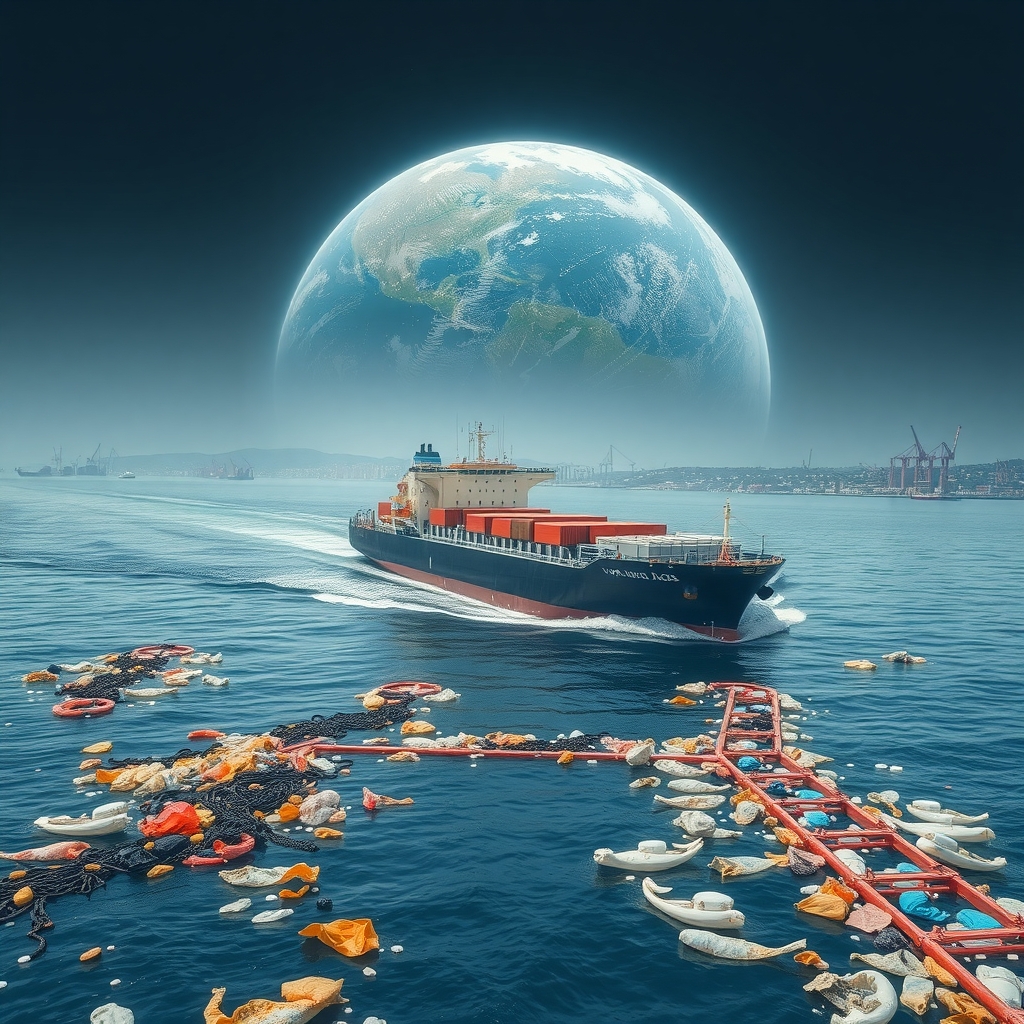
The tension between the freedom of the high seas and the preservation of the marine environment represents one of the most profound dialectics in modern international law. For centuries, the maritime domain was viewed through the lens of mare liberum, a doctrine emphasizing unhindered navigation and the utilization of the seas as a limitless resource. However, the industrialization of maritime commerce and the subsequent ecological degradation necessitated a fundamental shift from a regime of absolute freedom to one of regulated stewardship. Today, maritime environmental law functions as a complex web of treaty-based obligations, customary norms, and evolving jurisprudential standards designed to mitigate the anthropogenic impact of global shipping.
The legal architecture governing vessel pollution is not a monolithic entity but rather a layered system of functional competence. It seeks to balance the rights of flag states to exercise jurisdiction over their vessels with the rights of coastal states to protect their maritime zones and the collective interest of the international community in preserving the global commons. As vessel technology advances and the types of pollutants—ranging from traditional heavy fuel oils to controversial low-sulfur alternatives and invasive biological matter—become more complex, the legal frameworks must perpetually recalibrate the threshold of "due diligence" required of both private actors and sovereign states.
How does UNCLOS protect the marine environment?
The United Nations Convention on the Law of the Sea (UNCLOS) serves as the constitutional bedrock for all maritime activities, including the protection and preservation of the marine environment. While UNCLOS does not provide a granular technical manual for pollution prevention, it establishes the normative foundations upon which all specific environmental treaties are built. The crux of this protection lies in Part XII, which imposes a general obligation on all states to protect and preserve the marine environment.
Article 192 of UNCLOS is perhaps the most significant provision in this regard, stating unequivocally that "States have the obligation to protect and preserve the marine environment." This is not merely a hortatory statement; it is a legal duty that carries implications for both direct and indirect pollution. This obligation is further articulated in Article 194, which requires states to take all necessary measures to prevent, reduce, and control pollution from any source, including vessels. This includes the necessity of regulating the design, construction, equipment, operation, and manning of vessels to minimize their environmental footprint.
However, the implementation of these obligations is mediated by the jurisdictional zones of the sea. In the territorial sea, the coastal state possesses near-absolute sovereignty to enforce environmental standards. In the Exclusive Economic Zone (EEZ), the coastal state's authority is more nuanced, focused on protecting its economic interests and the ecological integrity of its waters, often through the regulation of vessel-source pollution as permitted by Article 211. On the high seas, the primary responsibility shifts toward the flag state, creating a jurisdictional gap that has historically been exploited by "flags of convenience." The jurisprudence of the International Tribunal for the Law of the Sea (ITLOS) has increasingly emphasized that the duty to protect the marine environment is an obligation of conduct, requiring states to exercise "due diligence" to ensure that vessels under their flag comply with international standards.
How does MARPOL regulate vessel pollution?
While UNCLOS provides the constitutional mandate, the International Convention for the Prevention of Pollution from Ships (MARPOL) provides the technical and operational teeth. Managed by the International Maritime Organization (IMO), MARPOL is organized into several technical Annexes, each targeting a specific category of pollutant. The effectiveness of MARPOL lies in its ability to translate broad environmental goals into mandatory technical standards for ship design and crew operation.
The regulatory mechanics of MARPOL can be broken down into its primary components:
- Annex I: Prevention of Pollution by Oil. This is perhaps the most mature aspect of the convention, mandating requirements such as the use of double hulls for oil tankers and the installation of oily water separators to ensure that any discharge from machinery spaces meets strict oil content limits.
- Annex II: Control of Pollution by Noxious Liquid Substances in Bulk. This annex governs the transport of chemical cargoes, establishing strict discharge criteria and residue handling procedures to prevent the contamination of the water column with toxic substances.
- Annex IV: Prevention of Pollution by Sewage from Ships. This regulation addresses the discharge of human waste, requiring ships to either treat sewage using approved systems or discharge it only when at a certain distance from land.
- Annex V: Prevention of Pollution by Garbage from Ships. This annex has seen significant recent updates, strictly prohibiting the discharge of almost all forms of plastics into the sea and regulating the disposal of other waste materials.
- Annex VI: Prevention of Air Pollution from Ships. A relatively recent addition, Annex VI addresses the atmospheric impact of shipping, including limits on sulfur oxide (SOx) and nitrogen oxide (NOx) emissions, which has driven a massive technological shift toward cleaner fuels and exhaust gas cleaning systems (scrubbers).
Despite these rigorous standards, the enforcement of MARPOL remains a significant challenge. The convention relies heavily on a triad of enforcement: flag state inspections, port state control (PSC), and shipboard record-keeping. The integrity of the system is often compromised by fraudulent entries in Oil Record Books or the sophisticated bypassing of pollution-control equipment, a practice known as "magic pipes." Consequently, the legal evolution of MARPOL is increasingly focused on enhancing the transparency of vessel operations and strengthening the investigative powers of port states.
Who is liable for oil spills from ships?
Determining liability in the aftermath of a maritime environmental catastrophe involves navigating a bifurcated regime of international conventions. The central question is not merely who caused the damage, but which legal instrument applies to the specific vessel and the type of oil spilled. The international community has developed a specialized regime to ensure that victims of pollution—ranging from coastal states to commercial fisheries—can seek compensation without the prohibitive burden of proving negligence in complex maritime torts.
For pollution caused by tankers carrying persistent oil, the 1992 Civil Liability Convention (CLC) applies. The CLC is characterized by the principle of strict liability, meaning the shipowner is liable for pollution damage regardless of fault, subject to very limited exceptions (such as acts of war or natural phenomena of exceptional character). This regime is supplemented by the International Oil Pollution Compensation Funds (IOPC Funds), which provide an additional layer of compensation when the damage exceeds the shipowner's liability limit under the CLC. This "two-tier" system ensures a high level of financial security for environmental remediation and economic loss claims.
However, a significant gap exists for spills involving non-tankers (such as container ships) or non-persistent oils. These incidents fall under the 1990 International Convention on Civil Liability for Bunker Oil Pollution Damage (the Bunkers Convention). Unlike the CLC, the Bunkers Convention does not have a dedicated fund mechanism similar to the IOPC Funds; instead, it relies on the shipowner's compulsory insurance and potentially general maritime law or national statutes to cover damages. This distinction is critical for legal practitioners and insurers, as the recourse available to a coastal state following a bunker spill is significantly different from that following a tanker spill.
The following table provides a comparative overview of these primary liability regimes:
| Feature | CLC (1992) | Bunkers Convention (2001) |
|---|---|---|
| Primary Target | Tanker oil spills (persistent oil) | Fuel oil spills from any vessel type |
| Basis of Liability | Strict liability for shipowner | Strict liability for shipowner |
| Compensation Layers | Two-tier (Shipowner + IOPC Fund) | Single-tier (Shipowner/Insurance) |
| Scope of Damage | Property, economic loss, and environmental reinstatement | Property, economic loss, and environmental damage |
What is the role of flag state jurisdiction in environmental protection?
The principle of flag state jurisdiction is a cornerstone of maritime law, derived from the concept of state sovereignty. Under UNCLOS, every state has the right to fly its flag on vessels, and in return, the flag state assumes the primary responsibility for the vessel's compliance with international regulations. This includes ensuring the ship is seaworthy, properly manned, and equipped to prevent pollution in accordance with MARPOL and other standards.
However, the practical application of this jurisdiction is frequently undermined by the phenomenon of "flags of convenience." When shipowners register vessels in states with lax regulatory oversight or low tax regimes, the flag state's ability—or willingness—to enforce environmental standards is diminished. This creates a "race to the bottom" that threatens the efficacy of the entire global maritime environmental regime. The international community has attempted to combat this through the "genuine link" requirement in UNCLOS, which suggests that there must be a substantive connection between the state and the vessel. Yet, the legal threshold for what constitutes a "genuine link" remains notoriously vague and difficult to enforce in international courts.
To mitigate the failures of flag state enforcement, the doctrine of Port State Control (PSC) has emerged as a vital countervailing force. PSC allows a coastal state to inspect foreign-flagged vessels entering its ports to verify compliance with international environmental standards. If a vessel is found to be in violation, the port state has the authority to detain the ship, preventing it from sailing until the deficiency is rectified. This mechanism effectively shifts the enforcement burden from the often-unwilling flag state to the more motivated port state, providing a practical check on the sovereignty-based loopholes that characterize the high seas.
The importance of this jurisdictional balance was underscored in the South China Sea Arbitration (Philippines v. China), where the tribunal emphasized the duty of states to protect the marine environment regardless of sovereignty disputes. The ruling reinforced the idea that environmental obligations are not secondary to territorial claims but are independent, binding duties under UNCLOS that require proactive management and the prevention of harmful activities.
The evolution of maritime environmental law is moving toward a more integrated, precautionary approach. The traditional focus on reactive liability—compensating for damage after it occurs—is increasingly being supplemented by a focus on proactive due diligence and the prevention of harm before it manifests. This shift is driven by the realization that certain marine ecosystems, once destroyed, may be beyond the reach of compensatory mechanisms. As we look toward the future, the legal challenges will likely center on the regulation of new frontiers, such as deep-sea mining and the decarbonization of the global fleet, requiring a jurisprudential agility that matches the scale of the ecological challenges we face.
Conclusion
Maritime environmental law remains a dynamic and contested field, caught between the imperatives of global trade and the urgent necessity of ecological preservation. The transition from the era of unregulated maritime exploitation to a regime defined by UNCLOS and MARPOL marks a significant achievement in international cooperation. However, the persistent ambiguities regarding state responsibility, the complexities of multi-layered liability regimes, and the systemic weaknesses of flag state jurisdiction continue to present significant hurdles. The future efficacy of this legal framework will depend on the ability of international institutions to harmonize enforcement mechanisms, close jurisdictional loopholes, and operationalize the precautionary principle in a manner that respects both the sovereignty of states and the biological limits of our oceans.
Comments
No comments yet.