Sovereignty and Suppression: The Legal Framework Governing Maritime Drug Trafficking
A rigorous legal analysis of maritime drug interdiction, evaluating the jurisdictional tensions between flag-state sovereignty and international law enforcement under UNCLOS and the 1988 Vienna
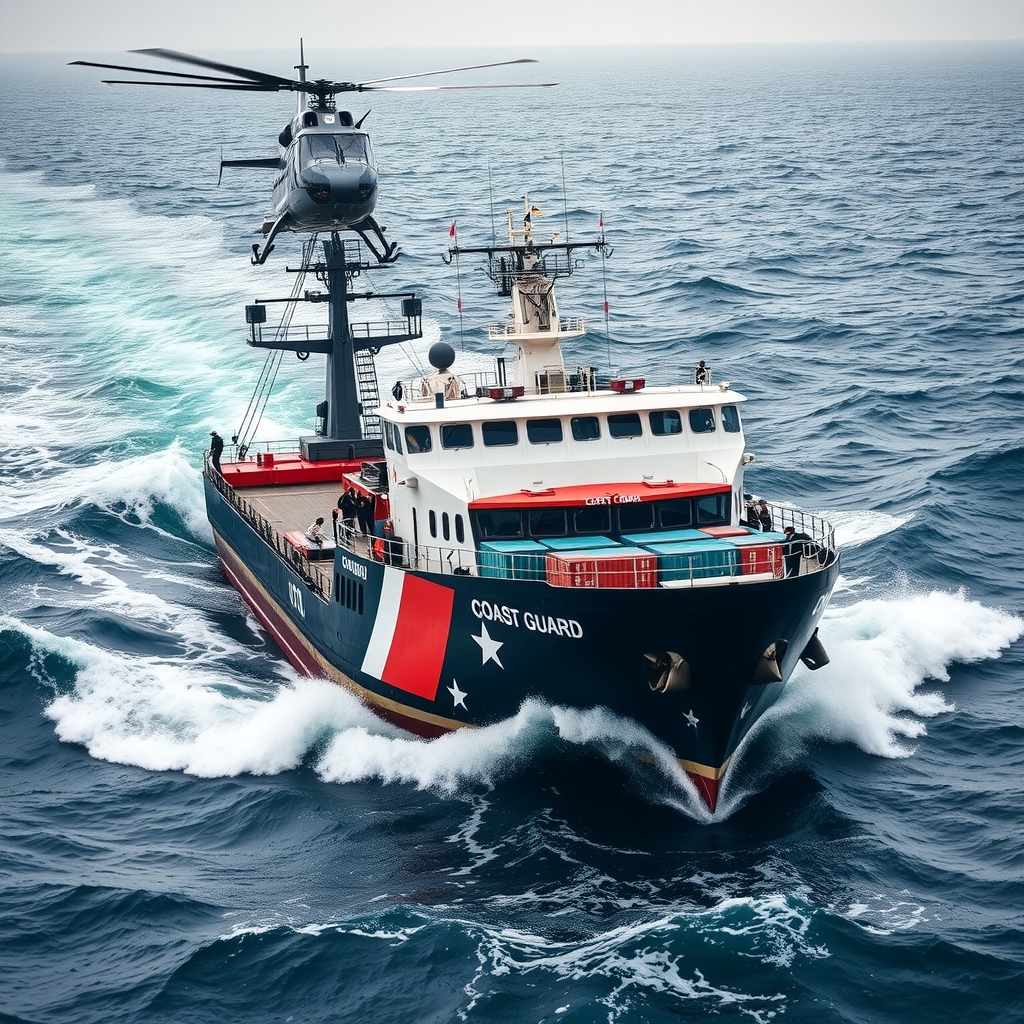
The maritime domain, covering over seventy percent of the Earth's surface, serves as both the lifeblood of global commerce and a vast, complex vector for transnational organized crime. Among the various security threats confronting the international maritime order, the illicit transport of narcotic drugs and psychotropic substances by sea presents a persistent challenge to the traditional doctrines of public international law. While the international community has long recognized the necessity of suppressing maritime drug trafficking, the legal frameworks designed to combat this phenomenon must navigate a profound systemic tension. This tension exists between the foundational principle of the freedom of the high seas, characterized by the exclusive jurisdiction of the flag state, and the collective security interest in enforcing prohibition regimes across ocean spaces.
This article provides a detailed academic inquiry into the international legal regimes governing maritime drug interdiction. It evaluates the limitations of the United Nations Convention on the Law of the Sea (UNCLOS), the operational mechanisms of the 1988 United Nations Convention against Illicit Traffic in Narcotic Drugs and Psychotropic Substances, and the evolving jurisprudence of international courts and tribunals. By examining the doctrinal conflicts between sovereignty and suppression, the limits of bilateral treaty frameworks, and the human rights obligations of interdicting states, this analysis exposes the legal ambiguities that continue to complicate enforcement operations on the high seas.
How does Article 108 of UNCLOS govern drug trafficking on the high seas?
The primary multilateral instrument establishing the jurisdictional framework for ocean space is the 1982 United Nations Convention on the Law of the Sea (UNCLOS). Often referred to as the constitution for the oceans, UNCLOS attempts to balance the competing interests of coastal states, flag states, and the international community. However, its treatment of maritime drug trafficking reveals a striking asymmetry when compared to other maritime crimes, such as piracy. This asymmetry is crystallized in Article 108 of the Convention, which governs the illicit traffic in narcotic drugs or psychotropic substances on the high seas.
Article 108 is structured in two paragraphs, each reflecting a soft-law approach to cooperation rather than a robust grant of enforcement jurisdiction. Paragraph 1 mandates that all states shall cooperate in the suppression of illicit traffic in narcotic drugs and psychotropic substances engaged by vessels on the high seas contrary to international conventions. Paragraph 2 provides that any state which has reasonable grounds for believing that a vessel flying its flag is engaged in illicit traffic may request the cooperation of other states to suppress such traffic.
A critical examination of this text reveals significant legal limitations. Unlike Article 105, which establishes universal jurisdiction over piracy—allowing any state to seize a pirate ship, arrest the persons on board, and decide upon the penalties to be imposed—Article 108 does not grant unilateral enforcement powers to non-flag states. It does not authorize a right of visit, search, or seizure against foreign-flagged vessels suspected of carrying drugs. Instead, the article establishes a general duty to cooperate, leaving the executive enforcement jurisdiction strictly contingent upon the consent of the flag state.
The drafting history of UNCLOS confirms that several delegations sought to elevate drug trafficking to a crime of universal jurisdiction, akin to piracy or slave trading. However, these proposals were vigorously opposed by many developing nations and traditional maritime states. These nations feared that granting unilateral boarding rights on the high seas would invite abuse by powerful naval powers and systematically erode the principle of sovereign equality.
Consequently, Article 108 functions as a cooperative exhortation rather than an enforcement mechanism. It fails to provide the prescriptive or enforcement jurisdiction necessary to actively suppress trafficking networks. This regulatory gap has forced the international community to seek alternative legal instruments to operationalize the vague cooperation mandate of UNCLOS, leading to a bifurcated legal regime where the law of the sea must be constantly reconciled with specialized anti-narcotics treaties.
What are the jurisdictional limits of flag states in maritime interdiction?
To understand the challenges of maritime interdiction, one must analyze the doctrine of exclusive flag-state jurisdiction, which is codified in Article 92 of UNCLOS. This principle dictates that vessels on the high seas shall be subject to the exclusive jurisdiction of the flag state, save in exceptional cases expressly provided for by international treaties or UNCLOS itself. This exclusive authority encompasses both prescriptive jurisdiction (the power to make laws) and enforcement jurisdiction (the power to enforce those laws through boarding, search, arrest, and prosecution).
The exclusive jurisdiction of the flag state is a legal fiction that treats a vessel as a floating extension of the flag state\'s territory. While this doctrine is essential for maintaining order and predictability in international shipping, it creates a formidable shield for illicit actors. Under custom and treaty law, a foreign warship cannot lawfully board a vessel flying another state\'s flag on the high seas without explicit authorization, unless there is reasonable ground for suspecting that the vessel is engaged in piracy, the slave trade, unauthorized broadcasting, is without nationality, or, though flying a foreign flag or refusing to show its flag, is in reality of the same nationality as the warship (the "Right of Visit" under Article 110 of UNCLOS).
Crucially, Article 110 does not include drug trafficking in its exhaustive list of exceptions to the exclusive jurisdiction of the flag state. Therefore, if a warship encounters a foreign-flagged vessel suspected of drug trafficking on the high seas, it has no unilateral right to board and search that vessel. The interdicting state must first verify the registry of the vessel and obtain the express consent of the flag state before taking any enforcement action. This requirement presents severe operational challenges, particularly when dealing with flag states that lack the administrative capacity, political will, or rapid-response infrastructure to process verification and boarding requests in real time.
The limits of flag-state jurisdiction are further complicated by the phenomenon of "flags of convenience" and open registries, where states offer registration to foreign-owned vessels with minimal regulatory oversight. In cases where a flag state fails to exercise effective jurisdiction and control over its vessels, as required by Article 94 of UNCLOS, a jurisdictional vacuum arises. While the International Tribunal for the Law of the Sea (ITLOS) has emphasized the obligation of flag states to exercise due diligence over their vessels—notably in its Advisory Opinion on Sub-Regional Fisheries Commission responsibilities—there remains no established rule of customary international law that allows third states to unilaterally assume enforcement jurisdiction over a foreign-flagged vessel simply because the flag state is failing in its regulatory duties.
An exception to this limitation occurs when a vessel is determined to be "without nationality" or "assimilated to a ship without nationality" under Article 110(1)(d) and Article 110(2) of UNCLOS. Stateless vessels do not enjoy the protection of the exclusive flag-state jurisdiction doctrine. Consequently, any state may exercise jurisdiction over a stateless vessel on the high seas under domestic law. In maritime interdiction practice, drug trafficking organizations frequently employ unregistered vessels, vessels displaying false registration markings, or vessels that refuse to claim a nationality. In these scenarios, the boarding state can assert jurisdiction, though the legal basis for prosecuting the crew must still be established under the boarding state\'s domestic legislation, raising distinct issues of extraterritorial jurisdiction.
How does the principle of freedom of the high seas conflict with drug enforcement?
The doctrinal tension between the freedom of the high seas (*mare liberum*) and the imperatives of maritime law enforcement is a defining feature of modern maritime security law. Originally articulated by Hugo Grotius in the early seventeenth century, the principle of *mare liberum* posits that the oceans are resilient commons open to all nations and cannot be subjected to the sovereignty of any single state. This principle is codified in Article 87 of UNCLOS, which guarantees freedom of navigation, overflight, and other internationally lawful uses of the sea.
When applied to drug enforcement, this classic liberal doctrine conflicts directly with the suppression of transnational organized crime. Drug trafficking networks systematically exploit the freedom of navigation to transport massive quantities of illicit substances through international waters. They operate under the assumption that the vastness of the oceans and the protective shield of flag-state sovereignty will insulate them from interdiction. The legal barrier of the high seas effectively acts as a geographical sanctuary, where coastal states cannot easily project their sovereign authority without running afoul of international law.
This conflict is manifested in several specific legal debates:
- Extraterritorial Jurisdiction and Prescriptive Competence: To what extent can a state criminalize conduct that occurs entirely on the high seas aboard a foreign vessel? Under the *Lotus* case (PCIJ, 1927), a state\'s jurisdiction is territorial unless an international treaty or rule of customary law permits extraterritorial application. While states can exercise prescriptive jurisdiction over their own nationals (the active personality principle) or protect their security interests (the protective principle), the physical enforcement of these laws on the high seas against foreign nationals on foreign vessels remains strictly prohibited without flag-state consent.
- The Abuse of Rights: Some legal scholars argue that the systematic use of the high seas for illicit trafficking constitutes an "abuse of rights" under Article 300 of UNCLOS. This article requires states to exercise their rights and jurisdictions in good faith and in a manner that does not constitute an abuse of right. However, applying Article 300 to non-state actors operating private vessels is doctrinally difficult, as the convention primarily governs relations between sovereign states, not criminal entities.
- Constructive Presence and Hot Pursuit: The doctrine of hot pursuit under Article 111 of UNCLOS allows a coastal state to pursue and arrest a foreign vessel on the high seas if there is good reason to believe the vessel has violated the laws of that state. However, the pursuit must begin within the internal waters, archipelagic waters, territorial sea, or contiguous zone of the pursuing state, and it must be continuous and uninterrupted. This doctrine is highly restrictive and rarely applies to modern maritime drug smuggling, where vessels operate far beyond the territorial sea or rely on mother ships that remain permanently on the high seas while sending smaller "go-fast" boats to make landfalls.
The persistent conflict between freedom of navigation and law enforcement has led to a fragmented legal environment where states must balance the preservation of free maritime commerce—essential for the global economy—with the necessity of closing security gaps. This has prevented the emergence of a general right of unilateral interdiction, ensuring that flag-state consent remains the indispensable pivot of high-seas drug enforcement.
What legal challenges arise from boarding vessels suspected of illicit drug transport?
The actual physical boarding of a vessel on the high seas is a highly intrusive act of sovereignty that carries significant legal and physical risks. When an interdicting state suspects a foreign vessel of drug trafficking, it must navigate a maze of procedural and human rights requirements to ensure the legality of the operation. Failure to do so can result in international responsibility for the interdicting state, the exclusion of evidence in subsequent criminal prosecutions, or diplomatic disputes with the flag state.
The first major legal challenge concerns the standard of suspicion required to initiate an inquiry or request a boarding. Under Article 17 of the 1988 Vienna Convention, a state must have "reasonable grounds to suspect" that a vessel is engaged in illicit traffic. What constitutes "reasonable grounds" is not defined in the treaty and varies significantly across domestic jurisdictions. In practice, interdicting states rely on intelligence reports, anomalous navigation patterns, the absence of flag indicators, or the physical characteristics of the vessel (such as modified fuel tanks or structural alterations). If a boarding is conducted without a sufficient evidentiary threshold, and subsequent inspection reveals no illicit substances, the interdicting state may be liable for any loss or damage sustained by the vessel, as reflected in the spirit of Article 110(3) of UNCLOS.
A second, highly contentious challenge relates to the treatment of crew members and the protection of their human rights during and after interdiction. Boarding operations are often executed by military forces, such as navies or coast guards, whose training is geared toward defense rather than law enforcement. This raise issues concerning the use of force, detentions on board, and the right to a fair trial.
The landmark case of Medvedyev and Others v. France (2010), decided by the European Court of Human Rights (ECtHR), illustrates these human rights complexities. In this case, the French navy interdicted a Cambodian-flagged cargo vessel, the Winner, on the high seas off the coast of Cape Verde, suspecting it of carrying large quantities of cocaine. The boarding was conducted with the ad hoc consent of the Cambodian government, conveyed via a diplomatic note. Following the boarding, the French authorities confined the crew to their cabins and restricted their navigation for thirteen days while the vessel was towed to France, where the crew was subsequently placed in judicial custody.
The ECtHR was tasked with determining whether the crew\'s detention on board during the transit period violated Article 5(1) of the European Convention on Human Rights, which guarantees the right to liberty and security. The Court held that:
- Any deprivation of liberty must be "lawful" and compliant with the "rule of law," requiring a legal basis that is accessible, precise, and foreseeable.
- The ad hoc diplomatic consent provided by Cambodia did not satisfy the requirement of "foreseeability" or "accessibility" of the law, as Cambodia was not a party to any bilateral treaty with France that detailed the conditions of detention and judicial review.
- Consequently, France was found to have violated Article 5(1) due to the lack of a sufficiently defined legal framework governing the detention of the crew on the high seas prior to their presentation before a judicial authority.
The dissenting opinions in Medvedyev highlighted the practical difficulties of maritime law enforcement, arguing that the high seas constitute a unique jurisdictional environment where strict terrestrial standards of immediate judicial presentation cannot always be met. Nevertheless, the judgment established a powerful precedent: states parties to international human rights treaties cannot escape their human rights obligations when acting extraterritorially on the high seas. Boarding states must ensure that their domestic laws provide a clear, foreseeable, and statutory framework for the detention and transit of foreign nationals arrested at sea.
The Interplay Between the 1988 Vienna Convention and the Law of the Sea
Recognizing the operational deficiencies of Article 108 of UNCLOS, the international community drafted Article 17 of the 1988 United Nations Convention against Illicit Traffic in Narcotic Drugs and Psychotropic Substances (the 1988 Vienna Convention). Article 17 is the primary legal mechanism designed to operationalize maritime drug interdiction, serving as a procedural bridge between the sovereignty of flag states and the law enforcement needs of interdicting states.
Article 17 explicitly reaffirms the principle of exclusive flag-state jurisdiction while establishing structured pathways for consensual boarding. Under Article 17(3), a state that has reasonable grounds to suspect that a vessel flying the flag of another party is engaged in illicit traffic may request authorization from the flag state to board, search, and, if evidence of trafficking is found, take appropriate action with respect to the vessel, persons, and cargo on board. The flag state is obligated under Paragraph 4 to respond to such requests expeditiously.
While Article 17 represented a significant step forward, it maintains the requirement of flag-state consent. It does not authorize unilateral enforcement. In practice, the process of identifying a vessel, contacting its flag state through diplomatic channels, verifying its registry, and obtaining formal consent can take hours or even days. In the fast-moving environment of maritime smuggling, where crews can quickly scuttle vessels or jettison cargo, this administrative delay can be fatal to the success of an operation.
To overcome these administrative delays, states have increasingly relied on Article 17(9), which encourages parties to conclude bilateral or regional agreements to facilitate and expedite the suppression of illicit traffic. These bilateral treaties have transformed the landscape of maritime interdiction, particularly in the Caribbean Basin and the Eastern Pacific.
Bilateral "Shiprider" Agreements and Pre-Consent Regimes
The United States has pioneered the use of bilateral maritime counter-drug agreements, commonly known as "shiprider" agreements, with numerous nations in Central America, South America, and the Caribbean. These agreements streamline the consent process through several innovative legal mechanisms:
- Embarked Officers (Shipriders): These agreements allow law enforcement officers from a partner nation to embark on host-nation (e.g., US Coast Guard) vessels. When a suspected vessel is encountered within the partner nation\'s territorial waters or is flying the partner nation\'s flag on the high seas, the embarked shiprider can authorize the boarding, effectively converting a foreign military operation into a national law enforcement action under local authority.
- Pre-Consent and Expedited Verification: Some advanced agreements include "suppose-consent" or expedited boarding clauses. For instance, if a flag state does not respond to a verification and boarding request within a specified, short timeframe (such as two or four hours), the interdicting state is legally authorized to proceed with the boarding as if consent had been granted.
- Pursuit and Entry into Territorial Waters: These treaties often permit foreign law enforcement vessels to enter the territorial seas of the partner nation to pursue fleeing vessels, bypassing traditional territorial sovereignty barriers.
While highly effective operationally, these bilateral frameworks have drawn criticism from some constitutional and international law scholars. Critics argue that these agreements can result in an asymmetric surrender of sovereign authority by smaller developing nations to larger naval powers. Furthermore, the delegation of law enforcement authority under complex bilateral arrangements can obscure the lines of state responsibility and complicate the judicial protection of detained crews, who may find themselves caught in a jurisdictional jurisdictional vacuum between the law of the boarding state and the law of their flag state.
Comparative Analysis of Maritime Enforcement Regimes
The legal framework governing drug trafficking at sea is best understood when contrasted with other maritime security regimes. International law establishes a clear hierarchy of enforcement powers based on the perceived severity and universal threat of the maritime crime. The following table provides a comparative analysis of these regimes under UNCLOS and related conventions.
| Maritime Offense | UNCLOS Basis | Jurisdictional Nature | Right of Visit (Art. 110) | Consent Requirement |
|---|---|---|---|---|
| Piracy | Articles 100-107 | Universal Jurisdiction | Yes (Explicit) | None (Unilateral Seizure Allowed) |
| Slave Trade | Article 99 | Cooperative / Restrictive | Yes (Explicit) | Boarding allowed; jurisdiction reverted to flag state |
| Drug Trafficking | Article 108 | Consensual / Treaty-Based | No | Strictly Required (unless stateless) |
| Migrant Smuggling | 2000 Palermo Protocol | Consensual / Treaty-Based | No | Strictly Required (unless stateless) |
This comparison demonstrates that despite the recognized threat of global narcotics distribution networks, international law treats drug trafficking with a lower level of unilateral enforcement authority than piracy or the slave trade. Piracy, as the classic *hostis humani generis* (enemy of mankind) offense, triggers universal jurisdiction because it occurs outside the jurisdiction of any state and threatens the safety of all maritime commerce. Drug trafficking, by contrast, is classified as a transnational organized crime where sovereignty concerns continue to restrict unilateral high-seas enforcement.
Jurisprudential Developments and Flag State Sovereignty
The jurisprudence of international courts, including the International Court of Justice (ICJ) and the International Tribunal for the Law of the Sea (ITLOS), has consistently reinforced the primacy of flag-state sovereignty on the high seas, even in cases involving alleged maritime security threats or resource violations. While these tribunals have rarely ruled directly on a high-seas drug seizure case, their broad jurisdictional rulings have shaped the legal boundaries within which maritime interdictions must occur.
In the M/V Norstar case (Panama v. Italy, 2019), ITLOS dealt with the arrest of a Panamanian-flagged vessel by Italian authorities on the high seas for alleged involvement in fuel tax evasion. Although the case did not involve drugs, the Tribunal\'s reasoning on the scope of Article 87 (Freedom of the High Seas) and Article 92 (Exclusive Jurisdiction of the Flag State) is highly relevant to maritime drug enforcement. ITLOS ruled that:
Italy’s application of its domestic laws to actions committed by a foreign vessel on the high seas, and its subsequent enforcement action, constituted a breach of Panama\'s exclusive jurisdiction as the flag state. The Tribunal reaffirmed that any exception to the exclusive jurisdiction of the flag state on the high seas must be interpreted strictly.
This strict interpretation highlights that any unilateral enforcement action taken by a coastal or naval state against a foreign-flagged vessel on the high seas, without explicit treaty-based or ad hoc consent, constitutes a violation of international law. The ITLOS ruling in M/V Norstar serves as a warning to interdicting states that domestic counter-narcotics legislation cannot be applied extraterritorially to foreign vessels on the high seas without a solid international legal basis.
Similarly, in the M/V Virginia G case (Panama/Guinea-Bissau, 2014), ITLOS evaluated the sovereign rights of coastal states in their Exclusive Economic Zone (EEZ). The Tribunal noted that while a coastal state enjoys sovereign rights for the purpose of exploring, exploiting, conserving, and managing natural resources in the EEZ, its enforcement jurisdiction is not unlimited. Any enforcement measures, such as boarding and arrest, must remain proportional and respect the procedural safeguards enshrined in international law. When applied to drug interdiction, which typically falls under the contiguous zone or high seas legal regimes, this jurisprudence reinforces that states must exercise restraint and adhere strictly to procedural standards during boarding operations.
Conclusion: Towards a Cohesive Maritime Security Architecture
The suppression of drug trafficking and the illicit transport of psychotropic substances by sea remains one of the most complex challenges facing modern international law. The legal framework, split between the maritime sovereignty protections of UNCLOS and the cooperative mechanisms of the 1988 Vienna Convention, reflects a delicate compromise between state sovereignty and international security. While exclusive flag-state jurisdiction remains a vital pillar of the global maritime order, it continues to create jurisdictional gaps that transnational criminal organizations exploit.
As maritime smuggling methods become more sophisticated—utilizing low-profile vessels, semi-submersibles, and complex transshipment networks—the limitations of the existing consensual interdiction model will become more acute. Resolving these challenges requires a legal approach that does not dismantle flag-state sovereignty, but rather refines and standardizes the cooperative mechanisms of the 1988 Vienna Convention.
Future developments may lie in the creation of a multilateral implementing agreement under UNCLOS, specifically tailored to maritime security and transnational crime. Such an agreement could establish standardized timelines for flag-state verification, clarify human rights protections for crews detained at sea, and provide a unified framework for the admissibility of evidence across different domestic jurisdictions. Until such an architecture is realized, the suppression of maritime drug trafficking will depend on the continued negotiation of bilateral agreements and the careful balancing of sovereign rights and collective security obligations on the high seas.
Comments
No comments yet.