The Boundaries of Sovereignty: Navigating Maritime Defense Zones and Security Zones
An in-depth analysis of how international law and modern geopolitics balance coastal state security with the fundamental global right to freedom of navigation.
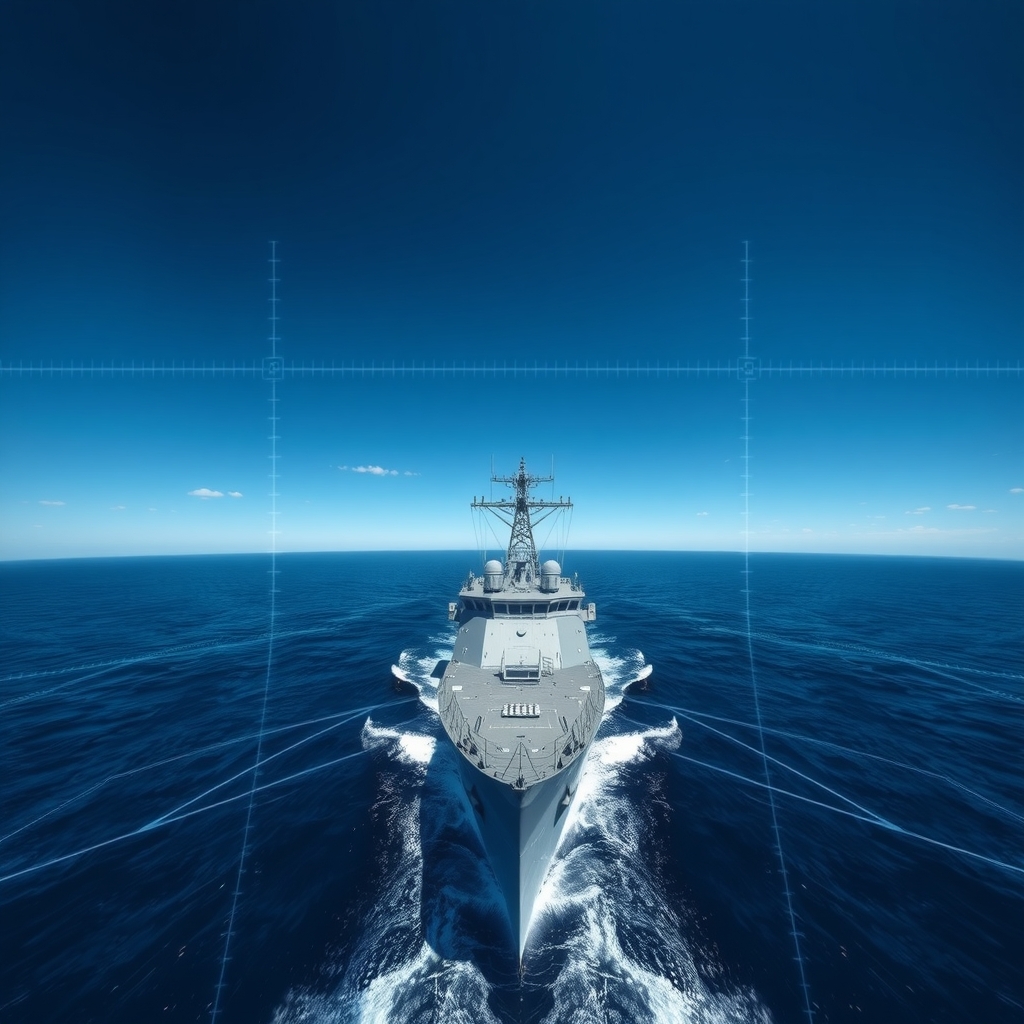
The world's oceans cover more than seventy percent of the planet, serving as the primary highways for global commerce and the staging grounds for geopolitical power projection. For centuries, maritime law has grappled with a fundamental tension: the balance between the security interests of coastal nations and the collective right of the international community to navigate the seas without restriction. This legal struggle is encapsulated in the concepts of maritime security zones and defense zones.
While the 1982 United Nations Convention on the Law of the Sea (UNCLOS) established a comprehensive framework dividing the oceans into distinct jurisdictional bands, state practice has frequently pushed the boundaries of these codified rules. Today, rising geopolitical competition, the proliferation of sophisticated maritime surveillance technology, and regional conflicts have brought the legal validity of unilateral security zones back to the forefront of international diplomacy and naval strategy.
What is a maritime security zone under international law?
To understand the legal standing of a maritime security zone, one must first examine the architecture of UNCLOS. The convention divides maritime space into several zones measured from a coastal state's baseline:
- Internal Waters: Waters landward of the baseline, where the coastal state exercises full sovereignty, equivalent to its land territory.
- Territorial Sea: Extending up to 12 nautical miles, where the coastal state exercises sovereignty, subject to the right of innocent passage for foreign vessels.
- Contiguous Zone: Extending up to 24 nautical miles, where the state may exercise limited enforcement control.
- Exclusive Economic Zone (EEZ): Extending up to 200 nautical miles, where the coastal state possesses sovereign rights over resource exploitation but does not hold territorial sovereignty.
- High Seas: Open to all states, where freedom of navigation and overflight prevail.
Crucially, UNCLOS does not explicitly codify a general category of "security zones" or "military defense zones" that a coastal state can declare beyond its territorial sea to restrict foreign military navigation. Under strict treaty interpretation, the oceans outside the 12-nautical-mile territorial sea remain open to high seas freedoms of navigation and overflight, as specified in Article 58 of the convention.
Despite this lack of explicit treaty backing, numerous states have unilaterally declared security zones, defense perimeters, or military warning areas extending far into their EEZs or even the high seas. These states argue that the inherent right to self-defense, as recognized under Article 51 of the United Nations Charter, permits them to take precautionary measures to protect their coastlines from potential offshore threats. Conversely, major maritime powers, most notably the United States, maintain that such zones are unlawful restrictions on the freedom of the seas, asserting that military operations outside territorial waters are fully protected under international law.
What is the difference between a contiguous zone and a security zone?
A common point of confusion in maritime geography is the distinction between the contiguous zone and a security zone. While both sit adjacent to the territorial sea, their legal foundations, purposes, and recognition under international law are fundamentally different.
The contiguous zone is explicitly defined and authorized under Article 33 of UNCLOS. It is a functional zone where a coastal state may exercise the control necessary to prevent and punish the infringement of its customs, fiscal, immigration, and sanitary laws within its territory or territorial sea. The jurisdiction granted in the contiguous zone is administrative and preventive; it does not grant the coastal state general police powers, nor does it alter the legal status of the waters as part of the EEZ or high seas regarding navigation.
When UNCLOS was being negotiated, several developing nations lobbied extensively to include the word "security" in Article 33. They argued that coastal states should have the right to intercept vessels suspected of threatening national security before they entered the territorial sea. However, maritime powers strongly resisted this proposal, fearing it would lead to creeping jurisdiction, where coastal nations would slowly convert international waters into sovereign buffer zones.
As a result, the term "security" was deliberately excluded from the final text of Article 33. Therefore, under international treaty law, a coastal state has no legal authority to enforce security-related restrictions, such as banning foreign military vessels or conducting security inspections, within its contiguous zone. When a nation establishes a "security zone" within or beyond its contiguous zone to monitor or restrict foreign warships, it does so based on domestic legislation or unilateral claims, rather than recognized treaty law.
Can a coastal state restrict foreign warships in its exclusive economic zone?
Perhaps the most contentious debate in modern ocean law centers on the rights of foreign military forces operating within a coastal state's Exclusive Economic Zone (EEZ). This issue divides the international community into two primary camps: those who support unrestricted military access and those who advocate for coastal state control over military activities in the EEZ.
The maritime power perspective, championed by countries like the United States, the United Kingdom, and Japan, holds that the EEZ is an international water space where high seas freedoms apply to all states, subject only to the resource-related rights of the coastal state. According to this view, military activities—such as intelligence gathering, hydrographic surveys, military exercises, and the transit of warships—are lawful, non-resource-related uses of the sea. They argue that Article 58 of UNCLOS explicitly preserves high seas freedoms of navigation and overflight within the EEZ, and that military activities are traditional, peaceful uses of the ocean.
Conversely, a significant minority of coastal nations, including China, India, Brazil, and Iran, argue that foreign military operations within their EEZs require prior notification or consent. These nations base their arguments on several assertions:
- The "Due Regard" Obligation: Under UNCLOS Article 58(3), states exercising their rights in the EEZ must show "due regard" to the rights and duties of the coastal state. Some coastal nations argue that foreign military maneuvers or surveillance activities undermine their economic security, disturb marine environments, or threaten their sovereign rights, thereby violating the due regard clause.
- The Peaceful Uses Clause: Article 88 of UNCLOS states that the high seas shall be reserved for peaceful purposes, a principle that also applies to the EEZ via Article 58(2). Nations seeking to restrict military activities argue that espionage, active sonar deployment, and simulated combat exercises are inherently non-peaceful.
- National Security Concerns: Many developing states view unchecked foreign military presence close to their shores as an existential threat and a remnant of colonial-era gunboat diplomacy.
This legal divide has led to dangerous real-world friction. The United States conducts regular Freedom of Navigation Operations (FONOPs) specifically designed to challenge what it deems excessive maritime claims. During these operations, US Navy warships intentionally sail through contested waters, such as those in the South China Sea, without seeking prior permission or giving notice, asserting the right of free passage and challenging domestic laws that require authorization.
Are maritime exclusion zones legal during armed conflicts?
During times of war, the peacetime rules of UNCLOS are supplemented—and in some cases superseded—by the law of armed conflict at sea, also known as international humanitarian law. During hostilities, belligerent nations often declare Maritime Exclusion Zones (MEZs), war zones, or operational zones to restrict the movement of neutral vessels and contain the theater of naval operations.
The legality of these zones remains highly debated, as they directly clash with the rights of neutral states to continue commercial trade. The primary legal benchmark for modern maritime warfare is the San Remo Manual on International Law Applicable to Armed Conflicts at Sea, compiled by international legal experts in 1994. The manual outlines strict parameters for the establishment and enforcement of exclusion zones:
"A belligerent may, as an exceptional measure, establish a maritime exclusion zone, but the establishment of such a zone does not absolve the belligerent from its obligations under international humanitarian law."
Under the San Remo framework, several key rules apply to wartime exclusion zones:
- No Free-Fire Zones: The declaration of an exclusion zone does not make it a "free-fire zone" where any vessel can be attacked on sight. Belligerents must still positively identify targets to ensure they are legitimate military objectives, adhering to the principles of distinction and proportionality.
- Safe Passage for Neutrals: If a belligerent isolates an area via an exclusion zone, it must provide safe corridors for neutral merchant vessels not engaged in the conflict, provided those vessels comply with routing and inspection instructions.
- Alternative Routes: The zone must not block access to neutral ports or international straits, which are vital for global transit.
- Notification: The extent, location, and rules of the exclusion zone must be officially declared and communicated to the international community.
Historical examples illustrate the varying applications of these principles. During the 1982 Falklands War, the United Kingdom declared a Total Exclusion Zone around the islands, warninng that any ship or aircraft found inside without permission would be treated as hostile. While the zone was generally accepted by neutrals due to its clear boundaries and defined military utility, the sinking of the Argentine cruiser General Belgrano just outside the zone highlighted the legal complexities of operating on the margins of declared boundaries.
More recently, the conflict in the Black Sea has demonstrated how maritime defense zones and naval blockades can disrupt global supply chains, particularly agricultural exports. The threat of naval mines and unilateral exclusion declarations by belligerents has effectively turned large swaths of the Black Sea into high-risk zones, reminding the world that wartime maritime zones have immediate, severe consequences for global food security and maritime insurance rates.
Safety Zones Around Offshore Energy and Critical Infrastructure
While broad military security zones face skepticism under international law, there is one specific type of security zone that is universally recognized and highly regulated: safety zones around artificial islands, installations, and structures.
Articles 60 and 80 of UNCLOS grant coastal states the authority to establish safety zones around offshore installations—such as oil and gas platforms, offshore wind farms, and deep-sea research stations—located within their internal waters, territorial seas, and EEZs. Unlike military zones, these safety zones have a clear, cooperative purpose: preventing collisions, protecting critical infrastructure, and safeguarding the marine environment.
Under international law, these safety zones are limited to a distance of 500 meters around the outer edges of the installation, unless a larger distance is authorized by generally accepted international standards or recommended by the International Maritime Organization (IMO). All foreign vessels must respect these safety zones and comply with international standards regarding navigation in their vicinity.
With the rapid expansion of offshore wind energy and the vulnerability of underwater assets, such as fiber-optic communication cables and gas pipelines, the management of these localized security zones has become a critical national priority. States are increasingly utilizing unmanned surface vessels, advanced radar arrays, and satellite surveillance to monitor these 500-meter zones, demonstrating how modern technology is reshaping the practical enforcement of established maritime boundaries.
Geopolitical Flashpoints and the Future of Maritime Boundaries
As the strategic value of the oceans continues to grow, the disputes surrounding maritime defense zones are shifting from academic debates into active geopolitical flashpoints. The South China Sea serves as the most prominent arena for this struggle. Through the construction of artificial islands and the subsequent militarization of reefs, some states have attempted to claim territorial waters, airspace, and security zones around features that were previously submerged at high tide—a practice heavily criticized by international tribunals.
Furthermore, the emergence of gray-zone warfare—where nations use civilian coast guards, maritime militias, and commercial fishing fleets to assert territorial claims—complicates the traditional legal definitions of naval activity. When a state deploys civilian-looking vessels to enforce a security zone, it blurs the line between domestic law enforcement and military aggression, presenting a profound challenge to the enforcement mechanisms of UNCLOS.
In the coming decades, climate change will also impact these dynamics. As the Arctic ice cap melts, opening new transit routes like the Northern Sea Route, Arctic coastal states are already asserting domestic security controls and icebreaker escort requirements over waters that other nations argue should remain international straits. This regional transformation will likely spark a new wave of legal disputes over the permissible scope of coastal state jurisdiction in polar waters.
Conclusion
The legal status of maritime security zones and defense zones remains a delicate balancing act on the global stage. While UNCLOS provides a robust foundation for ocean governance, it deliberately left certain security questions open to interpretation to secure consensus during its drafting. Today, that ambiguity is being challenged by rising maritime powers seeking greater control over their coastal approaches and established naval powers determined to preserve their operational freedom.
As technology evolves and geopolitical rivalries intensify, the international community must work to prevent unilateral maritime claims from eroding the freedom of navigation that underpins the global economy. Resolving these disputes will require a renewed commitment to multilateral dialogue, adherence to international legal norms, and a collective understanding that the oceans must remain open, predictable, and safe for all nations.
Comments
No comments yet.