Navigating Fault: The Complexities of Collision Liability and Maritime Claims
An analytical examination of the legal frameworks, international conventions, and jurisprudential doctrines governing maritime collision liability.
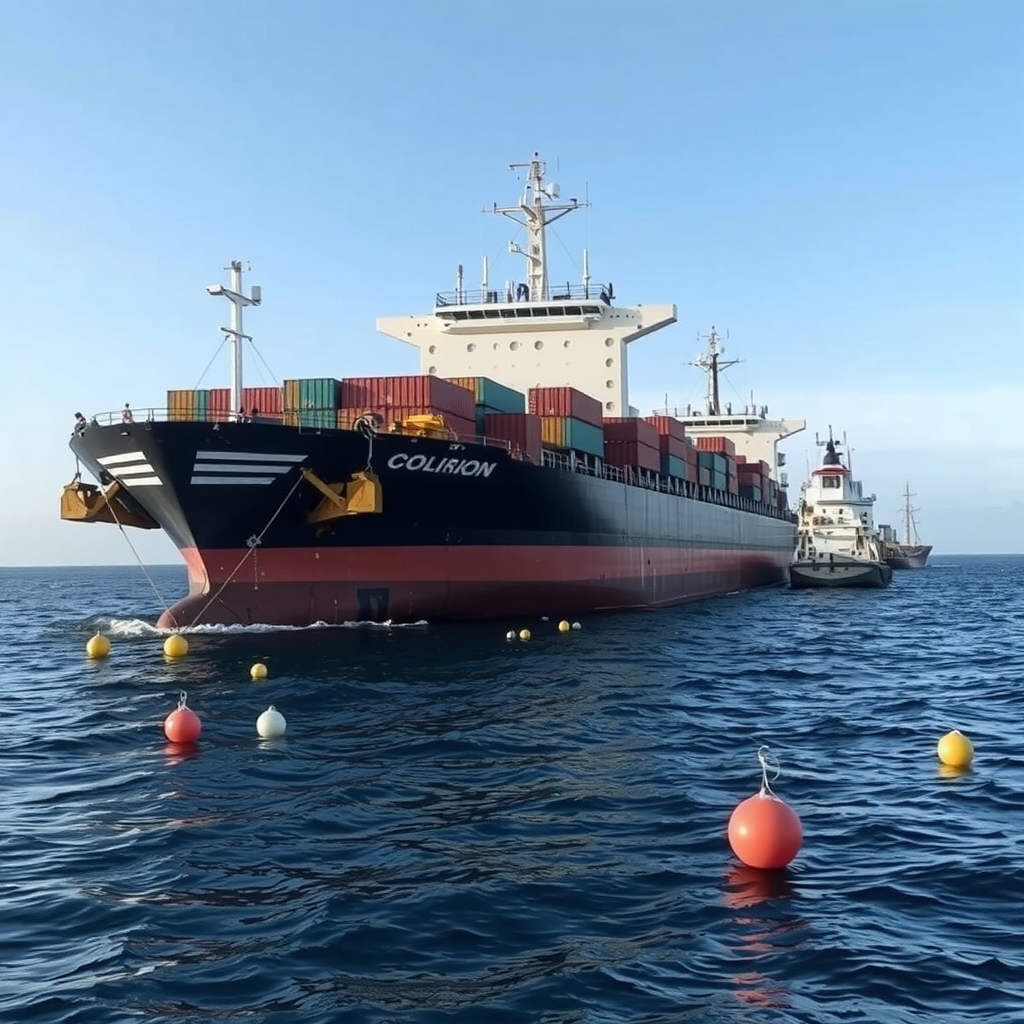
The maritime environment, characterized by its inherent volatility and the vast, often unyielding nature of the high seas, necessitates a robust legal architecture to govern the inevitable intersections of vessel movements. Maritime collision law is not merely a subset of tort law; it is a specialized field where the intersection of international conventions, national statutes, and centuries of admiralty jurisprudence creates a complex matrix of rights and obligations. When two or more vessels collide, the resulting litigation transcends simple damage assessment, venturing into the profound realms of fault apportionment, limitation of liability, and the technical interpretation of navigational rules.
At its core, the adjudication of maritime collisions seeks to balance the competing interests of commercial certainty, maritime safety, and equitable compensation. The evolution from the archaic "all-or-nothing" fault models of the nineteenth century to the sophisticated proportional liability regimes of the modern era reflects a deepening understanding of the multifaceted nature of nautical error. This article explores the nuanced layers of collision liability, evaluating the regulatory frameworks that define the standard of care and the jurisprudential doctrines that determine the financial consequences of maritime accidents.
The Regulatory Standard: COLREGs and the Duty of Care
The bedrock of maritime collision litigation lies in the determination of whether a vessel acted in accordance with the International Regulations for Preventing Collisions at Sea (COLREGs). Adopted by the International Maritime Organization (IMO), the COLREGs provide the essential "rules of the road" for mariners. However, the application of these rules is rarely a binary exercise of checking boxes. Instead, it requires a granular analysis of whether a master, in a given moment of peril, exercised the degree of skill and foresight expected of a prudent mariner.
Rule 2 of the COLREGs, often referred to as the "Rule of Good Seamanship," is perhaps the most significant and debated provision. It imposes a duty upon the mariner to depart from the strict letter of the rules if such departure is necessary to avoid immediate danger. This provision introduces a level of subjective judgment into what is ostensibly an objective regulatory framework. Jurists often grapple with the tension between the technical requirements of rules—such as stand-on and give-way vessel obligations—and the overarching requirement to act with common sense and professional competence.
In practice, a collision is seldom the result of a single rule violation. It is frequently a cumulative failure of situational awareness, lookout maintenance, and timely maneuvering. Consequently, the evidentiary burden in these cases often shifts toward the analysis of Voyage Data Recorders (VDR), radar logs, and bridge audio, which are scrutinized to reconstruct the precise temporal sequence of events leading to the impact.
How is liability determined in a ship collision?
The determination of liability in a maritime collision is fundamentally a process of evaluating fault, which in maritime law is synonymous with negligence or the failure to adhere to the established standard of care. Unlike certain terrestrial jurisdictions that may employ strict liability for specific types of accidents, maritime law remains predominantly fault-based. To establish liability, a claimant must typically demonstrate that a vessel's crew failed to comply with the COLREGs or failed to exercise reasonable care under the circumstances.
A critical concept in this determination is the "Agony of the Moment" doctrine. This principle posits that if a mariner is placed in a position of sudden, unforeseen peril due to the negligence of another vessel, their subsequent actions—even if they technically violate a COLREG rule—should not be deemed negligent if they were a reasonable response to the emergency. The law recognizes that in the heat of a crisis, a human operator may not have the luxury of perfect deliberation. However, this doctrine is applied with extreme caution by courts to prevent it from becoming a blanket excuse for poor seamanship.
Furthermore, the concept of contributory negligence plays a decisive role. In modern maritime jurisprudence, following the widespread adoption of the 1910 Brussels Collision Convention, the focus has shifted from determining a single "guilty" party to assessing the relative degree of fault of each vessel. This apportionment of fault is often expressed in percentages, which directly dictate the proportion of damages each party must bear.
The following table outlines the distinction between the historical and modern approaches to collision liability:
| Feature | Pre-1910 Common Law Approach | Post-1910 Brussels Convention Regime |
|---|---|---|
| Liability Model | "All-or-Nothing" (Single party liable) | Proportional Liability (Multiple parties) |
| Fault Assessment | Binary: One vessel is at fault, or both are equally at fault. | Nuanced: Degrees of fault (e.g., 70/30 split). |
| Damages Recovery | Victim recovers 100% from the liable party. | Victim recovers based on the liable party's percentage. |
| Legal Complexity | Relatively low, but often inequitable. | High; requires detailed technical evidence. |
Who is liable for a ship collision?
Identifying the specific entity liable for a collision requires navigating the distinction between in personam and in rem actions. While the immediate cause of a collision is usually the error of a vessel's master or crew, the legal responsibility for the resulting damage typically falls upon the shipowner. This is grounded in the doctrine of vicarious liability, wherein the employer is held responsible for the negligent acts of employees performed within the scope of their employment.
However, the scope of liability can extend beyond the immediate owner. Depending on the contractual relationships and the nature of the incident, several other parties may be brought into the litigation:
- The Shipowner: Generally liable for the actions of the crew and for ensuring the vessel is seaworthy.
- The Charterer: May be liable if the collision was caused by instructions provided by the charterer or by the failure to provide a suitable vessel under certain time-charter arrangements.
- The Manager: In cases of systemic management failure, such as inadequate training or failure to maintain safety protocols, the technical manager may face claims.
- Cargo Interests: While primarily claimants, cargo owners may sometimes face complex subrogation issues if the collision involved issues of improper loading or stability.
A pivotal aspect of maritime liability is the concept of seaworthiness. If a collision is caused not merely by navigational error but by a latent defect in the vessel's equipment or a failure in its structural integrity, the owner's liability is significantly heightened. Under many jurisdictions, a vessel that is unseaworthy at the commencement of a voyage may lose the right to limit its liability, as the failure to provide a fit vessel is seen as a fundamental breach of the maritime undertaking.
The Doctrine of Limitation of Liability
One of the most distinctive and controversial features of maritime law is the right of shipowners to limit their liability for certain claims. This principle is codified in the Convention on Limitation of Liability for Maritime Claims (LLMC) of 1976 and its subsequent 1996 Protocol. The rationale is purely economic: maritime commerce is inherently risky, and without the ability to cap potential losses, the insurance markets for shipping would become prohibitively expensive or cease to exist altogether.
The limitation is not an absolute shield. Under Article 4 of the LLMC, a claimant can "break" the limit if they can prove that the loss resulted from the owner's personal act or omission, committed with the intent to cause such loss, or recklessly and with knowledge that such loss would probably result. This is an exceptionally high evidentiary bar. It is not enough to prove gross negligence or even extreme incompetence; one must effectively prove a level of subjective awareness of the impending disaster.
This creates a profound tension in maritime jurisprudence. On one hand, the limitation regime provides the stability necessary for global trade. On the other, it can lead to outcomes that appear deeply inequitable, where a victim of a catastrophic collision—such as one involving massive environmental damage or loss of life—is forced to accept a compensation amount that is a mere fraction of the actual damages incurred.
Modern Challenges: Autonomous Vessels and the Future of Claims
As we look toward the future, the advent of Maritime Autonomous Surface Ships (MASS) promises to revolutionize the industry but also threatens to upend the established legal doctrines of collision liability. The current framework is heavily predicated on the concept of the "human element"—the master's judgment, the lookout's eyes, and the crew's reaction. When the decision-making agent is an algorithm, the traditional definitions of negligence and the "agony of the moment" become increasingly difficult to apply.
If an autonomous vessel collides with a manned vessel, where does the fault lie? Is it a failure of the software developer, the sensor manufacturer, or the remote supervisor? The transition from human error to system error will require a radical reimagining of the standard of care. We may see a shift toward a more strict liability model for autonomous operators, or perhaps a new regulatory regime that treats maritime software with the same rigor as aviation systems.
Furthermore, the environmental dimension of collisions continues to expand the scope of maritime claims. The increasing frequency of massive oil spills and chemical leaks following collisions has led to a proliferation of complex multi-party litigations involving environmental protection agencies, coastal states, and international funds like the International Oil Pollution Compensation Funds (IOPC Funds). These cases often involve overlapping jurisdictions and competing claims for ecological restoration, which are far more difficult to quantify than traditional hull and cargo damage.
Conclusion
Collision liability and maritime claims remain among the most intricate areas of international law. The interplay between the technical mandates of the COLREGs and the subjective assessments of fault requires a sophisticated synthesis of law and seamanship. While the move toward proportional liability has brought greater equity to the apportionment of damages, the continued existence of the limitation of liability regime ensures that the tension between commercial risk management and victim compensation remains unresolved.
As the industry moves toward greater automation and faces escalating environmental scrutiny, the legal frameworks must evolve. The challenge for future jurists and legislators will be to maintain the predictability required for global commerce while ensuring that the law remains capable of addressing the unprecedented complexities of a digital and ecologically sensitive maritime era. The sea remains unpredictable, and the law, much like the mariner, must remain ever-vigilant and adaptable.
Comments
No comments yet.