Sovereignty, Rescue, and Responsibility: Navigating the Legal Obligations of Maritime Carriers in Irregular Migration
This academic analysis explores the complex intersection of maritime law, human rights, and carrier liability when dealing with irregular migration and sea rescues.
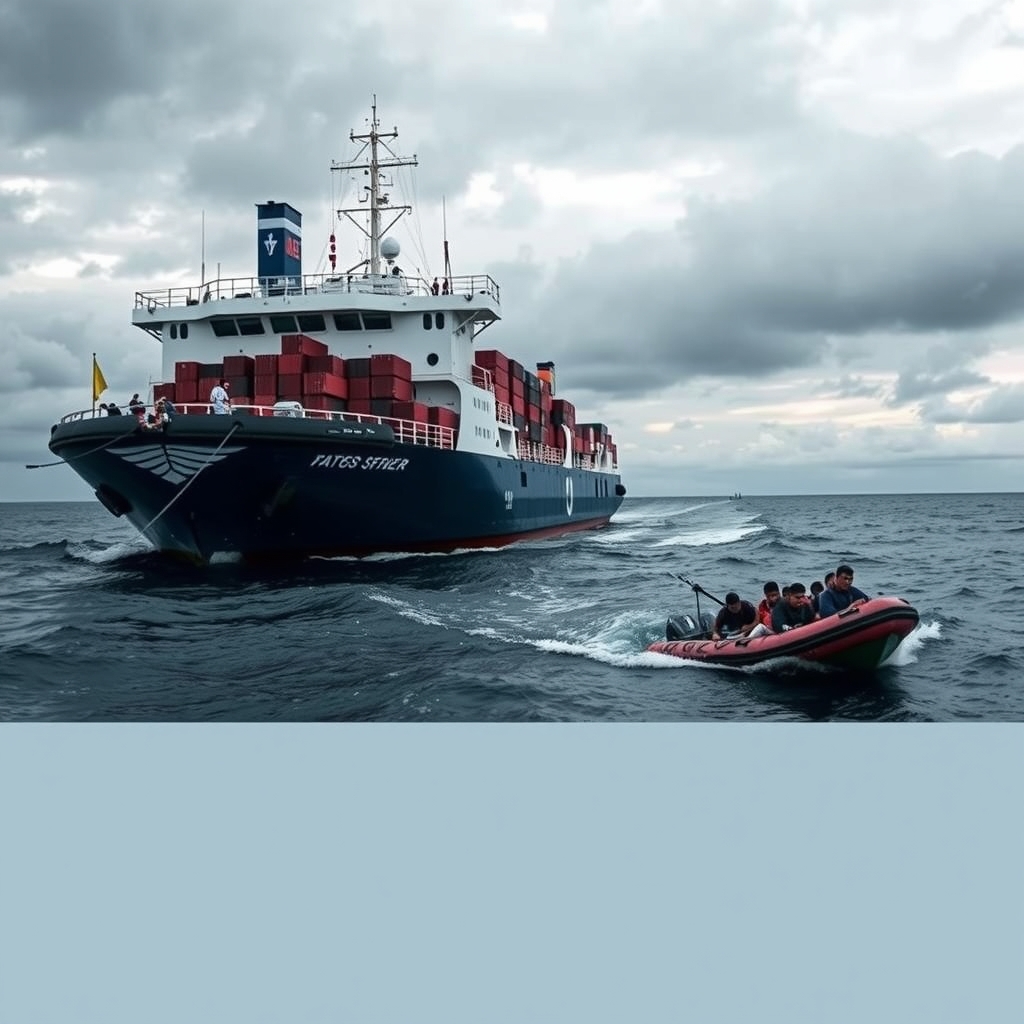
The contemporary maritime landscape is increasingly defined by a profound tension between the ancient tradition of the sea—the duty to rescue those in distress—and the rigid, often punitive, immigration frameworks of coastal states. As irregular migration routes shift toward the maritime domain, commercial vessels find themselves at the epicenter of a geopolitical crisis. The legal status of the maritime carrier, once primarily governed by the carriage of goods and the safety of the crew, has been forcibly expanded to include roles as de facto humanitarian responders and border enforcement intermediaries. This evolution is not merely a matter of operational logistics but represents a significant jurisprudential shift that challenges the established boundaries of the United Nations Convention on the Law of the Sea (UNCLOS) and the International Convention for the Safety of Life at Sea (SOLAS).
At the heart of this discourse lies the dichotomy between the carrier’s private commercial interests and the public international law obligations imposed upon them. When a merchant vessel encounters a craft in distress, the shipmaster is bound by both moral imperative and treaty law to intervene. However, the subsequent process of disembarkation often triggers a cascade of legal ambiguities, where the sovereign rights of states to control their borders frequently clash with the non-refoulement obligations inherent in international human rights law. The following analysis scrutinizes these frictions, evaluating the shifting burden of responsibility from the state to the private carrier and the resultant legal precarity for global shipping.
The Jurisprudential Foundation of the Duty to Render Assistance
The obligation to assist persons in distress at sea is one of the most well-established principles of international maritime law. It is codified in Article 98 of UNCLOS, which mandates that every State shall require the master of a ship flying its flag to render assistance to any person found at sea in danger of being lost. This is supplemented by Regulation 33 of Chapter V of the SOLAS Convention, which emphasizes that the master of a ship at sea which is in a position to be able to provide assistance, on receiving information from any source that persons are in distress at sea, is bound to proceed with all speed to their assistance.
However, the simplicity of these mandates belies the complexity of their application in the context of irregular migration. While the duty to rescue is absolute, the duty to provide a place of safety for disembarkation is far more contested. The 2004 amendments to the SAR and SOLAS Conventions were intended to clarify this by placing the primary responsibility on the State party responsible for the Search and Rescue (SAR) region to ensure that a place of safety is provided. Yet, as evidenced by numerous incidents in the Mediterranean and the Andaman Sea, states frequently engage in jurisdictional disputes to avoid the domestic political and legal consequences of accepting rescued migrants. This creates a legal vacuum where the carrier is left in indefinite custody of individuals, often incurring massive daily costs and legal liabilities.
What are the legal obligations of shipmasters toward rescued migrants?
The shipmaster’s obligations extend beyond the immediate act of pulling individuals from the water. Under the International Maritime Organization (IMO) Guidelines on the Treatment of Persons Rescued at Sea (Resolution MSC.167(78)), the master must treat rescued persons with humanity and ensure their basic needs are met. This includes medical care, food, and shelter. Crucially, the master must also document the circumstances of the rescue and the status of the individuals, a task for which merchant officers are often poorly trained.
A significant legal nuance arises regarding the status of the vessel as a temporary place of safety. Jurisprudence from the European Court of Human Rights (ECHR), most notably in Hirsi Jamaa and Others v. Italy (2012), has established that states cannot circumvent their human rights obligations by conducting interceptions at sea. While this case primarily concerned state vessels, the principles have trickled down to private carriers. If a carrier acts under the direction of a State Maritime Rescue Coordination Centre (MRCC) to return migrants to a country where they face persecution, the carrier may find itself an unwitting participant in a violation of the principle of non-refoulement. The master, therefore, is caught between the administrative orders of a coastal state and the overarching dictates of international human rights law.
| Convention / Instrument | Primary Obligation for Carriers | Legal Ambiguity |
|---|---|---|
| UNCLOS Article 98 | Duty to render assistance to persons in distress. | Definition of "distress" in the context of seaworthy but overcrowded migrant vessels. |
| SOLAS Chapter V | Obligation to proceed with speed to the rescue. | Point of disembarkation and the definition of a "place of safety." |
| SAR Convention | Coordination with MRCCs for rescue operations. | State refusal to designate a landing port, leaving the carrier in limbo. |
| FAL Convention | Prevention of unauthorized entry and management of stowaways. | Conflict between humanitarian rescue and stowaway liability regimes. |
How does carrier liability change during irregular migration events?
Carrier liability in the context of irregular migration is multi-faceted, encompassing civil, administrative, and occasionally criminal dimensions. Traditionally, maritime law viewed migrants who boarded a ship without authorization as stowaways. Under the Convention on Facilitation of International Maritime Traffic (FAL Convention), the carrier is responsible for the security of the vessel and the eventual repatriation of stowaways. This often involves substantial financial bonds, the cost of guards, and the expenses of air travel for the individuals being returned.
However, the mass migration events of the 21st century have blurred the lines between stowaways and rescued persons. If a master rescues migrants in distress, they are technically not stowaways. Yet, many coastal states treat them as such for the purposes of carrier liability. For example, some jurisdictions impose heavy fines on carriers that arrive in port with undocumented individuals, regardless of whether those individuals were rescued at sea. This creates a perverse incentive for masters to ignore distress signals—a direct violation of UNCLOS—to avoid the ruinous financial and legal penalties associated with disembarkation delays and state-imposed fines.
Furthermore, the carrier faces significant civil liability risks concerning the cargo. A diversion to perform a rescue is generally protected under the Hague-Visby Rules as a reasonable deviation. However, if the presence of rescued migrants leads to damage to the cargo, delays in delivery, or the loss of a commercial contract, the carrier may face claims from cargo interests. While the "liberty clause" in most Bills of Lading provides some protection, the protracted nature of modern disembarkation disputes tests the limits of these legal safeguards. The economic impact on the carrier is not merely the direct cost of care but the systemic risk of vessel arrest or detention by port authorities seeking to enforce immigration compliance.
The Conflict of Doctrines: Private Property vs. Human Rights
A critical examination of this issue requires addressing the conflicting doctrines of sovereign immunity and private property rights. When a state instructs a private vessel to change course or to remain outside territorial waters with rescued migrants on board, it is effectively requisitioning private property for a public border control function. This raises questions of compensation and the limits of state authority over foreign-flagged vessels on the high seas. The M/V Saiga (No. 2) case before the International Tribunal for the Law of the Sea (ITLOS) emphasized that the use of force and the exercise of jurisdiction must be reasonable and necessary. By extension, the imposition of indefinite custodial duties on a private carrier could be interpreted as an unreasonable exercise of coastal state jurisdiction.
The ship is not a floating jail, nor is the master a surrogate immigration officer. To force a commercial entity to bear the weight of a state’s failure to manage its borders is to undermine the very stability of international maritime trade.
Non-Refoulement and the Carrier’s Dilemma
The principle of non-refoulement—prohibiting the return of refugees to a place where they face a threat to their life or freedom—is a cornerstone of international law. For the maritime carrier, this principle manifests as a significant legal risk. If a carrier, following the instructions of a coastal state’s MRCC, returns rescued individuals to a port where they may be subject to torture or inhuman treatment (such as certain ports in North Africa), the carrier may be held liable in international or even domestic human rights forums. While the carrier is not a state actor, the degree of state control exercised during such operations can lead to the attribution of the state’s conduct to the carrier, or at the very least, expose the carrier to complicity claims.
This dilemma is exacerbated by the lack of a clear, universally accepted definition of a "place of safety." Is it merely a location where the immediate threat to life is removed, or must it also be a location where the individuals' fundamental rights are protected? The IMO and UNHCR have argued for the latter, but many states maintain a narrower, more geographic interpretation. For the carrier, this ambiguity is a source of constant legal friction, as choosing the "wrong" port can lead to either state sanctions or human rights litigation.
The Role of Flag State Obligations and International Cooperation
Under UNCLOS, the Flag State holds primary jurisdiction over the vessel. However, in the context of irregular migration, Flag States often remain passive, leaving the carrier to negotiate directly with Coastal and Port States. This failure of Flag State protection is a significant weakness in the current international maritime architecture. If a vessel is denied entry into a port of safety, the Flag State should, in theory, intervene diplomatically or legally to protect its vessel’s interests and ensure the safety of those on board. In practice, many Flag States are Open Registries with little capacity or desire to engage in complex geopolitical disputes over migration.
The need for enhanced international cooperation is evident. The current system relies on the good faith of states to adhere to the 2004 SAR/SOLAS amendments, but the lack of an enforcement mechanism for these amendments means that carriers often become the pawns in a larger political struggle. Regional agreements, such as those attempted in the European context, have often focused more on border externalization than on clarifying the liability and responsibilities of the carriers involved in rescues.
Comparative Analysis of Jurisdictional Responses
Different regions have adopted varying legal approaches to carrier responsibility in migration contexts. In the United States, the focus remains heavily on the Carrier Initiative Program and strict fines under the Immigration and Nationality Act. In the European Union, the interplay between the Schengen Borders Code and the European Convention on Human Rights creates a more complex legal environment where the carrier’s actions are subject to intense judicial scrutiny. In Australia, the "Pacific Solution" and subsequent policies have effectively shifted the legal burden away from the carrier by utilizing offshore processing, though the initial interception and rescue obligations remain a point of significant legal debate.
Conclusion: Toward a Clearer Regulatory Calculus
The current legal framework governing maritime carrier responsibilities in the face of irregular migration is characterized by a profound misalignment between treaty obligations and operational reality. The maritime carrier is being forced to navigate a landscape where the duty to rescue is increasingly criminalized or financially penalized by states seeking to deter migration. This trajectory is unsustainable. A rigorous re-evaluation of the SAR and SOLAS frameworks is necessary to ensure that the primary responsibility for the long-term management of rescued persons remains with states, not private commercial entities.
To preserve the integrity of the international maritime order, it is essential to decouple the humanitarian act of rescue from the administrative and legal processes of immigration enforcement. This requires the establishment of mandatory disembarkation protocols that provide carriers with legal certainty and protection from civil and administrative liability when acting in accordance with international law. Without such reforms, the "tradition of the sea" risks being eroded by a regulatory environment that prioritizes border exclusion over the preservation of human life. The future of maritime security and the protection of the global commons depend on a jurisprudential shift that reaffirms the shipmaster’s role as a lifesaver, not a border guard.
Comments
No comments yet.