Maritime Antitrust and Shipping Alliances: Jurisdictional Friction
A rigorous legal examination of maritime antitrust law, shipping alliances, and the jurisdictional frictions governing global containerized trade.
Introduction
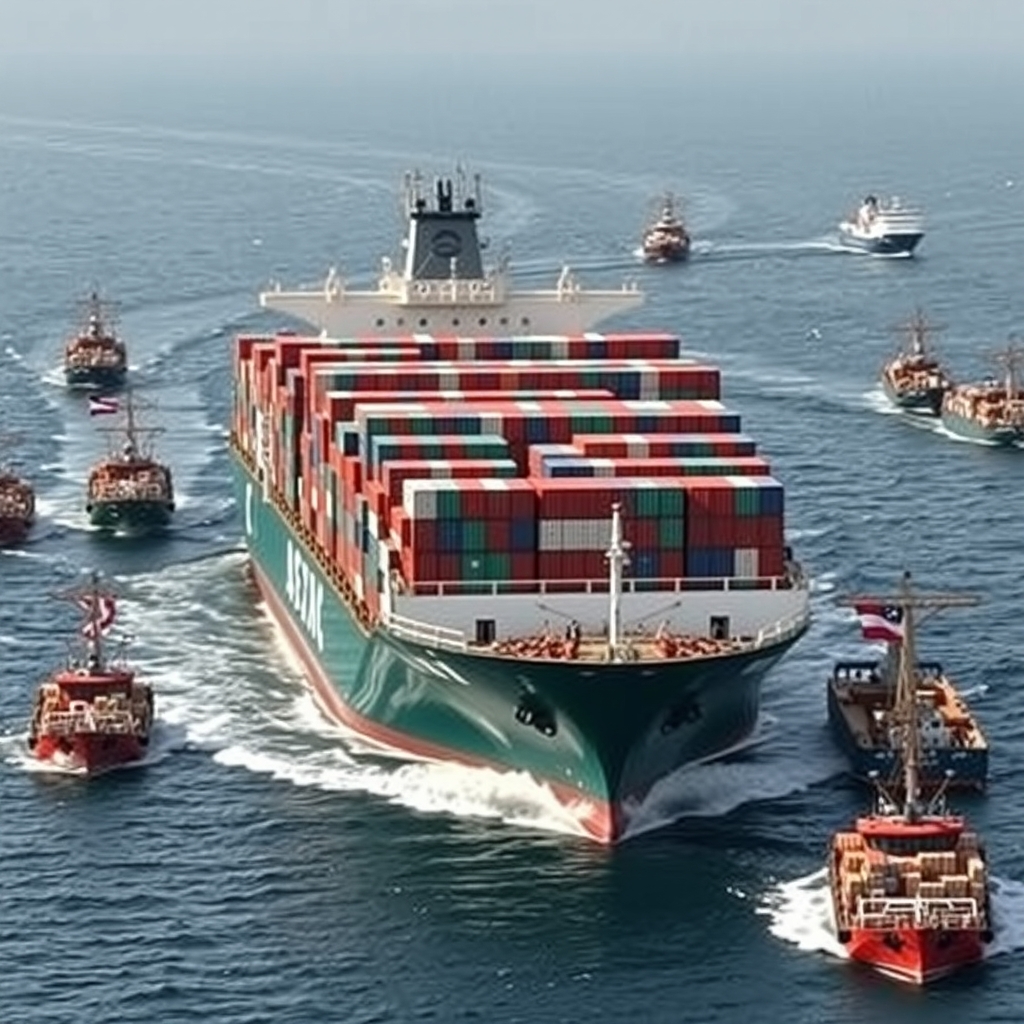
The architecture of global containerized trade relies on massive cooperative structures known as liner shipping alliances. These consortia permit ocean carriers to pool vessels, coordinate sailings, and share terminal facilities without engaging in direct corporate mergers. Yet, this high degree of operational integration places liner shipping in persistent tension with the fundamental principles of international competition law. Historically granted broad exemptions from antitrust scrutiny under doctrines of maritime exceptionalism, container shipping alliances now face unprecedented regulatory divergence. As competition authorities across the European Union, the United States, and Asian jurisdictions dismantle traditional safe harbors, legal scholars and practitioners must confront the complex interplay between extraterritorial enforcement, comity, and the lex maritima.
Examining this regulatory matrix requires navigating a labyrinth of international treaties, domestic statutes, and evolving judicial interpretations. While the 1982 United Nations Convention on the Law of the Sea (UNCLOS) establishes the jurisdictional framework for navigation on the high seas, it remains largely silent on the economics of commercial collusion and market dominance. Consequently, the regulation of shipping cartels is left to the disparate administrative bodies of sovereign states, creating a landscape fraught with friction. To understand how contemporary tribunals balance operational efficiency against market monopolization, one must look closely at the jurisdictional boundaries and doctrinal conflicts that define modern maritime antitrust.
How do international antitrust laws apply to global ocean carriers?
The application of domestic competition statutes to transnational shipping enterprises turns on the doctrine of effects and the limits of extraterritorial jurisdiction. Under principles developed in landmark jurisprudence such as the classic United States Supreme Court decisions on foreign commerce, domestic antitrust laws may reach conduct occurring outside national territory provided that such conduct has a direct, substantial, and foreseeable effect on domestic commerce. In the context of maritime transport, ocean carriers routinely deploy capacity adjustments, slot charters, and joint pricing discussions across multiple legal regimes simultaneously. When an alliance headquartered in Zurich or Singapore agrees to withdraw capacity from a transpacific trade lane, that private coordination immediately impacts freight rates and supply chain logistics in North American and European import markets.
International tribunals and domestic courts have long wrestled with the friction between sovereign enforcement powers and international comity. The International Court of Justice (ICJ) and arbitral panels operating under the auspices of the Permanent Court of Arbitration (PCA) frequently emphasize that unilateral exercises of regulatory authority must respect the sovereign equality of states. Nevertheless, competition authorities such as the European Commission Directorate-General for Competition (DG Competition) and the U.S. Federal Maritime Commission (FMC) assert jurisdiction over foreign-flagged carriers by virtue of the carriers' participation in domestic trade. This dual reality means that ocean carriers operate within a web of overlapping, and occasionally contradictory, compliance mandates. A business practice fully protected under the block exemption regulations of one jurisdiction may constitute a per se violation of statutory prohibitions in another, compelling shipping lines to design hyper-complex compliance frameworks.
What is the historical evolution of block exemptions and carrier immunities?
Maritime exceptionalism is rooted in the recognition of the extreme capital intensity and cyclical volatility inherent in ocean shipping. Throughout the nineteenth and twentieth centuries, governments permitted liner conferences—cartels that fixed freight rates and allocated cargo quotas—on the theory that unfettered price competition would lead to destructive rate wars, market consolidation, and ultimately the collapse of reliable international transport. This protective philosophy was codified in domestic legislation such as the U.S. Shipping Act of 1916 and subsequent revisions, as well as the European Economic Community's Regulation 4056/86, which granted comprehensive antitrust immunities for liner conferences.
However, the regulatory tide turned dramatically at the dawn of the twenty-first century. Critics and economic analysts argued that liner conferences suppressed market signals and harmed shippers by artificially inflating transport costs without generating commensurate efficiency gains. The European Union repealed its block exemption for liner conferences via Regulation 1419/2006, forcing carriers to transition from rigid rate-fixing conferences to more flexible operational consortia. Even so, the EU preserved a specialized Consortia Block Exemption Regulation (CBER) for operational agreements that did not involve price-fixing, provided market share thresholds were maintained. The following comparative table illustrates the divergent statutory frameworks governing maritime alliances across major regulatory jurisdictions:
| Jurisdiction | Primary Regulatory Body | Core Statutory Instrument | Current Status of Exemptions |
|---|---|---|---|
| European Union | |||
| United States | |||
| People's Republic of China |
The expiration of the EU Consortia Block Exemption Regulation in August 2024 marked a watershed moment. Rather than enjoying a presumptive safe harbor, shipping lines operating within European waters must now conduct a self-assessment of their alliance agreements under the general antitrust provisions of Article 101 of the Treaty on the Functioning of the European Union (TFEU). This regulatory shift places the evidentiary burden squarely on carriers to prove that any operational efficiencies generated by capacity pooling outweigh the restriction of competition.
How do international tribunals adjudicate maritime competition disputes?
When competition disputes escalate beyond administrative enforcement, resolution mechanisms must navigate the specialized terrain of maritime law and international public law. The International Tribunal for the Law of the Sea (ITLOS), while primarily mandated to resolve disputes concerning the interpretation and application of UNCLOS, occasionally intersects with commercial navigation and state jurisdiction over maritime zones. Similarly, dispute resolution clauses in international consortia agreements frequently designate arbitration under institutional rules such as those of the International Chamber of Commerce (ICC), bypassing municipal courts in favor of private, confidential tribunals.
The jurisprudence of international arbitration in maritime antitrust reveals acute legal ambiguities. Arbitral tribunals evaluating commercial disputes between alliance members must apply national competition laws chosen by the contracting parties or mandated by conflict-of-laws principles. This creates the risk of fragmented enforcement, where an arbitral award enforcing a capacity-sharing agreement might run afoul of mandatory public policies against cartels in a state where the award is sought to be recognized and enforced. Furthermore, dissenting opinions in landmark maritime arbitrations often highlight the tension between party autonomy in commercial contracting and the public interest in competitive maritime markets.
Consider the doctrinal challenge posed by mandatory public policy exceptions in international enforcement. Under the New York Convention on the Recognition and Enforcement of Foreign Arbitral Awards, a state may refuse enforcement of an award if it would be contrary to its public policy. In antitrust litigation, this exception permits national courts to decline enforcement of arbitral awards that validate anticompetitive coordination. Jurists defending the integrity of international arbitration argue that commercial certainty requires minimal judicial interference, while competition advocates counter that allowing private tribunals to immunize cartel-like behavior undermines the rule of law in global trade corridors.
Conclusion
The governance of maritime antitrust and shipping alliances stands at a historic crossroads. As traditional safe harbors and block exemptions expire across major economic blocs, the era of maritime exceptionalism recedes. Ocean carriers are increasingly compelled to navigate a complex, fragmented regulatory environment characterized by assertive enforcement from competition authorities in Brussels, Washington, Beijing, and beyond. Balancing the undeniable operational efficiencies of container shipping alliances against the imperatives of open competition requires continuous doctrinal refinement. International conventions, domestic statutes, and arbitral jurisprudence must adapt to ensure that global maritime trade remains both resilient and genuinely competitive in the decades ahead.
Comments
No comments yet.