Marine Insurance and the Jurisprudential Allocation of Risk in Contemporary Maritime Navigation
A scholarly analysis of international maritime conventions and judicial precedents governing risk distribution, liability, and insurance mechanisms in global shipping operations.
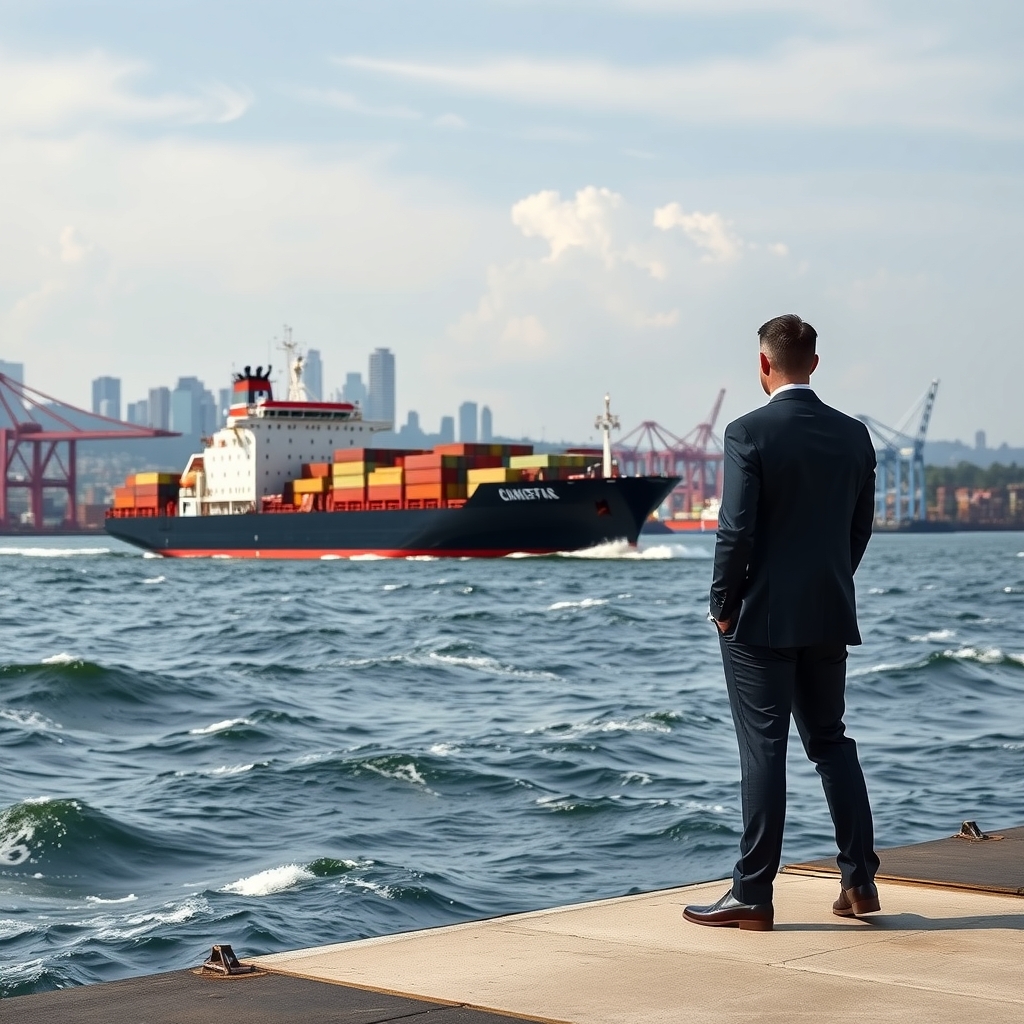
The architecture of modern maritime commerce is fundamentally predicated upon the sophisticated distribution of risk between shipowners, cargo interests, and underwriters. At its core, the legal framework governing marine insurance serves not merely as a financial indemnity mechanism but as a primary instrument of risk allocation that bridges the gap between private contractual obligations and public international maritime standards. The evolution of this framework, from the customary lex maritima to the codified strictures of the Marine Insurance Act 1906 and its subsequent international iterations, reflects a continuous effort to provide certainty in an inherently volatile environment.
Central to this discussion is the synthesis of public international law, specifically the United Nations Convention on the Law of the Sea (UNCLOS), and the private law regimes governing carriage of goods and insurance. While UNCLOS establishes the jurisdictional parameters for vessel safety and environmental protection, the actual fiscal consequences of maritime casualties are adjudicated through a complex interplay of insurance clauses and international liability conventions. This analysis explores the doctrinal foundations of marine insurance, the evolving nature of maritime liability, and the legal challenges posed by shifting geopolitical and technological landscapes.
The Doctrinal Foundation: Indemnity and the Duty of Fair Presentation
The principle of indemnity remains the cornerstone of marine insurance law. Unlike life assurance, marine insurance is designed to restore the assured to the financial position they occupied prior to the occurrence of a loss, rather than providing a windfall. This principle is mediated through the concept of insurable interest, which prevents the contract from degenerating into a mere wager. The jurisprudence in cases such as Lucena v Craufurd (1806) established that an insurable interest requires a legal or equitable relation to the property, such that the assured may be prejudiced by its loss or benefited by its preservation.
Historically, the doctrine of uberrimae fidei (utmost good faith) imposed a rigorous burden on the assured to disclose every material circumstance that might influence a prudent insurer’s judgment. In the United Kingdom, the Insurance Act 2015 significantly modified this by introducing the duty of fair presentation. This shift represents a move toward a more balanced risk allocation, requiring the assured to provide sufficient information to put a prudent insurer on notice that it needs to make further inquiries. The legal ambiguity often lies in what constitutes a material fact in the age of big data and real-time vessel monitoring, where insurers arguably possess external means of verifying risk profiles.
How does marine insurance allocate risk in maritime operations?
In maritime operations, risk allocation is achieved through a bifurcated system of insurance: Hull and Machinery (H&M) insurance, which covers physical damage to the vessel, and Protection and Indemnity (P&I) insurance, which covers third-party liabilities. This duality ensures that both the proprietary interests of the shipowner and the potential social and environmental costs of maritime activities are addressed. The allocation process is further complicated by the inclusion of specific warranties and exclusions in insurance contracts.
The doctrine of seaworthiness plays a pivotal role in this allocation. Under the Hague-Visby Rules, a carrier must exercise due diligence to make the ship seaworthy before and at the beginning of the voyage. If a vessel is found unseaworthy and this condition proximately causes the loss, the insurer may be discharged from liability. However, the definition of seaworthiness has expanded beyond structural integrity to include the competence of the crew and the adequacy of navigational equipment. In The Zeina, the court highlighted that the standard of seaworthiness is not an absolute one but is relative to the particular voyage and service to be performed.
Furthermore, the mechanism of General Average, as codified in the York-Antwerp Rules, represents a unique form of communal risk sharing. When a sacrifice is made or expenditure incurred for the common safety of the ship, cargo, and freight, all parties rateably contribute to the loss. This centuries-old doctrine remains vital, ensuring that the master of a vessel can make urgent decisions to save the venture without being paralyzed by the fear of individual liability. The legal disputes surrounding General Average often center on whether the peril was indeed real and whether the sacrifice was reasonable, as seen in the landmark analysis in The Ocean Victory concerning safe port warranties and the definition of an abnormal occurrence.
Comparison of Risk Allocation under International Carriage Regimes
| Convention | Basis of Liability | Limit of Liability | Burden of Proof |
|---|---|---|---|
| Hague-Visby Rules | Due diligence to provide seaworthy vessel | 666.67 SDR per unit or 2 SDR per kg | Carrier must prove due diligence |
| Hamburg Rules | Presumed fault or neglect | 835 SDR per unit or 2.5 SDR per kg | Carrier must disprove negligence |
| Rotterdam Rules | Fault-based with extended obligations | 875 SDR per unit or 3 SDR per kg | Complex shared burden |
What is the impact of environmental liability on marine insurance?
Environmental liability has fundamentally transformed the marine insurance landscape, shifting the focus from cargo damage to massive ecological remediation costs. The legal framework for this shift is primarily defined by the International Convention on Civil Liability for Oil Pollution Damage (CLC) and the International Convention on the Establishment of an International Fund for Compensation for Oil Pollution Damage (Fund Convention). These conventions establish a regime of strict liability for shipowners, meaning that liability is not contingent upon a finding of fault, provided the damage resulted from an escape or discharge of oil.
For insurers, particularly P&I Clubs, this creates a high-stakes environment where the potential for catastrophic claims necessitates robust pooling arrangements. The impact is seen in the requirement for compulsory insurance and the right of direct action against insurers, as stipulated in Article VII of the CLC. This means that a state or private party affected by oil pollution can sue the insurer directly, bypassing the shipowner. This legal structure ensures that victims are compensated even if the shipowner is insolvent, effectively making the marine insurer a guarantor of environmental safety.
The jurisprudential challenge arises in the interpretation of the right to limit liability. Under the 1976 Convention on Limitation of Liability for Maritime Claims (LLMC), shipowners and insurers can limit their liability unless it is proven that the loss resulted from their personal act or omission, committed with the intent to cause such loss, or recklessly and with knowledge that such loss would probably result. The high threshold for breaking this limit is a critical protection for the insurance industry, yet it remains a point of contention in cases involving gross negligence and regulatory failure, such as the Erika or Prestige disasters.
How do P&I clubs handle third party liability claims?
Protection and Indemnity (P&I) Clubs operate on a mutual basis, where shipowners pool their risks to cover liabilities that are generally excluded from standard Hull and Machinery policies. These include personal injury to crew and passengers, damage to fixed and floating objects (FFO), and pollution. The mutual model is distinct because the assured is both an insurer and an insured party. This structure fosters a unique legal relationship where the Club’s Board of Directors often has discretionary power to pay claims that may technically fall outside the scope of cover, known as omnibus cover.
When a third-party claim arises, the P&I Club typically provides a Letter of Undertaking (LOU) to prevent the arrest of the vessel. The LOU serves as a contractual guarantee that the Club will pay any judgment or settlement up to a specified amount. This mechanism is essential for the fluidity of maritime trade, as it allows vessels to continue their operations while legal disputes are adjudicated. In the context of the International Tribunal for the Law of the Sea (ITLOS), the requirement for prompt release of vessels under Article 292 of UNCLOS often involves the assessment of whether the financial security provided, such as a P&I LOU, is reasonable.
The handling of these claims is also governed by the principle of Pay to be Paid. Historically, this meant that a shipowner must first satisfy a third-party claim before seeking reimbursement from the Club. However, in cases of insolvency, the Third Parties (Rights against Insurers) Act 2010 in the UK and similar legislation elsewhere have sought to mitigate this requirement, allowing third parties to step into the shoes of the insolvent shipowner and claim directly against the Club. This tension between the mutual contract and statutory intervention continues to define the legal boundaries of P&I operations.
What are the legal implications of autonomous ships for marine insurers?
The advent of Maritime Autonomous Surface Ships (MASS) introduces profound legal ambiguities regarding the allocation of risk and the definition of a ship. Traditional marine insurance is predicated on the presence of a master and crew who exercise human judgment in the face of maritime perils. When this human element is replaced by artificial intelligence or remote operators, the conventional interpretations of seaworthiness and due diligence must be re-evaluated.
From a legal standpoint, the status of the remote operator is a primary concern. Should the remote operator be considered the master of the vessel? If so, the traditional rules regarding navigation and management of the ship, which often provide carriers with a defense under the Hague-Visby Rules (the error in navigation exception), may apply. However, if the autonomous system is viewed as an inherent part of the ship’s equipment, any failure may be categorized as an unseaworthiness issue, for which the carrier has a non-delegable duty of due diligence. This shift would likely move the burden of risk from P&I Clubs toward product liability insurers and manufacturers.
Moreover, cyber risks become central to the insurability of autonomous vessels. If a vessel’s control system is compromised by a cyber-attack, the question of whether this constitutes a peril of the sea or a shore-based negligence issue becomes critical. The B Atlantic case, while dealing with drug smuggling and the exclusion of certain war risks, underscores how courts meticulously examine the cause of a loss to determine if it falls within specific policy exclusions. For autonomous ships, insurers will likely require stringent cyber-security warranties, the breach of which could void the entire policy.
Jurisprudential Evolution: War Risks and Geopolitical Ambiguity
The modern maritime environment is increasingly characterized by gray zone conflicts and hybrid threats. This has led to significant litigation regarding the distinction between marine risks and war risks. Standard H&M policies typically exclude war, strikes, and political acts, which are then covered under a separate War Risk policy. The legal difficulty arises in the characterization of the proximate cause of loss. The causa proxima rule, as articulated in the Marine Insurance Act, dictates that the most immediate and effective cause—not necessarily the most remote in time—determines which policy responds.
The case of The Renos provided significant clarity on the calculation of a Constructive Total Loss (CTL) in the context of salvage and repair costs. However, in the realm of war risks, the B Atlantic (2018) remains a definitive authority. In this case, a vessel was detained by Venezuelan authorities after drugs were discovered attached to its hull. The Supreme Court had to determine if the loss was caused by the peril of piracy or the exclusion of seizure and detainment by reason of infringement of customs regulations. The ruling emphasized a strict construction of policy exclusions, highlighting that the intention of the parties, as expressed in the Institute War and Strikes Clauses, is paramount in allocating these geopolitical risks.
The role of the International Court of Justice (ICJ) and the Permanent Court of Arbitration (PCA) also intersects with marine insurance, particularly in disputes over maritime boundaries and sovereign rights. When a state arrests a vessel in disputed waters, the resulting insurance claim often hinges on the legality of the arrest under international law. If the arrest is deemed a lawful exercise of sovereign authority, the loss may be excluded; if it is deemed an act of piracy or an unlawful seizure, the insurer may be liable. Thus, the findings of international tribunals on the limits of state jurisdiction directly influence the private law of insurance recovery.
“The shipowner’s liability is not a static concept but a fluid obligation that must adapt to the technological and regulatory environment of the era. The insurance contract remains the primary instrument through which these evolving burdens are managed and distributed across the maritime industry.”
Synthesizing Risk and Liability in the 21st Century
The synthesis of legal risk allocation in maritime operations is moving toward a more integrated model where the boundaries between different types of insurance are blurring. The rise of integrated logistics and the “door-to-door” carriage concepts introduced by the Rotterdam Rules demand a broader approach to insurance that covers multimodal risks. Furthermore, the increasing pressure for decarbonization and the adoption of alternative fuels present new risks, such as the volatility of ammonia or hydrogen, which require insurers to develop new underwriting standards and legal templates.
The role of ITLOS in defining the “genuine link” between a vessel and its flag state (as in the M/V Saiga (No. 2)) also has implications for insurance. A flag state that fails to exercise effective jurisdiction and control may be held liable for the vessel’s non-compliance with international safety standards, potentially opening new avenues for subrogation by insurers against states that fail their UNCLOS obligations. While this remains a developing area of law, it points to a future where public international law and private insurance law are increasingly intertwined.
In conclusion, the legal framework of marine insurance and risk allocation is a dynamic system that balances the need for commercial certainty with the realities of maritime peril. Through the careful interpretation of international conventions and the application of rigorous jurisprudential standards, the maritime legal community ensures that the risks of global trade are managed in a way that promotes safety, environmental stewardship, and economic stability. As the industry faces the challenges of automation, cyber-warfare, and climate change, the fundamental principles of indemnity, good faith, and proximate cause will remain the essential tools for navigating the uncertain waters of the future.
Comments
No comments yet.