The Algorithmic Horizon: Jurisprudential Challenges of UAVs and AUVs in Maritime Space
An analytical inquiry into the legal status of unmanned aerial and underwater vehicles under UNCLOS, addressing sovereignty, liability, and the definition of a vessel.
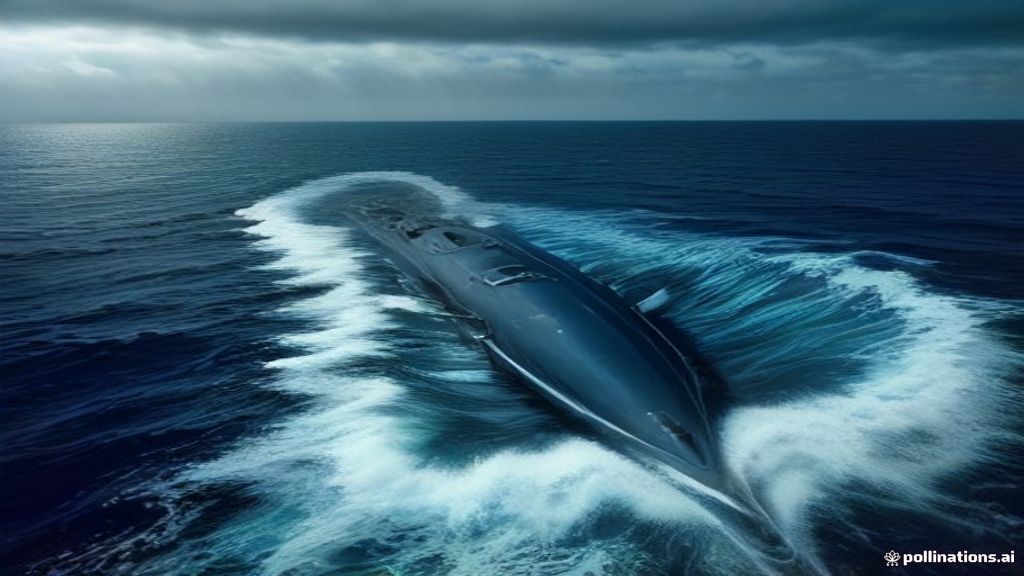
The rapid proliferation of unmanned maritime technologies represents more than a mere shift in naval architecture; it constitutes a profound ontological challenge to the normative frameworks of international maritime law. As Unmanned Aerial Vehicles (UAVs) and Autonomous Underwater Vehicles (AUVs) transition from experimental platforms to integral components of global maritime operations, the existing legal architecture—primarily the United Nations Convention on the Law of the Sea (UNCLOS)—finds itself grappling with systems that defy traditional categorizations of 'ship,' 'master,' and 'crew.' The absence of a human presence on board complicates the application of established doctrines regarding sovereign immunity, innocent passage, and state responsibility.
The Ontological Dilemma: Are Autonomous Underwater Vehicles Considered Ships Under UNCLOS?
Central to the legal ambiguity surrounding unmanned systems is the foundational question of their classification. Under UNCLOS, the rights and duties of maritime actors are largely predicated on the status of the 'vessel' or 'ship.' While UNCLOS does not provide a singular, exhaustive definition of a 'ship,' decades of jurisprudence from the International Tribunal for the Law of the Sea (ITLOS) and the International Court of Justice (ICJ) have inferred that a ship is a craft capable of navigation, used for transport or specific functions, and possessing a degree of human agency.
The introduction of AUVs disrupts this paradigm. If an AUV operates via pre-programmed algorithms without real-time human intervention, does it satisfy the requirement for a 'master' as stipulated in Article 94 of UNCLOS? Article 94 mandates that every state shall effectively exercise its jurisdiction and control in administrative, technical, and social matters over ships flying its flag, specifically requiring a master and a crew. The absence of these elements creates a legal vacuum. If an AUV is not a ship, it may not enjoy the standard immunities or rights afforded to vessels, such as the right of innocent passage in the territorial sea or the freedom of navigation on the high seas.
Scholarly debate currently splits into three primary camps:
- The Functionalist Approach: Argues that if a device performs the functions of a ship—navigating, carrying cargo or sensors, and interacting with the maritime environment—it should be treated as such, regardless of its crew configuration.
- The Formalist Approach: Contends that without a human master to exercise judgment and assume legal responsibility, the device remains mere 'equipment' or 'property' rather than a maritime vessel.
- The Sui Generis Approach: Suggests that autonomous systems represent a new category of maritime actor that requires a bespoke legal regime, separate from both traditional ships and mere inanimate objects.
The implications of this classification are not merely academic. The determination of whether an AUV is a ship dictates whether its presence in a coastal state's Exclusive Economic Zone (EEZ) constitutes a violation of sovereign rights or the legitimate exercise of freedom of navigation.
Aerial Sovereignty and Unmanned Systems: Can UAVs Exercise the Right of Innocent Passage?
While AUVs navigate the subaquatic realm, UAVs introduce a vertical dimension to the legal tension. The jurisdictional boundaries between maritime law and air law are often blurred when UAVs operate in close proximity to the sea surface. This raises a critical question: Can UAVs exercise the right of innocent passage?
In traditional maritime law, 'innocent passage' through a territorial sea is a well-established right for ships, provided the passage is not prejudicial to the peace, good order, or security of the coastal state (Article 19, UNCLOS). However, the concept of innocent passage is fundamentally tied to the maritime domain. UAVs, by their very nature, operate in the airspace. Under the Chicago Convention on International Civil Aviation, airspace sovereignty is absolute for the coastal state. Therefore, a UAV flying over a territorial sea is not exercising 'innocent passage' in the maritime sense, but rather requesting permission for transit through sovereign airspace.
The complexity intensifies when UAVs are 'maritime-centric'—for instance, low-altitude drones used for hydrographic surveying or surface surveillance. If a UAV is launched from a vessel in the EEZ to conduct surveillance, its legal status fluctuates. Is it an extension of the vessel's maritime activities, or is it an aircraft subject to the strict sovereignty of the coastal state? The lack of clear distinction between 'maritime operations' and 'aerial transit' for unmanned systems creates significant potential for maritime incidents and diplomatic friction.
| Jurisdictional Domain | Relevant Legal Framework | UAV Status/Implication |
|---|---|---|
| Territorial Sea (Airspace) | Chicago Convention / UNCLOS | Subject to absolute coastal state sovereignty; no inherent right of passage. |
| Territorial Sea (Surface) | UNCLOS Art. 17-19 | If treated as a vessel, subject to innocent passage rules. |
| Exclusive Economic Zone | UNCLOS Art. 58 | Freedom of navigation applies, but subject to coastal state's rights over resources. |
| High Seas | UNCLOS Art. 87 | Freedom of overflight applies, mirroring freedom of navigation. |
How Does UNCLOS Regulate Autonomous Marine Scientific Research?
One of the most contentious applications of AUV technology is in the realm of Marine Scientific Research (MSR). AUVs are uniquely suited for deep-sea exploration, yet their use in the EEZ of a coastal state triggers the complex consent regimes of UNCLOS Part XIII.
Under UNCLOS, coastal states have the right to regulate, authorize, and conduct MSR in their EEZ and on their continental shelf. While the regime generally favors the promotion of scientific research, it also grants coastal states the authority to withhold consent if the research is deemed to be related to resource exploration or exploitation, or if it poses a threat to the environment. The 'dual-use' nature of AUVs—where a platform used for oceanographic mapping could just as easily be used for submarine warfare intelligence—creates a profound evidentiary challenge for coastal states.
If an autonomous system is deployed by a foreign state, how does the coastal state verify the nature of the data being collected? The difficulty in distinguishing between 'pure' scientific research and 'military' intelligence gathering (which is not explicitly prohibited in the EEZ but remains a grey area in customary international law) means that AUVs are frequently viewed through a lens of suspicion. This tension undermines the UNCLOS objective of fostering international cooperation in marine science, as the deployment of autonomous systems may be perceived as an infringement on maritime sovereignty rather than a contribution to global knowledge.
Liability and Attribution in the Age of Autonomy
As these systems become more independent, the question of legal accountability becomes paramount. In traditional maritime law, liability for collisions or environmental damage is relatively straightforward, governed by the principle of the master's responsibility and the flag state's duty to ensure safety (the 'due diligence' standard). However, when an algorithm makes a decision that results in a collision or an oil spill, who is liable for autonomous vessel collisions?
The attribution of liability in the context of AI-driven maritime operations presents a tripartite challenge:
- The Operator/Owner: Under the principle of vicarious liability, the owner of the system might be held responsible. However, if the autonomy was such that the operator could not have reasonably foreseen the specific action taken by the AI, the chain of causation becomes tenuous.
- The Manufacturer/Developer: If the error is rooted in a software defect or a failure in the sensor suite, liability might shift toward product liability law. This moves the dispute from the maritime domain into the complex realm of commercial and tort law.
- The State: Under the ILC Articles on State Responsibility, a state is responsible for the internationally wrongful acts of its organs. If an autonomous military system violates the territorial waters of another state, the attribution of that act to the state depends on whether the system is considered a 'state organ' or an 'agent' acting under the state's instructions.
The 'black box' problem—the inherent opacity of deep-learning neural networks—complicates the evidentiary requirements of international tribunals. In a potential dispute before ITLOS, proving 'fault' or 'negligence' becomes nearly impossible if the reasoning behind an autonomous maneuver cannot be reconstructed or explained by human witnesses. This may necessitate a shift from a 'fault-based' liability regime to a 'strict liability' regime for autonomous maritime operators, similar to the regime applied to space objects under the 1972 Liability Convention.
The Dual-Use Conundrum: Military Operations vs. Marine Scientific Research
The distinction between civilian and military use is the cornerstone of maritime stability. Yet, UAVs and AUVs are archetypal dual-use technologies. An AUV equipped with advanced sonar can map the seabed for scientific purposes or for the deployment of undersea cables and mines. A UAV can monitor weather patterns or conduct surveillance for naval combat operations.
This ambiguity tests the 'peaceful purposes' doctrine found in UNCLOS Article 88, which states that the high seas shall be reserved for peaceful purposes. While this does not prohibit military activity, the deployment of autonomous systems in contested waters—such as the South China Sea—often operates in the 'grey zone' between legal scientific inquiry and unlawful military provocation. The lack of transparency in autonomous missions makes it difficult for states to distinguish between legitimate scientific endeavors and covert intelligence, surveillance, and reconnaissance (ISR) operations, thereby increasing the risk of accidental escalation.
Synthesis and Projections
The current legal impasse regarding UAVs and AUVs is a symptom of a deeper disconnect between the static nature of treaty law and the dynamic velocity of technological innovation. The existing UNCLOS framework, while remarkably robust for its time, did not envision a maritime actor that lacks a human consciousness.
To resolve these ambiguities, the international community may need to move toward one of several pathways. First, an interpretive guidance from ITLOS could clarify the definition of 'vessel' to encompass autonomous systems, provided they meet certain safety and accountability standards. Second, the development of a new protocol under UNCLOS, specifically addressing 'Unmanned Maritime Systems' (UMS), could establish clear rules for their status, their right of passage, and their obligations regarding environmental protection and data transparency.
Ultimately, the challenge is not merely technical but philosophical. International maritime law is built on the assumption of human agency—of a master making decisions, a crew maintaining a ship, and a state exercising control through human agents. As we move toward an algorithmic horizon, the law must find a way to anchor these digital actors within a framework of human responsibility, ensuring that the pursuit of technological efficiency does not come at the cost of maritime order and the rule of law.
Comments
No comments yet.