Legal Status of Artificial Islands, Installations, and Structures in International Maritime Law
An in-depth legal analysis of artificial islands, offshore installations, and structures under UNCLOS, examining jurisdiction, safety zones, decommissioning, and contemporary maritime challenges.
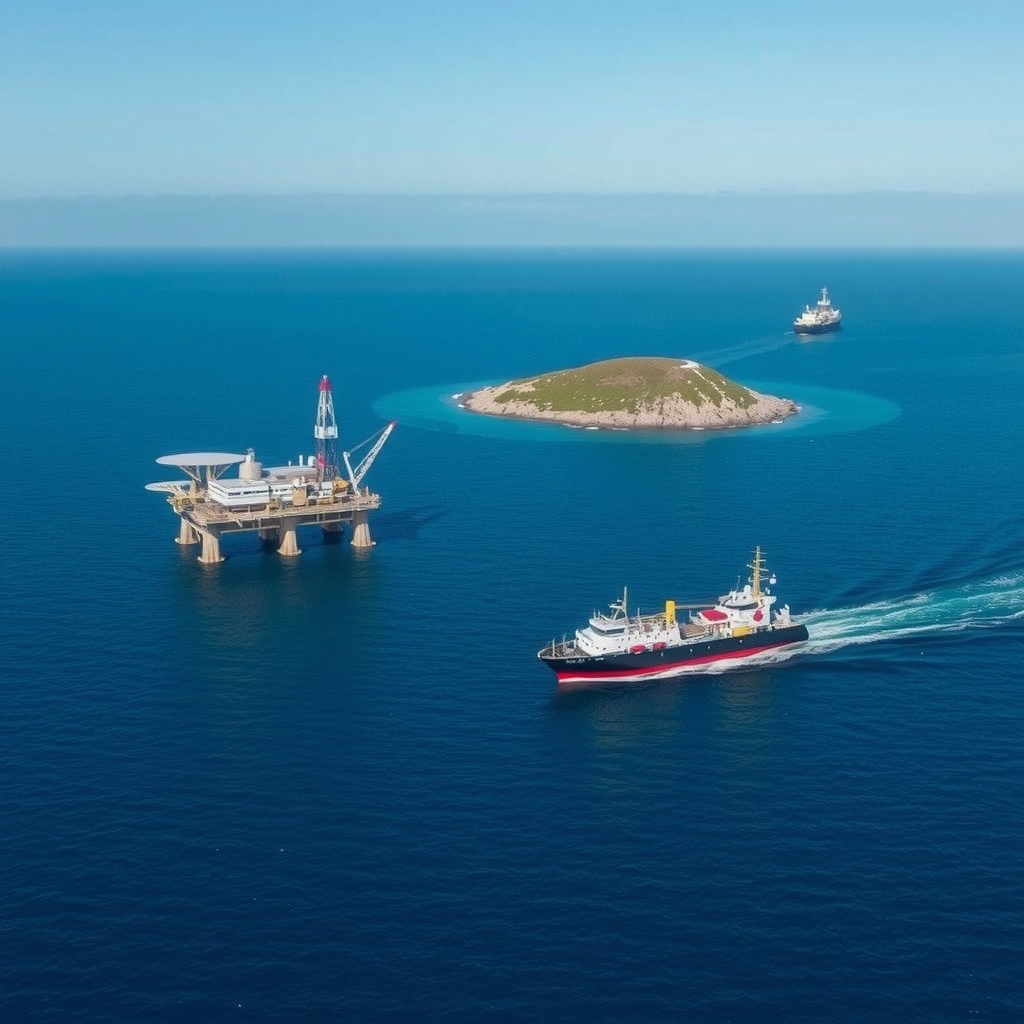
Humanity has long sought to alter maritime spaces to facilitate commerce, defense, resource extraction, and coastal protection. Over the past century, technological advancement transformed maritime engineering from simple harbor jetties into complex offshore constructs, including deep-water oil rigs, massive offshore wind farms, floating processing facilities, and extensive island-building projects. These human-made features challenge traditional spatial frameworks established in public international law. At the center of this legal architecture sits the United Nations Convention on the Law of the Sea, which establishes the primary rights and obligations of states regarding the construction, operation, and regulation of man-made objects in the ocean.
The distinction between natural terrestrial features and artificial constructs lies at the core of the international legal regime governing ocean space. While natural features generate sovereign territory and distinct maritime zones, artificial islands, installations, and structures occupy a secondary legal category. They exist as functional extensions of human activity upon the sea rather than original sources of maritime entitlement. Understanding this distinction requires careful examination of text, customary practice, and the legal mechanics governing jurisdiction, navigation, environmental protection, and decommissioning.
Evolution of the Offshore Legal Regime
Before the mid-twentieth century, international law provided limited guidance regarding structures erected beyond the territorial sea. Classical international law centered on the binary divide between sovereign territorial waters and the high seas. The freedom of the high seas allowed states to construct installations on the ocean floor or in water columns, provided such constructs did not unreasonably interfere with navigation or fishing rights enjoyed by other nations.
The rapid expansion of the offshore petroleum industry following the Truman Proclamation of 1945 necessitated a refined legal regime. Coastal states asserted jurisdictional claims over the natural resources of the continental shelf, raising urgent questions regarding who held the right to build and regulate drilling platforms. The 1958 Geneva Convention on the Continental Shelf addressed these developments by granting coastal states exclusive rights to construct and maintain installations necessary for exploring and exploiting continental shelf resources. However, it explicitly denied these installations the legal status of natural islands.
When Third United Nations Conference on the Law of the Sea negotiated the text that became UNCLOS in 1982, delegates codified and expanded these provisions. The resulting treaty established comprehensive legal rules governing artificial constructs across distinct maritime zones, including internal waters, the territorial sea, the exclusive economic zone, the continental shelf, the high seas, and the seabed Area beyond national jurisdiction.
Taxonomy of Man-Made Ocean Features
International law distinguishes three main categories of human-built features: artificial islands, installations, and structures. Although UNCLOS frequently groups these terms together, subtle conceptual differences exist within state practice and legal scholarship.
An artificial island generally refers to a non-naturally formed landmass created through the dumping or deposition of sand, rock, gravel, or aggregate onto the seabed or submerged reefs, rising above the water level at high tide. These constructs mimic natural islands in appearance and permanence but lack organic geological origin.
Installations typically refer to engineering units designed for technical or industrial functions, such as petroleum platforms, floating production storage and offloading vessels anchored permanently to the seabed, offshore radar stations, and wind turbines. Installations may be fixed directly to the seabed or dynamically positioned over long periods.
Structures represent a broader residual category encompassing any other fixed or floating man-made object placed in the marine environment. This category includes breakwaters, navigational beacons, research platforms, undersea pipelines, and floating residential platforms.
Despite these conceptual nuances, the primary legal rules governing all three categories remain uniform under UNCLOS. The critical factor is that none of these constructs, regardless of size, engineering complexity, or human habitation, constitute natural land formations.
What is the legal status of artificial islands under UNCLOS?
Under international law, artificial islands, installations, and structures possess a defined status that prevents them from altering the baseline or political geography of coastal states. Article 60, paragraph 8 of UNCLOS articulates this foundational rule by establishing that artificial islands, installations, and structures do not possess the legal status of islands. They have no territorial sea of their own, and their presence does not affect the delimitation of the territorial sea, the exclusive economic zone, or the continental shelf.
This principle reinforces the fundamental legal doctrine that maritime entitlement derives from natural land sovereignty. The maxim that the land dominates the sea requires that natural land features alone can generate maritime zones such as territorial seas or exclusive economic zones. A state cannot expand its sovereign territory or extend its baseline by pouring sand onto a submerged shoal, building concrete platforms, or converting low-tide elevations into permanent structures above high water.
Consequently, an artificial island constructed on the high seas or within an exclusive economic zone remains an artificial construct. It does not possess territorial sovereignty. The state that constructs or authorizes the feature exercises jurisdiction over the structure itself and activities occurring upon it, but it cannot claim surrounding ocean space as territorial waters solely based on the feature\'s presence.
Do artificial islands have a territorial sea or exclusive economic zone?
Artificial islands, installations, and structures do not generate a territorial sea, an exclusive economic zone, or a continental shelf. Article 121 of UNCLOS reserves maritime zone generation exclusively for naturally formed areas of land surrounded by water which are above water at high tide. Because artificial constructs fail the requirement of natural formation, they are legally incapable of generating any maritime zone.
Safety Zones and Navigational Limitations
Although artificial islands and installations cannot generate a territorial sea or exclusive economic zone, coastal states possess the legal right to establish limited safety zones around them. Article 60, paragraph 4 of UNCLOS allows coastal states to establish reasonable safety zones around artificial islands, installations, and structures constructed within their exclusive economic zone or on their continental shelf.
These safety zones are designed to ensure the safety both of navigation and of the installations themselves. The legal parameters governing safety zones are strictly defined:
- Breadth Limit: Safety zones shall not exceed a distance of 500 meters around the artificial island or installation, measured from each point of its outer edge, unless authorized by generally accepted international standards or recommended by the competent international organization, namely the International Maritime Organization.
- Navigational Respect: Ships of all nationalities must respect these safety zones and comply with generally accepted international standards regarding navigation in the vicinity of offshore installations.
- Prohibition of Interference: Artificial islands, installations, and safety zones may not be established where they might cause interference to the use of recognized sea lanes essential to international navigation.
The 500-meter safety zone does not constitute a territorial sea or sovereign zone. It represents a specialized operational perimeter wherein the coastal state exercises focused regulatory authority to prevent maritime collisions and protect industrial infrastructure.
Who has jurisdiction over offshore installations and structures on the continental shelf?
Jurisdiction over offshore installations and structures depends on their geographical location and the legal regime of the maritime zone in which they are placed. Within internal waters and the territorial sea, the coastal state exercises full territorial sovereignty, granting it exclusive power to authorize, construct, regulate, and dismantle any artificial feature.
In the exclusive economic zone and on the continental shelf, jurisdictional allocation operates under a specialized legal framework. Article 60, paragraph 1 of UNCLOS grants the coastal state the exclusive right to construct, and to authorize and regulate the construction, operation, and use of:
- Artificial islands;
- Installations and structures for economic purposes, such as energy production, resource extraction, and fisheries management;
- Installations and structures which may interfere with the exercise of the rights of the coastal state in the zone or on the shelf.
Article 60, paragraph 2 establishes that the coastal state shall have exclusive jurisdiction over such artificial islands, installations, and structures, including jurisdiction with regard to customs, fiscal, health, safety, and immigration laws and regulations.
| Maritime Zone | Authorization Right | Jurisdictional Scope | Legal Status of Feature |
|---|---|---|---|
| Internal Waters & Territorial Sea | Coastal State (Exclusive Sovereignty) | Full Sovereign Jurisdiction | Does not alter coastal baseline unless part of permanent harbor works |
| Exclusive Economic Zone (EEZ) | Coastal State (Exclusive Right) | Exclusive jurisdiction over construction, safety, customs, fiscal, health, and environmental matters | No territorial sea or EEZ generation; 500m safety zone allowed |
| Continental Shelf | Coastal State (Exclusive Right) | Exclusive jurisdiction over installations related to exploration and exploitation of natural resources | No maritime zones generated; 500m safety zone allowed |
| High Seas | All States (High Seas Freedom) | Flag State / Constructing State jurisdiction, subject to due regard and international obligations | No maritime zones generated; must respect rights of other user states |
| The Area (International Seabed) | Subject to International Seabed Authority (ISA) rules | Jurisdiction divided between constructing state and ISA oversight | No maritime zones generated; strict environmental compliance required |
This statutory structure ensures that while the surrounding waters of the exclusive economic zone retain their status as a zone of mixed rights where international freedoms of navigation and overflight persist, the physical platform itself operates under the strict regulatory regime of the coastal state. Foreign flag vessels cannot enter the 500-meter safety zone without authorization, and offenses committed aboard the installation fall under the penal and administrative jurisdiction of the coastal state.
High Seas and the International Seabed Area
Beyond national jurisdiction, the construction of installations and artificial structures is governed by the principles of high seas freedoms under Article 87 of UNCLOS. All states enjoy the freedom to construct artificial islands and other installations permitted under international law, subject to Part VI of the Convention dealing with the continental shelf.
However, high seas freedoms are not absolute. They must be exercised with due regard for the interests of other states exercising high seas freedoms, such as navigation, fishing, oceanographic research, and laying submarine cables. Constructing artificial features on the high seas does not convey territorial sovereignty over the surrounding waters or seabed.
In the Area, defined as the seabed and ocean floor beyond the limits of national jurisdiction, activities related to mineral resources are administered by the International Seabed Authority. Installations constructed in the Area for resource exploitation must comply with the rules, regulations, and procedures established by the Authority, ensuring environmental protection and equitable benefit sharing under the common heritage of mankind principle.
What are the legal obligations for decommissioning offshore installations?
The legal obligations governing the abandonment, removal, and decommissioning of offshore installations represent a critical intersection of maritime security, environmental protection, and financial responsibility. As offshore oil fields mature and offshore energy infrastructure reaches the end of its operational lifecycle, states and operators face strict legal mandates regarding structure disposal.
Article 60, paragraph 3 of UNCLOS sets the fundamental global standard for decommissioning:
Any installations or structures which are abandoned or disused shall be removed to ensure safety of navigation, taking into account any generally accepted international standards established in this regard by the competent international organization. Such removal shall also have due regard to fishing, the protection of the marine environment and the rights and duties of other States. Appropriate publicity shall be given to the depth, position and dimensions of any installations or structures not entirely removed.
This provision represents a compromise between absolute removal requirements and realistic technical limits. While early international instruments favoured complete removal of all abandoned platforms, UNCLOS permits partial removal under specific conditions, provided navigational safety and marine environmental protection are strictly maintained.
International Standards and Regional Frameworks
To implement Article 60, paragraph 3, the International Maritime Organization adopted Resolution A.672(16) in 1989, titled Guidelines and Standards for the Removal of Offshore Installations and Structures on the Continental Shelf and in the Exclusive Economic Zone. These guidelines establish objective criteria for determining whether an installation may remain partially in place or must be completely removed:
- Water Depth and Navigation: Installations standing in water depths of less than 75 meters and weighing less than 4,000 metric tons in air must be entirely removed, as they present significant hazards to surface navigation and fishing operations. For structures constructed after January 1, 1998, this threshold increases to water depths of less than 100 meters.
- Unobstructed Water Column: If partial removal is permitted, an unobstructed water column of at least 55 meters must be maintained above any remaining submerged structure to allow safe passage for deep-draught commercial vessels.
- Environmental Assessment: Any decision to leave a structure partially or wholly in place must undergo an environmental impact assessment, evaluating potential damage to living marine resources, marine ecosystems, and coastal livelihoods.
Regional treaties frequently impose standards stricter than the baseline rules of UNCLOS and the International Maritime Organization. A primary example is Decision 98/3 under the Convention for the Protection of the Marine Environment of the North-East Atlantic, known as the OSPAR Convention. Adopted following public controversy over proposed deep-sea disposal of the Brent Spar storage buoy, OSPAR Decision 98/3 prohibits the dumping and leaving in place of disused offshore installations within the North-East Atlantic area, establishing a general rule of complete land-based disposal for steel and concrete platforms, subject to very narrow, rigorously reviewed exceptions.
Rigs-to-Reefs Initiatives and Ecological Dilemmas
The decommissioning of offshore structures presents complex ecological questions through Rigs-to-Reefs programs. Over decades of operation, steel jacket structures of oil platforms often host rich marine ecosystems, serving as artificial reefs that shelter fish, corals, and benthic communities. Completely removing these structures can disrupt thriving biological habitats.
Under international law, converting an offshore installation into an artificial reef requires navigating the boundary between legitimate habitat creation and illegal ocean dumping. Under the 1972 London Convention and its 1996 Protocol, dumping is defined as any deliberate disposal at sea of platforms or other man-made structures. However, placement of matter for a purpose other than mere disposal is permitted, provided such placement is not contrary to the aims of the convention.
Consequently, a state converting an installation into an artificial reef must demonstrate that the decision is grounded in genuine ecological management, backed by scientific research, and conducted under strict regulatory oversight, rather than serving as a cost-saving measure for offshore operators avoiding complete removal obligations.
Land Reclamation and Strategic Feature Modification
A challenging issue in contemporary international law involves extensive land reclamation undertaken upon low-tide elevations, submerged reefs, and isolated maritime features. Coastal states have engaged in large-scale dredging and construction to expand small maritime features into artificial islands complete with airstrips, deep-water harbors, radar installations, and military housing.
Such activities raise important questions regarding whether physical modification can alter the legal status of a maritime feature or expand its jurisdictional reach. Under public international law, the answer is negative.
A low-tide elevation—defined under Article 13 of UNCLOS as a naturally formed area of land surrounded by and above water at low tide but submerged at high tide—does not possess a territorial sea of its own if it lies beyond the territorial sea of the mainland or a natural island. Pouring concrete or depositing sand onto a low-tide elevation to raise it permanently above high tide does not transform it into a natural island under Article 121. Legal status is evaluated based on the natural state of the feature prior to human intervention.
Similarly, an uninhabitable rock that cannot sustain human habitation or economic life of its own retains its classification under Article 121, paragraph 3. Constructing artificial buildings, desalination plants, energy networks, or military barracks on such a rock does not convert it into a fully entitled island capable of generating an exclusive economic zone or continental shelf. Human habitation and economic viability must exist organically, stemming from the natural capacity of the feature itself, rather than being artificially sustained from external sources.
Emerging Offshore Technologies and Ocean Space
The acceleration of the global energy transition and technological innovation has introduced novel offshore constructs that challenge existing regulatory frameworks. Floating offshore wind platforms, ocean thermal energy conversion plants, sea-based hydrogen production units, and floating solar arrays are expanding rapidly across coastal and international waters.
These developments create complex spatial interactions with traditional maritime activities, including commercial shipping lanes, submarine telecommunication cables, commercial fisheries, and marine protected areas. Under UNCLOS, coastal states possess exclusive jurisdiction over offshore renewable energy installations within their exclusive economic zone under Article 56 and Article 60. However, exercising this jurisdiction requires balancing energy goals against obligations to preserve freedom of navigation under Article 87 and protect the marine environment under Part XII.
Another emerging frontier involves floating cities, dynamic seasteading projects, and mobile offshore structures designed as autonomous ocean communities or climate adaptation solutions for low-lying island states facing sea-level rise. From a legal standpoint, floating platforms that remain mobile or temporarily anchored do not qualify as artificial islands, which are generally understood as permanently fixed to the seabed.
If a floating platform is registered as a vessel under national law, flag state jurisdiction applies. However, if a massive floating platform remains stationary for long periods, functioning as a non-navigable community or processing facility, international consensus increasingly treats it as an offshore installation or structure under Article 60. This classification subjects it to coastal state regulation regarding environmental standards, safety perimeters, and jurisdictional controls while operating within an exclusive economic zone.
Environmental Responsibility and Due Diligence
The construction and operation of artificial islands and offshore structures carry significant obligations regarding environmental protection. Part XII of UNCLOS imposes an absolute duty on all states to protect and preserve the marine environment.
Under Article 206, when states have reasonable grounds for believing that planned activities under their jurisdiction or control—including major dredging, land reclamation, or offshore installation construction—may cause substantial pollution of or significant and harmful changes to the marine environment, they must conduct a comprehensive environmental impact assessment. The results of these assessments must be published or communicated to competent international organizations.
Furthermore, Article 208 mandates that coastal states adopt laws and regulations to prevent, reduce, and control pollution of the marine environment arising from or in connection with seabed activities and offshore installations under their jurisdiction. These national laws must be no less effective than international rules, standards, and recommended practices.
Where state-backed island construction causes severe damage to coral reef systems, disrupts marine biodiversity, or degrades fragile marine ecosystems, the constructing state may incur international legal responsibility for breach of its due diligence obligations. Under the rules of state responsibility for internationally wrongful acts, states must make full reparation for environmental harm caused by violations of treaty obligations or customary international law.
Conclusion
The legal framework governing artificial islands, installations, and structures under international law represents a balanced compromise between state sovereign rights, commercial utility, navigational freedoms, and environmental stewardship. Grounded in the enduring principle that the land dominates the sea, UNCLOS explicitly ensures that human engineering cannot unilaterally redraft political geography or generate sovereign maritime entitlements out of ocean waters.
While coastal states exercise exclusive jurisdiction over the construction, operation, and regulation of artificial features within their exclusive economic zones and on their continental shelves, these constructs remain limited legally. They possess no territorial sea, no exclusive economic zone, and no capacity to alter international baseline delimitations. Their operational reach is bounded by precise 500-meter safety zones designed solely for structural protection and navigational safety.
As ocean usage intensifies through offshore wind development, deep-sea industrial operations, artificial reef conversion, and climate adaptation projects, the rules established in UNCLOS, supported by IMO standards and regional conventions, provide a resilient framework. Maintaining this legal clarity remains essential for preventing jurisdictional creeping, protecting delicate marine ecosystems, and ensuring that ocean space remains a realm of lawful, safe, and sustainable international cooperation.
Comments
No comments yet.