The Law of the Sea and Maritime Transport: The Legal Bedrock of Global Trade
An in-depth analysis of how UNCLOS and international maritime law underpin global maritime trade, facilitating trillions of dollars in exchanges among industrialized economies.
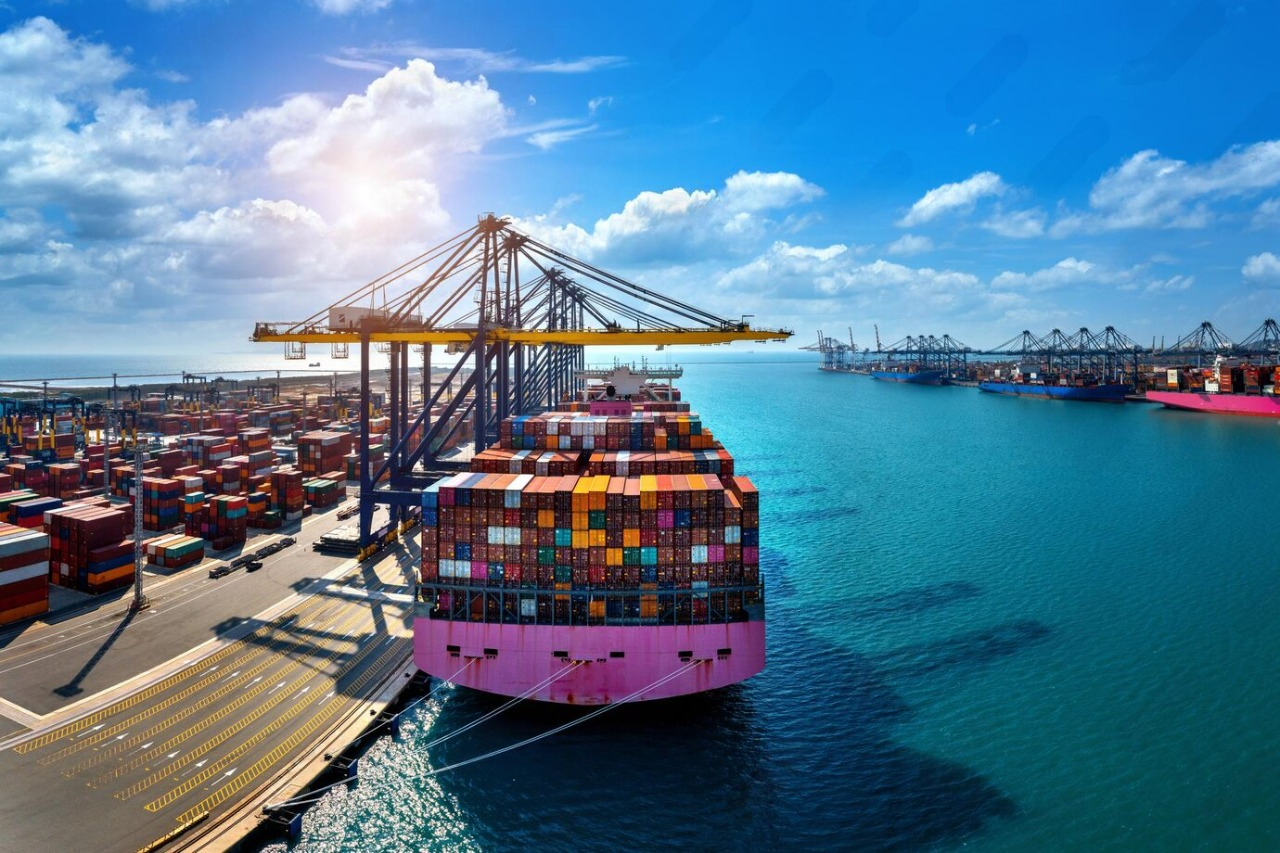
Every hour, thousands of massive commercial vessels navigate international waterways, carrying everything from crude oil, semiconductors, and lithium batteries to wheat, machinery, and finished consumer goods. According to the United Nations Conference on Trade and Development (UNCTAD), maritime transport forms the backbone of globalized trade, handling over 80 percent of the world merchandise trade by volume and upwards of 70 percent by value. Behind this immense logistical ballet lies not merely an intricate web of supply-chain logistics, but a robust, multilateral legal framework: the law of the sea.
Chief among these legal instruments is the United Nations Convention on the Law of the Sea (UNCLOS), often described as the “Constitution for the Oceans.” Concluded in 1982 and entered into force in 1994, UNCLOS codified centuries of customary maritime practices and established clear jurisdictional boundaries, navigational rights, and resource protections. Without the legal stability provided by UNCLOS and its complementary conventions, the predictable flow of commerce between industrialized hubs—specifically across Trans-Pacific, Trans-Atlantic, and Euro-Asian sea routes—would disintegrate into jurisdictional chaos, sovereign disputes, and unmanageable financial risk.
The Statistical Architecture of Modern Maritime Transport
To grasp the significance of maritime legal regimes, one must first recognize the scale of global seaborne commerce. The growth of industrial shipping over the past half-century has mirrored the rise of global value chains. In 1970, total world seaborne trade sat at roughly 2.6 billion metric tons. By the end of 2023, data published in UNCTAD’s annual Review of Maritime Transport showed that annual maritime volumes exceeded 12 billion metric tons.
This growth is heavily driven by trade among advanced and rapidly industrializing economies. Containerized shipping—the lifeblood of high-value manufactured trade—accounts for a substantial share of global value. The global container fleet surpassed 29 million Twenty-Foot Equivalent Units (TEUs) in capacity, moving advanced components between industrial clusters in East Asia, North America, and Europe. Bulk commodities tell a similar story: millions of metric tons of iron ore, metallurgical coal, bauxite, and liquefied natural gas (LNG) are shipped each month to fuel the steel mills, chemical plants, and electricity grids of nations such as Japan, South Korea, Germany, and the United States.
| Metric | Global Figure (Approximate) | Primary Significance |
|---|---|---|
| Share of Global Trade (Volume) | 80% – 85% | Indispensable for dry bulk, wet bulk, and containerized goods |
| Share of Global Trade (Value) | 70% – 75% | Carries intermediate inputs, autos, electronics, and consumer retail |
| Annual Seaborne Volume | 12+ Billion Metric Tons | Underpins global industrial manufacturing and food security |
| Global Commercial Fleet | 105,000+ Ships (>100 Gross Tons) | Operated across flags of convenience, coastal states, and port states |
The operational cost-effectiveness of maritime trade is unmatched by air, rail, or road freight. A single ultra-large container vessel (ULCV) carrying 24,000 TEUs moves cargo equivalent to a convoy of over 10,000 long-haul trucks. However, the commercial viability of this transport model depends entirely on legal certainty: vessels must be guaranteed passage through foreign territorial waters, archipelagic waters, and international straits without facing arbitrary detentions, sudden tolls, or coastal state interference.
The Legal Architecture: UNCLOS and Navigational Regimes
Before the codification of UNCLOS, ocean governance was fragmented, torn between the historic doctrine of Mare Liberum (freedom of the seas, championed by Hugo Grotius) and unilateral claims by coastal states seeking to extend their territorial dominion seaward (Mare Clausum). UNCLOS successfully struck a compromise between coastal state sovereignty and the common interests of maritime nations.
The convention divides ocean space into distinct jurisdictional zones, each carrying specific balances of rights and obligations:
- Internal Waters: Waters on the landward side of the baseline, where the coastal state exercises full sovereignty.
- Territorial Sea: Extending up to 12 nautical miles from the baseline. Coastal states maintain sovereignty, but foreign commercial vessels are entitled to the critical right of innocent passage.
- Contiguous Zone: Extending up to 24 nautical miles, where coastal states may enforce customs, immigration, fiscal, and sanitary laws.
- Exclusive Economic Zone (EEZ): Extending up to 200 nautical miles from the baseline. The coastal state enjoys sovereign rights over natural resources (fishing, hydrocarbons, minerals), but other states retain high-seas freedoms of navigation and overflight, as well as the freedom to lay submarine cables and pipelines.
- High Seas: All parts of the ocean beyond the EEZ, open to all nations and reserved for peaceful purposes, where no state may validly purport to subject any part of them to its sovereignty.
Innocent Passage vs. Freedom of Navigation
For commercial operators, the nuances between legal regimes dictate operational protocols. Under Article 19 of UNCLOS, passage is considered “innocent” so long as it is not prejudicial to the peace, good order, or security of the coastal state. Commercial cargo ships transporting lawful goods cannot be arbitrarily turned away by a coastal state simply for passing through its 12-nautical-mile territorial sea, provided they do not conduct military exercises, engage in unauthorized fishing, or cause severe, willful pollution.
“The high seas are open to all States, whether coastal or land-locked. Freedom of the high seas is exercised under the conditions laid down by this Convention and by other rules of international law.” — UNCLOS, Article 87
In the EEZ and on the high seas, the principle of Freedom of Navigation (FoN) reigns supreme. This legal protection prevents regional powers from turning busy trade arteries—such as the South China Sea, the North Sea, or the Caribbean Basin—into closed commercial zones. Commercial vessels sailing under foreign flags can operate freely without paying unapproved levies or obtaining prior permission from surrounding coastal entities.
Trade Corridors of Industrialized Economies and Chokepoint Vulnerability
Industrialized nations depend on interconnected logistics chains where raw materials are extracted in one hemisphere, processed in a second, and assembled and consumed in a third. This dynamic makes major maritime chokepoints critical to economic stability.
The Transit Passage Regime
Under traditional territorial sea rules, straits used for international navigation might fall entirely within the overlapping territorial waters of coastal states. If coastal states could apply restrictive innocent-passage regulations to these corridors, global trade would face significant disruption. To prevent this, UNCLOS Part III codified the regime of transit passage.
Transit passage grants all ships, including commercial tankers, container carriers, and state vessels, the freedom of continuous and expeditious transit through straits used for international navigation between one part of the high seas or an EEZ and another part of the high seas or an EEZ. Coastal states bordering straits cannot suspend transit passage, nor can they discriminate against the flag of any vessel.
Critical Global Chokepoints
- The Strait of Malacca: Linking the Indian Ocean with the South China Sea and the Pacific, this channel carries approximately one-fourth of global maritime commerce. Industrialized economies across East Asia—including Japan, South Korea, China, and Taiwan—receive roughly 80 percent of their crude oil imports through this 550-mile passage.
- The Suez Canal and the Bab el-Mandeb: Connecting the Mediterranean Sea to the Red Sea and the Indian Ocean, this route traditionally accounts for approximately 12 to 15 percent of global trade and roughly 30 percent of global container traffic. Disruption here forces vessels to reroute around the Cape of Good Hope, adding 10 to 14 days to voyages between Asia and Europe, elevating bunker fuel consumption, and inflating supply-chain costs.
- The Strait of Hormuz: The world’s most critical oil transit chokepoint, handling over 20 million barrels per day—equivalent to roughly one-fifth of global petroleum liquids consumption. Industrialized manufacturing in Western Europe, the United States, and East Asia relies heavily on the uninterrupted legal protection of transit through this passage.
- The Panama Canal: A freshwater lock canal system operating under the 1977 Treaty Concerning the Permanent Neutrality and Operation of the Panama Canal, which guarantees non-discriminatory transit fees and passage for commercial vessels of all flags, even during times of war. This corridor links manufacturing centers in East Asia directly to the industrial consumer markets of the U.S. East and Gulf Coasts.
The Regulatory Matrix: IMO, Port State Control, and Flag States
While UNCLOS sets the macro-legal framework, technical and operational governance is largely steered by the International Maritime Organization (IMO), a specialized agency of the United Nations. IMO treaties provide the standardized rules that ensure an ocean-going vessel complies with identical safety and environmental criteria whether it docks in Rotterdam, Busan, Los Angeles, or Singapore.
Flag State Responsibility vs. Open Registries
Under Article 91 of UNCLOS, every state determines the conditions for the grant of its nationality to ships, for the registration of ships in its territory, and for the right to fly its flag. The vessel must possess a “genuine link” with the flag state, though the legal definition of this link remains broadly interpreted. As a consequence, open registries—most notably Panama, Liberia, and the Marshall Islands—flag over half of the world’s commercial fleet by deadweight tonnage.
Under Article 94, the flag state assumes responsibility for exercising effective jurisdiction and control in administrative, technical, and social matters over ships flying its flag. This covers regular safety inspections, crew competency certifications, and casualty investigations.
Port State Control (PSC)
Because some flag states struggle to enforce rigorous technical standards across thousands of vessels scattered globally, international law empowers coastal destinations via Port State Control (PSC). Regional agreements—such as the Paris Memorandum of Understanding (Paris MoU) in Europe and the Tokyo MoU in the Asia-Pacific—allow inspectors to board foreign-flagged ships to verify compliance with core IMO instruments:
- SOLAS (International Convention for the Safety of Life at Sea, 1974): Establishes minimum structural, equipment, and navigational safety requirements for merchant vessels.
- MARPOL (International Convention for the Prevention of Pollution from Ships, 1973/1978): Governs the prevention of operational or accidental pollution by oil, noxious liquid substances, sewage, garbage, and atmospheric emissions (Annex VI).
- STCW (Standards of Training, Certification and Watchkeeping, 1978): Enforces qualification standards for masters, officers, and watch personnel across international merchant fleets.
- MLC (Maritime Labour Convention, 2006): Adopted under the International Labour Organization (ILO), ensuring minimum working and living standards for seafarers.
Through Port State Control, industrialized nations protect their shorelines, ports, and regional ecosystems by penalizing, detaining, or banning unsafe or substandard vessels, leveling the competitive playing field for responsible maritime operators.
Contemporary Challenges: Geopolitical Frictions and Environmental Transitions
The legal architecture governing international shipping is facing significant pressure from contemporary geopolitical, technological, and environmental developments.
Militarized Conflicts and Freedom of Navigation
In recent years, commercial vessels have faced physical attacks, state boardings, and electronic interference (GPS spoofing) near major trade corridors such as the Red Sea, the Gulf of Aden, and the Persian Gulf. When non-state actors or belligerent coastal nations disrupt merchant vessels, the legal doctrines of innocent passage and transit passage are put to the test. Commercial shipowners are forced to alter routing, driving up marine war-risk insurance premiums, requiring international naval coalitions to deploy freedom-of-navigation patrols, and raising legal questions regarding self-defense and the escorting of flagged vessels under international humanitarian law.
Decarbonization and the European Union ETS
As the international community confronts climate change, shipping accounts for nearly 3 percent of total global greenhouse gas (GHG) emissions. In 2023, the IMO adopted a revised GHG Strategy aimed at reaching net-zero greenhouse gas emissions from international shipping “by or around, i.e., close to 2050.”
Meanwhile, the European Union moved ahead with unilateral regional measures by incorporating maritime transport emissions into the EU Emissions Trading System (EU ETS). Large commercial vessels calling at ports within the European Economic Area must monitor, report, and surrender allowances for their carbon emissions, regardless of their flag. This development highlights an ongoing legal and commercial debate: how far can regional port states project their decarbonization mandates beyond their territorial boundaries without violating multilateral norms established under UNCLOS and IMO mechanisms?
The Opening of Arctic Sea Routes
Accelerating polar ice melt has made the Northern Sea Route (NSR) along Russia’s Arctic coastline and the Northwest Passage through the Canadian Arctic archipelago increasingly passable during summer months. For trade between Northern Europe and East Asia, the NSR can shorten voyage distances by roughly 30 to 40 percent compared to the Suez Canal route.
However, this transition introduces complex legal questions under UNCLOS Article 234, the “ice-covered areas” provision. Article 234 grants coastal states the right to adopt and enforce non-discriminatory laws to prevent maritime pollution from vessels in ice-covered areas within the limits of the EEZ. How coastal nations interpret this provision—whether as a tool to impose pilotage fees and navigational restrictions or as a narrow environmental mandate—remains a subject of intense debate among maritime and industrialized nations.
The Indispensable Alignment of Law and Commerce
Maritime transport is not an isolated sector; it is the physical circulatory system of the global industrial economy. From the just-in-time components powering advanced manufacturing in Japan, the United States, and Germany, to the raw commodities shipped across the Southern Hemisphere, uninterrupted seaborne trade is fundamental to modern economic production.
This vast, globalized flow of goods cannot function in an environment of legal ambiguity. The United Nations Convention on the Law of the Sea, together with IMO safety and environmental frameworks, provides the predictable institutional structure that commercial shipping requires. By protecting freedom of navigation, guaranteeing innocent and transit passage, and establishing clear lines of jurisdiction among flag, coastal, and port states, international maritime law ensures the world’s oceans remain an open, shared global commons for international commerce.
Comments
No comments yet.