The Jurisprudential Paradox of Abandoned Vessels and Wreck Removal
This analysis examines the evolving international legal framework governing the removal of wrecks and the persistent challenges posed by abandoned maritime vessels.
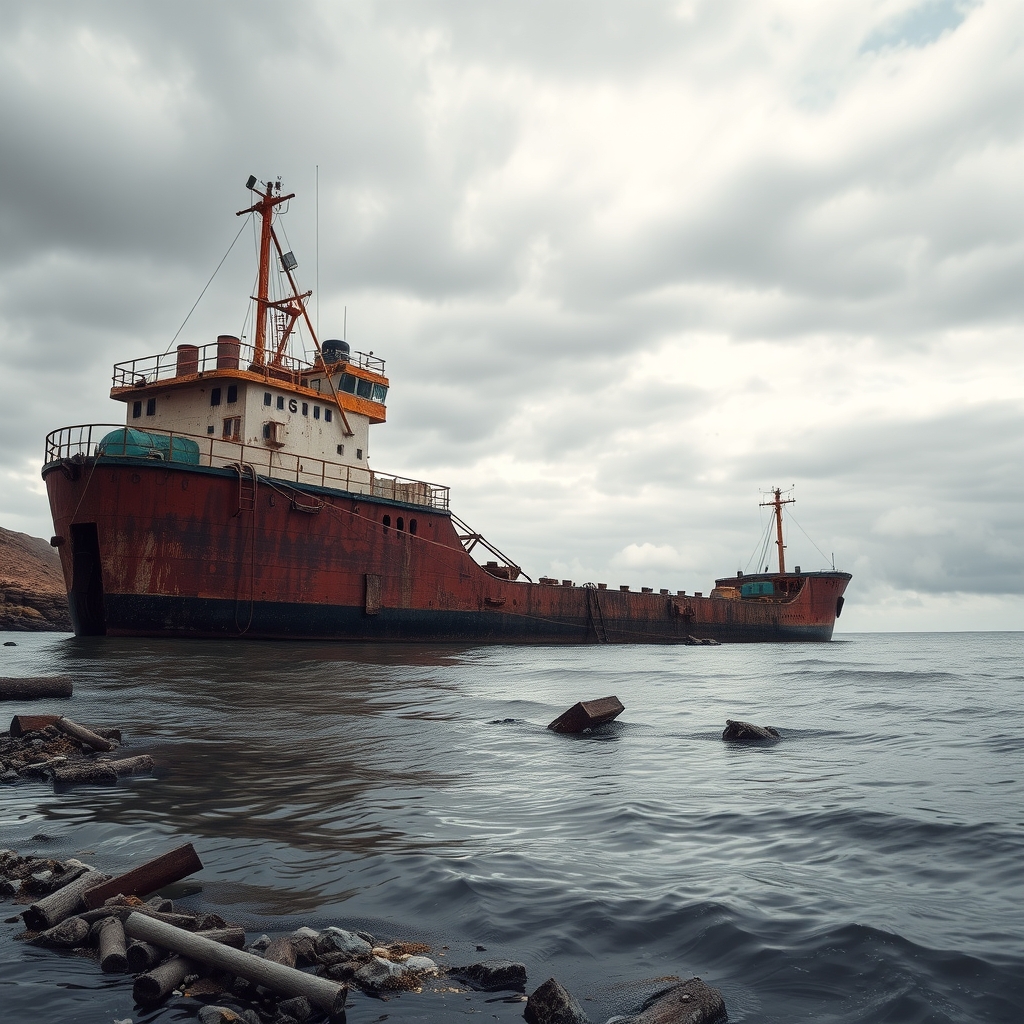
The Ontological Status of the Maritime Wreck
The status of a vessel as a wreck remains one of the most conceptually elusive categories in maritime jurisprudence. While the Nairobi International Convention on the Wreck Removal of 2007 provides a functional definition—addressing sunken or stranded vessels that pose a hazard to navigation or the environment—the threshold at which a ship transitions from an active commercial asset to an abandoned maritime wreck is rarely defined by objective temporal markers. Instead, it is an intersection of flag state jurisdiction, the abandonment of possessory interest by the shipowner, and the subsequent assertion of authority by a coastal state.
Historically, the law of salvage operated under the presumption that a vessel remains the property of its original owner, even when incapacitated. However, the proliferation of aging fleets and the economic incentives associated with abandoning hulls in precarious positions have forced a recalibration of this doctrine. When a vessel is abandoned without a clear successor to its liability, the financial burden of clearance shifts, creating a vacuum that international conventions struggle to fill.
How is liability for abandoned ship wreck removal determined?
Liability frameworks for wreck removal are predominantly structured around the principle of strict liability, yet they are hampered by the distinction between domestic and international waters. Under the Nairobi Convention, the registered owner is held responsible for the costs associated with the location, marking, and removal of a wreck that poses a hazard. This creates an immediate jurisdictional tension: if the vessel is abandoned beyond the territorial sea of a state, the ability of that state to enforce compliance is severely curtailed by the doctrine of flag state exclusivity.
The legal complexity deepens when the registered owner becomes unreachable or insolvent. Protection and Indemnity Clubs have traditionally acted as the de facto guarantors of such liabilities, yet they operate under the specific limitations of their own articles of association and the relevant national legislation governing maritime insurance. The fundamental challenge remains that international law often treats the vessel as an entity separate from the corporate interests that profit from its operation, allowing for a decoupling of liability that leaves coastal states to bear the immediate fiscal risk of cleanup operations.
What legal framework governs the removal of abandoned vessels?
The governing framework is a patchwork of international treaty law and customary practices. Key instruments include the 1989 International Convention on Salvage and the 2007 Nairobi Convention. The latter represents a significant departure from earlier iterations by explicitly addressing the hazard posed by wrecks in the Exclusive Economic Zone. Despite this, gaps persist, particularly regarding vessels that are intentionally scuttled or left derelict in regions with limited administrative oversight.
The International Tribunal for the Law of the Sea (ITLOS) has occasionally provided clarity on the rights of coastal states to intervene in the event of an environmental threat. However, judicial intervention is retrospective. The lack of a centralized international register for abandoned vessels means that prevention remains reactive rather than prophylactic. Comparative analysis of legal doctrines reveals a persistent friction between the rights of the owner to maintain ownership and the sovereign right of a state to protect its maritime environment from the dangers posed by derelict structures.
| Legal Instrument | Primary Focus | Application Scope |
|---|---|---|
| Nairobi Convention (2007) | Hazardous Wreck Removal | EEZ and Territorial Sea |
| UNCLOS (1982) | Sovereign Jurisdiction | Global Maritime Zones |
| International Salvage Convention (1989) | Compensation for Assistance | Distressed Vessels |
The Role of Flag State Oversight and Its Limitations
The effectiveness of wreck removal protocols is fundamentally tethered to the efficacy of the flag state. When a vessel is flagged in a jurisdiction characterized by loose regulatory oversight, the likelihood of effective enforcement against the owner diminishes significantly. This phenomenon, often referred to as the flag of convenience effect, creates an asymmetry where the flag state derives the registration revenue while the coastal state is left to manage the environmental or navigational costs of a vessel that has reached the end of its functional life.
Jurisprudence from the Permanent Court of Arbitration (PCA) has underscored the duty of flag states to exercise effective control, yet the absence of punitive mechanisms for failure to manage an abandoned vessel means that the duty remains largely aspirational. The legal community continues to grapple with whether this represents a failure of the treaty architecture itself or a failure of political will in the enforcement of international maritime safety standards.
Is an abandoned vessel considered private property under maritime law?
A vessel, even when severely damaged or derelict, retains its status as private property unless ownership has been formally renounced or abandoned according to the specific civil code of the relevant jurisdiction. This is a critical distinction in the law of salvage; salving a vessel does not grant title, only a lien for the services rendered. Consequently, the government cannot simply seize and sell a wreck for its scrap value without satisfying the procedural requirements of notice and opportunity to salvage.
This doctrine creates a formidable hurdle for port states seeking to expedite the removal of an abandoned vessel. The procedural protections afforded to the owner—even a largely anonymous or shell-entity owner—can delay operations by years. The intersection of property rights and public policy necessitates a balancing act that is frequently decided through prolonged litigation, which in turn exacerbates the environmental risks posed by the deteriorating structure.
Can a coastal state seize an abandoned vessel in its waters?
The authority of a coastal state to seize and dispose of an abandoned vessel is derived primarily from its sovereign rights within its territorial sea and its limited environmental enforcement powers within the Exclusive Economic Zone. Under the principle of sovereign immunity, state-owned vessels are generally exempt from such seizures, but the majority of abandoned vessels are commercial in nature. A state must demonstrate that the vessel presents an objective danger to navigation or the marine environment before it can bypass traditional property protections.
The standard of objective danger is one of the most litigated elements of maritime law. When does a hull transition from an eyesore to a hazard? The ambiguity of this threshold allows for wide latitude in domestic courts, often leading to inconsistent outcomes that complicate the global enforcement of wreck removal standards.
Future Trajectories and the Necessity of Reform
The evolving nature of maritime traffic and the increasing frequency of ship abandonment indicate that the current legal framework is nearing a point of systemic saturation. The shift toward a more robust, harmonized international regime requires an elevation of the status of the coastal state’s interest over the transient property rights of the owner. Without a compulsory insurance requirement linked to the total lifecycle of the vessel—from construction to decommissioning—the burden of wreck removal will remain an unresolved externality of global trade.
The conclusion is clear: the current jurisprudence is a reactive architecture. Moving forward, the maritime community must adopt a preemptive stance, utilizing digital tracking and mandatory financial security bonds to ensure that when a vessel is abandoned, the resources for its removal are already encumbered. Until then, the wreck will remain a phantom in international law, caught between the sovereignty of states and the transient anonymity of capital.
Comments
No comments yet.