The Architecture of Ocean Governance: Navigating the Legal Framework of International Maritime Safety
An examination of the complex interplay between UNCLOS, IMO conventions, and the jurisdictional tensions between flag and coastal states in maritime safety.
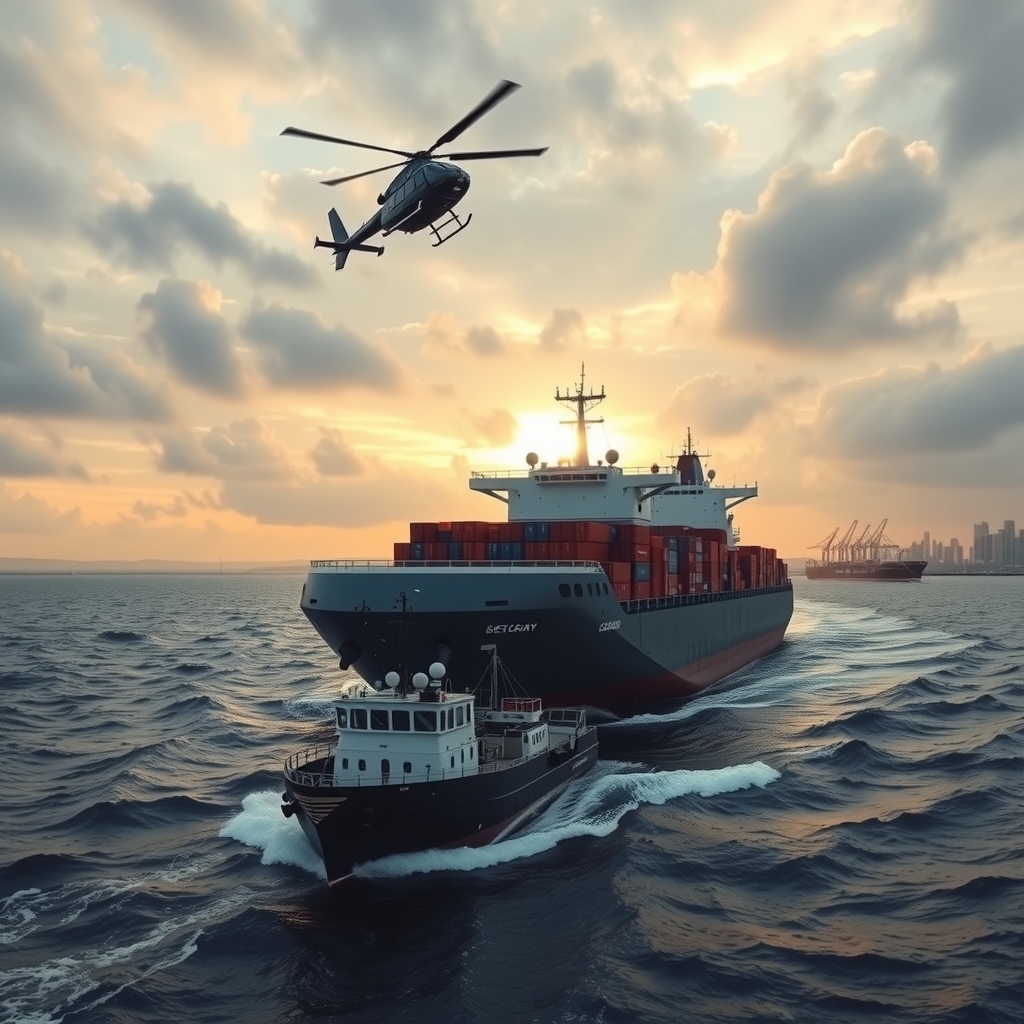
The high seas, once perceived as a terra nullius of lawless expanse, have evolved into one of the most rigorously regulated domains in international law. This regulatory density is not merely a response to the physical hazards of the marine environment but a sophisticated attempt to manage the intersection of sovereign interests, commercial imperatives, and the collective necessity for human and environmental protection. International maritime safety law functions as a multi-layered architecture, where the overarching constitutional principles of the United Nations Convention on the Law of the Sea (UNCLOS) provide the structural skeleton, while the technical, specialized regimes promulgated by the International Maritime Organization (IMO) serve as the vital organs of enforcement and standardization.
At the core of this framework lies a fundamental tension: the principle of flag state primacy versus the necessity of coastal and port state intervention. While the traditional doctrine of exclusive jurisdiction over vessels on the high seas suggests that the state under whose flag a ship sails holds total authority, the modern reality of globalized maritime trade—characterized by "flags of convenience" and the cross-border nature of environmental disasters—demands a more distributed model of governance. This article seeks to analyze the mechanisms of this governance, the legal ambiguities inherent in its implementation, and the evolving jurisprudence that seeks to resolve the conflicts between state sovereignty and the imperative of safety.
The Constitutional Foundation: UNCLOS and the Delegation of Authority
The United Nations Convention on the Law of the Sea (UNCLOS) provides the legal basis for all maritime activities. It does not, however, contain the granular technical specifications required for modern navigation. Instead, UNCLOS establishes the jurisdictional boundaries within which safety regulations may be applied. The convention delineates the rights and duties of various actors—flag states, coastal states, and port states—across different maritime zones, from internal waters and the territorial sea to the Exclusive Economic Zone (EEZ) and the high seas.
The relationship between UNCLOS and technical safety conventions is one of constitutionalism and specialized regulation. UNCLOS provides the mandate, while the IMO provides the substance. This delegation is essential because the technical requirements of maritime safety—such as the stability of a hull, the frequency of radio signals, or the certification of a bridge officer—are too dynamic for a global treaty of the UNCLOS magnitude to address through periodic amendments. Thus, the IMO acts as the central repository for the "soft law" that becomes "hard law" once incorporated into national legislation and international enforcement protocols.
How does UNCLOS regulate maritime safety standards?
The regulation of maritime safety under UNCLOS is primarily achieved through the mechanism of state responsibility and the delegation of technical competence. Article 94 of UNCLOS is the cornerstone of this arrangement, stipulating that every state shall effectively exercise its jurisdiction and control in administrative, technical, and social matters over ships flying its flag. This article imposes a positive obligation on the flag state to ensure that its vessels are seaworthy, adequately manned, and compliant with international safety standards.
However, the regulation is not limited to the flag state. UNCLOS also provides for the rights of coastal states to protect their marine environment and the safety of their waters. In the territorial sea, the coastal state's authority is significantly expanded, allowing for the imposition of laws related to the safety of navigation and the regulation of maritime traffic. In the EEZ, the coastal state's power is more circumscribed but remains vital for preventing pollution, which is increasingly recognized as an inseparable component of maritime safety. The interplay is characterized by a delicate balance: a flag state cannot use its sovereignty to bypass international safety norms, and a coastal state cannot use safety concerns as a pretext to infringe upon the freedom of navigation guaranteed by the convention.
The regulatory mechanism operates as follows:
- Standard Setting: The IMO develops technical standards (e.g., SOLAS, MARPOL).
- Codification: These standards are integrated into the legal obligations of states through treaty ratification.
- Implementation: Flag states translate these standards into national laws and administrative oversight.
- Compliance: Coastal and port states monitor compliance through inspections and enforcement actions.
The Technical Pillars: SOLAS, MARPOL, and STCW
While UNCLOS provides the framework, the actual safety of life and the prevention of pollution are governed by three primary pillars of the IMO regime. These conventions represent the transition from general principles to specific, enforceable technical requirements.
The SOLAS Convention: The Safety of Life at Sea
The International Convention for the Safety of Life at Sea (SOLAS) is arguably the most important of all maritime treaties. Born from the tragedy of the Titanic, its primary objective is to specify minimum standards for the construction, equipment, and operation of ships. SOLAS covers a vast array of technical aspects, including fire protection, life-saving appliances, radio communications, and the management of safe navigation. The evolution of SOLAS has moved from mere mechanical requirements toward the integration of Safety Management Systems (SMS) under the International Safety Management (ISM) Code, which shifts the focus from the hardware of the ship to the organizational culture of the company operating it.
The MARPOL Convention: Environmental Safety
The International Convention for the Prevention of Pollution from Ships (MARPOL) recognizes that maritime safety cannot be decoupled from environmental protection. A vessel that leaks heavy fuel oil is not only an ecological hazard but a safety risk to the crew, the coastal community, and the integrity of the maritime ecosystem. MARPOL’s technical annexes regulate everything from oil discharge and noxious liquid substances to sewage and air emissions. The legal sophistication of MARPOL lies in its ability to impose strict technical limitations on ship design and operational procedures to mitigate the risk of catastrophic environmental accidents.
The STCW Convention: The Human Element
The International Convention on Standards of Training, Certification and Watchkeeping for Seafarers (STCW) addresses the critical variable in maritime safety: the human element. Recognizing that technical excellence is rendered moot by human error, STCW establishes global minimum standards for the training and competency of seafarers. This ensures a level of predictability in the international maritime labor market, ensuring that a navigator trained in one jurisdiction meets the rigorous standards required to command a vessel in another.
What is the legal role of the International Maritime Organization?
The International Maritime Organization (IMO) serves as the specialized agency of the United Nations responsible for the safety and security of shipping and the prevention of marine and atmospheric pollution by ships. Its role is tripartite: it is a forum for intergovernmental negotiation, a regulatory body that develops technical standards, and a facilitator of international cooperation.
The IMO does not possess an enforcement arm. It cannot board a ship or arrest a violator. Instead, its power is derived from the consensus of its Member States. When the IMO adopts a new convention or an amendment to an existing one, it is up to the individual states to ratify, implement, and enforce those rules. This creates a decentralized enforcement model where the IMO provides the "rulebook" but the states provide the "policing."
The legal efficacy of the IMO is often debated through the lens of "soft law" versus "hard law." While many IMO guidelines are technically non-binding, they are frequently incorporated into the mandatory requirements of other conventions or become part of the "good seamanship" standard used by courts to determine negligence. Consequently, the IMO's regulatory output carries significant legal weight in both administrative and judicial proceedings.
What are the obligations of a flag state regarding safety?
The concept of the flag state is the most fundamental principle of maritime law, yet it is also the most prone to abuse. Under UNCLOS Art. 94, a flag state has the obligation to ensure that its ships are registered, possess appropriate documentation, and are subject to regular inspections. This includes maintaining a competent maritime administration capable of investigating marine casualties.
A significant challenge to this obligation is the phenomenon of the "flag of convenience," where shipowners register their vessels in states with lax regulatory oversight, low taxes, and minimal enforcement capability. This creates a "race to the bottom" in maritime safety standards. The legal response to this has been the development of the "genuine link" principle. UNCLOS Art. 91 requires a genuine link between the state and the ship, implying that the state must have a real connection to the vessel and its operation.
However, the jurisprudence surrounding the "genuine link" has been notably ambiguous. In the landmark M/V Saiga (No. 2) case (Saint Vincent and the Grenadines v. Guinea), the International Tribunal for the Law of the Sea (ITLOS) clarified that while the "genuine link" is required, its absence does not necessarily allow other states to ignore the flag state's jurisdiction. This distinction is crucial; it prevents the total collapse of the flag state system but highlights the difficulty of holding "non-performing" flag states accountable for safety failures. The obligation, therefore, remains a standard of due diligence—the state must show it has taken all reasonable steps to regulate its fleet, even if it cannot prevent every individual violation.
| Authority Type | Primary Legal Basis | Core Mandate | Enforcement Method |
|---|---|---|---|
| Flag State | UNCLOS Art. 94 | Continuous oversight and administrative control of the vessel. | Registration, certification, and national investigations. |
| Coastal State | UNCLOS Art. 211 / 220 | Protection of the marine environment and safety in the EEZ/Territorial Sea. | Regulation of transit, pollution monitoring, and boarding. |
| Port State | IMO Conventions / Port State Control | Verification of compliance with international standards. | Physical inspections, vessel detention, and banning from ports. |
How are maritime accidents adjudicated in international courts?
When maritime safety failures result in collisions, environmental catastrophes, or loss of life, the legal fallout is processed through multiple channels: national courts (for criminal and civil liability), specialized international tribunals, and arbitration panels. The adjudication of these accidents often hinges on the determination of fault and the interpretation of standard of care.
International judicial bodies play a critical role in clarifying the application of maritime law in complex cross-border scenarios. The International Tribunal for the Law of the Sea (ITLOS) and the International Court of Justice (ICJ) often deal with disputes between states regarding the interpretation of UNCLOS, such as the rights of a coastal state to intervene in a ship's passage on safety grounds. The Permanent Court of Arbitration (PCA) is frequently used for technical disputes and arbitrations involving shipowners and state entities.
Key jurisprudential themes in maritime accident adjudication include:
- The Standard of Seaworthiness: Determining whether a vessel's physical condition or the crew's competence fell below the standard required by SOLAS.
- The Duty of Due Diligence: Evaluating whether the flag state or the shipowner took all reasonable steps to prevent a predictable accident.
- Contributory Negligence: Analyzing how the actions of multiple parties—vessel masters, pilots, and shore-based controllers—interacted to cause the event.
- State Responsibility: Determining if a state's failure to enforce its own maritime laws led to international harm.
In cases of environmental damage, the trend in jurisprudence has been toward a more stringent application of the "polluter pays" principle. Courts are increasingly looking past the immediate vessel operator to the parent company or the entity that benefits from the operation, particularly when systemic failures in the Safety Management System (SMS) are identified. This reflects a shift from viewing maritime accidents as isolated mechanical failures to seeing them as systemic failures of corporate and state governance.
The Digital Frontier: Autonomous Vessels and New Legal Realities
As the maritime industry enters the era of Maritime Autonomous Surface Ships (MASS), the existing legal framework faces an ontological crisis. Most international maritime safety laws are predicated on the presence of a human master and crew. The SOLAS and STCW conventions explicitly reference human actions, watchkeeping, and the responsibilities of the master. When the "master" is an algorithm, the traditional pillars of maritime law begin to crumble.
The legal ambiguities are profound. Who is the "master" of an autonomous vessel? If a collision occurs due to a software error, does the liability lie with the shipowner, the software developer, or the remote operator? The current debate within the IMO revolves around whether to amend existing conventions or to draft an entirely new legal regime specifically for MASS. The challenge lies in maintaining the high safety standards of the current regime while accommodating the technological shift toward remote and autonomous operations. This transition will likely require a redefinition of "seaworthiness" to include cyber-security and software integrity, and a reimagining of "due diligence" for the digital age.
Conclusion
International maritime safety law is a dynamic and perpetually evolving field, characterized by a constant struggle to harmonize the principles of state sovereignty with the practical realities of a globalized, high-risk industry. From the foundational mandates of UNCLOS to the technical precision of the IMO's conventions, the framework provides a necessary, if imperfect, mechanism for managing the vast complexities of the ocean. The shift from mechanical safety to organizational and human-centric safety, and now toward the digital challenges of autonomy, demonstrates the resilience of the law. However, the persistence of "flags of convenience" and the burgeoning challenges of cyber-physical threats suggest that the architecture of ocean governance must remain in a state of continuous refinement. The future of maritime safety will depend not just on better technology, but on the ability of the international community to close the gaps between technical capability and legal accountability.
Comments
No comments yet.