International Conventions Governing Maritime Commerce
Explore the foundational international conventions and legal frameworks that regulate global maritime commerce, trade, and ocean shipping.
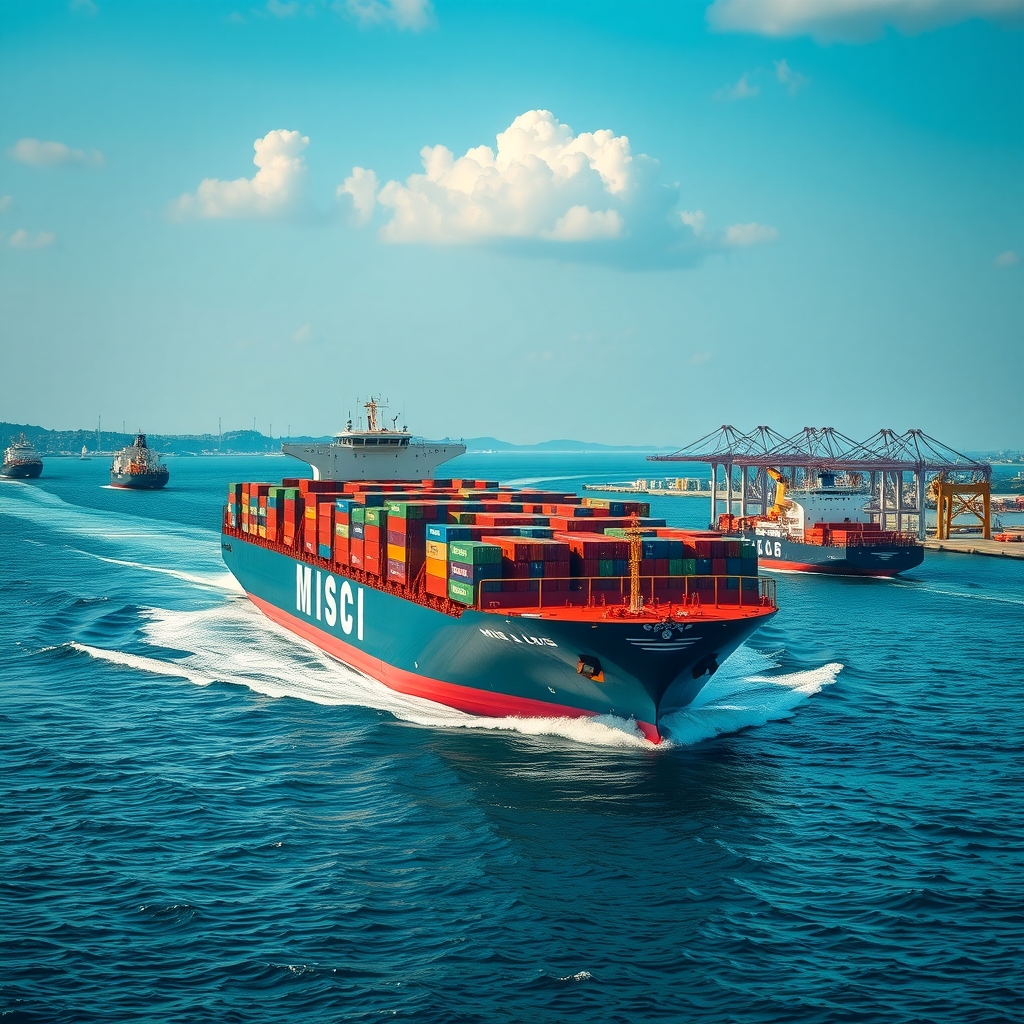
Maritime commerce forms the absolute backbone of global trade, carrying over eighty percent of the world's volume of merchandise. Because ships routinely cross vast ocean expanses, traversing jurisdictional boundaries from the internal waters of one sovereign state to the high seas and into the ports of another, an intricate web of international conventions has evolved over centuries. Without harmonized international rules, cross-border shipping would face chaotic legal friction, conflicting national laws, and unpredictable liabilities that could paralyze international supply chains.
Understanding how these legal frameworks operate requires looking closely at the multilateral treaties, specialized international organizations, and diplomatic conferences that shape modern maritime trade. From safety-of-life treaties at sea to standardized cargo liability regimes and environmental protections, these international instruments create a predictable environment for shipowners, cargo interests, insurers, and port authorities alike.
What are the main international maritime conventions?
The architecture of international maritime law is built upon a series of specialized conventions developed primarily through the auspices of the International Maritime Organization (IMO), the Comité Maritime International (CMI), and United Nations bodies such as UNCTAD and UNCITRAL. These treaties address distinct pillars of maritime operations, ranging from vessel safety and crew standards to commercial liability and environmental protection.
Among the most influential commercial instruments are those governing the carriage of goods by sea, passenger rights, maritime liens, and salvage. Historically, maritime nations recognized that commercial disputes could not be resolved equitably if every coastal state applied its own parochial domestic laws to foreign-flagged vessels. Consequently, diplomatic conferences were convened to draft uniform substantive rules. Key treaties establish baseline standards that contracting states incorporate into their national legislation, ensuring that a bill of lading issued in Singapore carries predictable legal consequences when discharged in Rotterdam or Buenos Aires.
Furthermore, these conventions are constantly updated through protocols and amendments to reflect technological shifts, such as containerization, electronic bills of lading, and the digitization of maritime documentation. This ongoing legal evolution ensures that international trade law remains responsive to the practical realities of modern ship management and global logistics.
How do Hague Visby Rules affect cargo liability?
When goods are damaged, lost, or delayed during an ocean voyage, the financial stakes are often enormous. The regime governing carrier liability for cargo loss is rooted in international uniformity. The International Convention for the Unification of Certain Rules of Law relating to Bills of Lading, commonly known as the Hague Rules of 1924, and its subsequent amendments via the Visby Protocol of 1968 (together forming the Hague-Visby Rules), provide the foundational liability framework used by a vast majority of trading nations.
Under the Hague-Visby Rules, a carrier is subject to minimum mandatory responsibilities, notably the obligation to exercise due diligence to make the ship seaworthy before and at the beginning of the voyage, properly man, equip, and supply the vessel, and make the holds and all other parts of the ship in which goods are carried fit and safe for their reception and preservation. In exchange for these strict duties, the carrier is granted a list of statutory immunities or defenses, such as damage resulting from navigational error, fire (unless caused by the actual fault or privity of the carrier), acts of God, or inherent vice of the goods.
Crucially, the Hague-Visby Rules establish financial limits on the carrier's liability per package or unit, or per kilo of gross weight, protecting shipping lines from catastrophic exposure while ensuring cargo owners receive fair compensation for provable losses. This delicate balance of risk allocation has served as the bedrock of commercial shipping contracts for decades, though newer regimes like the Hamburg Rules and the Rotterdam Rules attempt to modernize or expand carrier duties for the contemporary digital era.
What is the role of the IMO in maritime commerce?
Established through a convention adopted in Geneva in 1948 and coming into full effect in the late 1950s, the International Maritime Organization acts as the specialized United Nations agency responsible for the safety and security of shipping and the prevention of marine and atmospheric pollution by ships. The IMO provides the indispensable machinery for cooperation among governments in the formulation of regulatory frameworks governing international shipping.
The IMO’s portfolio encompasses an extensive suite of treaties that directly impact commercial viability and operational compliance. Some of the most critical conventions developed under its purview include:
- SOLAS (International Convention for the Safety of Life at Sea): Often regarded as the most important of all international treaties concerning maritime safety, establishing construction, equipment, and operational standards for merchant ships.
- MARPOL (International Convention for the Prevention of Pollution from Ships): The principal international convention covering prevention of pollution of the marine environment by ships from operational or accidental causes.
- STCW (International Convention on Standards of Training, Certification and Watchkeeping for Seafarers): Sets qualification standards for masters, officers, and watch personnel on seagoing merchant ships.
- Load Lines Convention: Regulates hull strength and the maximum allowable draft to ensure vessels are not overloaded.
Compliance with these conventions is not optional for vessels engaged in international trade. Port State Control authorities inspect foreign vessels visiting their ports to ensure they meet international standards, detaining substandard ships that fail to comply with IMO treaty mandates.
How does UNCLOS regulate maritime trade?
The United Nations Convention on the Law of the Sea, often designated as UNCLOS, provides the overarching constitutional framework for all oceanic activities, including maritime commerce. Signed in 1982 and entering into force in 1994, UNCLOS delineates maritime zones and defines the rights and duties of sovereign states concerning navigation, resource exploitation, and environmental protection.
For commercial shipping, UNCLOS guarantees the fundamental principle of freedom of navigation on the high seas. It establishes clearly defined legal zones:
- Internal Waters: Waters on the landward side of the baseline of the territorial sea, where coastal states exercise full sovereignty.
- Territorial Sea: Extending up to 12 nautical miles from the baseline, where coastal states exercise sovereignty, subject to the vital right of innocent passage for foreign merchant vessels.
- Exclusive Economic Zone (EEZ): Extending up to 200 nautical miles from the baseline, where coastal states have sovereign rights over natural resources, but freedom of navigation is preserved for international shipping.
- Archipelagic Waters: Special regimes allowing archipelagic sea lanes passage for commercial vessels traversing island nations.
By securing predictable navigational corridors and codifying the duties of flag states, coastal states, and port states, UNCLOS eliminates arbitrary interference with commercial shipping lanes, enabling the smooth global flow of raw materials, energy products, and manufactured consumer goods.
What is the purpose of maritime safety conventions?
Commercial shipping operates in an inherently hazardous environment. Storms, heavy seas, mechanical failures, navigational errors, and fire present constant risks to human life, valuable cargoes, and multi-million-dollar vessel assets. The primary purpose of international maritime safety conventions is to establish a universally accepted floor of protective standards that minimizes these operational risks, protects seafarers, and prevents catastrophic maritime casualties.
Treaties like SOLAS mandate rigorous structural requirements, such as watertight compartmentalization, fire-detection systems, lifesaving appliances including lifeboats and inflatable rafts, and modern radio communication equipment like the Global Maritime Distress and Safety System (GMDSS). Furthermore, the International Safety Management (ISM) Code, incorporated into SOLAS Chapter IX, requires shipowners and operating companies to implement robust safety management systems both onboard vessels and ashore.
When safety standards are harmonized internationally, shipowners compete on a level playing field rather than cutting operational corners to lower short-term costs. This global regulatory discipline protects the marine environment from disastrous oil spills, reduces salvage and general average incidents, and upholds the humanitarian imperative to safeguard human life at sea.
Conclusion
International conventions governing maritime commerce represent a triumph of multilateral diplomacy and legal harmonization. By bridging divergent national legal traditions, these treaties provide the vital predictability required to sustain complex global supply chains. From the constitutional clarity of UNCLOS and the safety mandates of SOLAS and the IMO to the commercial risk-allocation of the Hague-Visby Rules, international maritime law ensures that ships can transit the world's oceans efficiently, safely, and equitably.
As technology continues to advance—ushering in autonomous vessels, alternative low-carbon fuels, and digital trade documentation—the international legal framework must continue to adapt. Nevertheless, the core principles of cooperation, standardization, and mutual recognition embedded within these foundational conventions will remain the indispensable anchor of global maritime commerce for generations to come.
Comments
No comments yet.