The International Convention on Civil Liability for Oil Pollution Damage
Discover how the International Convention on Civil Liability for Oil Pollution Damage shapes global maritime environmental safety and tanker owner obligations.
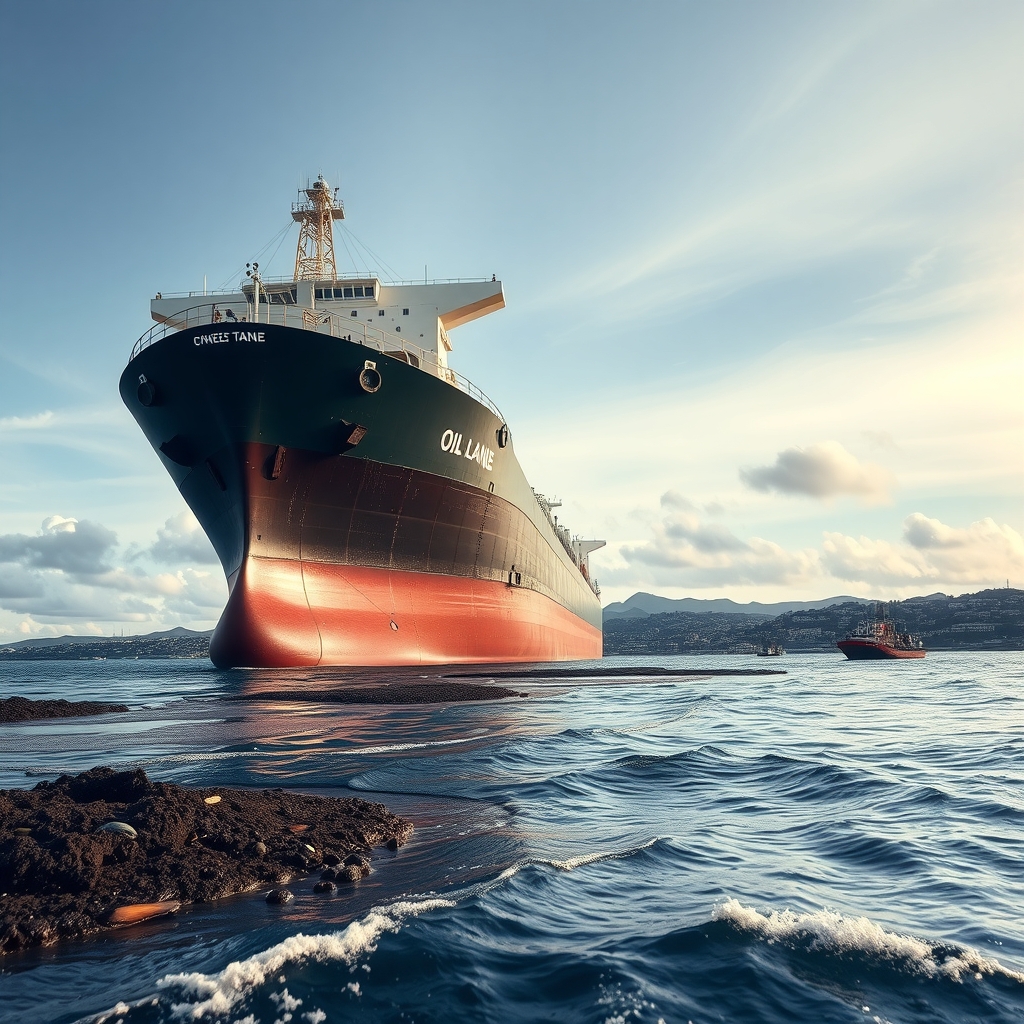
Maritime transport serves as the vital circulatory system of global commerce, moving immense volumes of crude oil and refined petroleum products across the world's oceans every single day. While this maritime trade underpins modern industrial society, it carries inherent and catastrophic environmental risks. A catastrophic tanker collision, a grounding on a hidden reef, or a structural failure on the high seas can unleash thousands of tons of persistent hydrocarbons into fragile marine ecosystems, coating coastlines, devastating local fisheries, and threatening coastal economies. Managing the aftermath of such environmental disasters requires an intricate legal architecture that balances the urgent need for environmental remediation with the economic realities of international shipping.
At the center of this legal framework stands the International Convention on Civil Liability for Oil Pollution Damage, universally known as the CLC Convention. Developed under the auspices of the International Maritime Organization in the wake of historic maritime disasters, this landmark treaty fundamentally transformed how the global community handles maritime environmental accountability. By establishing a uniform, predictable, and mandatory system of compensation, the convention ensures that victims of oil pollution—ranging from small coastal municipalities to multi-million-dollar tourism industries—receive prompt and fair indemnification, while simultaneously providing shipowners with predictable liability boundaries that make marine commerce insurable.
What is the International Convention on Civil Liability for Oil Pollution Damage?
The International Convention on Civil Liability for Oil Pollution Damage is a foundational multilateral treaty adopted to ensure that adequate compensation is available to persons who suffer pollution damage caused by spills of persistent oil from sea-going vessels carrying oil as cargo. Concluded in 1969 and subsequently updated through various protocols—most notably the 1992 Protocol, which modernised its scope and financial limits—the convention addresses the legal vacuum that historically plagued maritime environmental disasters. Before its enactment, victims seeking compensation faced immense jurisdictional hurdles, conflicting national laws, and the daunting challenge of proving negligence in foreign courts under complex maritime tort principles.
The CLC Convention sweeps away these procedural hurdles by establishing a strict liability regime. Under this treaty, the registered owner of a ship carrying oil as cargo is strictly liable for any pollution damage caused by the ship as a result of an incident. This means that claimants do not need to prove fault or negligence on the part of the shipowner or the crew. If oil escapes from the cargo tanks and causes damage in the territory, territorial sea, or exclusive economic zone of a contracting state, the owner is automatically held accountable. This strict liability approach places the risk of environmental harm squarely on the entity best positioned to manage and insure that risk, streamlining the path from disaster to recovery.
However, this strict liability is paired with a critical legal trade-off: canalization of liability. The convention shields other maritime actors—such as charterers, managers, pilots, and salvors—from direct claims by pollution victims, channeling all legal responsibility exclusively toward the registered shipowner. This prevents a chaotic multi-party legal free-for-all in courtrooms around the world and ensures that the financial backing of the shipowner and their insurers remains the singular, focused source of compensation. Furthermore, to complement this system, the international maritime community established a supplementary tier of compensation through the International Oil Pollution Compensation Funds, ensuring that exceptionally large spills exceeding the shipowner's statutory limit can still be adequately addressed.
How does the strict liability regime work in practice?
The operational mechanics of the CLC Convention revolve around strict liability coupled with a carefully calibrated system of financial limitations. When an oil spill occurs, the legal mechanisms spring into action immediately. The affected coastal state or private citizen does not need to establish that the captain made an error in navigation or that the shipowner failed to maintain the vessel properly. The mere occurrence of the escape of persistent oil and the resulting damage triggers liability, subject to only a very narrow set of statutory exemptions.
These exemptions are strictly construed and rarely successfully invoked. A shipowner can escape liability under the CLC Convention only if they prove that the damage resulted from an act of war, hostilities, civil war, or insurrection; that it was wholly caused by the intentional act or omission of a third party acting with intent to cause damage; or that it was wholly caused by the negligence or other wrongful act of any government or other authority responsible for the maintenance of lights or other navigational aids. Natural phenomena of an exceptional, inevitable, and irresistible character can also provide a defense, but meeting this legal threshold is notoriously difficult in modern maritime litigation.
To ensure that this strict liability does not bankrupt the shipping industry or make maritime trade economically unviable, the convention establishes a limitation of liability. The maximum amount recoverable from the shipowner is calculated based on the tonnage of the vessel. For smaller vessels, a baseline floor applies, while larger tankers face progressively higher limits up to a statutory ceiling. This financial predictability allows shipowners to calculate their risk exposure and purchase specialized marine pollution liability insurance. In exchange for this limitation, the shipowner is required to maintain compulsory insurance or other financial security—such as a bank guarantee—covering their liability under the convention. Ships carrying more than 2,000 tons of oil in bulk as cargo must carry a certificate attesting that such insurance is in force, a document routinely verified by port state control authorities worldwide.
Who is covered and protected by the CLC Convention?
The geographic and material scope of the CLC Convention defines its protective reach across the globe. Materially, the treaty applies exclusively to persistent oil carried as cargo on sea-going vessels constructed or adapted to carry oil in bulk. This includes crude oil, fuel oil, heavy diesel oil, and lubricating oil, but specifically excludes non-persistent oils like gasoline or kerosene, which rapidly evaporate upon exposure to the air and leave little persistent residue requiring long-term remediation. Furthermore, the convention focuses primarily on pollution damage caused in the territory, territorial sea, and exclusive economic zones of contracting states. It covers not only the cost of preventive measures taken to minimize or prevent pollution damage—such as booming off a slick or deploying dispersants—but also compensation for economic loss sustained by coastal communities dependent on fishing, tourism, and marine commerce.
Geographically, the convention binds all states that have officially ratified or acceded to the instruments. When a spill occurs within the jurisdictional waters of a contracting state, the courts of that state have exclusive jurisdiction to entertain claims for compensation. This creates a predictable forum for litigation and avoids the international forum-shopping that once plagued maritime claims. Claimants are spared the complexity of foreign legal systems, and judgments rendered by courts of a contracting state are generally recognized and enforceable in any other contracting state, ensuring that corporate asset shielding or cross-border technicalities cannot easily evade environmental justice.
Beyond human claimants and commercial entities, the CLC Convention has progressively evolved to recognize the intrinsic value of the natural environment itself. While traditional common law tort principles struggled to assign financial value to ecological harm where no direct commercial fishery or property was damaged, modern interpretations of the convention allow for compensation covering the costs of reasonable reinstatement measures actually undertaken or to be undertaken. This means that restoring damaged mangrove forests, cleaning oiled seabirds, and rehabilitating marine habitats are recognized as legitimate compensable expenses under the overarching umbrella of pollution damage.
To further illustrate the operational layers of this global liability regime, consider the following structural components that govern every covered maritime incident:
- Compulsory Insurance Certification: Tankers must maintain financial security and carry state-issued certificates verifying coverage.
- Strict Liability Standard: Claimants bypass fault-based hurdles, securing prompt indemnification for actual economic and environmental loss.
- Canalization of Claims: Legal actions are directed solely at the registered owner, protecting operational contractors and crew members from litigation.
- Tonnage-Based Limitation Funds: Shipowners can constitute a dedicated limitation fund in court, capping their individual exposure per incident.
- Exclusive Jurisdictional Forum: Legal proceedings must be brought in the courts of the contracting state where the damage occurred.
What are the limitations and future challenges of the convention?
Despite its remarkable success in harmonizing international maritime law and providing billions of dollars in compensation over the decades, the CLC Convention faces ongoing modern challenges. One persistent issue involves the financial limits set by the convention. Although the 1992 Protocol significantly raised the compensation caps compared to the original 1969 text, catastrophic spills involving ultra-large crude carriers can still threaten to exhaust the shipowner's limitation fund. This reality underscores the vital importance of the supplementary International Oil Pollution Compensation Funds, which step in to provide a second and third tier of financial backing when the CLC limit proves insufficient to cover total losses.
Another emerging challenge relates to the changing nature of maritime transport and environmental awareness. As the global fleet evolves, questions frequently arise regarding unconventional petroleum products, floating storage and offloading units, and the legal classification of various hazardous liquid cargoes that share operational characteristics with persistent oils but may fall outside the strict definitions of the convention. Furthermore, geopolitical tensions and the rise of the so-called shadow fleet—aging tankers operating outside traditional Western insurance and regulatory networks—pose significant enforcement hurdles. Ensuring that all vessels trading globally maintain legitimate and verifiable CLC insurance certificates remains a constant battle for port state control inspectors and maritime regulators.
Environmental advocacy groups also continue to push the boundaries of what constitutes compensable environmental damage, particularly regarding long-term ecological monitoring, biodiversity loss, and climate-related interactions with spilled hydrocarbons. While the convention provides a robust and reliable baseline, its continuous adaptation through diplomatic conferences and legal precedent demonstrates that international maritime law must remain vigilant and responsive to new environmental realities.
Conclusion
The International Convention on Civil Liability for Oil Pollution Damage stands as a towering achievement in the history of international environmental and maritime law. By bridging the gap between commercial maritime interests and ecological preservation, it established a predictable, fair, and efficient mechanism for addressing the grim reality of oil spills. Through its pillars of strict liability, compulsory insurance, and canalization of claims, the convention ensures that victims receive timely financial relief without getting entangled in endless disputes over fault, while providing shipowners with the operational certainty necessary to sustain global trade.
As maritime commerce continues to navigate technological advancements, geopolitical shifts, and heightened environmental expectations, the framework provided by the convention remains indispensable. It serves as a powerful reminder that international cooperation can successfully regulate high-risk global industries, holding polluters accountable while safeguarding the vast and vital marine ecosystems upon which all nations depend.
Comments
No comments yet.