Human Rights at Sea: Safeguarding the Seafarer Community
Behind global trade are millions of crew members facing unique risks at sea. This article examines the treaties and enforcement tools designed to protect their rights.
By Admin · 11 MIN READ
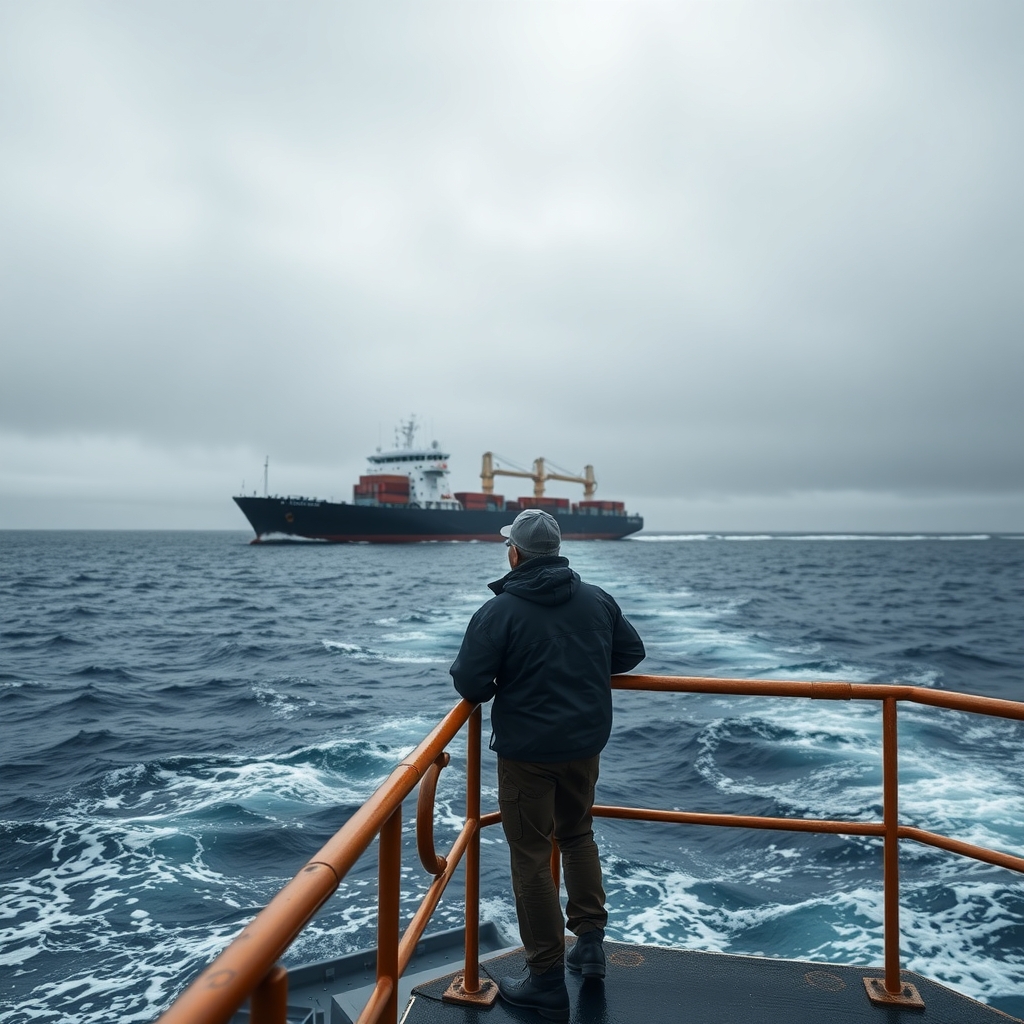
Human Rights at Sea: Safeguarding the Seafarer Community
Abstract
Seafarers are the indispensable engine of global trade, responsible for transporting over 80% of the world's commercial cargo. Despite their critical role, the transnational nature of the maritime industry and the geographical isolation of the oceans often leave seafarers navigating a complex "legal vacuum." This paper provides a comprehensive, comparative analysis of the human rights framework applicable at sea. By examining the structural vulnerabilities of the seafarer community, detailing specific typologies of human rights abuses, and analyzing landmark jurisprudence from international tribunals, this article evaluates the efficacy of existing protective mechanisms. It asserts that the foundational principle—"human rights apply at sea as they do on land"—requires robust jurisdictional enforcement, particularly concerning the obligations of Flag States and Port States.
1. Introduction and The Legal Vacuum
The maritime environment has historically been governed by the law of the sea, a framework heavily focused on state sovereignty, navigational rights, and the allocation of marine resources. However, the individuals operating within this environment—the seafarers—have frequently been marginalized in international legal discourse. The industry's reliance on "Flags of Convenience" (FOC) allows shipowners to register vessels in jurisdictions with minimal regulatory oversight, weak labor protections, and limited enforcement capabilities.
This structural fragmentation creates a jurisdictional void where fundamental human rights are easily bypassed. When a vessel operates on the high seas, it is subject to the exclusive jurisdiction of its Flag State. If that state is unwilling or unable to enforce human rights standards, seafarers are left exposed to exploitation, forced labor, abandonment, and unsafe working conditions. Recognizing this gap, modern international law is increasingly attempting to reconcile the traditional law of the sea with universal human rights law, operating under the emerging paradigm of "Human Rights at Sea."
2. The International Legal and Regulatory Framework
The protection of seafarers relies on a tripartite legal architecture, integrating the law of the sea, international labor law, and fundamental human rights instruments.
2.1. The United Nations Convention on the Law of the Sea (UNCLOS, 1982)
UNCLOS serves as the constitution of the oceans. While primarily focused on state rights, it contains critical provisions safeguarding human life:
- Article 94 (Duties of the Flag State): Mandates that every state shall effectively exercise its jurisdiction and control in administrative, technical, and social matters over ships flying its flag. This includes ensuring appropriate labor conditions, crew safety, and adequate training.
- Article 98 (Duty to Render Assistance): Imposes an absolute obligation on masters of all vessels to render assistance to any person found at sea in danger of being lost, serving as a foundational customary law of maritime solidarity.
2.2. The Maritime Labour Convention (MLC, 2006)
Administered by the International Labour Organization (ILO), the MLC is widely regarded as the "Seafarers' Bill of Rights." It consolidated and updated over 68 existing maritime labor standards into a single, comprehensive document. Its core pillars include:
- Minimum Requirements: Strict regulations regarding minimum age, medical certification, and recruitment practices.
- Conditions of Employment: Standardized Seafarers' Employment Agreements (SEAs), guaranteed payment of wages, and regulated hours of work and rest.
- Accommodation and Welfare: Mandates concerning onshore welfare facilities, food and catering standards, and onboard medical care.
- Compliance and Enforcement: A dual system relying on Flag State inspections and Port State Control (PSC) to ensure compliance, including the 2014 amendments that require shipowners to maintain financial security (insurance) to cover abandonment, repatriation, and outstanding wages.
2.3. Universal Human Rights Instruments
The applicability of core human rights treaties is not geographically limited to terrestrial borders. The Universal Declaration of Human Rights (UDHR), the International Covenant on Civil and Political Rights (ICCPR), and the International Covenant on Economic, Social and Cultural Rights (ICESCR) apply fully to individuals within a state's jurisdiction, which includes vessels flying its flag. This encompasses the right to life, freedom from torture, prohibition of slavery and forced labor, and the right to fair and just working conditions.
3. Comparative Analysis of Maritime Legal Instruments
| Legal Instrument / Convention | Governing Body | Primary Focus & Seafarer Protections | Enforcement & Monitoring Mechanism |
| UNCLOS (1982) | United Nations | Flag State jurisdiction, navigational safety, duty to rescue. | International Tribunal for the Law of the Sea (ITLOS), ICJ, Arbitral Tribunals. |
| MLC (2006) | ILO | Comprehensive labor rights, fair wages, repatriation, abandonment insurance. | Port State Control (PSC), Flag State inspections, ILO supervisory bodies. |
| SOLAS (1974) | IMO | Ship survivability, safety equipment, emergency communication, structural integrity. | Flag State audits, Classification Societies (e.g., Lloyd's Register). |
| ICCPR (1966) | United Nations | Right to life, liberty, security of person, and fair trial (vital in criminalization cases). | UN Human Rights Committee, regional human rights courts. |
4. Typologies of Human Rights Violations at Sea
4.1. Seafarer Abandonment
Abandonment occurs when a shipowner fails to cover the cost of a seafarer's repatriation, leaves them without necessary maintenance and support, or severs ties, including the non-payment of wages for two months or more. Often resulting from a shipowner's financial insolvency or deliberate evasion of liabilities, abandoned seafarers are left stranded on decaying vessels in foreign ports, facing starvation, physical deterioration, and severe psychological distress. The joint ILO/IMO database on abandonment routinely records hundreds of active cases globally.
4.2. Criminalization and Unfair Treatment
In the aftermath of maritime accidents—such as oil spills, collisions, or groundings—seafarers are frequently subjected to immediate arrest and detention by coastal states. They are often utilized as political scapegoats or bargaining chips, denied basic due process, translation services, and legal representation. This criminalization violates the presumption of innocence and the right to a fair trial as enshrined in the ICCPR.
4.3. Piracy, Armed Robbery, and Hostage-Taking
Operating in high-risk areas (such as the Gulf of Guinea or the Horn of Africa) exposes seafarers to extreme violence, abduction, and prolonged captivity. Beyond the immediate threat to the right to life and physical security, the trauma of piracy incidents inflicts long-term psychological damage. State failures to secure maritime routes directly implicate their positive obligations to protect human rights within their operational spheres.
4.4. Denial of Shore Leave and Medical Access
Shore leave is fundamentally vital for the physical and mental well-being of seafarers who spend months confined to a steel structure. Increasingly, due to stringent visa regimes, heightened port security (post-ISPS Code), and global health crises (such as the COVID-19 pandemic), seafarers are denied the right to disembark. Furthermore, the denial of urgent onshore medical care constitutes a direct violation of the right to health and, in severe cases, the right to life.
5. International Jurisprudence and Case Law Analysis
International tribunals have played a pivotal role in clarifying that human rights obligations permeate the law of the sea. The following landmark cases illustrate the operationalization of human rights at sea.
5.1. M/V "SAIGA" (No. 2) Case (Saint Vincent and the Grenadines v. Guinea), ITLOS, 1999
- Context: Guinea arrested the M/V Saiga, an oil tanker flying the flag of Saint Vincent and the Grenadines, using excessive force and subsequently detaining the crew without due process.
- Legal Reasoning: The International Tribunal for the Law of the Sea (ITLOS) emphasized that "considerations of humanity" apply universally in the law of the sea. The Tribunal ruled that the use of force must be avoided and, if necessary, strictly proportionate.
- Precedent: Established that coastal states exercising enforcement jurisdiction must respect international human rights standards, specifically concerning the physical integrity and liberty of seafarers, regardless of their nationality or the flag of the vessel.
5.2. The Arctic Sunrise Arbitration (Netherlands v. Russian Federation), PCA, 2015
- Context: Russian authorities boarded and seized the Arctic Sunrise, a Greenpeace vessel flying the Dutch flag, in Russia's Exclusive Economic Zone (EEZ). The crew and activists were detained for months under piracy charges.
- Legal Reasoning: The Permanent Court of Arbitration (PCA) found that Russia's boarding, seizure, and detention of the crew lacked legal justification under UNCLOS.
- Precedent: The tribunal reinforced the exclusive jurisdiction of the Flag State on the high seas and in the EEZ. Crucially, it affirmed that a Flag State is entitled to seek reparation on behalf of all crew members on board its vessel, irrespective of their individual nationalities, strengthening the protective umbrella for multinational seafarer crews.
5.3. The Enrica Lexie Incident (Italy v. India), PCA, 2020
- Context: Italian marines stationed on a commercial oil tanker fired upon an Indian fishing vessel, killing two Indian fishermen, leading to the arrest of the marines and the detention of the vessel by India.
- Legal Reasoning: While largely focused on sovereign immunity and jurisdictional clashes between the Flag State (Italy) and the Coastal State (India), the tribunal highlighted the necessity of compensating the victims' families, weaving human rights and the right to life into the fabric of maritime dispute resolution.
6. Matrix of Violations and Legal Precedents
| Manifestation of Violation | Breached Human Rights Principle | Relevant Case Law / Legal Instrument | Jurisprudential Outcome & Mechanism |
| Unlawful Use of Force and Detention | Right to physical integrity, "Considerations of Humanity." | M/V SAIGA (No. 2) (ITLOS) | States must strictly adhere to proportionality and human rights during maritime law enforcement. |
| Arbitrary Arrest of Multinational Crews | Right to Liberty (ICCPR Art. 9), Flag State exclusivity. | Arctic Sunrise Arbitration (PCA) | Flag States hold the right to claim reparations for all crew members unlawfully detained by coastal states. |
| Abandonment and Wage Theft | Right to just working conditions, freedom from forced labor. | MLC 2006 (2014 Amendments) | Mandatory financial security certificates for vessels; direct access for seafarers to claim insurance. |
| Denial of Fair Trial post-Incident | Presumption of innocence, Right to Fair Trial (ICCPR Art. 14). | IMO/ILO Guidelines on Fair Treatment | Procedural safeguards mandated for seafarers detained during maritime accident investigations. |
7. Structural Challenges in Maritime Human Rights Governance
Despite robust textual protections, the implementation of human rights at sea suffers from profound systemic weaknesses:
- The "Corporate Veil" and Flags of Convenience: FOC registries often lack genuine links to the vessel's beneficial owners. Complex corporate structures (shell companies) are deliberately utilized to shield shipowners from liability, making it exceptionally difficult to hold perpetrators accountable for abandonment or wage theft.
- Inadequate Port State Control (PSC): While PSC is designed as a secondary safety net to inspect foreign ships, its effectiveness varies drastically by region. Many developing ports lack the resources, trained inspectors, or political will to detain vessels for labor and human rights violations.
- The Blacklisting Threat: Seafarers often operate under short-term contracts. Reporting human rights abuses, unsafe conditions, or unpaid wages frequently results in the seafarer being "blacklisted" by crewing agencies, effectively ending their career. This climate of fear perpetuates chronic underreporting.
8. Strategic Pathways for Reform
To bridge the gap between theoretical rights and practical enforcement, several structural reforms are necessary:
- Extraterritorial Jurisdiction and Universal Access to Justice: Domestic courts must expand their willingness to hear cases regarding human rights violations at sea, utilizing principles of universal jurisdiction or holding parent companies accountable for their global maritime supply chains through mandatory Human Rights Due Diligence (HRDD) laws.
- Strengthening the ILO/IMO Enforcement Paradigm: International bodies must transition from standard-setting to robust enforcement. This includes empowering PSCs to impose severe financial penalties and banning habitual offending shipowners from international waters.
- Establishment of a Global Seafarers' Welfare Fund: Creating a centralized, internationally managed emergency fund, financed by mandatory shipping levies, to immediately facilitate the repatriation and remuneration of abandoned seafarers, bypassing the lengthy process of liquidating seized assets.
9. Conclusion
The enduring isolation of the maritime environment can no longer serve as a justification for the erosion of human dignity. As established by UNCLOS, the MLC 2006, and reaffirmed by the jurisprudence of ITLOS and the PCA, the legal architecture to protect seafarers exists. However, overcoming the current enforcement deficit requires a paradigm shift: treating the oceans not merely as an economic transit zone governed by commercial interests, but as a space where the universal rule of law and human rights strictly apply. Safeguarding the seafarer community is not just a legal obligation; it is a fundamental moral imperative required to ensure a just and sustainable global economy.
References
- International Labour Organization (ILO). (2006). Maritime Labour Convention (MLC), 2006. Geneva: ILO.
- International Tribunal for the Law of the Sea (ITLOS). (1999). The M/V "SAIGA" (No. 2) Case (Saint Vincent and the Grenadines v. Guinea), Judgment, ITLOS Reports 1999, p. 10.
- Permanent Court of Arbitration (PCA). (2015). The Arctic Sunrise Arbitration (Kingdom of the Netherlands v. Russian Federation), Award on the Merits.
- Permanent Court of Arbitration (PCA). (2020). The "Enrica Lexie" Incident (Italy v. India), Award.
- Petrig, A. (2019). Human Rights and the Law of the Sea. In The Oxford Handbook of the Law of the Sea. Oxford: Oxford University Press.
- United Nations. (1982). United Nations Convention on the Law of the Sea (UNCLOS). 1833 UNTS 396.
Comments
Thank you — your comment has been published.
Thank you — your comment was received and will appear after approval.
Human verification failed. Please try again.
Please fill in the required fields correctly.
Too many comments. Please try again later.
Your comment was rejected by the spam filter.
Too many links in the comment.
Comments are closed.
No comments yet.