Guarding the Oceans: The Evolution and Impact of the SOLAS Convention
Discover the origins, technical chapters, and global enforcement of the SOLAS Convention, the legal pillar protecting lives across international shipping.
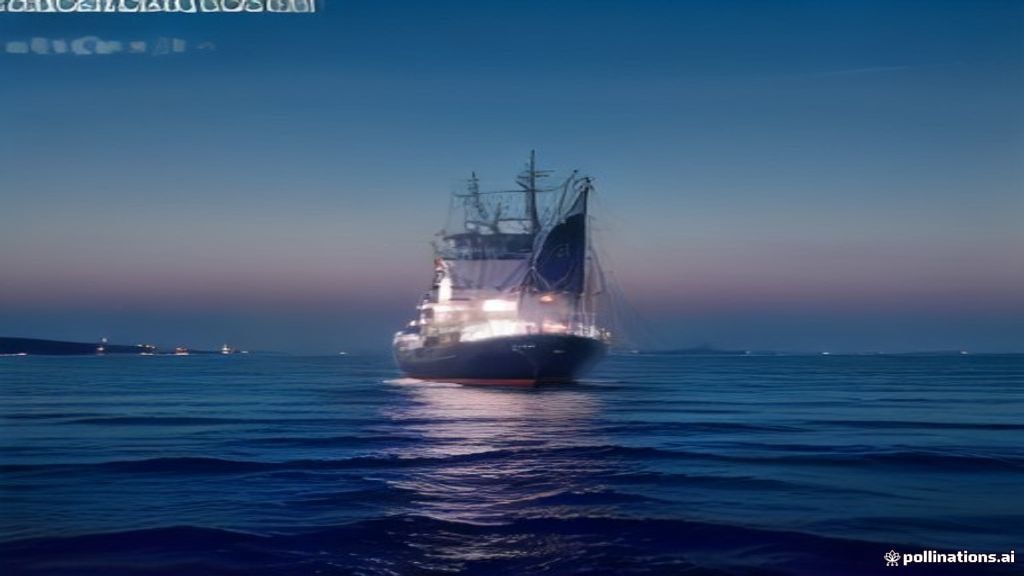
Commercial maritime transport moves more than eighty percent of global trade across the expanse of the world ocean. Navigating international waters presents inherent physical perils, ranging from severe weather storms and rogue waves to structural failures, shipboard fires, and collisions. For over a century, the global maritime industry has depended on a unified, binding regulatory framework to minimize these risks: the International Convention for the Safety of Life at Sea. Known universally by its acronym SOLAS, this treaty is widely recognized as the most critical of all international agreements concerning the safety of merchant ships.
Administered by the International Maritime Organization, a specialized agency of the United Nations, SOLAS establishes minimum mandatory standards for ship construction, equipment, operations, and management. Its rules govern everything from structural hull integrity and fire detection systems to lifeboats, emergency radio frequencies, and digital navigation networks. Understanding SOLAS requires an examination of how historical maritime tragedies transformed reactive seamanship into a proactive, enforceable international legal regime.
What is the SOLAS Convention and why was it created?
The primary catalyst for the creation of SOLAS was the sinking of the passenger liner RMS Titanic in April 1912. The tragic loss of more than 1,500 passengers and crew revealed severe vulnerabilities in maritime safety protocols. Ships operating in the early twentieth century were not required to carry sufficient lifeboats for all persons on board, wireless radio operations were inconsistent and uncoordinated between rival commercial lines, and continuous maritime radio watches were not mandatory across passenger routes.
In direct response to global public outrage, representatives from the world maritime nations convened in London to establish binding international standards. In 1914, they adopted the first version of the SOLAS treaty. This initial agreement introduced compulsory requirements for lifeboat capacity, continuous radio watches, ice patrols in the North Atlantic, and fireproof bulkheads on passenger vessels. Although the outbreak of World War I prevented the 1914 treaty from fully entering into legal force, it established the precedent for global cooperation in ocean safety.
Subsequent treaties were adopted in 1929, 1948, and 1960 as shipbuilding techniques evolved from riveted steel to welded construction and steam turbine propulsion. However, keeping safety regulations updated through traditional treaty ratification methods proved slow and cumbersome. To solve this problem, the maritime community adopted a revised treaty structure in 1974, known as SOLAS 74, which remains the cornerstone of modern maritime safety.
SOLAS 74 introduced the tacit acceptance procedure. Under this mechanism, an amendment adopted by the International Maritime Organization automatically enters into force on a specified date unless objections are formally lodged by a defined number of member states. This legal innovation eliminated multi-year delays, allowing global safety rules to keep pace with rapid technological change, chemical transportation risks, and digital bridge navigation.
Key Chapters and Structure of SOLAS
The SOLAS Convention consists of general legal articles detailing treaty obligations and amendment procedures, followed by a technical annex divided into fourteen distinct chapters. Each chapter addresses specific technical and operational aspects of maritime safety.
Chapter I covers general provisions, defining survey routines, inspection protocols, and official safety certificate issuance for merchant vessels. Chapter II-1 outlines structural construction standards, subdivision requirements, stability calculations, and main propulsion machinery rules. Chapter II-2 regulates fire protection, detection, and extinction, specifying structural fire barriers, inert gas systems on tankers, and fixed fire suppression installations.
Chapter III governs life-saving appliances and survival arrangements, while Chapter IV sets rules for digital and radio communications under the Global Maritime Distress and Safety System, known as GMDSS. Chapter V focuses on safety of navigation, establishing mandatory rules for weather warnings, ice patrol services, vessel traffic services, and ship routing systems that apply to all ships on all voyages.
Subsequent chapters target specialized vessels and operational safety management systems. The following table summarizes the fourteen technical chapters comprising the SOLAS annex:
| SOLAS Chapter | Primary Subject Area | Key Regulatory Focus |
|---|---|---|
| Chapter I | General Provisions | Surveys, inspections, and safety certificates |
| Chapter II-1 | Construction and Stability | Subdivision, hull integrity, machinery, and electrical stability |
| Chapter II-2 | Fire Protection | Fire detection, containment barriers, and extinction equipment |
| Chapter III | Life-Saving Appliances | Lifeboats, liferafts, rescue boats, and personal equipment |
| Chapter IV | Radiocommunications | GMDSS emergency frequencies and satellite communication networks |
| Chapter V | Safety of Navigation | Navigational equipment, warnings, bridge watches, and routing |
| Chapter VI | Carriage of Cargoes | Securing bulk cargoes, grain transport, and container weights |
| Chapter VII | Dangerous Goods | Classification and transport of packaged chemical substances |
| Chapter VIII | Nuclear Ships | Reactor safety and radiation protection standards |
| Chapter IX | Management for Safety | Mandatory International Safety Management Code compliance |
| Chapter X | High-Speed Craft | Safety standards for modern high-speed commercial vessels |
| Chapter XI-1 & XI-2 | Maritime Safety & Security | Enhanced surveys and the International Ship and Port Facility Security Code |
| Chapter XII | Bulk Carrier Safety | Structural reinforcement for heavy solid bulk cargo ships |
| Chapter XIII & XIV | Verification & Polar Code | Compliance audits and safety measures for polar waters |
How is the SOLAS Convention enforced on international ships?
Enforcement of SOLAS rests upon a dual structure: primary jurisdiction exercised by the flag state administration and secondary oversight conducted by port state authorities. Flag state jurisdiction refers to the legal authority of the nation where a ship is registered. Under international law, the flag state assumes primary legal responsibility for verifying that vessels flying its flag comply fully with SOLAS regulations.
Before a merchant ship can legally engage in international trade, the flag state administration or its designated agents must conduct extensive physical surveys. These surveys verify hull integrity, engine performance, fire pump functionality, life-saving gear, and navigation electronics. Upon passing these inspections, the vessel is issued standard international certificates, such as the Cargo Ship Safety Construction Certificate and the Cargo Ship Safety Equipment Certificate. Flag states frequently delegate initial and annual survey duties to recognized classification societies such as Lloyd's Register, DNV, or the American Bureau of Shipping, though legal responsibility remains with the flag administration.
Because certain flag states historical lacked rigorous oversight capabilities, international maritime law developed a secondary enforcement layer known as Port State Control. Under regional agreements such as the Paris Memorandum of Understanding and the Tokyo Memorandum of Understanding, port state inspectors possess the legal authority to board foreign vessels entering their harbors.
Port state inspectors review mandatory SOLAS certificates, assess the physical condition of the vessel, and require crew members to conduct unannounced fire and abandon-ship drills. If inspectors discover severe deficiencies that pose immediate threats to human life or marine environments, they can detain the vessel. Detainable deficiencies include inoperable fire pumps, rusted launch davits, defective radio communication units, or an untrained crew. The ship cannot sail until all critical defects are corrected, establishing a financial and operational deterrent against poor ship maintenance.
What are the main requirements for life-saving appliances under SOLAS?
Chapter III of SOLAS, amplified by the mandatory International Life-Saving Appliance Code, sets strict design, maintenance, and deployment standards for survival gear. The core operational principle is that all personnel aboard a ship must be capable of safely abandoning the vessel during extreme emergencies within a specified period.
For passenger vessels operating on long international voyages, SOLAS mandates that survival craft must accommodate one hundred percent of the total passengers and crew on each side of the ship, providing two hundred percent total capacity. On cargo vessels, totally enclosed lifeboats capable of accommodating all crew members must be provided on both the port and starboard sides, or a single free-fall lifeboat launched over the stern must be installed.
SOLAS lifeboats must be constructed with fire-retardant materials, feature self-righting capabilities if capsized, and carry engine systems capable of operating when submerged or out of the water during launch. Each lifeboat must contain mandatory emergency provisions, including fresh water, high-calorie rations, thermal protective aids, visual signal flares, and portable radio equipment.
In addition to lifeboats, ships must carry dedicated rescue boats capable of maneuvering in rough seas to recover crew members who fall overboard. Personal equipment rules require approved lifejackets for every person on board, fitted with locator lights and whistles, alongside thermal immersion suits designed to prevent hypothermia in cold waters. Chapter III mandates weekly operational tests of survival craft, monthly abandon-ship drills, and continuous maintenance records managed under the shipboard safety management plan.
How does SOLAS address maritime cybersecurity and modern technology?
The transformation of merchant shipping from mechanical operation to integrated digital systems has reshaped maritime safety risks. Modern vessels depend on interconnected electronic networks for voyage planning, engine monitoring, dynamic positioning, cargo management, and satellite communications. The widespread deployment of Automatic Identification Systems, Electronic Chart Display and Information Systems, and Voyage Data Recorders has significantly improved situational awareness while introducing digital vulnerabilities.
To mitigate these risks, the International Maritime Organization incorporated cyber risk management directly into mandatory SOLAS frameworks. Under Resolution MSC.428(98), maritime cyber risk management is integrated into the International Safety Management Code mandated by Chapter IX of SOLAS. Shipowners and technical operators must address digital risks within their approved Safety Management Systems.
This mandate requires operators to conduct formal cyber risk assessments across operational technology controlling steering, main propulsion, and power generation, as well as information technology networks managing administrative data. Systems must feature network segmentation, access control policies, regular software security updates, and crew training to prevent unauthorized digital intrusion or operational failure during voyages.
Looking toward the future, the development of Maritime Autonomous Surface Ships presents new regulatory challenges for SOLAS treaties. Autonomous operations challenge traditional rules that assume human watchkeepers are present on the navigation bridge or in engine control rooms. The International Maritime Organization is developing a mandatory framework to govern autonomous shipping operations, ensuring that software navigation systems maintain equal or superior safety standards compared to conventional crewed vessels.
Conclusion
From the aftermath of the Titanic tragedy to the modern era of automated container carriers and complex global supply chains, the SOLAS Convention has served as the legal cornerstone of human safety at sea. Its dynamic structural framework, accelerated by the tacit acceptance procedure and enforced through global port state control inspections, ensures that international maritime rules adapt continuously to technological advancement.
By mandating strict standards for hull integrity, fire suppression systems, life-saving appliances, radio communications, and digital safety management, SOLAS protects hundreds of thousands of seafarers and marine passengers every day. As the international maritime sector moves toward alternative low-carbon fuels and autonomous vessel designs, the core objective of the SOLAS Convention remains unchanged: guaranteeing that safety of life remains the paramount priority across the international oceans.
Comments
No comments yet.