Building the Future on Water: Floating Cities and Autonomous Ocean Communities
From rising seas to urban crowding, permanent habitats on the ocean surface are moving from concept to construction. This article explores the engineering, sustainability, and legal frameworks behind
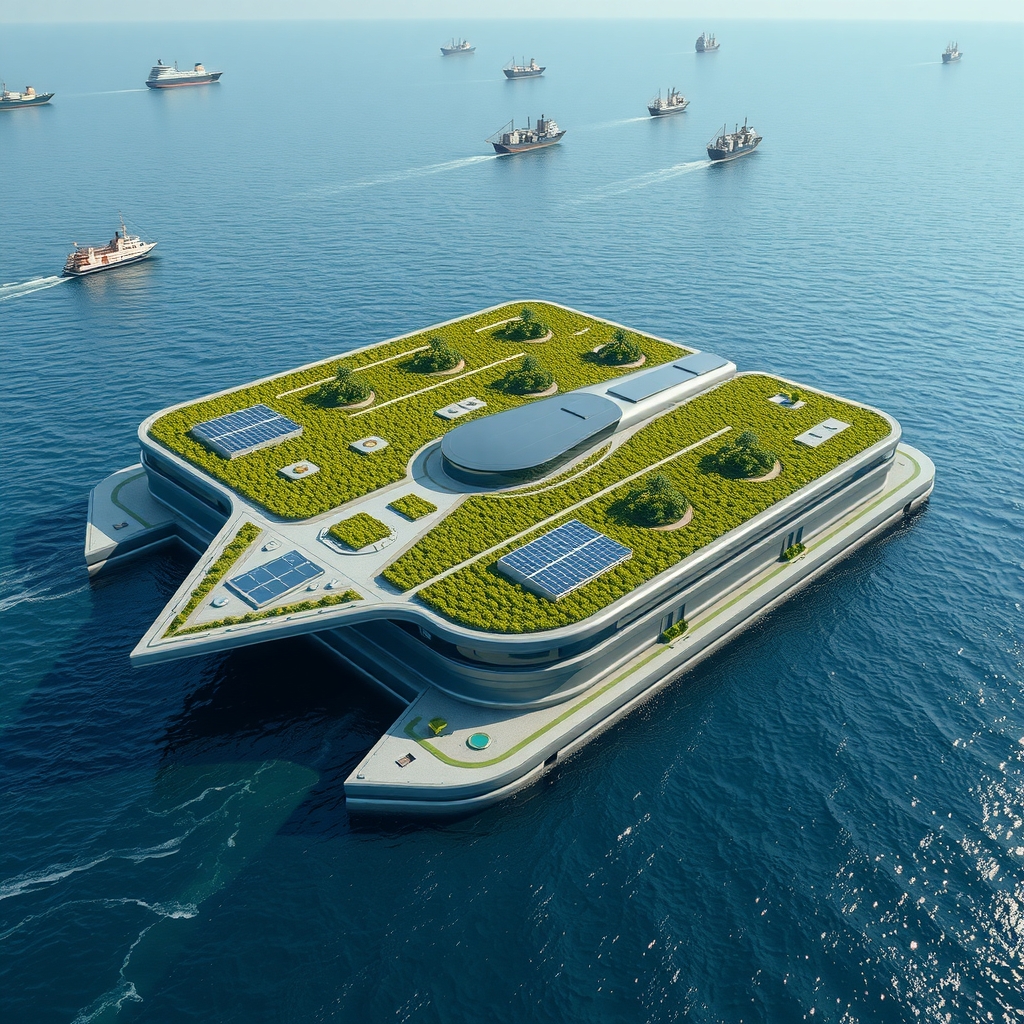
As coastlines recede and urban densities climb, humanity is looking outward rather than solely upward. Floating cities and autonomous ocean communities represent one of the most ambitious frontiers in modern urban planning and marine engineering. These concepts propose permanent human habitats anchored in international waters or deployed within coastal zones, designed to function as self-sufficient ecosystems rather than temporary vessels. While the idea has long inhabited the realm of science fiction, advances in materials science, renewable energy, and modular construction have begun to shift these projects into the field of civil engineering.
The motivation is multifaceted. Climate change threatens coastal settlements with rising sea levels and intensifying storms, prompting a search for resilient infrastructure. Simultaneously, global population growth drives the need for new habitable space without expanding the ecological footprint on land. This article examines the technological realities, the sustainability potential, the legal ambiguities, and the significant risks associated with building the future on water.
What is a floating city and how does it stay upright?
A floating city is not merely a collection of houseboats or a large cruise liner. In architectural and engineering terms, it is a permanently moored or dynamically positioned platform that supports urban functions such as housing, commerce, waste processing, and agriculture. The distinction matters because a vessel is designed to travel, whereas a city is designed to remain. Ships rely on hull integrity and maneuverability to avoid danger; floating habitats must withstand danger where it stands.
Stability is achieved through three primary mechanisms: buoyancy, center of gravity, and mooring. Most designs utilize large pontoon or semisubmersible hulls that distribute weight across a wide surface area. Low centers of gravity, often achieved by placing heavy machinery and ballast deep within the structure, prevent excessive rolling. Mooring systems either anchor the community to the seabed in shallow waters or use dynamic positioning thrusters in deep water to maintain location.
Some projects incorporate variable ballast systems similar to ships but scaled up. When waves strike, the structure moves with them rather than resisting them, reducing structural stress. This philosophy, sometimes referred to as adaptive buoyancy, prioritizes flexibility over rigidity. Below is a comparison of the fundamental differences between maritime vessels and floating urban infrastructure.
| Feature | Maritime Vessel | Floating City |
|---|---|---|
| Primary Function | Transportation of cargo or passengers | Permanent habitation and economic activity |
| Duration of Stay | Temporary or transit | Permanent or multi-generational |
| Propulsion | Engine-driven movement | Moored or dynamic positioning; minimal movement |
| Infrastructure | Onboard self-sufficiency for voyages | Integrated utilities, waste, and power grids |
Design strategies also vary by location. In shallow coastal areas, fixed platforms may be used where stability is easier to achieve. In open ocean environments, catamaran or hexagonal modular designs are preferred to spread loads evenly. The goal is always to minimize the energy required to maintain position, thereby increasing the efficiency of the entire community.
How can ocean communities achieve energy independence?
One of the primary justifications for moving populations to the sea is access to abundant renewable resources. Coastal energy grids often face transmission losses; a city at sea can generate power where it is consumed. Offshore wind farms are increasingly compatible with floating infrastructure, and newer turbine designs allow for deeper water deployment where winds are stronger and more consistent.
Wave energy converters and tidal systems offer predictable baseload power in specific regions, addressing the intermittency issues common in solar and wind. Solar photovoltaic surfaces can be integrated into walkways and roof structures, maximizing surface area without consuming additional footprint. This approach treats the entire surface of the city as a power generator.
Desalination is another critical dependency. Turning seawater into potable water requires significant energy, so the power generation and water treatment systems are often coupled. Energy storage is equally important. Batteries and green hydrogen production allow excess generation to be saved for calm periods. A closed loop reduces reliance on fuel tankers, which introduces logistical costs and carbon emissions.
Several design concepts propose using the water itself as a thermal battery. The temperature difference between surface water and deep water, known as ocean thermal energy conversion, can drive turbines in warm regions. While this technology is currently in early stages of commercial viability, it represents a long-term opportunity for zero-carbon baseload power in tropical maritime zones.
Is living on a floating city legally possible?
The legal status of autonomous ocean communities remains one of the most complex questions facing proponents. Under current international frameworks, a country may construct artificial islands or installations within its exclusive economic zone, but these structures do not possess the status of islands and do not generate their own territorial sea. This means they cannot be used to claim new ocean space in the way natural land does.
Jurisdiction is typically tied to the flag state of the structure or the coastal state where it is located. Seasteading advocates have historically proposed creating new sovereign states or special administrative zones, but there is no established precedent for registering a floating city as an independent nation. In practice, most modern proposals avoid total independence, instead seeking partnerships with existing governments to operate as special economic zones or resilience projects.
Citizens would still need to comply with the laws of the coastal state for waste, safety, and immigration. International treaties regarding pollution and safety apply to structures similarly to vessels, requiring the community to maintain high operational standards to avoid liability. Governance models range from corporate-led management to cooperative democracy, but every model must operate within the bounds of existing maritime law.
This legal gray area is a primary reason why funding for such projects is cautious. Investors require certainty regarding property rights and contractual enforcement, which are difficult to guarantee on the high seas without a recognized sovereign authority.
Why are floating cities important for climate adaptation?
Rising sea levels threaten millions of people living in coastal deltas and low-lying islands. Traditional sea walls are expensive and often fail to account for land subsidence. Floating infrastructure offers a solution that rises with the water rather than fighting it. This adaptability is crucial for vulnerable regions, where nations have already begun testing floating land solutions for housing and agriculture.
Beyond sea level rise, floating cities can be relocated if a specific site becomes hazardous, offering a level of resilience that concrete cannot match. They also reduce pressure on land-based ecosystems by concentrating high-density living in maritime space, potentially preserving inland biodiversity. In this sense, they function as a buffer for terrestrial habitats that would otherwise face urban sprawl.
However, proponents caution that floating cities are not a substitute for reducing carbon emissions. They are a tool for adaptation rather than a cure for climate change, and their construction materials carry an environmental cost that must be weighed against the benefits of relocation. The focus is shifting from total independence to hybrid models that integrate with coastal land networks.
What are the main risks of sea based cities?
The marine environment is inherently hostile to human infrastructure. Corrosion from saltwater, biofouling, and extreme weather events require continuous maintenance. Storm surges and hurricanes pose existential threats to any fixed structure, necessitating evacuation protocols and robust structural engineering. Insurance costs for such developments are currently high due to the lack of historical performance data.
Economic viability is another significant hurdle. The cost per square meter for marine infrastructure is typically much higher than on land due to the specialized shipping and construction methods required. Supply chains for building materials and food must be reliable, as resupply from land can be interrupted by weather.
Social and cultural risks include isolation and the difficulty of building community cohesion among residents who have chosen a highly unconventional lifestyle. Access to healthcare, education, and emergency services is more complex when the nearest land is hours away by boat. Medical emergencies at sea require different response times and capabilities than on land.
There is also the environmental risk of the cities themselves. Structures placed on reefs or in sensitive habitats can alter water flow, create shading, or disrupt marine life. Proper environmental impact assessments are mandatory to ensure that the solution does not create new ecological problems while solving an urban one.
Conclusion
The dream of living on the water has evolved from science fiction into an active field of engineering and policy. While technical challenges remain significant, the convergence of climate urgency and population growth keeps the conversation alive. The success of these projects will depend on collaboration between engineers, governments, and communities to ensure that the ocean becomes a sustainable frontier rather than a source of new problems.
Floating cities are unlikely to replace land-based megacities in the near future. Instead, they are best viewed as specialized solutions for specific geographic and demographic contexts. As technology matures and costs decrease, the viability of autonomous ocean communities will become clearer, offering a new perspective on how humanity might coexist with a changing planetary environment.
Comments
No comments yet.