Maritime Flags of Convenience and the Legal Reality of the Genuine Link Requirement
An in-depth analysis of open registries, UNCLOS Article 91, ITLOS jurisprudence, and how Port State Control addresses regulatory gaps in international shipping.
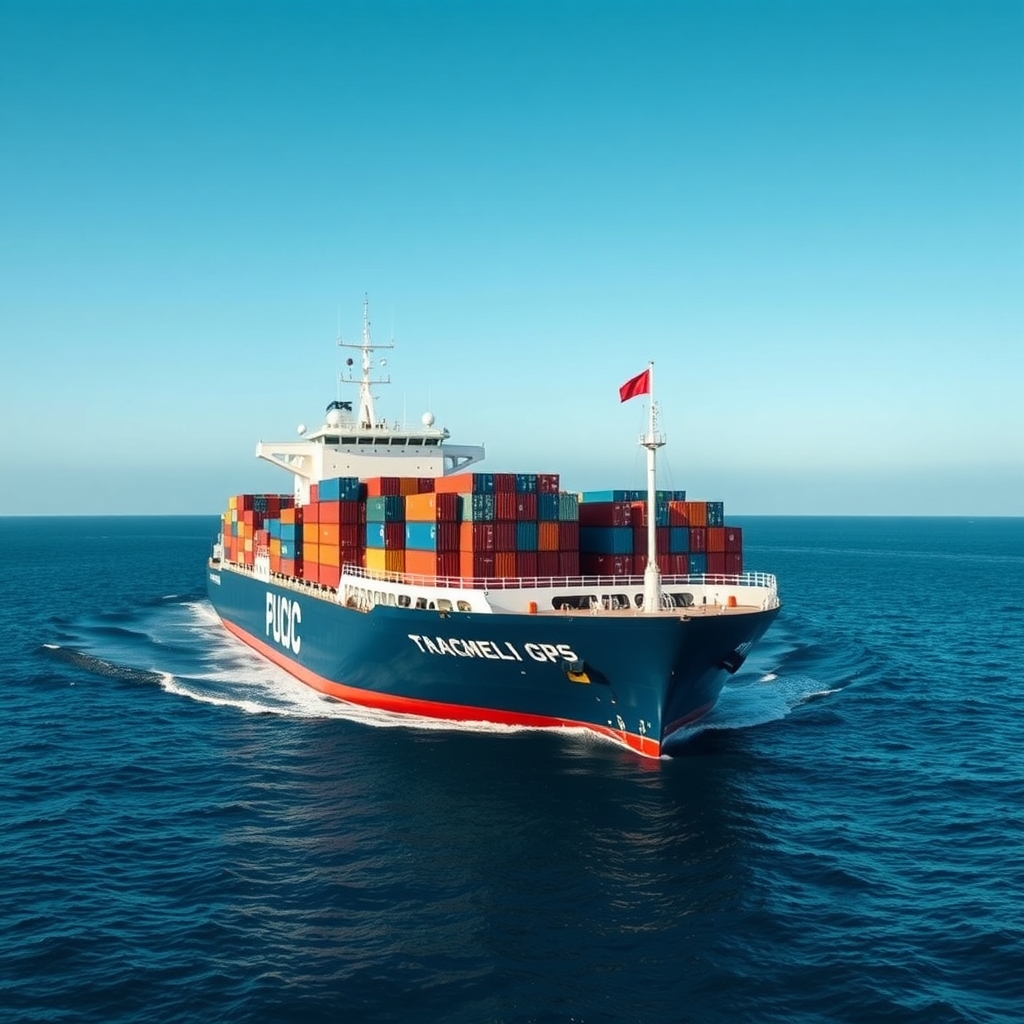
In contemporary maritime commerce, over eighty percent of international trade by volume moves across oceans aboard merchant ships. Beneath this sprawling logistical network lies a complex legal architecture governing the nationality of vessels. Every ship floating on the high seas must be registered under the laws of a sovereign state, granting that state exclusive jurisdiction over administrative, technical, and social matters on board. However, the global maritime industry has increasingly embraced open registries, commonly referred to as flags of convenience. This phenomenon enables shipowners to register vessels in nations with which they have no traditional territorial or economic connection, creating a persistent tension between state sovereignty, economic efficiency, and international law.
Central to this dynamic is the genuine link requirement, a legal concept articulated in international conventions intended to prevent open registries from degenerating into legal voids. Despite statutory definitions under the United Nations Convention on the Law of the Sea, interpreting and enforcing this link remains one of the most contentious subjects in international maritime jurisdiction. As regulatory bodies struggle to enforce safety, environmental, and labor standards across an increasingly fragmented global fleet, understanding the interplay between flag state responsibilities and open registration practices is critical for global ocean governance.
what is a flag of convenience in maritime law?
A flag of convenience refers to the business practice of registering a merchant ship in a sovereign state different from that of its beneficial owners. In maritime legal terminology, registries are broadly categorized into closed registries, secondary or international registries, and open registries. Closed registries require a substantial connection between the vessel and the flag nation, such as local citizenship for vessel owners, domestic crewing requirements, and local corporate domicile. In contrast, open registries allow foreign citizens and overseas corporations to register vessels with minimal physical presence or administrative ties to the flag state.
The practice originated in the early twentieth century when vessel operators sought ways to lower operating costs, avoid stringent national labor laws, and circumvent domestic prohibition or wartime neutrality restrictions. Over subsequent decades, nations such as Panama, Liberia, and the Marshall Islands established highly efficient maritime registries designed specifically to attract foreign-owned tonnage. Today, these open registries account for a massive majority of the global commercial merchant fleet by deadweight tonnage.
While open registries offer legal flexibility and commercial efficiency, they create structural regulatory challenges. Under international law, the flag state holds primary responsibility for inspecting vessels, issuing safety certificates, certifying officer credentials, and enforcing international environmental conventions on its flagged fleet. When an open registry lacks the administrative capacity, technical expertise, or political willingness to enforce these standards, substandard vessels can operate with relative impunity across international waters.
what is the genuine link requirement under unclos?
The genuine link requirement is a fundamental principle of international maritime law codified in Article 91 of the United Nations Convention on the Law of the Sea, often abbreviated as UNCLOS. Paragraph 1 of Article 91 explicitly dictates that every state shall fix the conditions for the grant of its nationality to ships, for the registration of ships in its territory, and for the right to fly its flag. Crucially, the text adds that there must exist a genuine link between the state and the ship.
The concept was originally introduced into international treaties through Article 5 of the 1958 Geneva Convention on the High Seas, which similarly mandated that a genuine link must exist between the state and the ship for the state to effectively exercise its jurisdiction and control in administrative, technical, and social matters over ships flying its flag. The primary objective behind the genuine link requirement was to ensure that a state would not grant its flag purely as a commercial service without assuming genuine regulatory authority over the vessel.
| International Legal Instrument | nPrimary Article | nCore Requirement Mandated | n
|---|---|---|
| 1958 Geneva Convention on High Seas | Article 5 | Establishes the initial requirement for a genuine link to ensure effective jurisdiction. |
| 1982 UNCLOS | Article 91 | Reaffirms the genuine link mandate while leaving conditions of registration to individual states. |
| 1982 UNCLOS | Article 94 | Outlines specific duties of flag states regarding safety, social standards, and crewing. |
| 1986 UN Ship Registration Convention | Articles 7-10 | Attempted to quantify genuine link via ownership and crewing ratios; not in force. |
Despite its clear phrasing, UNCLOS does not explicitly define what constitutes a genuine link. This deliberate or negotiated ambiguity has fueled decades of legal debate. Scholars and traditional maritime nations have argued that a genuine link requires economic components, such as beneficial ownership by nationals or local crewing requirements. Conversely, open registry states contend that the genuine link is demonstrated purely through the effective exercise of administrative and regulatory control over registered vessels, regardless of corporate ownership or crew nationality.
The Evolution of Flag State Duties from Geneva to Montego Bay
To understand the genuine link requirement fully, one must examine its relationship with Article 94 of UNCLOS, which delineates the scope of flag state duties. Article 94 provides that every state shall effectively exercise its jurisdiction and control in administrative, technical, and social matters over ships flying its flag. This legal duty requires flag states to maintain a national register of ships and assume jurisdiction under internal law over each ship flying its flag, including its master, officers, and crew.
Furthermore, Article 94 mandates that flag states take measures necessary to ensure safety at sea. These measures encompass the construction, equipment, and seaworthiness of ships, the manning of ships and labor conditions, and the prevention of collisions. Flag states must ensure that each vessel is surveyed by qualified nautical inspectors prior to registration and at appropriate intervals thereafter. Officers and crew must hold credentials that comply with applicable international regulations, such as the International Convention on Standards of Training, Certification and Watchkeeping for Seafarers, commonly known as the STCW Convention.
Every State shall effectively exercise its jurisdiction and control in administrative, technical and social matters over ships flying its flag. — United Nations Convention on the Law of the Sea, Article 94(1)
The legal framework established at Montego Bay in 1982 linked the existence of a valid flag not to mere administrative formality, but to ongoing regulatory compliance. When a flag state fails to enforce safety rules or investigate maritime casualties involving its ships, it breaches its affirmative obligations under Article 94. However, UNCLOS provides limited direct enforcement mechanisms against non-compliant flag states, leaving a gap between statutory duties and real-world compliance.
why do vessel owners use flags of convenience?
The shift toward open registries is driven primarily by financial, regulatory, and operational considerations. Vessel ownership and commercial shipping are highly competitive international businesses operated on tight profit margins. By electing to flag a vessel under an open registry, shipowners can achieve significant operational cost reductions and administrative efficiencies.
- Taxation and Financial Management: Open registry nations typically impose little to no corporate income tax on maritime operations, replacing traditional corporate income taxation with modest annual tonnage fees based on ship capacity.
- Crewing Costs and Flexibility: Closed registries frequently mandate that a high percentage of ship officers and crew members hold citizenship in the flag state, where labor costs are higher. Flags of convenience allow shipowners to recruit qualified seafarers internationally, reducing labor costs.
- Regulatory and Operational Speed: Leading open registries operate modern, streamlined administrative offices situated in global business hubs. Registration processes, mortgage recordings, and technical approvals can often be executed across time zones within hours.
- Corporate Anonymity and Asset Protection: Many open registry jurisdictions offer robust corporate secrecy laws, permitting complex corporate holding structures that shield the beneficial owners from legal liability and public disclosure.
While these economic incentives drive fleet expansion under flags of convenience, labor organizations such as the International Transport Workers Federation have long criticized the system. Critics argue that flags of convenience can lead to substandard working conditions, lower safety compliance, delayed wage payments, and difficulties in holding beneficial owners accountable in the event of maritime disasters or environmental pollution incidents.
how does a ship register under an open registry?
The process of registering a merchant ship under an open registry involves a structured series of legal and administrative steps designed to establish nationality while ensuring compliance with statutory safety documentation. While individual open registries maintain distinct procedures, the core process follows a standardized legal path across international commerce.
- Corporate Formation: The shipowner typically incorporates a foreign maritime entity or shell company within the open registry jurisdiction to act as the legal owner of the vessel.
- Application and Documentation Submission: The owner submits proof of ownership, such as a bill of sale or builder certificate, alongside evidence that the vessel has been deleted from its previous national registry to prevent dual registration, which is strictly prohibited under UNCLOS Article 92.
- Technical Inspection and Classification: The registry requires proof that the ship complies with key international safety conventions, including SOLAS, MARPOL, and the Load Line Convention. Most open registries delegate technical surveys and certification to recognized classification societies, such as DNV, ABS, or Lloyd Register.
- Issuance of Provisional and Permanent Certificates: Upon verifying technical compliance and receiving required registry fees, the registry issues a Provisional Certificate of Registry, permitting the vessel to fly the flag immediately. Following final inspection, a permanent certificate is granted.
Through this streamlined procedure, open registries process thousands of registrations annually. However, because technical verification is largely delegated to third-party classification societies, the flag state political administration itself may maintain minimal direct contact with the vessel or its crew, highlighting the operational gap surrounding the genuine link requirement.
The M/V Saiga Case and the Jurisprudential Dilemma
The legal enforceability of the genuine link requirement reached a definitive turning point before the International Tribunal for the Law of the Sea, known as ITLOS, in the landmark 1999 M/V Saiga (No. 2) Case between Saint Vincent and the Grenadines and Guinea. The dispute arose when Guinean authorities arrested the oil tanker M/V Saiga off the coast of West Africa, accusing it of illegal bunkering in Guinea exclusive economic zone. Guinea argued before the tribunal that its actions were justified because Saint Vincent and the Grenadines lacked a genuine link with the vessel, asserting that the ship was owned by a Cypriot company, managed by a Scottish firm, crewed by Ukrainian and Senegalese seafarers, and chartered to a Swiss company.
In its historic judgment, ITLOS rejected Guinea argument and addressed the true legal character of the genuine link requirement under UNCLOS Article 91. The tribunal explicitly ruled that the genuine link requirement is not a prerequisite for the validity of a vessel registration or its international recognition by third states. Rather, ITLOS concluded that the purpose of Article 91 is to secure more effective implementation of flag state duties under Article 94.
The tribunal clarified that UNCLOS does not authorize a third state to challenge or refuse to recognize the nationality of a ship simply because it considers that no genuine link exists between the ship and the flag state. According to ITLOS, the right to establish conditions for registration remains sovereign to the flag state. This landmark decision effectively eliminated the possibility of third states unilaterally invalidating open registry flags on the high seas, confirming that the absence of a genuine link does not void a vessel legal protection under its flag state sovereign immunity.
how do port state control inspections address flag state failure?
Because the ITLOS ruling in the M/V Saiga case established that third states cannot deny recognition to vessels lacking an economic genuine link, the international maritime community faced a practical dilemma: how to effectively enforce maritime safety and environmental standards when lax flag states fail to do so. The solution emerged not through flag state reform, but through the expansion of Port State Control mechanisms.
Port State Control, commonly abbreviated as PSC, is the inspection of foreign ships in national ports to verify that the condition of the ship, its equipment, and its crew comply with international regulations. When a vessel enters a foreign port, the coastal nation exercises territorial jurisdiction, giving it the legal authority to board, inspect, and if necessary detain sub-standard vessels regardless of where the ship is registered.
To eliminate ports of convenience and standardize inspection standards, nations have established regional agreements known as Memoranda of Understanding, or MOUs. The most influential regional regimes include the Paris MOU covering Europe and the North Atlantic, and the Tokyo MOU covering the Asia-Pacific region.
Port State Control inspectors target ships based on risk profiling systems that evaluate vessel age, history of deficiencies, classification society quality, and crucially, the performance history of the ship flag state. Flag states whose fleets demonstrate high deficiency and detention rates are placed on publicized Black Lists or Grey Lists. Vessels flying black-listed flags are subjected to mandatory, rigorous physical inspections whenever they dock within participating port states, and persistently non-compliant ships can be banned entirely from regional waters.
Through this system of coordinated port inspections, international maritime law has effectively shifted the operational burden of regulatory enforcement away from the flag state and onto port states. Port State Control serves as an essential regulatory counterweight to open registries, compelling shipowners to maintain rigorous safety standards even if their flag state exercises minimal oversight.
Regulatory Horizons: Reforming Maritime Sovereignty
In recent years, the challenge of enforcing standards across open registries has taken on new dimensions due to geopolitical volatility and environmental imperatives. The emergence of shadow fleets or dark fleets—vessels operating under flags of convenience with obscured ownership, disabled tracking systems, and inadequate insurance to evade international sanctions or oil price caps—has renewed interest in tightening flag state regulations.
Efforts to mandate stricter registration requirements through international agreements have historically struggled to gain universal traction. The 1986 United Nations Convention on Conditions for Registration of Ships attempted to establish clear statutory definitions for the genuine link by requiring minimum national participation in ship ownership, corporate management, and crewing. However, due to opposition from major open registry states and global shipping interests, the treaty failed to secure the required ratifications and has never entered into force.
Contemporary regulatory efforts focus instead on digital transparency, environmental performance tracking, and mandatory legal identification. The International Maritime Organization has introduced mandatory compliance frameworks, such as the IMO Member State Audit Scheme, which audits flag state administrations to ensure they possess the legislative and physical infrastructure necessary to fulfill their UNCLOS Article 94 duties. Furthermore, decarbonization targets mandated by the International Maritime Organization force open registries to enforce strict carbon intensity metrics and fuel efficiency standards on their fleets, turning environmental compliance into a key metric of registry quality.
Conclusion
The interplay between flags of convenience and the genuine link requirement underscores a fundamental paradox within modern international law. On one hand, UNCLOS enshrines state sovereignty by granting every nation the unilateral right to determine the conditions under which it grants its flag to merchant ships. On the other hand, the globalized nature of maritime commerce demands rigorous, uniform enforcement of safety, labor, and environmental standards across all vessels regardless of nationality.
Jurisprudence from ITLOS, particularly the M/V Saiga decision, has firmly established that the genuine link requirement under Article 91 cannot be used by third states to invalidate vessel flags or undermine freedom of navigation. Instead, accountability is maintained through the positive obligations listed under Article 94 and enforced through the pragmatic intervention of Port State Control regimes.
As the international shipping industry navigates complex geopolitical shifts, labor challenges, and the imperative to decarbonize, the efficacy of maritime governance will depend on continuous cooperation between flag states, port states, and international institutions. While open registries will remain an integral feature of global maritime economics, the effective enforcement of international standards ensures that convenience never overrides safety and accountability on the world oceans.
Comments
No comments yet.