Decarbonizing the High Seas: The Evolution of Maritime Environmental Jurisprudence and Regulatory Compliance
This article examines the shifting legal landscape of maritime decarbonization, focusing on the tension between international conventions and state enforcement.
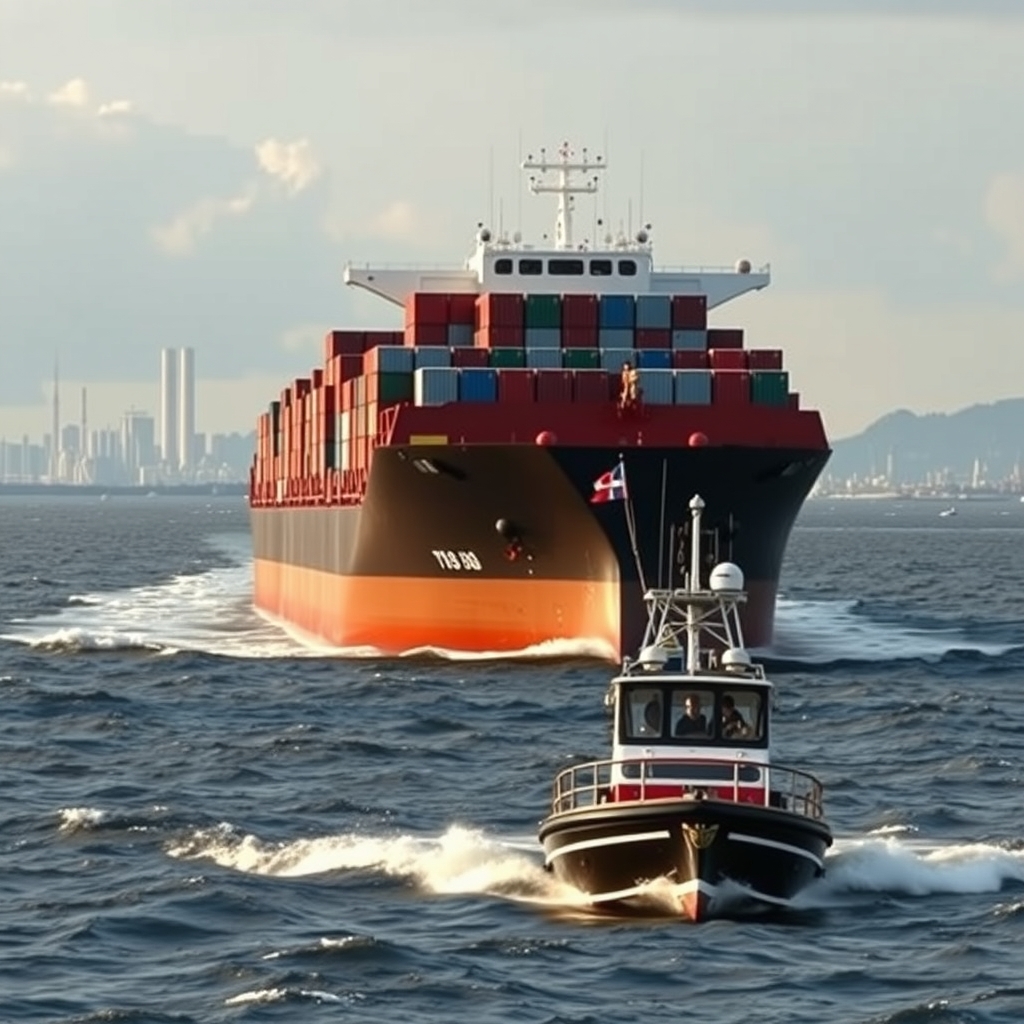
The Regulatory Shift Toward Maritime Decarbonization
The global shipping industry, currently responsible for nearly three percent of anthropogenic carbon dioxide emissions, stands at a precarious jurisprudential crossroads. Historically, the law of the sea—codified primarily in the 1982 United Nations Convention on the Law of the Sea (UNCLOS)—prioritized the freedom of navigation and the exclusivity of flag state jurisdiction. However, the escalating climate crisis has necessitated a paradigm shift. The International Maritime Organization (IMO) has increasingly moved from a body of technical consensus-building to one of prescriptive, albeit controversial, environmental governance. This transition is not merely administrative; it challenges the foundational principles of sovereignty that have historically insulated the merchant fleet from rigorous environmental oversight.
The introduction of the Carbon Intensity Indicator (CII) and the Energy Efficiency Existing Ship Index (EEXI) represents an attempt to externalize climate costs into the operational architecture of global trade. Yet, these regulations occupy a contested space between the regulatory ambition of the IMO and the enforcement capacity of port states. As jurisprudence begins to clarify the obligations of charterers and owners under these new regimes, the industry faces an unprecedented realignment of liability, particularly where operational mandates conflict with contractual obligations.
How does the International Maritime Organization enforce green shipping mandates?
Enforcement remains the primary structural vulnerability of international maritime law. Unlike domestic regulatory frameworks, the IMO lacks a centralized enforcement agency. It relies upon the traditional tripartite structure of flag state, port state, and coastal state jurisdiction. The flag state, often incentivized by competition for vessel registrations, has historically been viewed as the weak link in compliance verification. To mitigate this, recent shifts in port state control (PSC) have empowered nations to inspect not only safety equipment but also the administrative records of environmental compliance.
Under the principle of the genuine link, established in both the 1958 High Seas Convention and later reinforced in UNCLOS, a flag state is obligated to exercise effective jurisdiction over its vessels. When a vessel fails to meet carbon emission benchmarks, the legal burden shifts toward the port state to exercise its authority to detain ships or deny port entry. This intersection of international mandate and local implementation creates a complex web of legal exposure for vessel operators who find themselves subject to the overlapping, and sometimes conflicting, standards of various regional port state control regimes, such as the Paris Memorandum of Understanding.
What are the legal implications of non-compliance with carbon emission standards?
Non-compliance with green shipping standards triggers a cascading series of legal consequences, ranging from contractual breach to potential admiralty liens. When a vessel underperforms on its carbon intensity targets, the charterparty agreement—the foundational contract for shipping services—becomes a site of potential litigation. Current standard-form charterparties (e.g., BIMCO) are being renegotiated to allocate the risk of carbon fines and fuel-related costs. If a ship is detained by port state authorities for failing to produce valid energy efficiency records, the question arises as to whether this constitutes an off-hire event or a breach of the warranty of seaworthiness.
Furthermore, the evolution of liability in this sector mirrors the developments seen in the International Tribunal for the Law of the Sea (ITLOS) regarding the prevention of pollution. While traditional admiralty law emphasized physical cargo damage or collision, the emerging jurisprudence addresses invisible harm: greenhouse gas emissions. The potential for future litigation involving state-led claims for environmental remediation, analogous to the jurisprudence seen in the International Court of Justice (ICJ) regarding transboundary harm, looms over the shipping industry. Should a vessel’s carbon footprint be deemed a violation of international customary law, the shield of limited liability traditionally enjoyed by shipowners could be substantially eroded.
Comparative Analysis of Regulatory Enforcement Regimes
| Framework | Primary Legal Mechanism | Enforcement Authority |
|---|---|---|
| MARPOL Annex VI | Technical Standards | Flag State & Port State |
| EU ETS for Maritime | Market-Based Measure | European Union Member States |
| IMO CII/EEXI | Operational Rating | Port State Control |
The Intersection of Contract Law and International Regulation
The drafting of maritime contracts in the era of decarbonization requires a sophisticated understanding of both public international law and private commercial practice. The ambiguity inherent in defining what constitutes a fault-based versus strict-liability breach regarding carbon compliance remains a point of contention. Arbitral tribunals, such as the London Maritime Arbitrators Association (LMAA), are increasingly tasked with interpreting the interaction between existing 'due diligence' obligations and new environmental requirements. The emerging consensus suggests that shipowners will be held to a higher standard of technical maintenance than in previous decades, effectively transforming environmental performance into a requisite component of the vessel's technical condition.
Conclusion
The architecture of global maritime law is undergoing a profound transformation as it internalizes the external costs of fossil fuel reliance. While technical standards and international conventions provide a framework, the durability of these regulations will be tested by the inevitable friction between state sovereignty and global enforcement. Success will depend on the harmonization of regional market-based measures with international mandates, ensuring that the transition to green shipping does not facilitate a shift toward flags of convenience that bypass environmental scrutiny. Ultimately, the industry's ability to adapt will be defined by its capacity to integrate these rigorous environmental obligations into the very fabric of maritime commercial law.
Comments
No comments yet.