Risk Allocation and Jurisprudential Strictures in the Carriage of Dangerous Goods by Sea
A comprehensive legal analysis of hazardous cargo transport, examining the IMDG Code, strict liability regimes, and landmark maritime rulings on undeclared dangerous goods.
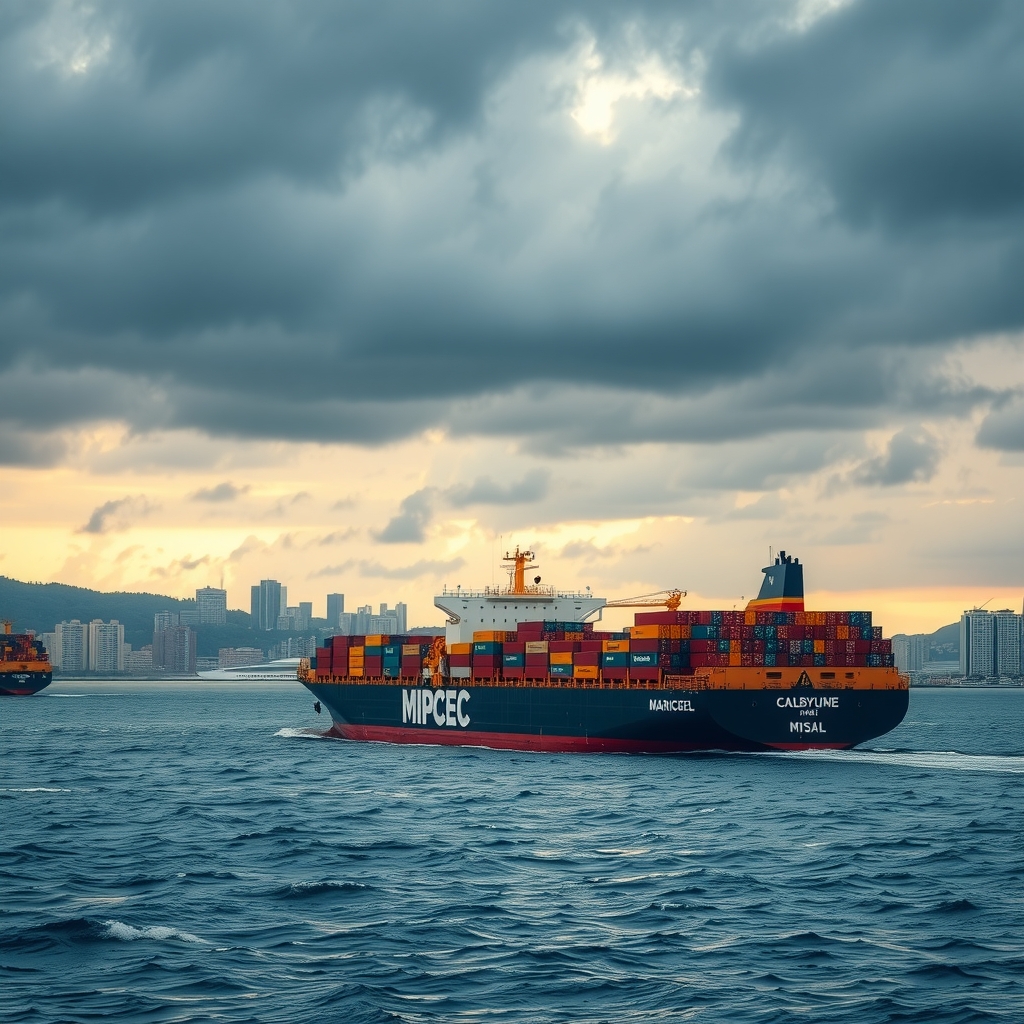
The carriage of dangerous goods by sea represents one of the most intellectually demanding intersections of maritime commerce and international law. As global supply chains expand to include increasingly volatile substances—from lithium-ion batteries to complex chemical precursors—the legal framework governing these shipments must balance the shipowner's right to a safe vessel with the shipper's necessity for commercial transit. This tension is mediated through a sophisticated matrix of international conventions, technical codes, and a body of jurisprudence that increasingly leans toward a regime of strict liability for the shipper. The evolution of this legal sector reflects a broader transition in maritime law: a move from general common law principles toward a highly codified, technically driven system of risk management.
The Taxonomy of Danger: Defining Hazardous Cargo
To understand the legal ramifications of hazardous carriage, one must first isolate the definition of danger in a maritime context. While the layman might associate danger strictly with explosive or flammable materials, the law adopts a more expansive and functionalist view. Goods may be considered dangerous not only because of their inherent physical properties but also because of their potential to cause delay, seizure, or the legal detention of the vessel. This concept, often referred to as legal danger, complicates the allocation of risk, as it encompasses cargoes that are physically inert but administratively toxic.
What is the definition of dangerous goods under the Hague-Visby Rules?
Under the Hague-Visby Rules, specifically Article IV Rule 6, the definition of dangerous goods is notably broad. The rules do not provide a closed list of substances but rather refer to goods of an inflammable, explosive or dangerous nature. This open-ended phrasing has allowed courts to interpret danger through the lens of the specific circumstances of the voyage. The landmark decision in Effort Shipping Co Ltd v Linden Management SA (The Giannis NK) [1998] clarified that danger is not confined to goods that cause direct physical damage to the ship. In this case, a cargo of groundnuts infested with Khapra beetle was deemed dangerous because it resulted in the vessel being quarantined and the eventual dumping of the entire cargo at sea. The House of Lords held that the term dangerous should be construed as meaning goods that are likely to cause physical damage to the ship or other cargo, but the subsequent development of the law has suggested that even the threat of significant delay or the incurrence of massive fines can bring a cargo within the ambit of Article IV Rule 6.
The distinction between inherent vice and dangerous nature is critical. While an inherent vice—such as the natural tendency of certain grains to heat—might lead to cargo damage (relieving the carrier of liability under Article IV Rule 2(m)), a dangerous nature imposes an affirmative liability on the shipper if that nature was not disclosed. This jurisprudential line ensures that the carrier is not made an involuntary insurer of the shipper's hazardous ventures without clear notice and the opportunity to refuse or take precautions.
The IMDG Code: From Recommendation to Mandatory Standard
The technical backbone of this regime is the International Maritime Dangerous Goods (IMDG) Code. Originally developed as a recommendatory supplement to the International Convention for the Safety of Life at Sea (SOLAS), the IMDG Code became mandatory on January 1, 2004. This transition significantly altered the landscape of maritime litigation. By integrating the Code into SOLAS Chapter VII, the international community effectively harmonized the standards for packing, labeling, and stowing hazardous materials.
The IMDG Code categorizes goods into nine classes, ranging from explosives to miscellaneous dangerous substances. In modern litigation, compliance with the IMDG Code is often treated as a minimum threshold for the shipper's duty of care. However, compliance with the Code does not automatically insulate a shipper from liability. If a cargo possesses idiosyncratic risks that are not fully captured by the Code's classifications, the shipper may still be held liable under the broader common law or Hague-Visby obligations to warn of known dangers. The Code acts as a floor, not a ceiling, for safety standards.
What are the legal obligations of shippers regarding dangerous goods?
The primary legal obligation of a shipper in the carriage of dangerous goods is the duty to provide a full and accurate description of the cargo. This is not merely a contractual requirement but a statutory duty under the Hague-Visby Rules and various national merchant shipping acts. The shipper is the party with the superior knowledge of the cargo's characteristics; the carrier, conversely, is entitled to rely on the shipper's declaration when determining stowage patterns and safety protocols.
This obligation can be broken down into three distinct pillars:
- The Duty to Inform: Shippers must notify the carrier of the dangerous nature of the goods before shipment. This notification must be sufficiently detailed to allow the carrier to exercise an informed judgment on whether to accept the goods and how to handle them.
- The Duty to Pack and Label: Under the IMDG Code and SOLAS, the shipper is responsible for ensuring that the goods are contained in packaging that can withstand the rigors of a sea voyage and are clearly marked with the appropriate hazard placards.
- The Strict Liability for Non-Disclosure: Perhaps the most significant aspect of the shipper's obligation is that liability for undeclared dangerous goods is strict. In The Giannis NK, the court confirmed that the shipper's lack of knowledge regarding the dangerous nature of the cargo (e.g., the presence of the beetle) was irrelevant. The shipper warrants the safety of the cargo regardless of their personal negligence.
This strict liability framework serves as a powerful deterrent against the misdeclaration of cargo, a problem that continues to plague the container shipping industry. When a shipper fails to declare hazardous materials to avoid higher freight rates or more stringent inspections, they effectively gamble with the lives of the crew and the integrity of the vessel.
Who is liable for damages caused by undeclared hazardous cargo?
The allocation of liability for damages resulting from undeclared dangerous goods is primarily directed toward the shipper. Article IV Rule 6 of the Hague-Visby Rules states that if dangerous goods are shipped without the consent of the carrier, the shipper shall be liable for all damages and expenses directly or indirectly arising out of or resulting from such shipment. This encompasses not only physical damage to the vessel and other cargo but also the costs of deviation, salvage, and environmental remediation.
However, the question of liability becomes more complex when multiple parties are involved, such as freight forwarders, NVOCCs (Non-Vessel Operating Common Carriers), and the actual manufacturer of the goods. In the recent jurisprudence following the MSC Flaminia fire (2018), the courts examined the liability of the NVOCC and the manufacturer of a chemical (Divinylbenzene) that underwent self-accelerating decomposition. The U.S. courts, applying principles consistent with international maritime standards, found that the manufacturer and the NVOCC shared liability for failing to provide adequate instructions regarding the temperature-sensitive nature of the cargo. This case emphasized that the duty to warn extends beyond the simple identification of the substance; it includes the provision of specific handling instructions necessary for safe transit.
The following table illustrates the variation in liability regimes across the primary international conventions governing maritime cargo:
| Convention | Basis of Shipper Liability | Carrier's Right to Destroy Cargo | Knowledge Requirement |
|---|---|---|---|
| Hague-Visby Rules | Strict Liability for undeclared goods. | At any time, without compensation. | No knowledge of danger required for shipper liability. |
| Hamburg Rules | Fault-based, but with a presumption of fault for dangerous goods. | Where they constitute an actual danger. | Shipper must inform of dangerous character. |
| Rotterdam Rules | Strict Liability for failure to inform/mark. | If the goods become an actual danger. | Focuses on the shipper's failure to provide information. |
The Role of Seaworthiness in Hazardous Carriage
While the shipper bears the brunt of liability for non-disclosure, the carrier is not exempt from obligations. The overarching duty to provide a seaworthy vessel (Article III Rule 1 of the Hague-Visby Rules) includes the duty to ensure the ship is cargoworthy. If a carrier accepts dangerous goods with full knowledge of their nature, they must provide a vessel equipped to handle such cargo safely. This includes functioning specialized ventilation systems, appropriate fire-fighting equipment, and a crew trained in the IMDG Code protocols.
A fascinating legal conflict arises when a fire is caused by dangerous goods that the carrier accepted. Under the Hague-Visby Rules, the carrier enjoys a "fire exception" (Article IV Rule 2(b)), which protects them from liability for fire damage unless caused by the carrier's actual fault or privity. However, if the fire resulted from the carrier's failure to exercise due diligence to make the ship seaworthy (e.g., faulty CO2 systems or improper stowage of hazardous containers), the seaworthiness obligation overrides the fire exception. This creates a high evidentiary bar in maritime litigation, where forensic fire investigators must determine whether the cause was the inherent instability of the cargo (shipper liability) or a failure in the vessel's protective systems (carrier liability).
Environmental Jurisdiction and State Responsibility
The carriage of dangerous goods also triggers broader questions of international law beyond the contractual relationship between shipper and carrier. The International Tribunal for the Law of the Sea (ITLOS) and the International Court of Justice (ICJ) have increasingly focused on the obligations of states to protect the marine environment (UNCLOS Part XII). When a vessel carrying hazardous substances suffers a casualty in a coastal state's Exclusive Economic Zone (EEZ), the legal fallout involves state responsibility and the right of the coastal state to intervene.
The MOX Plant case and the Probo Koala incident underscore the jurisdictional friction between the flag state's authority over the vessel and the coastal state's right to prevent pollution. Under UNCLOS Article 194, states must take all measures necessary to ensure that activities under their jurisdiction or control are conducted so as not to cause damage by pollution to other states and their environment. This places a positive obligation on flag states to enforce the IMDG Code and SOLAS requirements on their vessels. If a state fails to adequately regulate the carriage of dangerous goods under its flag, it may theoretically face claims for breach of treaty obligations in an international forum like the Permanent Court of Arbitration (PCA).
The HNS Convention: The Missing Link
Despite the robust technical standards of the IMDG Code, the liability and compensation regime for hazardous and noxious substances (HNS) remains fragmented. The International Convention on Liability and Compensation for Damage in Connection with the Carriage of Hazardous and Noxious Substances by Sea (HNS Convention) was intended to create a regime similar to the oil pollution funds (IOPC Funds). It would provide a two-tier system of compensation: first from the shipowner's insurance and second from a fund contributed to by HNS receivers.
The primary barrier to the HNS Convention's efficacy is its lack of universal ratification. Many states are hesitant to impose the reporting and financial burdens on their domestic chemical and manufacturing industries. Consequently, when an HNS incident occurs, claimants must rely on the 1976 Convention on Limitation of Liability for Maritime Claims (LLMC), which often provides significantly lower compensation limits than what would be available under a dedicated HNS regime. This legal vacuum often leads to protracted litigation in multiple jurisdictions as victims seek to bypass limitation funds through tort claims in more favorable forums.
Conclusion: Reconciling Technical Evolution with Legal Certainty
The legal landscape of dangerous goods carriage by sea is characterized by a high degree of technicality and a stringent approach to risk allocation. The jurisprudential trend, solidified by The Giannis NK and reinforced by modern container fire litigation, places a heavy burden on the shipper to ensure transparency and accuracy in cargo declaration. This strict liability is justified by the extreme informational asymmetry in maritime transport; the carrier cannot be expected to chemically analyze every container loaded onto a 24,000 TEU vessel.
However, as the shipping industry transitions toward decarbonization, new "dangerous" cargoes—such as ammonia and hydrogen fuels—will present novel legal challenges. These substances will require not only updates to the IMDG Code but also a re-evaluation of what constitutes a seaworthy vessel and an appropriately trained crew. The future of maritime law in this sector will likely see a narrowing of the carrier's exceptions and an even greater emphasis on the integrated management of risk between all parties in the maritime adventure. For now, the combination of the IMDG Code and the Hague-Visby strictures remains the primary bulwark against the inherent hazards of global trade, provided that the industry moves toward the full ratification of the HNS Convention to address the remaining gaps in environmental and third-party liability.
Comments
No comments yet.